Who Is Aliko Dangote? Africa’s Richest Man Explained — the Refinery, the Empire and What to Watch
GUIDES · NIGERIA
Key Facts
- —Who Nigerian industrialist. He founded the Dangote Group, a Lagos-based conglomerate, and is its president and chief executive.
- —Born 10 April 1957 in Kano, northern Nigeria, into a family of merchants. He studied business at Al-Azhar University in Cairo.
- —Net worth US$51.7 billion on the Forbes real-time list on 26 September 2026, 35th in the world. Bloomberg’s index showed US$35.3 billion on 14 September 2026.
- —Main assets The Lekki oil refinery near Lagos, Dangote Cement, a urea fertiliser plant and sugar and salt businesses.
- —The refinery Built for 650,000 barrels of crude a day. It processed 700,000 barrels a day in a performance test in June 2026.
- —The share offer 4.1 billion refinery shares at 525 naira (about US$0.40) each, open from 14 September to 13 October 2026.
Aliko Dangote explained for foreigners: how a Kano trader built Africa’s largest fortune, and why one refinery now dominates it.
Aliko Dangote is Africa’s richest man. Since 2024 his fortune has rested mainly on one asset: a giant oil refinery outside Lagos. To understand him, start with his method. He finds a product Nigeria imports and builds the factory to make it at home. Critics add a third step: keeping imports out.
This guide is about the man and his business. For the country, its politics and its economy, read our companion guide, Nigeria Explained.
Early life and path to wealth
Aliko Dangote was born in Kano on 10 April 1957. Kano is the commercial capital of Nigeria’s north and an old trading city. His mother’s side descends from Alhassan Dantata, one of the wealthiest West African merchants of the colonial era.
He studied business at Al-Azhar University in Cairo and graduated in 1977. Back in Nigeria, he began trading with backing from an uncle. He imported and sold cement, sugar, rice and other bulk goods.
Trading made him rich. Manufacturing made him a billionaire. From the 2000s he moved from importing goods to producing them. Cement came first, including a large plant at Obajana in central Nigeria.
The pattern repeated in sugar, salt, flour and then fertiliser. Each step replaced imports with local output. Nigerian governments often backed this with import curbs, which critics still hold against him.
Forbes has ranked him Africa’s richest person for more than a decade. That title says nothing about liquidity. Almost all of his wealth sits in shares of companies he controls, not in cash.
The fortune: cement, fertiliser and the refinery
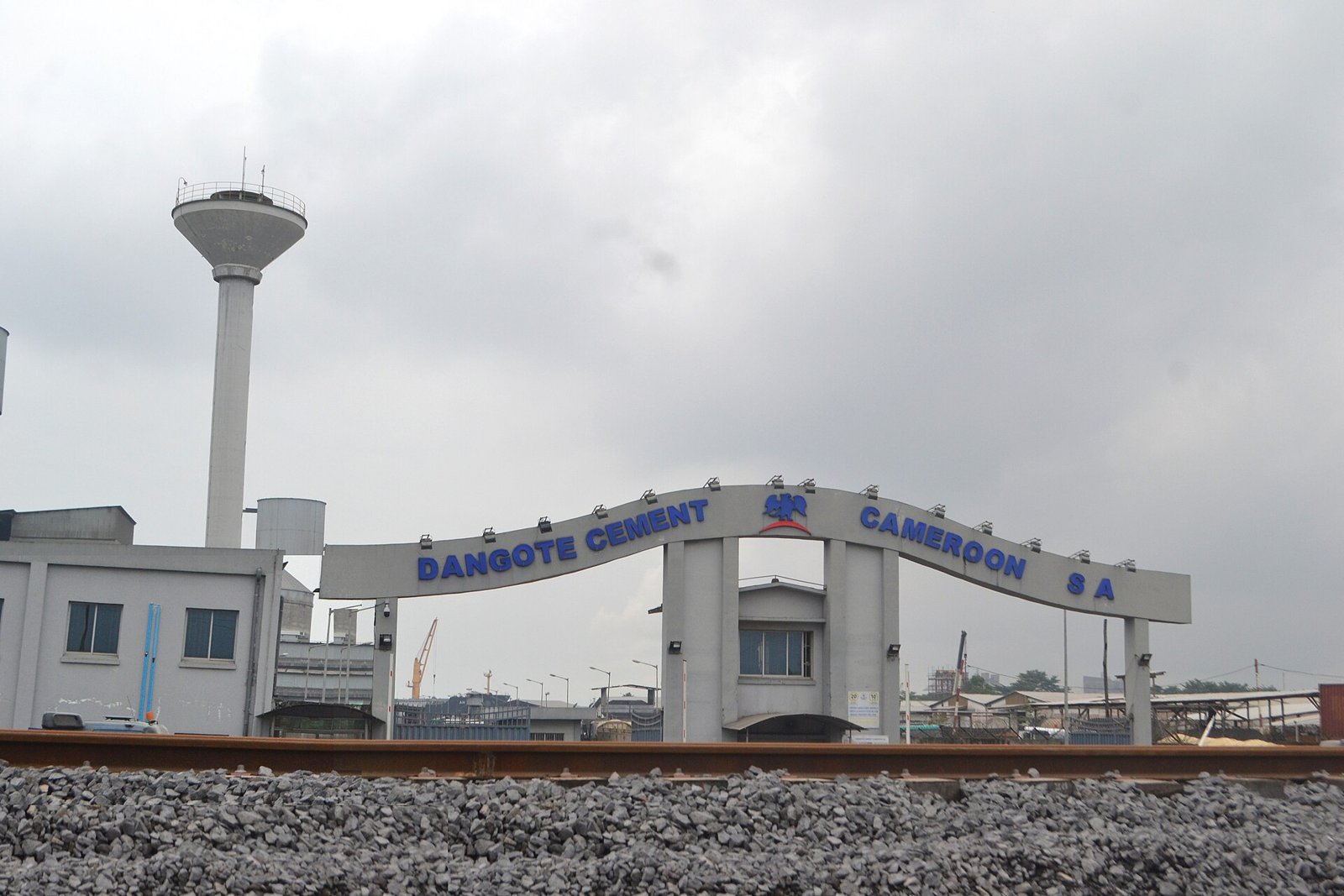
Dangote Cement is the oldest pillar. It is listed on the Nigerian Exchange (NGX), Lagos’s stock market. Its installed capacity was about 55 million tonnes a year in mid-2026, across 11 African countries. Nearly two-thirds of that, 35.3 million tonnes, is in Nigeria. It also operates in other African countries, including Cameroon, Ethiopia, Senegal, South Africa, Tanzania and Zambia.
The fertiliser business runs a urea plant near Lagos that cost about US$2.5 billion. Urea is the most widely used nitrogen fertiliser for crops. The plant makes about 3 million tonnes a year. On 20 September 2026 Dangote said the fertiliser company would list its shares in 2028. He had earlier promised a listing in 2025.
The refinery is now the heart of the fortune. It sits in the Lekki free zone east of Lagos, a special area with its own tax and customs rules. Buhari, then president, commissioned it on 22 May 2023. It began producing diesel and jet fuel in January 2024 and petrol in September 2024.
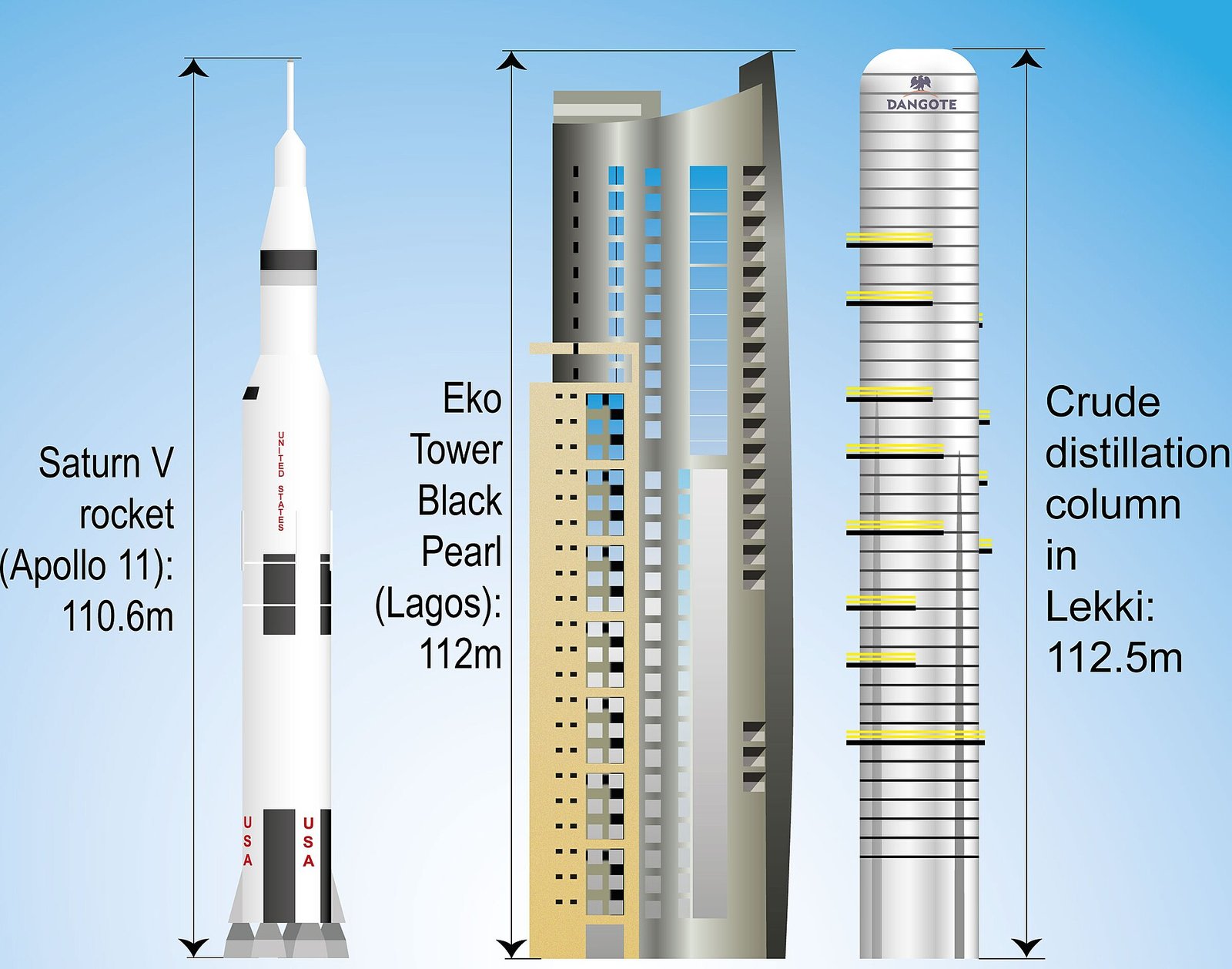
Its design capacity is 650,000 barrels of crude oil a day. For scale, that makes it the largest refinery in Africa. In June 2026 it processed 700,000 barrels a day during a performance test. Dangote puts the total investment at about US$20 billion.
On 14 September 2026 the refinery opened Africa’s largest share sale. It offers 4.1 billion new shares at 525 naira (about US$0.40) each. Fully sold, the offer raises 2.15 trillion naira (about US$1.62 billion). The smallest ticket is ten shares, or 5,250 naira (about US$3.96).
Those conversions use a rate of 1,325.32 naira to the US dollar on 25 September 2026, from market data.
For a sense of scale, the offer values the whole refinery at roughly US$47 billion to US$49 billion. That would make it the most valuable company on the Nigerian Exchange once listed.
The stake on sale is about 3.3 percent. Dangote stays by far the dominant shareholder. A private placement came first, in July 2026. It raised US$2.5 billion from investors including the Africa Finance Corporation, a development lender based in Lagos.
The July placement, not the public offer, is what lifted his net worth. Forbes valued him at US$31 billion before the placement and at US$51 billion when the offer opened. Nothing was sold for cash. The paper value of his refinery shares rose because outsiders agreed to pay a higher price for a small slice.
The business model
The Dangote model has three parts. First, build at a scale no local rival can match. Second, replace an import that Nigeria pays for in dollars. Third, press the government to protect the new plant.
The refinery follows that script. For decades Nigeria exported crude and imported most of its petrol, because its state refineries barely worked. Dangote set out to end that. The end of the petrol subsidy in May 2023 helped him by freeing fuel prices.
The empire is family-controlled and centred on one man. Dangote is president and chief executive of the group, and key decisions run through him. For outside investors, that concentration is both the attraction and the risk.
He also thinks continentally. His fertiliser group holds 60 percent of a planned urea complex at Gode in Ethiopia. The Ethiopian state investment arm holds the rest. He has also announced an expansion of the refinery to 1.4 million barrels a day, with target dates between 2028 and 2030.
Controversies and critics
The oldest charge is market power. Critics say Dangote companies dominate Nigerian cement and benefited from import restrictions. Dangote answers that the scale reflects investment in plants that nobody else built.
The refinery has turned that argument into a public fight. The main opponents are NNPC, the state oil company, and the NMDPRA, the regulator for fuel refining and distribution. The fight is about fuel import licences and crude supply.
In 2024 the refinery sued to cancel licences that let others import petrol and diesel. It withdrew that case in July 2025. In May 2026 it filed a new suit over import licences. In a court filing reported on 22 May 2026, NNPC accused the refinery of seeking a fuel monopoly. As of 27 September 2026 no final ruling has been reported.
Labour is the second flashpoint. In late September 2025 the refinery dismissed staff it accused of sabotage. The senior oil workers’ union, PENGASSAN, said more than 800 had been fired for joining it. It called a nationwide strike. Government-mediated talks ended the dispute on 1 October 2025. The affected workers were moved to other group companies without loss of pay.
The share offer has its own critics. The argument is not about access, since the minimum ticket is small. It is about price. BusinessDay’s editorial board put fair value well below the 525-naira offer price, after comparing the refinery with listed American refiners.
Regulators outside Nigeria have also stepped in. On 21 September 2026 Kenya’s Capital Markets Authority said the offer had never been submitted for its approval. It warned Kenyans to use only licensed intermediaries.
What to watch
The share offer closes on 13 October 2026. Allotment and listing on the NGX follow, with listing expected in November 2026. Watch whether the offer is fully taken up and where the shares first trade.
Our explainer on the refinery share offer sets out the mechanics and the valuation debate. Our report on the Kenyan regulator’s notice explains the warnings abroad.
The import-licence case is the second marker. A ruling either way would shape how much of Nigeria’s fuel market the refinery can supply.
Politics is the third. Nigeria votes for president on 16 January 2027. Dangote has worked with successive governments, but fuel pricing, crude supply and import rules all depend on who holds power.
The fertiliser listing, promised for 2028, and the refinery expansion are longer-dated tests. Both have already slipped once.
What this means for foreigners and investors
For investors, the offer is the first chance to own a piece of Dangote’s main asset directly. Foreign buyers can take part through authorised channels. The key document is the certificate of capital importation, which proves money entered Nigeria officially and allows it to leave again.
Our guide to investing in Nigeria explains how that works in practice.
A share purchase is not a bet on Nigeria alone. It is a bet on refining margins, on the naira and on one founder’s control. Minority holders will have little say.
For companies and residents, the refinery matters through fuel. Local production has changed where Nigeria buys its petrol, but it has not made fuel cheap. Pump prices still move with crude prices and the exchange rate.
Being Africa’s richest man does not mean Dangote sets national policy. He has lost arguments with regulators and with NNPC, and those disputes run through the courts.
Connected Coverage
Nigeria Explained: The Country, Tinubu’s Reforms and What to Watch
Taxes in Nigeria for Expats Under the New Regime
Bank Account in Nigeria for Foreigners
Buying Property in Nigeria as a Foreigner
Nigeria Safety for Expats 2026
Healthcare in Nigeria for Expats
Cost of Living in Lagos for Expats
Investing in Nigeria 2026: What Changed, What It Pays and What to Watch
Nigeria’s Dangote Says His Fertiliser Company Will List in 2028
Sources: Net worth from Forbes and Bloomberg, offer terms from the refinery’s offer documents and the Nigerian Exchange, cement capacity from Dangote Cement’s investor materials, and refinery milestones from Reuters and company statements.
- Forbes: Dangote real-time profile
- Forbes: Dangote 20 billion dollars richer as refinery offer opens
- Bloomberg: Dangote’s fortune set to jump on refinery offer
- Nigerian Exchange Group: refinery offer opens
- Reuters: refinery tops 700,000 barrels a day in test
- Reuters: NNPC accuses refinery of seeking fuel monopoly
- Dangote Cement: H1 2026 investor presentation
- P.M. News: US$2.5 billion private placement completed
- Argus: Nigeria resolves refinery labour dispute
- Channels Television: revised 2027 election timetable
What Is Not Known
What Dangote is actually worth. Forbes and Bloomberg differed by about US$16 billion in mid-September 2026. The gap comes from how each values the unlisted refinery. A market price will exist only once the shares trade.
His exact stake after the offer. Published figures range from the mid-80s to about 89 percent, depending on how the July placement and existing holders are counted. The final allotment will settle it.
Whether the refinery’s profits last. Figures reported from the offer documents show a first-half 2026 profit of about US$1.8 billion after earlier losses. Refining margins swing with world fuel prices, so one strong half-year is not a trend.
When the expansion to 1.4 million barrels a day will be finished. Company statements have named 2028, 2029 and 2030.
Frequently Asked Questions
Who is Aliko Dangote?
Aliko Dangote is a Nigerian industrialist and Africa’s richest person. He founded and runs the Dangote Group, which makes cement, fertiliser, sugar and salt and owns Africa’s largest oil refinery, near Lagos.
How much is Aliko Dangote worth?
Forbes put his net worth at US$51.7 billion on 26 September 2026, 35th in the world. Bloomberg’s index showed US$35.3 billion on 14 September 2026. The gap comes from how each values the unlisted refinery.
How big is the Dangote refinery?
It was built to process 650,000 barrels of crude oil a day and handled 700,000 barrels a day in a June 2026 performance test. Dangote plans to expand it to 1.4 million barrels a day before the end of the decade.
Can foreigners buy Dangote refinery shares?
Yes, through channels authorised for the offer, which runs from 14 September to 13 October 2026 at 525 naira (about US$0.40) a share. Foreign buyers need a certificate of capital importation to take dividends and sale proceeds out of Nigeria.
Is the Dangote refinery listed on the stock exchange?
Not yet. Its shares are due to list on the Nigerian Exchange after the offer closes on 13 October 2026, with listing expected in November 2026. Dangote Cement is already listed there.
Why is Dangote controversial?
Critics accuse his companies of dominating markets with government help. The refinery has fought NNPC and the fuel regulator in court over import licences, and in 2025 it clashed with an oil workers’ union over dismissals.
This article was produced by The Rio Times’ automated newsroom system. How we use AI · Report an error
Read More from The Rio Times