Senegal opens Dakar airport train, cutting the trip to 55 minutes
Senegal · EXPAT
Key Facts
- —The country Senegal is a French-speaking West African nation of about 19 million people. Its economy, roughly US$37 billion in 2025, is smaller than Vermont’s.
- —Why it matters Blaise Diagne International Airport, Senegal’s main gateway, sits about 50 km from central Dakar. Heavy road traffic has long made the transfer slow, costly and unpredictable.
- —Why now Dakar hosts the Youth Olympic Games from 31 October. About half of the 30,000 accredited athletes, officials and staff are expected to fly in from abroad.
- —What happened A 19 km extension of the TER, Dakar’s regional express train, reached the airport on Monday 28 September 2026.
- —The numbers The ride from central Dakar takes 55 minutes, with a train every 24 minutes. Second class costs 4,000 CFA francs (about US$6.90).
- —What it means for you Rail to the airport costs under US$15. One regular rider said the road trip could cost 40,000 CFA francs (about US$69).
- —Still open Reliability under Olympic crowds is untested. This phase ran nearly two years late, and a Thiès extension is promised for 2029.
Senegal has opened the Dakar airport train, cutting the trip from the capital to its international airport to 55 minutes. It arrives just weeks before Dakar hosts the Youth Olympic Games.
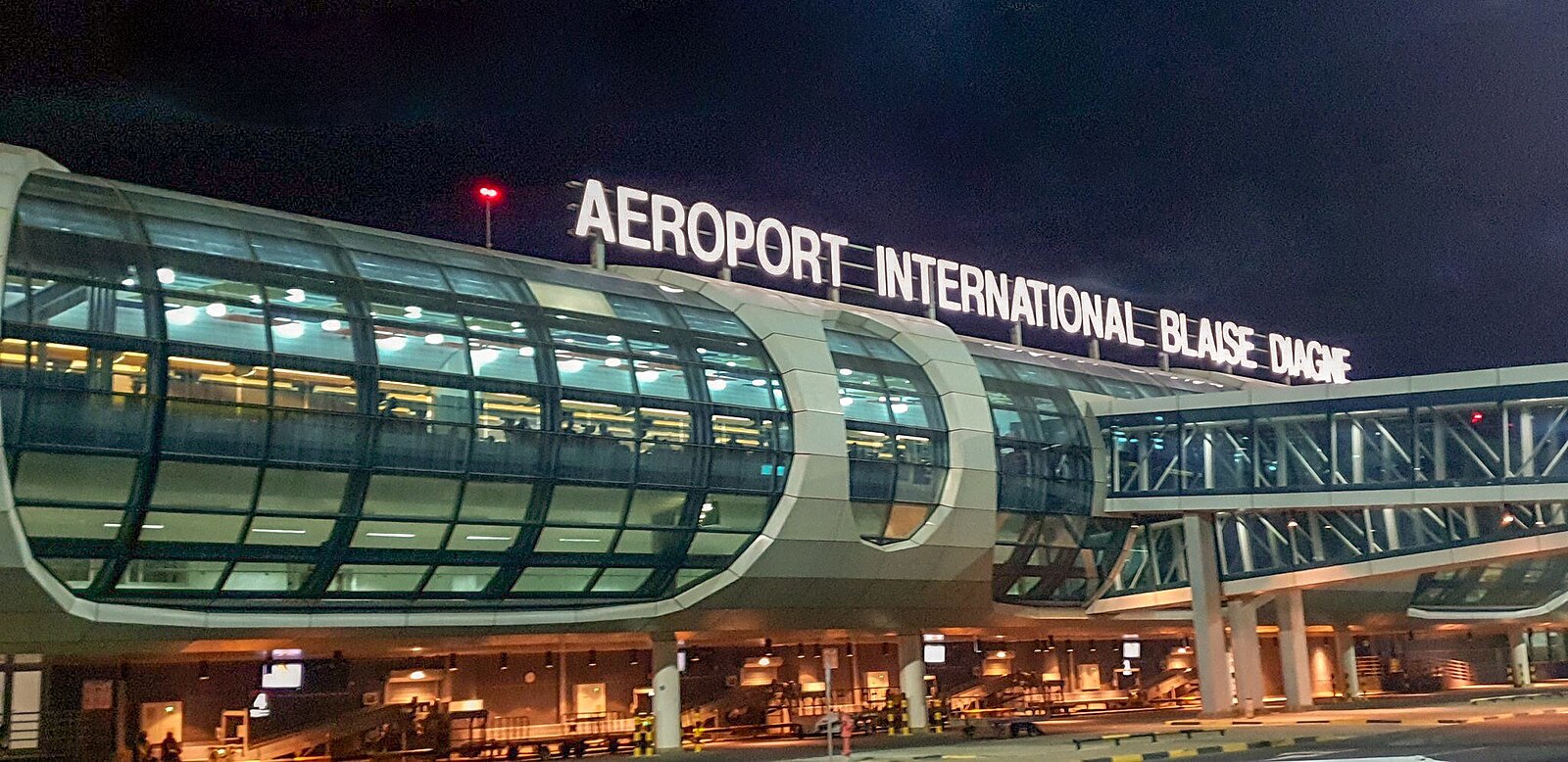
Senegal, a West African country of about 19 million people, has linked its capital to its main airport by rail. The TER (Train Express Régional), Dakar’s regional express train, began serving Blaise Diagne International Airport on Monday 28 September 2026.
The new 19 km section runs from the suburban hub of Diamniadio to the airport terminal. Passengers can now travel from central Dakar to the airport in 55 minutes, according to RFI, the French public broadcaster.
What the new rail link changes
Before Monday, the TER ran only between Dakar’s main station and Diamniadio, a new town on the city’s eastern edge. That first phase opened at the end of 2021 under the previous president, Macky Sall.
The airport stop now joins the 13 existing stations on the line. With the extension, the network covers about 55 km in total, the transport ministry said.
Trains leave Dakar for the airport every 24 minutes, RFI reported. The airport station sits right beside the arrivals terminal, so passengers walk straight from the platform to check-in.
Seven new dual-mode trains, able to run on electricity or diesel, were bought for this phase. The TER fleet now counts 22 trains, according to transport minister Abdoul Ahad Ndiaye.
Fares and the cost of the old trip
SeneNews, a Senegalese news site, and RFI reported a second-class fare of 4,000 CFA francs (about US$6.90). First class costs 7,500 CFA francs (about US$13).
A day later, RFI quoted a single ticket from the city centre at 5,000 CFA francs (about US$8.70). Regular passengers with a season pass pay 3,700 CFA francs (about US$6.40).
The CFA franc is the currency shared by eight West African states and is pegged to the euro. Conversions here use 576.8 CFA francs per US dollar (open.er-api.com, 29 September 2026).
For many families the saving is large. One regular rider told RFI that reaching the airport by road could cost almost 40,000 CFA francs (about US$69).
Why it opens now: the Youth Olympic Games
Dakar hosts the Youth Olympic Games from 31 October, the first Olympic event held in Africa. The train is the backbone of the transport plan for athletes and visitors.
About 30,000 people will be accredited for the Games, and roughly half are expected to come from abroad. “Everyone arrives at the airport,” said Ibrahima Wade, coordinator of the organising committee, speaking to RFI.
Delegations will take the train from the airport to venues in Diamniadio and Dakar. Athletes staying in the Olympic village will also use it to reach competitions, Wade said.
A project nearly two years late
Work on this second phase began in March 2022. The announced cost was 207 billion CFA francs (about US$359 million).
Opening was first planned for the end of 2023. The project then slowed for 11 months because of suspended payments, RFI reported.
An audit and trouble financing cost overruns caused further delay. The line finally opened almost two years behind schedule.
The final bill is about 300 billion CFA francs (about US$520 million), according to RFI and the Senegalese news site Senego. That is roughly 45% above the original estimate.
Lenders include the Islamic Development Bank and the Arab Bank for Economic Development in Africa. In 2023 they provided 56 billion CFA francs (about US$97 million) for this phase, Sika Finance reported.
A project that outlived a change of government
The TER was a flagship project of Macky Sall, who governed Senegal from 2012 to 2024. His successor, President Bassirou Diomaye Faye, took office in April 2024 and completed the airport section.
Transport minister Ndiaye framed the line as a tool against costly congestion. “We all know the cost of traffic jams for our citizens, but also for our economy,” he said at the opening.
For investors, the handover matters. A large transport project survived a change of government, even though its timetable and budget came under strain.
What it means for travellers and residents
For visitors landing in Senegal, the Dakar airport train offers a fixed journey time instead of an uncertain drive. That makes early flights and late arrivals easier to plan.
For residents along the line, the new stop adds an option for trips out of the city. The TER already carries about 90,000 passengers a day and hopes to reach 130,000.
A new station is also due at Sébikotane, between Diamniadio and the airport, after strong local demand, RFI reported. No opening date has been given.
What to watch next
The first test is the Youth Olympic Games, when thousands of visitors and delegations will use the line at once. Punctuality in those two weeks will shape its reputation.
The next phase aims to push the line about 20 km further to the city of Thiès by 2029. The European Union and the AFD, France’s development agency, are funding €10 million (about US$11.4 million) of studies.
The minister has also set a longer goal of 2,000 km of standard-gauge railway by 2050. For now, the airport link gives Dakar its clearest mobility gain in years.
For wider context on the region, see Africa: The New Scramble.
Frequently Asked Questions
How long does the train from Dakar to the airport take?
The Dakar airport train takes 55 minutes from the main station in central Dakar to Blaise Diagne International Airport. Trains leave every 24 minutes, and the airport station sits next to the arrivals terminal.
How much is a ticket?
Senegalese media and RFI reported 4,000 CFA francs (about US$6.90) in second class and 7,500 CFA francs (about US$13) in first class. RFI later quoted 5,000 CFA francs (about US$8.70) for a single ticket, so check the fare at the station.
What comes next for the TER network?
Senegal plans to extend the line about 20 km beyond the airport to Thiès, a target RFI reports for 2029. The EU and France’s development agency are funding €10 million (about US$11.4 million) of studies.
Connected Coverage
Sources
- RFI — Sénégal: le prolongement du TER vers l’aéroport de Dakar entre en service (28 Sep 2026)
- RFI — «C’est un vrai soulagement»: à Dakar, les usagers saluent le prolongement du TER (29 Sep 2026)
- SeneNews — TER: la liaison Dakar-AIBD officiellement lancée, voici les tarifs
- Senego — Le TER ouvre Diamniadio-AIBD au public pour plus de 300 milliards FCFA
- World Bank — Senegal population and GDP data
This article was produced by The Rio Times’ automated newsroom system. How we use AI · Report an error
LatAm Markets: Live Signals → — real-time movers, turnover leaders and FX across Latin America.
Read More from The Rio Times