Expats See Quito Living Costs at $1,500 to $3,000 a Month as Rental and Insurance Bills Bite
Guides · Ecuador
—The stakes. A realistic Quito budget for a single expat is now US$1,500–2,000 per month, while couples should plan on US$2,000–3,000 including housing and healthcare.
—The date. As of September 2026, Quito remains cheaper than major Western capitals but 15–25 percent more expensive than Cuenca, Ecuador’s main expat alternative.
—The neighbourhoods. Furnished two-bedroom rents in Gonzalez Suarez and Cumbaya run US$600–1,200 monthly, while La Floresta and Guapulo can start as low as US$400.
—The stability factor. Ecuador has used the US dollar since January 2000, keeping annual inflation between roughly 0.7 and 2.2 percent from 2023 to 2025 and removing currency risk.
—The comparison. Quito’s cost index excluding rent sits around 33, far below Bogotá and Lima when adjusted for lifestyle, though transport and imported goods still drive up daily spending.
Quito is a capital of strange contrasts for foreigners: its dollarized economy stops currency crashes, yet neighbourhood choices can swing monthly expenses by hundreds of dollars. A couple comfortable on US$2,200 in Cuenca will likely need US$2,500–2,800 to replicate the same lifestyle in the Ecuadorian capital.

Why Quito’s Dollarized Economy Reduces Expats’ Price Volatility
Ecuador adopted the US dollar as legal tender in January 2000, after the sucre lost about 67 percent of its value and inflation hit 91–96 percent in 1999.
The conversion was fixed at 25,000 sucres per US$1 by President Jamil Mahuad during the banking crisis.
Since then, average annual inflation has fallen dramatically: Cato Institute data shows 31.4 percent for 1975–1999 versus 3.4 percent for 2000–2024.
Recent years look even calmer, with inflation around 2.2 percent in 2023, roughly 1.5–1.6 percent in 2024, and 0.71–1.547 percent reported for 2024–2025 by different datasets.
For expats earning in US dollars, this means there is no exchange-rate risk in daily spending, a major advantage over neighbouring non-dollarized countries.
Rent, groceries, and services are denominated directly in dollars, so a US$400 apartment stays US$400 unless landlords raise prices.
President Daniel Noboa’s Decree 565 of March 18, 2025 formally ratified the US dollar as Ecuador’s sole legal currency and sought constitutional protection for the policy.
Public approval of dollarization runs near 90 percent, giving the system strong political and social support.
Realistic Monthly Budgets for Singles and Couples
A comfortable single expat can live well in Quito for US$1,500–2,000 per month, according to 2026 expat guidance.
Couples should plan on US$2,000–3,000 monthly depending on neighbourhood, lifestyle, and private health insurance choices.
A global nomad cost platform in September 2026 lists the base cost of living for one expat in Quito at US$1,194 per month, but this is a fairly austere benchmark.
Another global cost index from 2026 gives a frugal single budget of US$500 monthly, a typical expat budget of US$800, and a so-called Western expat budget of US$1,300.
Those lower figures assume shared or basic housing and very controlled spending, not the full-feature lifestyle most foreign residents actually choose.
A couple spending US$2,200 in Cuenca would need US$2,500–2,800 for a similar lifestyle in Quito, mainly because of higher rent and transport costs.
Healthcare choice is one of the biggest swing factors: a private insurance plan can add several hundred dollars to a monthly budget.
Expats who live in La Floresta or Guapulo and use public transit can stay near the bottom of these ranges, while Cumbaya families often exceed the top end.
Renting in Gonzalez Suarez, La Floresta, and Cumbaya
Gonzalez Suarez, a prestige ridge avenue with modern high-rises and panoramic valley views, commands the highest central rents.
A furnished two-bedroom there typically costs US$700–1,200 per month, though listings show US$800–1,000 as common and some luxury units at US$2,500.
La Floresta is a bohemian, walkable district popular with younger expats and digital nomads, with furnished two-bedroom rents of US$400–700.
Guapulo, an artistic hillside neighbourhood with narrow streets, offers similar two-bedroom rents from US$400 to US$700 monthly.
Cumbaya is the suburban valley favoured by expat families, embassy staff, and upper-middle-class Ecuadorians, with gated communities and international schools.
Furnished two-bedroom apartments in Cumbaya run US$600–1,200 monthly, while houses generally cost US$800–1,500.
La Carolina and Inaquilito, the business district with shopping malls and modern high-rises, fall in between at US$500–800 for a furnished two-bedroom.
For budget-minded expats, Centro Historico offers furnished two-bedrooms at US$300–500, but the colonial core carries more noise and security concerns.
Cheaper Districts and What They Offer
The Historic Centre remains the cheapest expat-friendly option in central Quito, with furnished two-bedrooms at US$300–500 monthly.
Working-class areas in the south and far north of the city generally offer lower rents, consistent with citywide outside-centre ranges of US$200–500 for a one-bedroom.
Numbeo data shows a typical one-bedroom outside the centre at US$317–341 monthly, with ranges down to US$200.
A three-bedroom outside the centre averages around US$498–560, but can be found from US$380 upward.
These lower-cost districts also tend to have cheaper lunch spots and local markets, shrinking food bills compared with La Floresta or Cumbaya.
The trade-off is usually longer commutes into central business areas and fewer services aimed at English-speaking residents.
Expats who prioritize saving money often start in Centro Historico or south Quito before relocating once they understand the city.
However, security-related costs can rise in cheaper areas, offsetting some savings if residents opt for private transport or additional door security.
Food, Groceries, and Restaurant Spending
Grocery prices in Quito are moderate by South American standards, with a litre of regular milk at US$1.08 and a 500g loaf of fresh white bread at US$1.61.
A kilogram of white rice costs about US$1.79, putting basic staples within easy reach of most budgets.
Local markets and neighbourhood stores in southern and far-northern districts offer lower prices than supermarkets in Cumbaya or La Carolina.
Imported goods remain expensive due to tariffs and logistics, even though dollarization prevents currency-driven price spikes.
Restaurant meals vary widely: a set lunch in a working-class area can cost very little, while dining near Gonzalez Suarez or in Cumbaya runs considerably higher.
Expats who cook at home and shop at local markets can keep monthly food costs to a fraction of those eating out regularly in expat-heavy zones.
Numbeo’s cost index excluding rent of around 33 reflects these moderate grocery and restaurant prices relative to major Western capitals.
A single person with a mixed eating pattern might budget several hundred dollars monthly for food, depending on imported product reliance.
Private Health Insurance and Medical Costs
Private health insurance is one of the largest variable costs for expats in Quito, alongside rent and transport.
Ecuador has both public healthcare through the state system and private clinics concentrated in Quito’s business and upscale districts.
Expats typically use private facilities, which are less crowded and offer faster access to specialists.
Monthly premiums depend on age, coverage level, and pre-existing conditions, with older expats paying significantly more.
Some foreigners choose a high-deductible international plan combined with local out-of-pocket payments at private clinics.
Without insurance, a specialist consultation at a private Quito clinic can cost far less than in the United States, but hospital procedures add up quickly.
The US$2,000–3,000 couple budget range already assumes some form of private coverage, while a US$1,500 single budget may only cover a basic plan.
For long-term residents, a local private insurance policy is generally cheaper than an international expat plan with evacuation coverage.
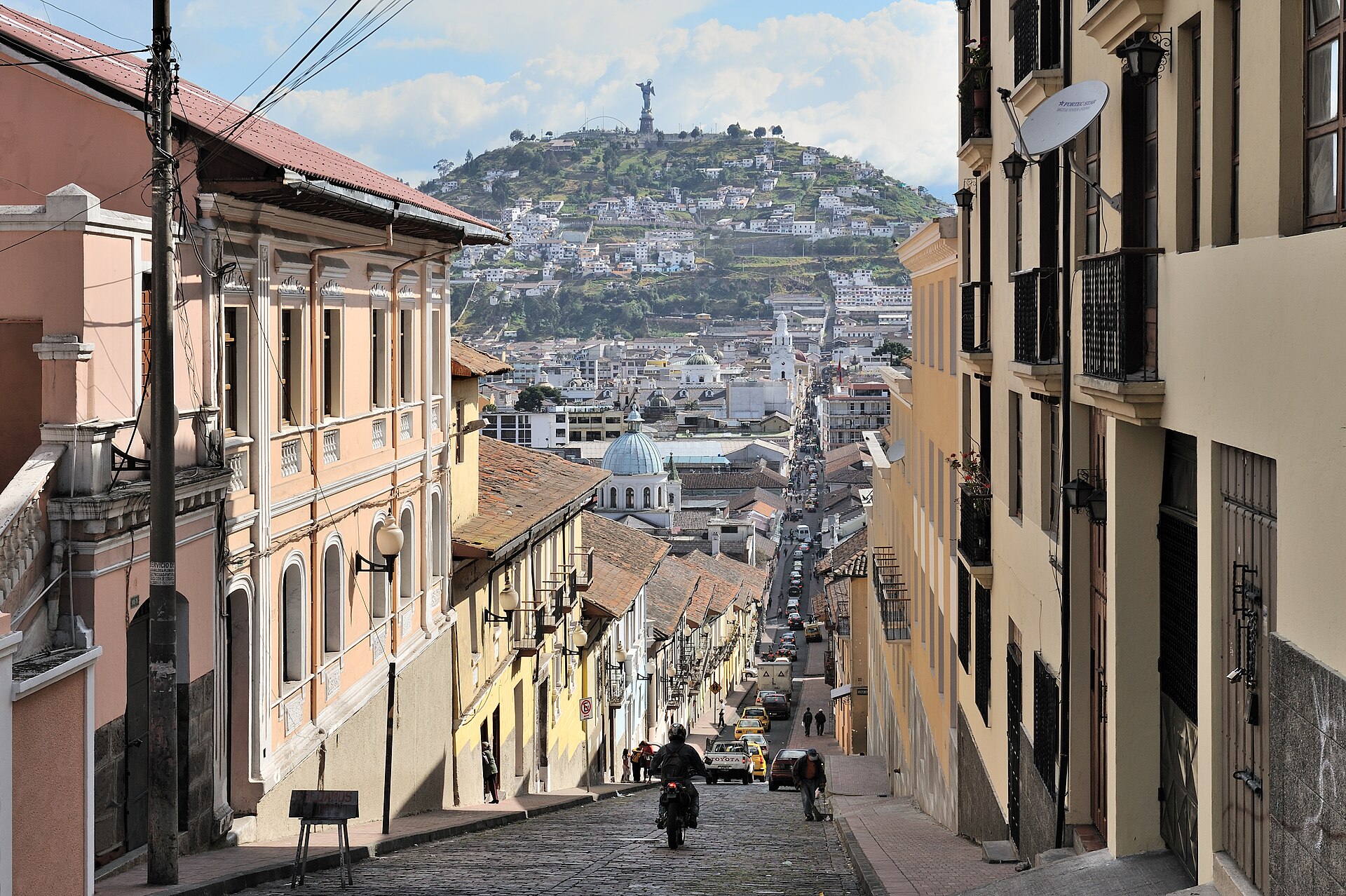
Transport, Fuel, and Getting Around the City
Quito’s transport system includes municipal buses, the Trolebus rapid bus corridors, and the Quito Metro, which began operating in recent years.
Public transport fares are low by regional standards, making it the cheapest way to move through the narrow valley city.
Taxis and ride-hailing apps are widely used by expats, especially at night or when travelling to security-sensitive areas.
Two-bedroom rents in Cumbaya often come with the need for a private car, due to distance from central Quito and less dense public transit coverage.
Fuel prices in Ecuador are heavily regulated, keeping private vehicle operating costs relatively stable.
Rush-hour traffic in Quito’s north-south valley corridor can be severe, making commute time a hidden cost for those living in cheaper peripheral districts.
Expats in La Floresta or La Carolina can often walk to cafes, offices, and services, saving on transport compared with Cumbaya residents.
Monthly transport budgets vary from under US$50 for heavy public transit users to several hundred dollars for ride-hailing and private vehicles.
Altitude, Climate, and Security-Related Living Costs
Quito sits at roughly 2,850 metres above sea level, high enough to cause shortness of breath, fatigue, and headaches for the first days or weeks after arrival.
The Equatorial altitude also means intense ultraviolet radiation year-round, requiring sun protection at all times.
Climate is generally spring-like throughout the year, but cool nights and strong sun can surprise newcomers, affecting clothing and utility choices.
Security is a real consideration in Quito, with expats often choosing apartments in buildings with 24-hour door staff or gated access.
Many upscale buildings in Gonzalez Suarez and La Carolina advertise private security, doormen, and controlled parking as standard features.
These security features are built into rents, which partly explains why furnished two-bedrooms range from US$400 in La Floresta to US$1,200 in Gonzalez Suarez or Cumbaya.
Expats in cheaper districts may spend more on taxis after dark or private security upgrades, narrowing the apparent rent advantage.
Altitude-related health costs, such as oxygen or medication for severe altitude sickness, can hit in the first week but rarely repeat.
Domestic Staff, Services, and Everyday Help
Live-in and part-time domestic help remains common among expat families in Quito, especially in Cumbaya and Gonzalez Suarez.
Weekly cleaning services are widely available and far less expensive than equivalent help in North America or Europe.
Monthly costs depend on hours, duties, and whether the worker lives in, but even full-time help is within reach of an upper-end couple budget.
Childcare and nanny services are similarly accessible, with local rates reflecting Ecuador’s lower overall wage structure.
Ecuador’s minimum wage rose from US$56.70 in 2000 to US$536.60 in 2024, providing a baseline for domestic staff expectations.
Employers of domestic workers must comply with local labour rules, including social security registration in many cases.
The US$3,000 couple budget can comfortably include weekly cleaning and child-related help; a US$1,500 single budget may only afford occasional cleaning.
Expats who do not hire help save substantial money, as service labour is a common lifestyle upgrade rather than an essential cost.
How Quito Compares with Cuenca, Bogotá, and Lima
Quito is 15–25 percent more expensive than Cuenca for a comparable lifestyle, with rent and transport driving most of the gap.
A couple spending US$2,200 per month in Cuenca can expect to need US$2,500–2,800 in Quito.
Cuenca’s compact historic centre and walkable layout reduce transport costs, while Quito’s long valley layout increases them.
Quito’s cost of living index excluding rent sits around 33–34, far below major Western capitals but higher than Cuenca.
Bogotá, with Colombia under President De La Espriella, has a competitive expat scene but faces currency and security fluctuations that Ecuador’s dollarization avoids.
Lima, under President Fujimori in Peru, generally offers lower rents for similar housing stock but adds exchange-rate risk and higher security costs in some districts.
Against Bogotá and Lima, Quito’s key advantage is dollar-denominated stability alongside moderate inflation of 0.7 to 2.2 percent in 2023–2025.
For foreigners earning US dollars, Quito’s predictability often outweighs the slightly lower nominal rents available in non-dollarized regional capitals.
More: Ecuador news in English, every day from The Rio Times.
Neighbourhood Strategies to Control Total Monthly Spending
Choosing La Floresta or Guapulo over Gonzalez Suarez can cut US$300–500 from monthly rent while keeping central neighbourhood walkability.
A furnished two-bedroom in La Floresta at US$400–700 costs roughly half of a comparable Gonzalez Suarez unit at US$700–1,200.
Living in Centro Historico for US$300–500 monthly frees up budget for private health insurance or domestic help, but adds noise and security costs.
Cumbaya makes sense for families needing international schools, despite rents of US$600–1,200 for apartments and US$800–1,500 for houses.
Using public transport and cooking at home can keep a single’s total at the US$1,194–1,500 level even in central districts.
Couples who rent in La Carolina at US$500–800 and avoid private cars can stay near the bottom of the US$2,000–3,000 range.
The biggest controllable costs are housing, private insurance, and transport, in that order, with food a distant fourth for most foreign residents.
Any neighbourhood strategy should weigh security: a cheaper district may require more spending on taxis and building upgrades than the rent alone suggests.
Connected Coverage
Los Tiguerones Designated Terrorists as Ecuador Escalates Security Buildup
Fuse Failure Shuts 161 Ecuador Oil Wells at Referendum-Hit ITT Block
The Big Picture
This article was produced by The Rio Times’ automated newsroom system. How we use AI · Report an error · Editorial responsibility: Matthias Camenzind, Editor-in-Chief
The Quito Guide
What The Rio Times publishes for foreigners in Quito, Ecuador.
This month
Coming up in Quito
- Def Leppard in Quito, Ecuador: Rock Legends at the Estadio Olímpico Atahualpa on October 30, with Extreme 30 Oct
- Carlos Rivera and Reik in Ecuador: Joint Tour Plays Quito on 5 November and Guayaquil on 7 November 5 Nov
- Shakira in Quito, Ecuador: Three Stadium Nights at Estadio Olímpico Atahualpa on November 8, 9 and 11 8 Nov
- Soy Luna Ecuador: Guayaquil on 12 November, Quito on 14 November 14 Nov
Living in Quito
Understand Ecuador