Paul Biya Reintroduces Vice President Role as Cameroon Succession Fight Intensifies
Politics · Cameroon
—The stakes. Biya’s victory at 92 and a succession bill concentrating power have turned Cameroon’s leadership transition into an open contest inside the ruling system.
—The mechanics. A 2026 constitutional amendment creates an unelected vice-president who would automatically complete Biya’s current term if he dies or leaves office.
—The court politics. Dynastic speculation centres on Franck Biya and Franck Hertz, while regime figures Ferdinand Ngoh Ngoh and Laurent Esso also hold influence.
—The economic toll. Anglophone separatist violence continues to weigh on plantations, logistics routes and investor confidence in the south-west and north-west regions.
—The regional logic. Cameroon’s dominance in CEMAC and its role in the Chad-Cameroon pipeline make domestic instability a risk for the wider Central African economic zone.
Paul Biya’s re-election in October 2025 at age 92 has not resolved the central question facing Cameroon. Instead, a 2026 constitutional bill reintroducing an appointed vice-president has turned the long succession watch into a structural crisis for the country’s ruling system and for foreign investors.
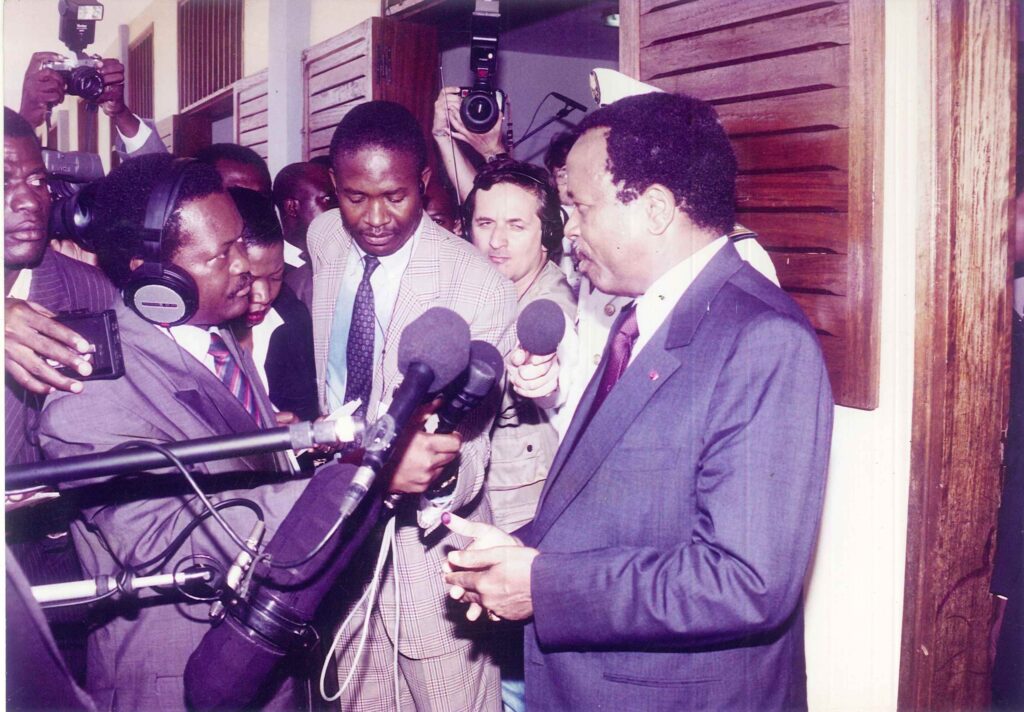
The 2025 Vote That Extended a Four-Decade Rule
Cameroon held presidential elections on 12 October 2025, with the Constitutional Council announcing official results on 27 October.
Paul Biya, born 13 February 1933 in Mvomeka’a, secured an eighth term with 53.66% of the vote, or 2,474,179 ballots.
The New York Times called the 92-year-old Biya the world’s oldest serving president, noting his new mandate could take him close to 100.
Main challenger Issa Tchiroma Bakary of the Cameroon National Salvation Front won 35.19% of the vote, or 1,622,334 ballots.
Tchiroma had declared himself the winner on election day, claiming between 54.8% and 55% of votes and alleging massive fraud.
Post-Election Protests and a Swift Crackdown
Human Rights Watch documented at least four people killed, dozens injured and hundreds arrested after the official proclamation.
The Chatham House analysis framed the repression as a sign that suppression cannot solve the country’s looming succession crisis.
The African Union Commission chairperson, Mahmoud Ali Youssouf, congratulated Biya on 28 October 2025.
That international recognition contrasted with domestic protests over the conduct of the vote and the ageing leadership’s refusal to plan a transition.
For investors, the crackdown signalled that political risk in Cameroon had moved from election-period volatility to an open transition question.
The Vice President Bill and the New Succession Rules
On 2 April 2026, Parliament examined a draft constitutional bill submitted by Biya to reintroduce the position of Vice President of the Republic.
Reuters reported that the vice-president would be appointed and removed by the president, not elected by popular vote.
In case of death, resignation or permanent incapacity of the president, the appointed vice-president would automatically complete the ongoing presidential term.
Elections would only be triggered if the vice-president himself became unable to serve, a major change from the previous interim role held by the President of the Senate.
The interim president would also be barred from initiating constitutional amendments or seeking election under the draft text.
A Constitutional Rewrite Without Popular Legitimacy
The Social Democratic Front, Cameroon’s main opposition party, rejected the bill as undemocratic.
The SDF insisted that the president and vice-president should be elected on a single ticket by the people.
The Human Rights and Law Research Centre described the change as rewriting succession rules to concentrate power in Biya’s hands.
The Guardian reported in June 2026 that parliament’s April vote had reignited a long-running debate over who would follow Biya.
Biya was 93 by mid-2026, and the amendment reinforced the perception that succession would be managed from within the presidential palace.
The Two Francks and the Palace Factions
Speculation over the vice-presidency has focused on Franck Biya, the president’s son from his late first wife Jean-Irène Biya.
Franck Hertz, a son of current First Lady Chantal Biya, is the second dynastic option named by The Guardian.
Chantal Biya is often called ‘Madame President’ because of her influence inside the ruling system.
Powerful non-family figures named as possible contenders include Ferdinand Ngoh Ngoh, Secretary General of the Presidency.
Paul Atanga Nji, Minister of Territorial Administration, and Louis-Paul Motazé, Minister of Finance, complete the shortlist cited by The Guardian.
The Anglophone Conflict’s Economic Weight
The separatist conflict in Cameroon’s Anglophone regions has been a persistent drag on local production and trade since 2017.
Plantations, transport corridors and market towns in the South-West and North-West regions have faced displacement and disruptions.
The conflict complicates agricultural supply chains, particularly for rubber, palm oil and cocoa, which depend on reliable logistics and labour.
Businesses operating near the Nigerian border also face higher security costs and intermittent curfews or roadblocks.
This instability reduces the attractiveness of Cameroon as a diversified entry point into Central African markets.
Oil and Timber Revenue Under Pressure
Cameroon’s oil and gas sector remains a core source of state revenue, though production from mature fields has been declining.
Timber exports, especially from the Congo Basin forest zone, are increasingly exposed to European due-diligence rules and logging restrictions.
Royalties and taxes from extractive industries feed the public budget but have not translated into broad infrastructure gains in Anglophone zones.
The government faces external pressure to improve transparency in contracts and revenue management in both sectors.
Any prolonged political paralysis could delay licence renewals and new exploration commitments.
The Chad-Cameroon Pipeline and Regional Energy Logic
The Chad-Cameroon pipeline remains a strategic piece of infrastructure linking landlocked Chad’s oilfields to the Atlantic coast.
Cameroon earns transit fees and port revenue from the Kribi terminal, channeling Chadian crude to international markets.
The pipeline is a physical reminder of Cameroon’s role as a gateway for Central African energy exports.
Political stability in Yaoundé is important for pipeline security and for contractual continuity with Chadian operators and offtakers.
Instability in Cameroon would affect more than its own budget, touching energy supply chains across the sub-region.
CEMAC Ties and the CFA Franc System
Cameroon is the largest economy in the Central African Economic and Monetary Community, known by its French acronym CEMAC.
CEMAC uses the Central African CFA franc, pegged to the euro and backed by the French treasury.
Cameroon’s weight inside the bloc means its fiscal and monetary discipline influences conditions for Gabon, Chad, Congo-Brazzaville and Equatorial Guinea.
Investors often treat Cameroon as a proxy for regional stability within CEMAC, including banking and payment-system risks.
A disorderly succession could complicate negotiations over reserve pooling and regional infrastructure financing.
Why Foreign Investors Should Treat Succession as a Structural Risk
The succession bill concentrates authority in a single appointed figure, reducing predictability around the next transfer of power.
The lack of an electoral mandate for the vice-president raises governance concerns for lenders, insurers and equity investors.
Post-election violence and the hardening of palace politics point to a period of recurring market-sensitive headlines.
Long-term investors in infrastructure, energy and agriculture should scenario-test for sudden leadership change and transitional legal uncertainty.
Even without a sudden rupture, the move to institutionalise an unelected successor changes how capital views Cameroon’s political risk premium.
The Long Watch Continues
Cameroon has now entered a phase where the formal succession mechanism exists but the identity of the successor remains unknown.
The ruling system is balancing dynastic ambition against the influence of appointed loyalists who control key ministries and security structures.
Biya’s age and the contested 2025 mandate mean every legal or health-related development will be scrutinised beyond Cameroon’s borders.
International partners, including France and CEMAC neighbours, are watching without publicly intervening in the internal debate.
Central Africa’s longest succession watch is no longer a background concern but a defining variable for the country’s economic outlook.
The Big Picture
Latest developments
- Central Africa’s BDEAC Bond Raises US$222M — 16 October 2026
- Kabila FRN Armed Group Explained: Reactions and Ban — 16 October 2026
- DR Congo Cannot Trace US$700M Ebola Funds — 15 October 2026
- DR Congo Ebola Aid Over US$700M Unreported — 15 October 2026
This article was produced by The Rio Times’ automated newsroom system. How we use AI · Report an error · Editorial responsibility: Matthias Camenzind, Editor-in-Chief
Expat Guide to Cameroon
What The Rio Times publishes for foreigners who live in or move to Cameroon.
Understand Cameroon
Read More from The Rio Times