Argentina Explained 2026: Milei’s Experiment, the Economy and What to Watch
GUIDES · ARGENTINA
Key Facts
- —Capital Buenos Aires, an autonomous federal district with its own government and its own directly elected head of government, separate from the surrounding province.
- —Population 46.2 million, from the 2022 census with its undercount adjustment. International estimates run a few hundred thousand lower.
- —Currency The peso, and there is more than one price for it. On 23 September 2026 the wholesale reference rate was 1,516 to the US dollar and the parallel rate about 1,555.
- —Language Spanish. Argentine Spanish uses vos rather than tú, and the accent is closer to Italian than to any other Spanish in the region.
- —Economy Grain, beef, shale oil and gas from Vaca Muerta, lithium and a large software and services sector. Argentina has defaulted on sovereign debt nine times.
- —Government A federal presidential republic. Four-year terms with one consecutive re-election allowed, 257 deputies and 72 senators, and no prime minister.
Argentina explained without the noise: what the stabilisation programme actually did, what it has not done, and the dates that will decide whether it holds.
Argentina explained in 2026 means explaining one experiment. A libertarian economist took office promising to end chronic inflation by cutting the state, and three years in the monthly numbers have fallen a long way while the twelve-month numbers have stopped falling. Both of those things are true at once.
What kind of country is this?
Argentina runs nearly 3,700 kilometres from the subtropical north to Tierra del Fuego. The core of it is the pampas, a flat, deep-soiled plain around Buenos Aires that is among the most productive farmland anywhere. West of that is the Andes and the lithium triangle. South is Patagonia, with Vaca Muerta underneath it.
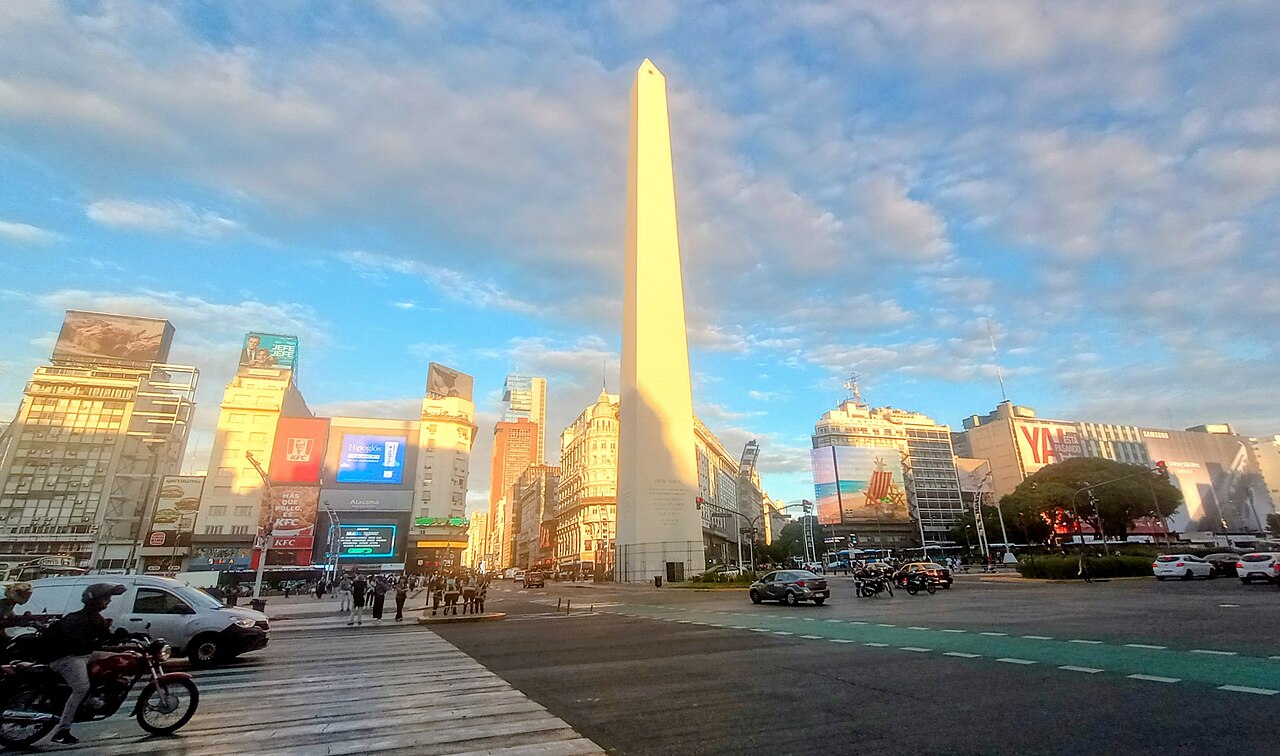
Almost all of the population lives in cities, and roughly a third of it in greater Buenos Aires alone. That concentration matters politically. A president who loses the province of Buenos Aires has lost most of the argument. It is why national politics so often looks like a fight between one metropolitan area and everywhere else.
The country was among the ten richest in the world per head in the early twentieth century. It is not now. Between then and now sit military coups, Peronism, the dictatorship from 1976 to 1983, the return of democracy, and nine sovereign defaults. That long descent is the backdrop against which Argentines assess any new economic plan, and it explains a scepticism that outsiders often read as pessimism. Any honest Argentina explained guide starts there rather than with the current headline.
Who runs Argentina and how
Javier Milei, an economist who describes himself as an anarcho-capitalist, has been president since 10 December 2023, elected at the head of La Libertad Avanza. He inherited monthly inflation of 25.5 percent and an annual rate of 211.4 percent in his first month in office.
Congress has 257 deputies, half renewed every two years, and 72 senators, a third renewed every two years. The midterm elections of 26 October 2025 were the hinge of the term. Milei’s party took 40.66 percent and 64 of the 127 contested lower-house seats against 33.70 percent for the Peronist bloc, on the lowest turnout of any national election since 1983.
What that changed is worth stating precisely, because it is widely overstated. From 10 December 2025 La Libertad Avanza became the largest bloc in both chambers. It still has no majority. In the Chamber it holds 95 seats against 93 for the Peronists, with the rest scattered across Provincias Unidas, the PRO, the radicals and a long tail of provincial parties. Every law is still a negotiation with governors.
That is the standing feature of Argentine government rather than a quirk of this one. Provinces control their own revenue shares and their own legislators, so a president bargains with governors the way a Brazilian president bargains with party blocs. Anyone assessing a reform announcement should ask first whether the governors are in it.
How the economy works
Argentina sells grain, soy products, beef, and increasingly oil and gas. Vaca Muerta, the shale formation in Neuquén, has turned a net energy importer back into an exporter. Lithium from the northwest and a substantial software and business-services export sector sit alongside that. The agricultural export tax, called retenciones, is a permanent political argument because it funds the state and squeezes the sector that earns the dollars.
The stabilisation programme has two legs. The first is a hard fiscal anchor. Through August 2026 the Treasury had accumulated a primary surplus of 1.1 percent of output and an overall surplus of 0.2 percent. The International Monetary Fund target for the year is 1.4 percent primary. The second leg is a managed exchange rate inside a band whose limits reset monthly by past inflation.
On inflation the arc is real and the caveat is important. Monthly inflation ran at 25.5 percent in December 2023, 2.7 percent in December 2024, 2.8 percent in December 2025 and 1.7 percent in August 2026, a fourteen-month low. But the twelve-month rate rose over 2026, from 31.5 percent at the end of 2025 to 33.5 percent in August. Disinflation has stalled on an annual basis even as the monthly print improved.
There is no policy interest rate to quote. The central bank abolished its formal policy rate in July 2025 and moved to steering monetary aggregates through open-market operations, repos and reserve requirements. Anyone citing an Argentine policy rate after mid-2025 is quoting a series that stopped being updated.
Markets have turned less friendly through September 2026. Country risk rose for eight consecutive sessions to around 556 to 566 basis points on 23 September, a five-month high and more than 150 points above July’s low. Reserves fell US$481 million in a single day to US$48.9 billion. The programme is not in crisis, and it is not comfortable either.

What is happening right now
As of 24 September 2026 the poverty figure for the first half of the year is the number everyone is waiting for. The last official reading was 28.2 percent for the second half of 2025, the lowest since 2018. Private estimates for the first half of 2026 cluster between 30 and 32 percent, which would mean between 1.5 and 1.7 million more people below the line since December. The official number had not been published when this guide was written.
The second story is American money. On 23 September 2026 the two governments launched the Andes-Atlantic Corridor, the first Western Hemisphere corridor under the Partnership for Global Infrastructure and Investment. The United States export credit agency is to provide financing of up to US$7 billion by 2027. A separate non-binding term sheet of up to US$6 billion is attached to the US$51 billion Argentina liquefied natural gas project in Vaca Muerta.
The third is the International Monetary Fund. A technical mission for the third review under the Extended Fund Facility arrived on 21 September 2026. On the precedent of the second review, a staff-level agreement would be followed by board approval about five weeks later. No board date has been announced.
Underneath all three sits the exchange-rate question. The peso is trading well below its band ceiling, which looks comfortable. But corporate hedging against the dollar roughly doubled to about US$12 billion between March and August 2026, and the central bank has slowed its own dollar purchases. That combination is what analysts are watching, not the spot rate.
What to watch
The statistics institute publishes on a fixed calendar and those dates are the spine of the year. Consumer prices for September land on 13 October 2026, October’s on 12 November and November’s on 15 December. Monthly activity data follow on 21 October, 24 November and 21 December. Third-quarter output arrives on 16 December.
The exchange-rate band resets every month, with the ceiling set by inflation two months earlier. The October 2026 ceiling is already fixed at 1,951.50 pesos to the dollar, up from 1,919.63 in September. November’s ceiling will be set by the September inflation print published on 13 October. That mechanism is public, so the band’s path is knowable even when the peso’s is not.
Then there is the third Fund review, which has no published board date, and beyond that the general election of October 2027. Between now and then the practical test is whether the fiscal surplus survives a year in which real wages have fallen and poverty has risen. That is the tension the whole programme rests on.
What this means for foreigners
The rules changed sharply in 2025 and a lot of published guidance is now wrong. A decree of 29 May 2025 requires non-permanent residents to hold health insurance or pay for public health services. It ends free public university for anyone who is not a citizen or permanent resident. It requires permanent-residency applicants to show sufficient means and a clean record, and it moves citizenship decisions from the courts to the migration authority. Emergency care remains free regardless of status. This is the Argentina explained change that most outdated guides miss.
The common route for people with passive income is the rentista temporary residency. It requires proof of income from assets rather than from work, at five times the statutory minimum wage, and the minimum wage is indexed, so the threshold moves. You will also need an Argentine police certificate and foreign police certificates from anywhere you lived a year or more in the last three. Documentation that the money entered through authorised financial institutions is required too.
Tax residency works on a longer clock than most countries. A foreigner living in Argentina for reasons other than work becomes a tax resident after more than twelve months, with residency taking effect from the thirteenth. That is more forgiving than the 183-day tests common elsewhere in the region, and it is one reason Argentina appears on remote-worker shortlists despite everything else.
On daily costs, the honest answer is that they depend on which exchange rate you live on. The gap between the official and parallel rates has narrowed to a few percent. That is historically unusual, and it removes the arbitrage that once made Buenos Aires extraordinarily cheap for dollar earners. Say it plainly: the country is no longer the bargain it was in 2023, because the peso is closer to being one currency again.
Connected Coverage
Sources: Inflation, poverty and the release calendar from INDEC, exchange rates, reserves and monetary data from the central bank, fiscal results from the economy ministry, residency rules from the national migration directorate and the official gazette, and the corridor agreement from the United States State Department.
- INDEC — consumer price index, August 2026
- INDEC — dissemination calendar, second half of 2026
- Banco Central de la República Argentina — public statistics API
- Argentine government — population and census figures
- Dirección Nacional de Migraciones — temporary residency as a rentista
- Boletín Oficial — Decree 366/2025 on migration, health cover and citizenship
- United States Department of State — Andes-Atlantic Corridor fact sheet
- International Monetary Fund — second review under the Extended Fund Facility
What Is Not Known
The official poverty rate for the first half of 2026. It was due for publication on the day this guide was written and had not appeared. Private estimates cluster at 30 to 32 percent against 28.2 percent officially for the second half of 2025. Alternative methods that update the consumption basket and account for rent would put it far higher, and that methodological dispute is itself unresolved.
Whether inflation is still falling. The monthly print hit a fourteen-month low of 1.7 percent in August 2026, but the twelve-month rate rose from 31.5 percent at the end of 2025 to 33.5 percent. The 21.3 percent accumulated in eight months annualises to roughly 33 percent, which makes the Fund’s projection of around 25 percent for the year look out of reach.
The growth number for 2026. Three credible forecasters give three answers: the Fund projected 3.5 percent in May 2026, the OECD cut to 2.6 percent in September, and market consensus had fallen to about 2.1 percent by mid-September. Second-quarter output fell 0.6 percent on the quarter. There is no settled figure.
Whether the exchange-rate band holds to the October 2027 election. The peso sits well below the ceiling, which reads as comfort. Against that, corporate dollar hedges roughly doubled to about US$12 billion between March and August 2026, the central bank has slowed its purchases, and country risk has risen more than 150 basis points since July. This is the central open question of the programme.
Whether the remaining capital controls on companies are lifted. The central bank’s president said in May 2026 that it is not among their priorities, and no timetable has been published. That directly affects whether a foreign company can repatriate profits earned before 2025.
Frequently Asked Questions
Who is the president of Argentina and what is he trying to do?
Javier Milei, an economist who calls himself an anarcho-capitalist, in office since 10 December 2023. His programme rests on a hard fiscal surplus and a managed exchange-rate band, aimed at ending the chronic inflation he inherited at 211.4 percent a year.
Has inflation in Argentina actually come down?
On a monthly basis, a long way: from 25.5 percent in December 2023 to 1.7 percent in August 2026. On a twelve-month basis it has stalled and even risen, from 31.5 percent at the end of 2025 to 33.5 percent in August 2026. Both statements are true and they describe different things.
What is the exchange rate in Argentina?
There is more than one. On 23 September 2026 the wholesale reference rate was about 1,516 pesos to the US dollar and the parallel rate about 1,555. The gap has narrowed to a few percent, which is historically unusual.
Can foreigners still use free healthcare and universities in Argentina?
Not as before. A decree published on 29 May 2025 requires non-permanent residents to hold health insurance or pay for public health services, and ends free tuition at state universities for anyone who is not a citizen or permanent resident. Emergency care remains free regardless of status.
When does a foreigner become an Argentine tax resident?
After more than twelve months of living in the country for reasons other than work, with residency taking effect from the thirteenth month. That is a longer runway than the 183-day tests used in much of the region.
What does Argentina export?
Grain, soy products and beef above all, and increasingly oil and gas from the Vaca Muerta shale formation in Neuquén. Lithium from the northwest and a sizeable software and business-services sector sit alongside them.
This article was produced by The Rio Times’ automated newsroom system. How we use AI · Report an error
In depth
Read More from The Rio Times