
BRAZIL · US RELATIONS
Key Facts
- —What is happening Brazil’s President Lula won re-election on Sunday, 25 October 2026, while the United States charges new 25% and 12.5% tariffs on Brazilian goods and calls two Brazilian gangs terrorist groups.
- —Why it matters The United States is Brazil’s largest foreign investor and a major trading partner, so tariffs, sanctions and visa fights move Brazilian farm exports, jobs and the earnings of US companies.
- —The numbers US goods exports to Brazil were US$54.33 billion in 2025 against imports of US$39.88 billion, and US imports from Brazil fell 17.2% in January to August 2026.
- —Who is who Lula leads the left-wing Workers’ Party and beat conservative senator Flávio Bolsonaro; Jamieson Greer, the US Trade Representative, runs the tariff cases, and Marco Rubio is Secretary of State.
- —What to watch Watch the start of Lula’s new term on 5 January 2027, any deal to lift the 25% tariff, a Brazilian response under its reciprocity law, and steps against the gangs.
- —What it means for you American importers pay an extra 25% and a separate 12.5% on many Brazilian goods, though beef, green coffee, orange juice, crude oil and civil aircraft are exempt, and travellers should check entry rules.
- —Prediction markets Polymarket prices a combined bet of a Lula win (already settled), Gadi Eizenkot as Israeli prime minister and a Democratic Senate at 44.5% (27 October, 9:39 a.m. ET). Polymarket puts Flávio Bolsonaro’s chance of winning at – and Kalshi at 0% (Lula: – and 100%), as of 25 October, 11:40 pm ET; prices are bets, not polls.
- —Power Index Brazil ranks 1st of 14 in The Rio Times Latin America Power Index, with 75.0 points (October 2026 edition).
Live tonight
Brazil’s runoff, live
The official TSE count for Flávio Bolsonaro and Lula, updated every minute (voting closed at 7 p.m. Brasília, 6 p.m. ET).
Brazil runoff polls · Polymarket and Kalshi odds · When results come · Brazil election poll data (CSV)
Tariffs, sanctions, gang labels and a re-elected president shape the relationship. Here is where Brazil and the United States stand in October 2026.
Brazil US relations in October 2026 are tense but tightly tied together. Luiz Inácio Lula da Silva won re-election on 25 October, while Washington charges two new tariffs on Brazilian goods.
More coverage sits on the Rio Times Brazil page. All amounts here are in US dollars, so no currency conversion is needed.
Brazil US Relations at a Glance
Brazil is South America’s largest economy, with US$2.28 trillion of output in 2025 and 212.8 million people, the World Bank says. The United States is its largest foreign investor, the US government’s 2025 Investment Climate Statement says.
The list below sums up each strand of the relationship using only what official records confirm. Details and dates follow in the sections after it.
- Tariffs: a 25% US tariff since 22 July 2026 and a separate 12.5% forced-labour tariff since 24 July 2026, each with long exemption lists.
- Sanctions: the US lifted its Global Magnitsky sanctions on Supreme Court Justice Alexandre de Moraes on 12 December 2025.
- Security: Washington named two Brazilian gangs foreign terrorist organizations on 5 June 2026, and Brazil stays a major non-NATO ally.
- Investment: the US government calls the United States the largest foreign investor in Brazil, and civil aircraft are exempt from the 25% tariff.
- People: the State Department rates Brazil Level 2 for travel, and entry rules for Americans should be checked before booking.
Lula’s Re-election and the Road to 5 January 2027
Luiz Inácio Lula da Silva of the left-wing Workers’ Party won the runoff on 25 October 2026, with 51.79% of valid votes. He received 64,256,232 votes, the electoral court announced.
Flávio Bolsonaro of the conservative Liberal Party, a senator and son of former president Jair Bolsonaro, took 59,826,041 votes or 48.21%. Turnout was about 128.2 million of more than 158 million eligible voters.

The Superior Electoral Court, the body that runs Brazilian elections, announced the result through its president, Kassio Nunes Marques. Abstention was about 19.2%, down from 21.08% in the first round.
Lula stays president until the new term starts on 5 January 2027, under the constitution as amended in 2021. Washington therefore deals with the same government through the transition.
A US presidential notice of 28 July 2026 says members of Brazil’s government are “politically persecuting a former President of Brazil”. That is Washington’s own wording, and the notice gives no supporting detail.
The Tariff Wall, Step by Step
Section 301 is a US trade law that lets Washington answer foreign practices it calls unfair. The US Trade Representative, USTR, opened a Section 301 case on Brazil on 15 July 2025.
It covered digital trade and electronic payment services, preferential tariffs, anti-corruption enforcement, intellectual property, ethanol access and illegal deforestation. On 30 July 2025 a separate order added a 40% tariff on Brazilian goods under an emergency law, from 6 August 2025.
Executive Order 14389 of 20 February 2026 ended all emergency-law duties, including that 40% tariff, though the Brazil emergency itself continues. A temporary 10% global surcharge under another law, Section 122, began on 24 February 2026 for 150 days.
USTR found Brazil’s practices actionable on 1 June 2026. Ambassador Jamieson Greer then imposed a 25% tariff on 15 July, covering goods entered from 22 July 2026.
A separate case on forced-labour import bans put a 12.5% tariff on Brazilian products from Friday, 24 July 2026. USTR lists Brazil among 54 economies it says failed to ban such imports.
Both tariffs are extra duties under separate tariff headings, and no notice states a combined Brazil rate. The forced-labour text says covered goods also pay any other additional duty in that part of the tariff schedule.
The 25% tariff exempts goods already hit by Section 232 national-security tariffs, such as steel, and civil aircraft with their parts. Its exemption lists also carry beef, green coffee, orange juice, crude oil and iron ore by tariff code.
After public comments USTR added aluminium hydroxide, unflavoured instant coffee, pig iron, certain seafood, used clothing and more to the exempt list. It dropped high-purity dissolving pulp from the proposed list, so that product pays the tariff.
USTR says it received over 360 comments and heard 77 witnesses on 6 and 7 July 2026 before deciding. It also says it remains open to more talks with Brazil on the practices it cited.
Who Sells What, the Trade Numbers
US Census Bureau data show US goods exports to Brazil of US$54.33 billion in 2025 and imports from Brazil of US$39.88 billion. The US surplus was US$14.45 billion, and two-way goods trade was about US$94.2 billion.
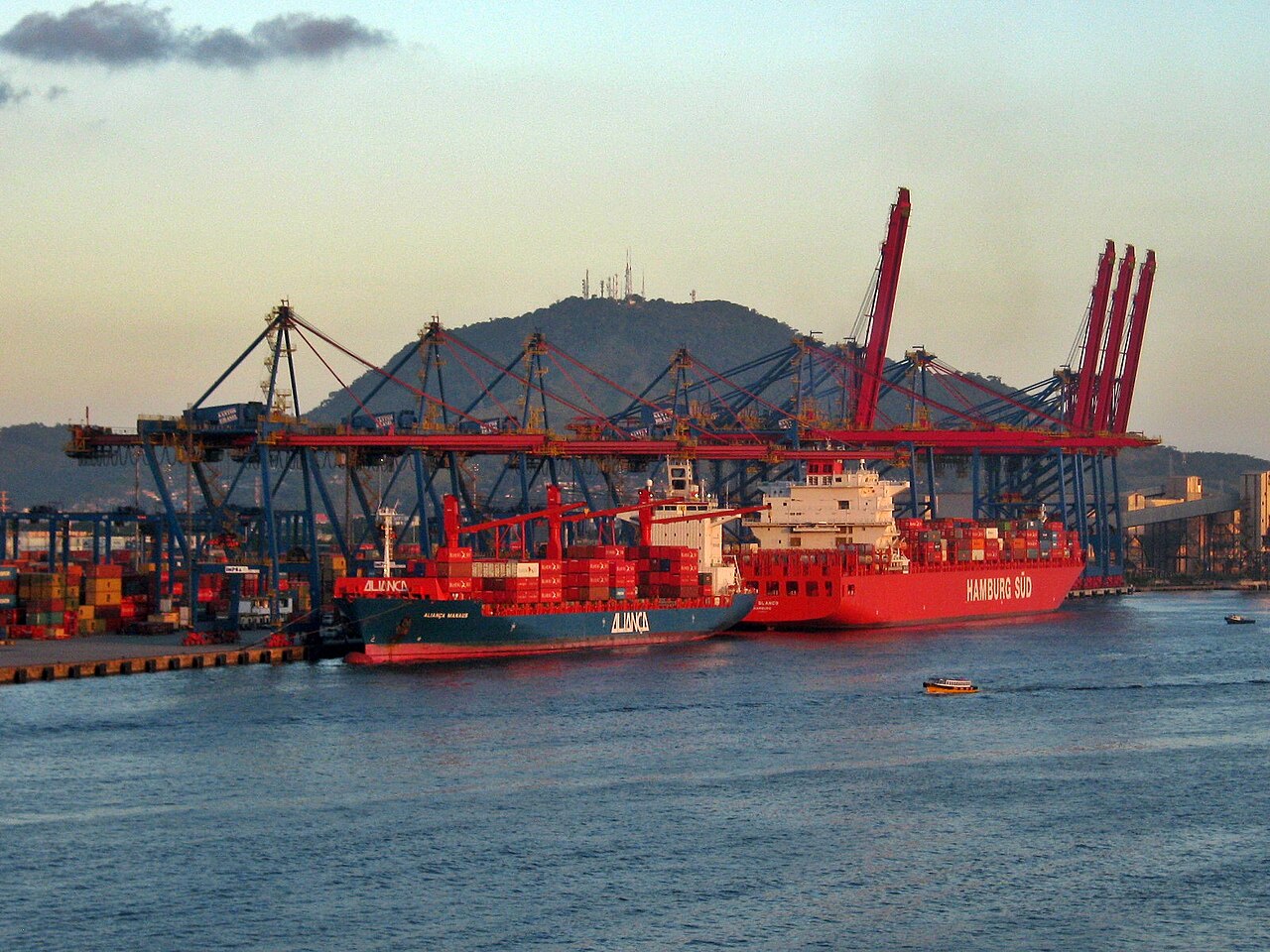
From January to August 2026, summed Census months show US goods exports to Brazil up 4.4% to US$37.37 billion. Imports from Brazil fell 17.2% to US$24.08 billion, so the US surplus reached US$13.29 billion.
Imports in August 2026 were US$3.61 billion against US$3.06 billion in August 2025, the first full month after the 25% tariff began. One month shows no trend, because exemptions cover large goods such as crude oil, coffee and aircraft.
Brazil’s exports of goods and services equalled 17.8% of its US$2.28 trillion economy in 2025, the World Bank says. A tariff on one market therefore hits some sectors harder than the whole economy.
Sanctions, Courts and the Moraes Case
Alexandre de Moraes is a justice of Brazil’s Supreme Federal Court, the country’s highest court. The US Treasury’s sanctions office, OFAC, removed him from its sanctions list on Friday, 12 December 2025.
OFAC also removed his wife, Viviane Barci de Moraes, and the legal institute LEX from the Global Magnitsky list that day. That program targets people the United States accuses of serious human rights abuse or corruption.
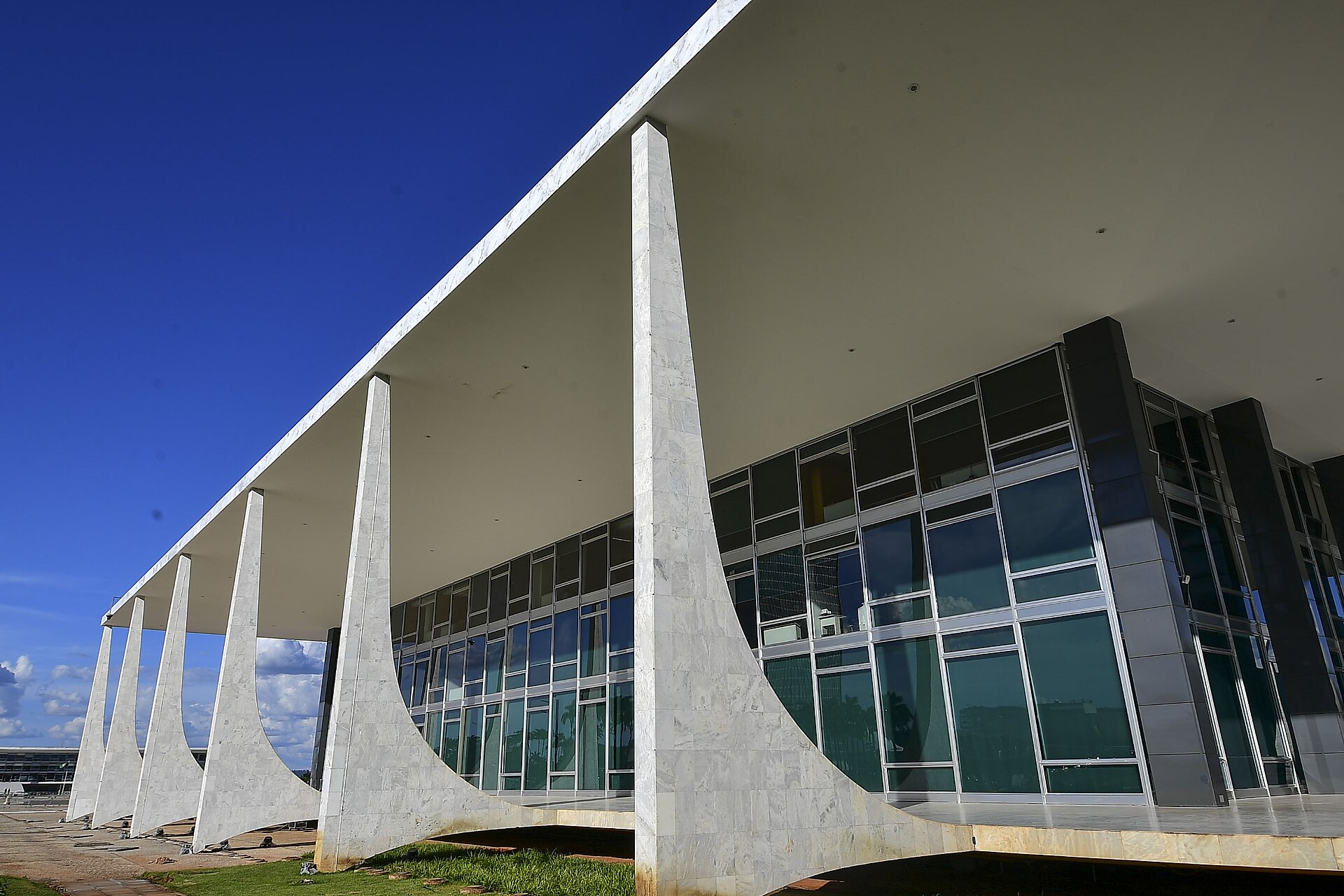
Yet the same notice still cites the Brazil Supreme Court’s “censorship and imprisonment of those exercising free expression”. It continued the Brazil emergency for one year on 28 July 2026.
The Section 301 tariff notice lists digital trade, electronic payments, anti-corruption enforcement, intellectual property, ethanol and deforestation as its grounds. It does not mention Moraes.
Gangs, Terror Labels and Military Ties
Secretary of State Marco Rubio signed an order on 28 May 2026 naming two Brazilian gangs foreign terrorist organizations. They are Primeiro Comando da Capital, known as PCC, and Comando Vermelho, or Red Command, effective Friday, 5 June 2026.
US law makes it a crime to give such groups material support, and US banks must hold and report their funds. Members who are foreign nationals are inadmissible to the United States.
A White House determination of 11 September 2026 says Brazil’s government “has failed to confront” the two groups. It says the gangs made Brazil a cocaine hub, though Brazil is absent from the memo’s list of major drug transit countries.
Brazil remains a major non-NATO ally in the State Department’s arms export rules, effective 18 September 2026. That status eases defence trade and cooperation with the United States.
Brazil’s official reaction to the designations was not confirmed. For the wider picture read the Rio Times guide to Brazil security and crime.
Investment, Companies and Aid
The US Investment Climate Statement of 20 May 2025 says the United States is the largest foreign investor in Brazil. It cites the UN trade body UNCTAD for US$86 billion of direct investment arriving in Brazil in 2022.
The 25% tariff exempts civil aircraft, their parts and flight simulators, which shields the aerospace trade between Brazilian and US firms. Commenters told USTR that Brazil supplies about 40% of US aluminium hydroxide, a raw material for water treatment.
Brazil received US$4.76 billion in personal remittances from all countries in 2025, or 0.21% of GDP, the World Bank says. That is small next to the size of the economy, so remittances are a minor channel.
The latest official size of US investment in Brazil and any US aid total could not be confirmed. They appear under What Is Not Known.
Visas, Travel and the Brazilian Diaspora
The State Department’s Brazil page says US tourists need a visa or e-visa from 10 April 2025, and other travellers already did. Brazil’s foreign ministry pages could not be opened to confirm today’s rule, so check with a Brazilian consulate.
The State Department advisory for Brazil is Level 2, “exercise increased caution”, dated 29 May 2025. It cites violent crime, kidnapping, drugging and robbery, and Level 4 “do not travel” areas including favelas and border zones.
Brazilians in the United States form a sizeable community, but no current official count could be confirmed. Official deportation counts for Brazilians in 2025 and 2026 were also not confirmed.
What Prediction Markets Say
Polymarket, an online market where users bet real money, lists one bet combining three autumn votes: Brazil, Israel and the US Senate. A Lula win, Israeli ex-army chief Gadi Eizenkot as leader and a Democratic Senate stood at 44.5% (27 October, 9:39 a.m. ET).
The same market put a Lula win, Benjamin Netanyahu as Israeli prime minister and a Democratic Senate at about 21%. The whole event had traded about US$450,000, and its Brazil leg was already settled by the 25 October result.
Prediction markets · who wins the runoff
Implied chance of winning Brazil’s presidency on 25 October, from traders’ prices.
Polymarket
Flávio Bolsonaro – · Lula – (US$249 million traded)
Kalshi (regulated in the US by the CFTC)
Flávio Bolsonaro 0.4% · Lula 99.6%
As of 25 October, 11:40 pm ET (03:40 Lisbon), updated every 20 minutes. Prices are bets, not polls, and can move fast.
Why we show this: prediction markets turn real-money bets into a live probability that moves within minutes of the news, which is why investors, campaigns and newsrooms in the United States now follow them closely. We show them next to polls and official results, never instead of them.
Why we show this: prediction markets turn real-money bets into a live probability that moves within minutes of the news, which is why investors, campaigns and newsrooms in the United States now follow them closely. We show them next to polls and official results, never instead of them.
What It Means for US Readers
Importers face an extra 25% tariff and a separate 12.5% tariff on many Brazilian goods since July 2026. Beef, green coffee, orange juice and crude oil are exempt by tariff code, so read the notices and ask your broker.
Exporters and investors should note that US goods exports to Brazil rose 4.4% in January to August 2026, a US$13.29 billion surplus. Because US firms are the largest foreign investors in Brazil, any trade deal after Lula’s win would matter to them.
Travellers should confirm entry rules with a Brazilian consulate, follow the Level 2 advisory and avoid the Level 4 areas it names. The Brazil Explained guide covers the basics for newcomers.
For who holds power in Brasília, read Brazil Geopolitics Explained and the Brazil power structure guide. The Rio Times Latin America Power Map ranks Brazil against its neighbours.
What Is Not Known
Whether Washington and Brasília will start new tariff talks after the 25 October result is not known. Whether Brazil will answer with its reciprocity law, which allows counter-measures, was not confirmed.
No notice states a combined Brazil rate for one product, and what followed the 150-day Section 122 surcharge was not confirmed. Exact exemption status for any single product needs the Federal Register annexes.
US investment in Brazil, any US aid total, the number of Brazilians in the United States and deportation counts are unconfirmed. Brazil’s own trade statistics could not be opened, so only US Census figures appear.
Brazil’s current visa rule for Americans was not confirmed on its own site, and the State advisory page is dated 2025. The US reaction to the 25 October result, Brazil’s reaction to the designations and any change to them were not confirmed.
Frequently Asked Questions
Who won Brazil’s 2026 presidential election?
Lula won the runoff on Sunday, 25 October 2026, with 51.79% of valid votes against Flávio Bolsonaro’s 48.21%. His new term starts on 5 January 2027.
What tariff does the United States charge on Brazil?
A 25% Section 301 tariff has applied since 22 July 2026, and a separate 12.5% forced-labour tariff since 24 July 2026. Beef, green coffee, orange juice, crude oil and civil aircraft are exempt from the 25% rate.
Are US sanctions on Judge Moraes still in force?
No. OFAC removed Alexandre de Moraes, his wife and the LEX institute from the sanctions list on 12 December 2025. The US emergency on Brazil continues for another year from July 2026.
Has the United States labelled Brazilian gangs terrorists?
Yes. PCC and Comando Vermelho became foreign terrorist organizations on Friday, 5 June 2026, after Secretary of State Marco Rubio signed it.
How much does the United States trade with Brazil?
US goods exports to Brazil were US$54.33 billion in 2025 and imports US$39.88 billion, a US$14.45 billion US surplus. US imports from Brazil fell 17.2% in January to August 2026.
Do Americans need a visa for Brazil?
The State Department says US tourists need a visa or e-visa from 10 April 2025. Confirm the current rule with a Brazilian consulate before booking.
Sources: Superior Electoral Court (TSE), runoff result (26 October 2026); Federal Register, USTR Notice of Action on Brazil (20 July 2026); Federal Register, Presidential Memorandum on Brazil (15 July 2026); USTR, Section 301 Action on Brazil (15 July 2026); Federal Register, USTR forced-labour Section 301 actions (28 July 2026); Federal Register, Executive Order 14323 (5 August 2025); Brazilian Presidency, Constitutional Amendment 111 (2021); US Customs and Border Protection, CSMS 69302472 (21 July 2026); US Customs and Border Protection, CSMS 69326983 (23 July 2026); Federal Register, Executive Order 14389 (25 February 2026); Federal Register, Section 122 surcharge proclamation (25 February 2026); Federal Register, continuation of the national emergency with respect to Brazil (29 July 2026); US Treasury OFAC, recent actions (12 December 2025); Federal Register, State Department designation of PCC and Comando Vermelho (5 June 2026); US State Department, Foreign Terrorist Organizations list; Federal Register, Presidential Determination 2026-23 (18 September 2026); Federal Register, ITAR major non-NATO ally list (18 September 2026); US Census Bureau, trade in goods with Brazil; World Bank, Brazil data; US Commerce Department, Brazil Investment Climate Statement (20 May 2025); US State Department, Brazil travel advisory; US State Department, Brazil country information; Polymarket, Fall Elections Combo market data (27 October 2026, 9:39 a.m. ET) (all accessed 27 October 2026).
This article was produced by The Rio Times’ automated newsroom system. How we use AI · Report an error · Editorial responsibility: Matthias Camenzind, Editor-in-Chief
Expat Guide to Brazil
What The Rio Times publishes for foreigners who live in or move to Brazil.
Start here
- Do US Citizens Need a Visa for Brazil? Yes, US$80.90 E-Visa
- Brazil Education and Healthcare Explained
- Brazil Security and Crime Explained 2026
- Brazil Rent and Power Bills After 4.58% Inflation
City guides
Rio de Janeiro, São Paulo, Florianópolis, Salvador, Belo Horizonte, Curitiba, Porto Alegre, Brasília
Coming up in Brazil
- BTS in Brazil 2026: São Paulo Dates, Tickets, How to Watch 28 Oct
- Natal Luz Gramado Tickets for 30 October to 10 January 30 Oct
- Plebe Rude plays Circo Voador on 30 October 30 Oct
- Brazil Crypto Firms Face a 30 October Licence Deadline 30 Oct
Understand Brazil