
BRAZIL · POWER
Key Facts
- —The country Brazil has 214.2 million people, the most in Latin America (2026).
- —Where wealth sits The Southeast: 42% of people, 53% of output (2022 and 2023 data).
- —Inequality Household income Gini index 0.511 in 2025, up from 0.504.
- —Congress Farm caucus signatories: 299 of 513 deputies, October 2026.
- —What happened Flávio Bolsonaro led Lula 47.03% to 45.16% on 4 October.
- —Prediction markets Kalshi: Flávio Bolsonaro 87.0%, Lula 13.0% to win the 25 October runoff (9 October, 5:07 a.m. ET) Polymarket puts Flávio Bolsonaro’s chance of winning at 87% and Kalshi at 87% (Lula: 14% and 13%), as of 9 October, 6:40 am ET; prices are bets, not polls.
Power in Brazil runs through a rich Southeast, a farm lobby in Congress, growing churches and a few political families. Here is who holds it, and who is left out.
Brazil power is concentrated in a few hands and a few places, even in a democracy of 214.2 million people. The Southeast produces over half of national output, and a farm caucus counts 299 of the 513 federal deputies.
For US readers, the presidential runoff on Sunday, 25 October 2026 shows each of these power centres at work. Its result will shape trade, investment and Brazil’s ties with Washington.
How Brazil Power Is Distributed
Brazil is a federal republic of 26 states and a Federal District, with a directly elected president. On paper, power is split between the president, Congress and the courts.
In practice, Brazil power is shared with groups that never appear on a ballot. They include agribusiness, big banks and industry, the churches, the armed forces and a small number of political families.
The president needs Congress to pass almost anything, and Congress is fragmented. As of 9 October 2026, 22 parties held seats in the 513-member Chamber of Deputies, its open-data service shows.
That fragmentation gives leverage to the Centrão, or “big centre”, a loose group of centre-right parties. They usually trade their votes for ministries, budget amendments and posts in state companies.
Both houses are led by politicians from the North and Northeast. Hugo Motta of Republicanos, a conservative party, has presided over the Chamber since February 2025 and represents Paraíba.
Davi Alcolumbre of União Brasil, a centre-right party, leads the Senate and represents Amapá, an Amazon state. Each state elects three senators, whatever its size.
So Amapá, with 733,759 people in the 2022 census, has the same Senate weight as São Paulo, with 44.4 million. That rule hands small states outsized power over national laws.
Regions, the Rich Southeast and the Voting Northeast
Brazil’s money and its votes sit in different places. The Southeast, which includes São Paulo, Rio de Janeiro and Minas Gerais, held 41.8% of the population in 2022.
The same region produced 53.0% of gross domestic product in 2023, IBGE, the national statistics office, reports. São Paulo state alone accounted for 31.5%.
The Northeast tells the opposite story. It is home to 26.9% of Brazilians but generated only 13.8% of output in 2023.
The other three regions, by share of people (2022) and of output (2023):
- South: 14.7% of people, 16.8% of output; farming and industry
- Centre-West: 8.0% of people, 10.6% of output; the soy and cattle belt, plus Brasília
- North: 8.5% of people, 5.8% of output; most of the Amazon rainforest
Output per person in the Northeast is roughly 40% of the Southeast’s, on 2023 output and 2022 census population. That gap drives national politics.
In the first round on Sunday, 4 October 2026, Lula won 63.8% of valid votes in the Northeast. Flávio Bolsonaro took 60.1% in the South, 56.5% in the Centre-West and 51.4% in the Southeast.
These shares are summed from state results of the Superior Electoral Court (TSE), which runs elections. Lula carried all nine Northeastern states plus Amazonas, Amapá and Pará.
Flávio carried the other 14 states and the Federal District. More on who lives where is in the guide to Brazil’s population and ethnic groups.
Race, Class and Who Earns What
Race and class overlap closely in Brazil. In the 2022 census, 45.3% of people described themselves as pardo, or mixed race, and 43.5% as white.
Another 10.2% said they were Black (preta), 0.4% of Asian descent and 0.6% indigenous. Black and pardo Brazilians together make up a majority of 55.5%.
Incomes still follow colour lines. In the second quarter of 2026, white workers earned 4,800 reais a month on average (about US$956), IBGE’s labour survey shows.
Black workers earned 2,754 reais (about US$549) and pardo workers 2,923 reais (about US$582). White workers therefore earned about 74% more than Black workers.
Conversions use 5.02 reais per US dollar, from open.er-api.com on 9 October 2026.
Overall inequality remains high. The Gini index of household income per person, where zero means perfect equality, was 0.511 in 2025.
That was up from 0.504 in 2024, though below the 0.517 recorded in 2023.
Gender gaps show up at the top as well.
Women were 51.5% of the population in the 2022 census. Yet they held only 88 of 513 Chamber seats in October 2026, or 17.2%.
Congress, Parties and the Caucuses That Decide
The largest party in the Chamber is the Liberal Party (PL), the conservative party of the Bolsonaro family, with 98 deputies. Lula’s Workers’ Party (PT), the main left-wing party, has 65.
The next five parties by seats, as of 9 October 2026:
- União Brasil (52 seats): centre-right, formed in 2022 from a merger
- Social Democratic Party, PSD (48): centre-right, pragmatic, part of the Centrão
- Progressistas, PP (46): conservative, a core Centrão party
- Republicanos (42): conservative, the party of the Chamber’s president
- Brazilian Democratic Movement, MDB (38): centrist, founded in 1966 as the legal opposition under military rule
Party labels often matter less than cross-party caucuses, called frentes parlamentares. The farm lobby’s caucus, the Agricultural Parliamentary Front (FPA), is the clearest example.
As of 9 October 2026, 299 of the 513 sitting deputies had signed up to it, the Chamber’s records show. That is 58% of the house, just short of the 308 votes needed to amend the constitution.
The Evangelical Parliamentary Front counted 212 sitting deputies and the Catholic front 201. The front for indigenous peoples’ rights had 183.
Signatures overlap, and signing does not bind a deputy’s vote. Still, the farm caucus reflects the weight of the Centre-West and South, where Flávio Bolsonaro won most strongly.
For the full list of office-holders, see who holds power in Brazil, from Lula to Congress.

Families, the Military and the Courts
Political families remain a feature of Brazilian power. The 2026 runoff is a family contest: Flávio Bolsonaro, senator for Rio de Janeiro, is Jair Bolsonaro’s eldest son.
The former president cannot run. The Supreme Federal Court (STF), Brazil’s top court, sentenced him to 27 years and three months for a coup plot.
His sentence began on 25 November 2025, the court says. After a hospital stay in March 2026 he was moved to house arrest on health grounds, upheld in July.
Another son, Eduardo Bolsonaro, received four years and two months from the STF for trying to interfere in the coup case.
The armed forces ruled Brazil from 1964 to 1985 and kept influence long after. The coup case marked a break, because officers of the highest rank were convicted alongside Bolsonaro.
Admiral Almir Garnier, a former navy commander, received 24 years, the STF says. Retired army generals Walter Braga Netto, Augusto Heleno and Paulo Sérgio Nogueira were also convicted, the same STF ruling shows.
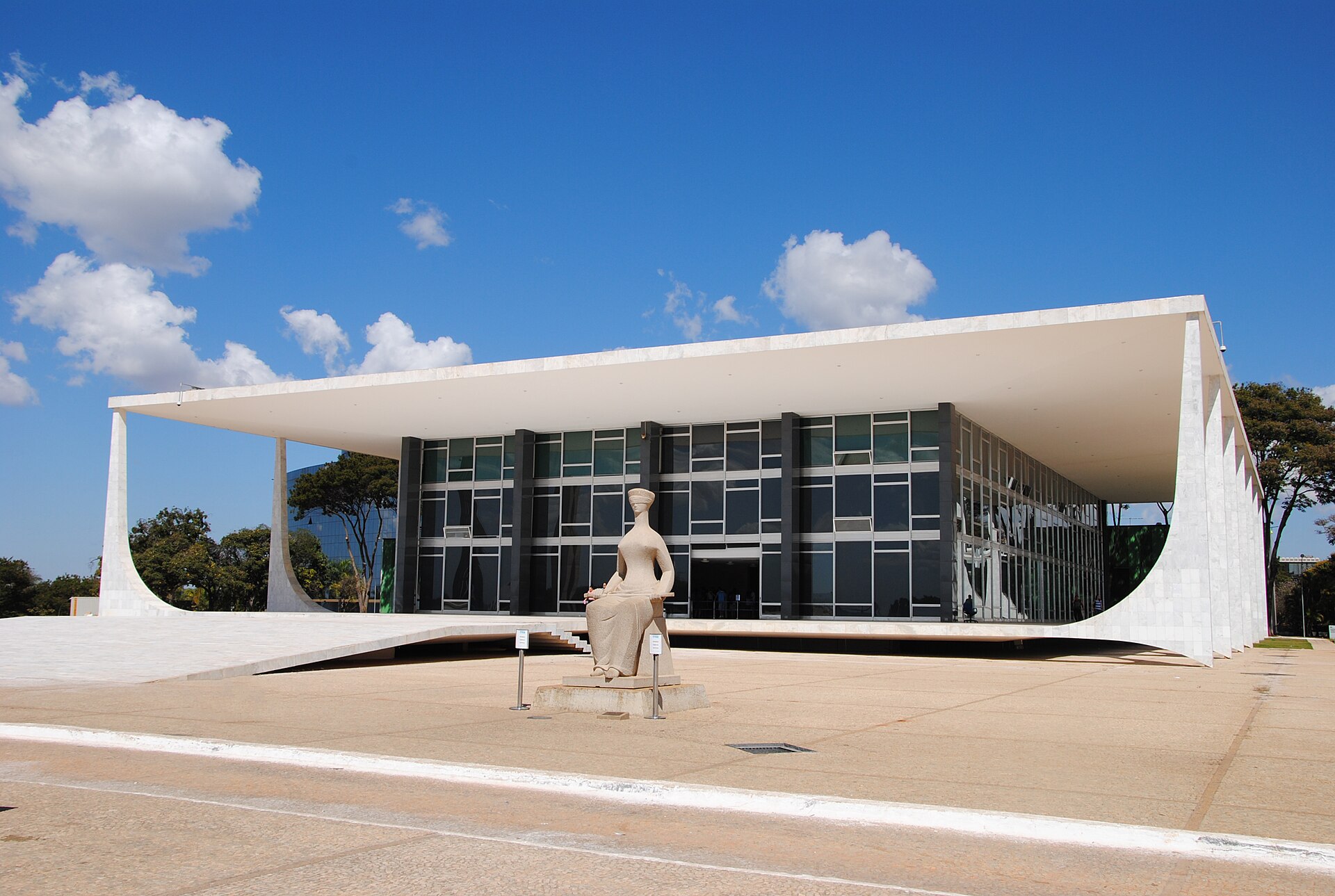
The courts are a power centre in their own right. The STF has 11 justices, and individual justices can issue sweeping orders alone.
Conservative critics call that overreach, while supporters say it protected democracy after the 2022 election. Either way, few big political questions in Brazil end without a court ruling.
Business, Churches and Unions
Big business is concentrated in São Paulo, home to the B3 stock exchange and most large private banks. The state is a business power too, through companies it controls.
The federal government controls Petrobras, the oil company. With the BNDES development bank, it held 35.45% of Petrobras shares in September 2026, while foreign investors held 48.73%.
The biggest companies, banks and business families are covered in who runs Brazil’s economy. Agribusiness adds political muscle through the farm caucus described above.
Religion is shifting power, too. In the 2022 census, 56.7% of Brazilians aged 10 and over were Catholic, down from 65.0% in 2010.
Evangelical Protestants rose from 21.7% to 26.9% over the same period, IBGE says. Afro-Brazilian religions such as Umbanda and Candomblé grew from 0.3% to 1.0%.
That growth gives evangelical churches weight in elections and in Congress. Their caucus is now larger than the Catholic one, 212 deputies against 201.
Organised labour was once a pillar of power, and Lula himself rose as a metalworkers’ union leader near São Paulo. The unions helped found his Workers’ Party in 1980.
A 2017 labour reform, Law 13,467, ended the compulsory union contribution, which had funded unions automatically.
Who Is Left Out
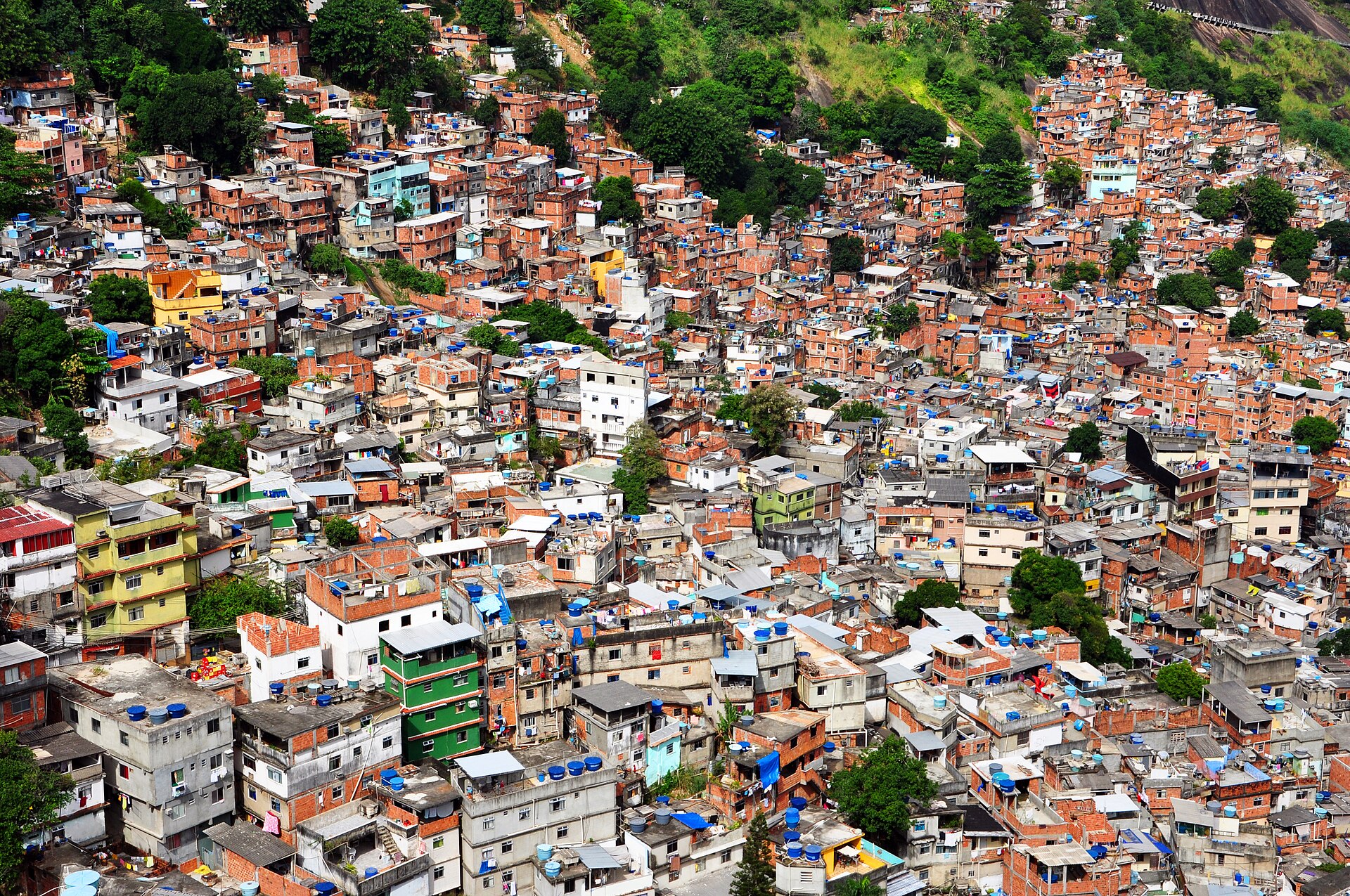
The groups with the least power are the poor, Black and pardo Brazilians, indigenous peoples and residents of urban favelas. Many belong to more than one of these groups.
About 1.2 million people chose “indigenous” as their colour or race in the 2022 census. Their land claims often set them against farm and mining interests with strong friends in Congress.
Millions of Brazilians live in favelas, informal neighbourhoods on hillsides and city edges where public services are weakest.
Women, a majority of the population, hold fewer than one in five Chamber seats. The poorer Northeast, meanwhile, has votes but little economic weight.
Newcomers can find the wider background in Brazil explained for newcomers, and Brazil’s place abroad in Brazil geopolitics explained.
What It Means for US Readers
For US investors, decisions in Brasília shape Petrobras, whose American Depositary Receipts made up 21.59% of its shares in September 2026. They also shape the farm exports that compete with US soy.
The 25 October runoff decides whether the Bolsonaro family returns to the presidency or Lula stays. Polling is tracked in the first Datafolha runoff poll.
For travellers and expats, the regional divide is visible on the ground. São Paulo and the South are wealthier, while the Northeast is poorer and votes differently.
All Brazil coverage is collected on the Rio Times Brazil page.
What Prediction Markets Say
Kalshi, a US exchange regulated by the Commodity Futures Trading Commission (CFTC), prices the runoff as a bet. Its “Brazil Presidential election winner?” market showed Flávio Bolsonaro at 87.0% and Lula at 13.0%.
Those prices were recorded on 9 October at 5:07 a.m. ET. The gap is far wider than the 1.87-point first-round margin, so traders are betting on transfers from eliminated candidates.
Prediction markets · who wins the runoff
Implied chance of winning Brazil’s presidency on 25 October, from traders’ prices.
Polymarket
Flávio Bolsonaro 86.5% · Lula 13.5% (US$178 million traded)
Kalshi (regulated in the US by the CFTC)
Flávio Bolsonaro 87% · Lula 13%
As of 9 October, 6:40 am ET (11:40 Lisbon), updated every 20 minutes. Prices are bets, not polls, and can move fast.
Why we show this: prediction markets turn real-money bets into a live probability that moves within minutes of the news, which is why investors, campaigns and newsrooms in the United States now follow them closely. We show them next to polls and official results, never instead of them.
Why we show this: prediction markets turn real-money bets into a live probability that moves within minutes of the news, which is why investors, campaigns and newsrooms in the United States now follow them closely. We show them next to polls and official results, never instead of them.
What Is Not Known
The runoff result is not known, and the new Congress elected on 4 October takes office only in February 2027. Its party balance is not yet in the Chamber’s records.
No primary source reviewed gives the racial make-up of Congress or company boards in 2026. This guide does not estimate it.
Caucus lists show signatures, not voting behaviour.
Whether Jair Bolsonaro stays under house arrest after the election is for the STF to decide. Current favela population figures for 2026 are not available.
Frequently Asked Questions
Who really holds power in Brazil?
Formal power is shared by the president, a fragmented Congress and the Supreme Federal Court. Agribusiness, big business, churches and a few political families add strong informal influence.
Which region of Brazil is the richest?
The Southeast, led by São Paulo state, produced 53.0% of Brazil’s output in 2023. São Paulo state alone produced 31.5%, IBGE data show.
What is the Centrão in Brazilian politics?
It is a loose group of centre-right parties that tends to back whichever government offers ministries and budget funds. Its votes often decide whether bills pass.
Is Jair Bolsonaro in prison?
He is serving a 27-year sentence for a coup plot, under house arrest on health grounds since 2026. His son Flávio is the conservative runoff candidate.
How big is the evangelical vote in Brazil?
Evangelicals were 26.9% of Brazilians aged 10 and over in the 2022 census. In Congress, 212 sitting deputies belong to the evangelical caucus.
When is Brazil’s presidential runoff?
The runoff between Flávio Bolsonaro and Lula is on Sunday, 25 October 2026. The winner takes office in January 2027.
Sources: Superior Electoral Court (TSE), 2026 first-round presidential results by state; IBGE, regional GDP 2023; IBGE, 2022 census by colour or race; IBGE, 2026 population estimate; IBGE, Gini index; IBGE, PNAD Contínua income by colour or race; IBGE, 2022 census religion results; Chamber of Deputies open data, deputies and caucuses; Federal Senate, presiding board; Supreme Federal Court (STF), house arrest ruling; STF, coup case sentences; Petrobras, shareholder composition; O Liberal; exchange rate from open.er-api.com (all accessed 9 October 2026).
This article was produced by The Rio Times’ automated newsroom system. How we use AI · Report an error · Editorial responsibility: Matthias Camenzind, Editor-in-Chief