
GUIDES · BRAZIL
Key Facts
- —Context Brazil is a secular republic with a Catholic majority. In the 2022 census, 100.2 million people aged ten and over called themselves Catholic.
- —Largest faiths Catholics 56.7%, evangelicals 26.9%, no religion 9.3%, Spiritists 1.8%, Umbanda and Candomblé 1.0% (IBGE 2022 census, ages ten and over).
- —Fastest change The Catholic share fell from 64.6% in 2010 to 56.7% in 2022. The evangelical share rose from 22.2% to 26.9% over the same period.
- —Political weight Datafolha found Flávio Bolsonaro on 52% among evangelicals and Lula on 50% among Catholics on 1 October 2026. The runoff is on Sunday, 25 October.
- —Holy days Monday, 12 October is a national holiday for Our Lady of Aparecida, the patron saint, under Law 6,802 of 1980.
- —Prediction markets Polymarket gives Flávio Bolsonaro an 88% chance of winning the presidency (11 October, 3:03 a.m. ET). Polymarket puts Flávio Bolsonaro’s chance of winning at 88% and Kalshi at 88% (Lula: 12% and 13%), as of 11 October, 4:20 am ET; prices are bets, not polls.
Brazil religion is changing fast. Catholics remain the majority, but evangelical churches now count one in four Brazilians aged ten and over. For a US reader, the shift helps explain the 25 October presidential runoff and much of daily life.
Brazil Religion by the Numbers
The most reliable count comes from IBGE, the national statistics institute, which asked about religion in the 2022 census. Its figures cover the 176.6 million residents aged ten and over. The headline numbers follow.
- Catholic: 100.2 million people, or 56.7%.
- Evangelical (all Protestant and Pentecostal churches): 47.4 million, or 26.9%.
- No religion: 16.4 million, or 9.3%.
- Spiritist (the Kardecist movement): 3.3 million, or 1.8%.
- Umbanda and Candomblé, the main Afro-Brazilian religions: 1.8 million, or 1.0%.
- Other religions, including Judaism, Islam and Buddhism: 7.1 million, or 4.0%.
- Indigenous traditions: about 99,000 people, or 0.06%.
The comparison with the 2010 census shows the direction of travel. Then, counting people of all ages, 64.6% were Catholic and 22.2% evangelical. Some 8.0% declared no religion, and Umbanda and Candomblé together stood at 0.3%.
The two counts cover slightly different age groups, so the comparison is approximate. The trend, however, is clear in every region. Catholicism is shrinking, evangelical churches are growing, and more Brazilians say they have no religion.
The Catholic Church: Still the Majority
Catholicism arrived with Portuguese colonisers and remains the default faith of public life. Churches dominate old town squares, saints’ days fill the calendar, and many people who rarely attend Mass still baptise their children.
The national bishops’ conference, the CNBB, speaks for the church on public policy. Its president is Cardinal Jaime Spengler, the Archbishop of Porto Alegre in the south. The church also reports to Pope Leo XIV, born Robert Francis Prevost in Chicago, who began his pontificate in May 2025.
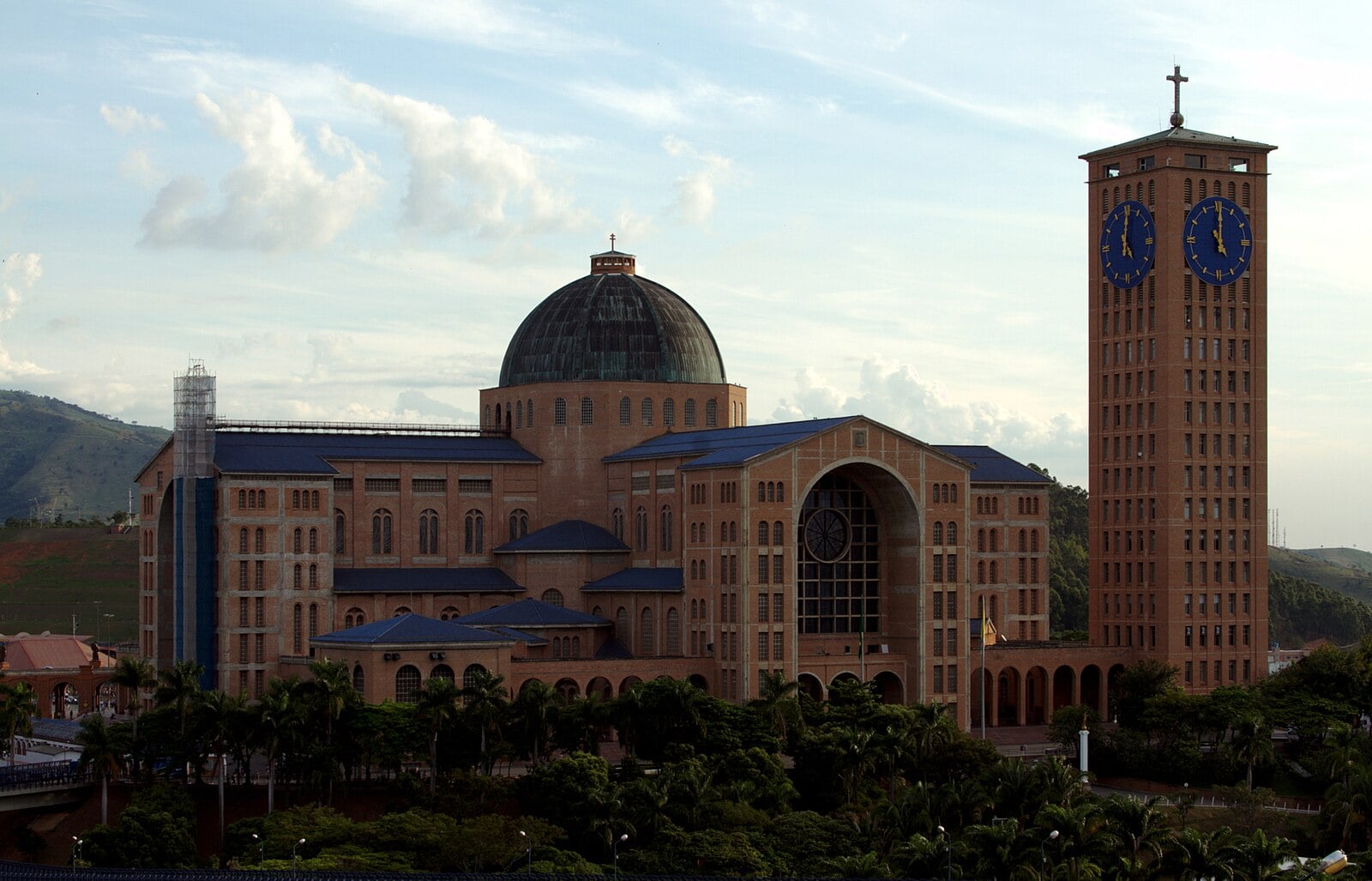
The heart of popular Catholicism is the National Shrine of Our Lady of Aparecida in São Paulo state. Dom Mário Antônio da Silva took office there as archbishop on 2 May 2026, Folha de S.Paulo reported. Catholicism is strongest in the northeast, where Piauí is 77.4% Catholic and Ceará 70.4%.
The Evangelical Rise
Brazilians use “evangélico” for all non-Catholic Christian churches, from historic Baptists and Presbyterians to Pentecostal movements. Pentecostal churches, which stress healing, prayer and personal conversion, make up most of the growth.
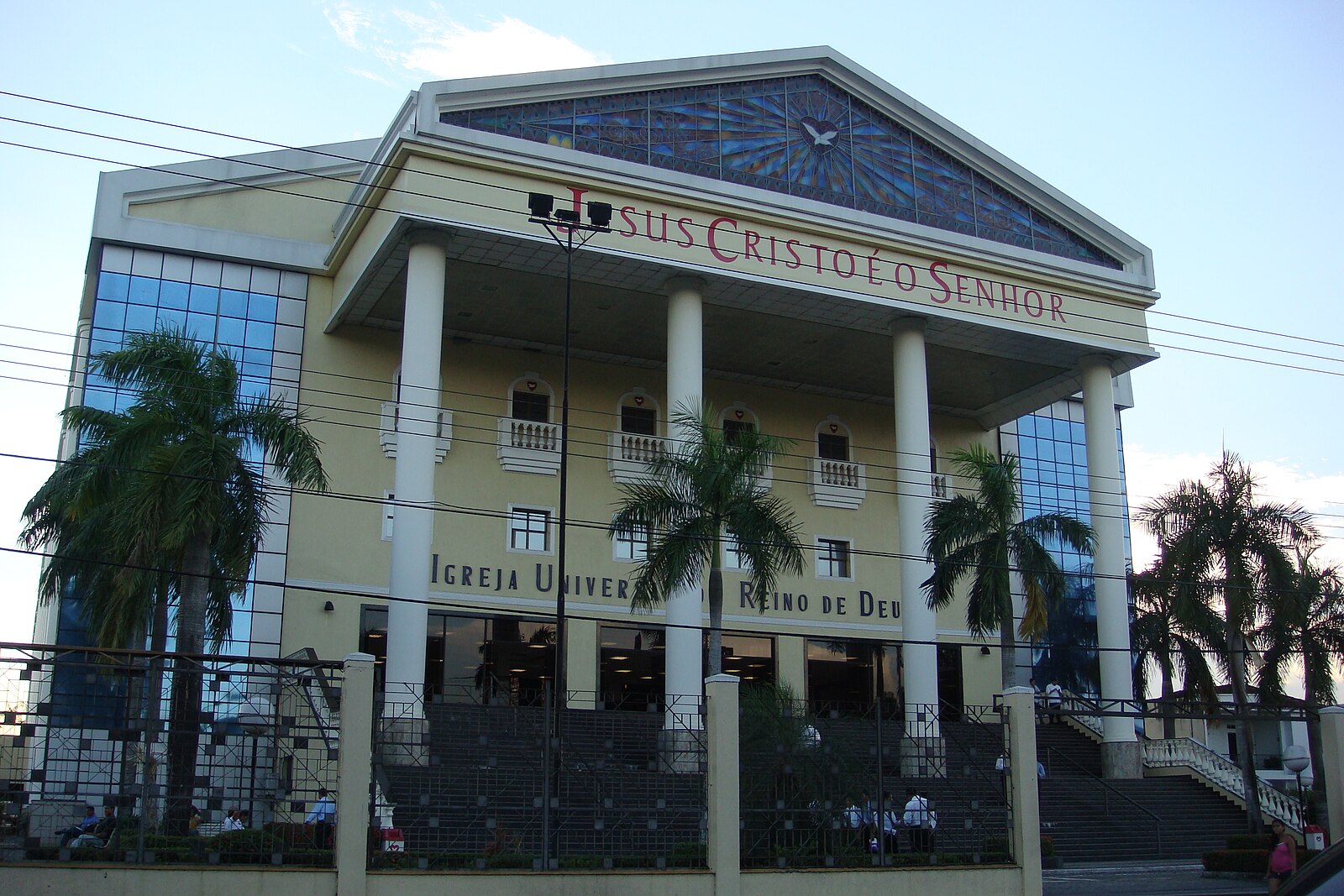
IBGE’s 2010 census gave a breakdown by church. The Assemblies of God (Assembleia de Deus) was the largest, with 12.3 million followers. The Christian Congregation of Brazil had 2.3 million, and the Universal Church of the Kingdom of God 1.9 million.
Evangelical churches are youngest in profile. In 2022, 35.9% of evangelicals aged ten and over were under 30, against 30.4% of Catholics. Small storefront churches in poorer suburbs, often led by a local pastor, carry much of the expansion.
Afro-Brazilian Faiths, Spiritism and the Non-Religious
Umbanda and Candomblé grew from the religions of enslaved Africans, mixed with Catholic and Indigenous elements. Candomblé worships the orixás, deities such as Iemanjá, goddess of the sea. Umbanda also draws on Spiritism.
The census share of these faiths more than tripled, from 0.3% in 2010 to 1.0% in 2022. They are most visible in Rio Grande do Sul, at 3.2%, and in Rio de Janeiro, at 2.6%. Many more Brazilians attend their ceremonies while declaring themselves Catholic.
Spiritism follows the teachings of the French writer Allan Kardec and stresses charity and reincarnation. It counted 3.3 million followers in 2022. The group without religion is the youngest of all: 45.7% of its members aged ten and over were under 30.
Where Faith Lives: The Regional Map
Religion in Brazil follows geography closely. The northeast is the Catholic heartland, at 63.9% in 2022. The north, the Amazon region, is the most evangelical, at 36.8%.
- Most evangelical states: Acre (44.4%), Rondônia (41.1%) and Amazonas (39.4%).
- Least Catholic states: Roraima (37.9%), Rio de Janeiro (38.9%) and Acre (38.9%).
- Highest share with no religion: Roraima (16.9%), Rio de Janeiro (16.9%) and Rondônia (12.9%).
- São Paulo state: 52.2% Catholic, 27.3% evangelical and 10.5% with no religion.
Rio de Janeiro state stands out. Only 38.9% of its residents are Catholic, 32.0% are evangelical and 16.9% have no religion. It is a preview of where the rest of the country may be heading.
Faith and Political Power in 2026
The constitution of 1988 guarantees freedom of belief and worship. It also bars the federal, state and municipal governments from establishing, funding or obstructing any church. Faith, however, plays a large role in voting.
The 2026 runoff pits two men. Luiz Inácio Lula da Silva, 80, is the sitting president for the left-wing Workers’ Party (PT). Senator Flávio Bolsonaro, 45, represents the conservative Liberal Party (PL) and is the son of former president Jair Bolsonaro.
In the first round on Sunday, 4 October, Flávio Bolsonaro took about 47.0% of valid votes. Lula took about 45.2%, Agência Senado, the Senate news agency, reported. The Superior Electoral Court (TSE), which runs elections, set the runoff for 25 October.
Datafolha, the polling institute of the Folha de S.Paulo group, published a first-round poll on 1 October. It put Flávio Bolsonaro on 52% among evangelicals, against 26% for Lula. Lula had 50% among Catholics against 32% for his rival.
Faith also entered the campaign directly. A false claim spread that Flávio Bolsonaro wanted to strip Our Lady of Aparecida of her title as patron saint. He denied it, and on 30 September the TSE confirmed an order to remove posts repeating it.
In Congress, the cross-party evangelical caucus stays influential but is changing. Four of its five leaders since 2018 failed to win seats in October 2026, Folha de S.Paulo reported. Sóstenes Cavalcante, the PL leader in the Chamber, was re-elected.
Younger evangelical politicians did well. The two most voted federal deputies in the country, Nikolas Ferreira and Lucas Pavanato of the PL, are evangelicals. From February 2027 the PL will hold 121 of 513 Chamber seats, the largest group.
Festivals and Holy Days
Religious dates shape the Brazilian year and its travel peaks. The most important ones for a visitor are listed below.
- Carnival, before Lent: a festival set by the Catholic calendar, held in the days before Ash Wednesday.
- Holy Week and Easter: processions in historic towns and church services across the country.
- Festas Juninas, June: village-style festivals for St John, St Anthony and St Peter, strongest in the northeast.
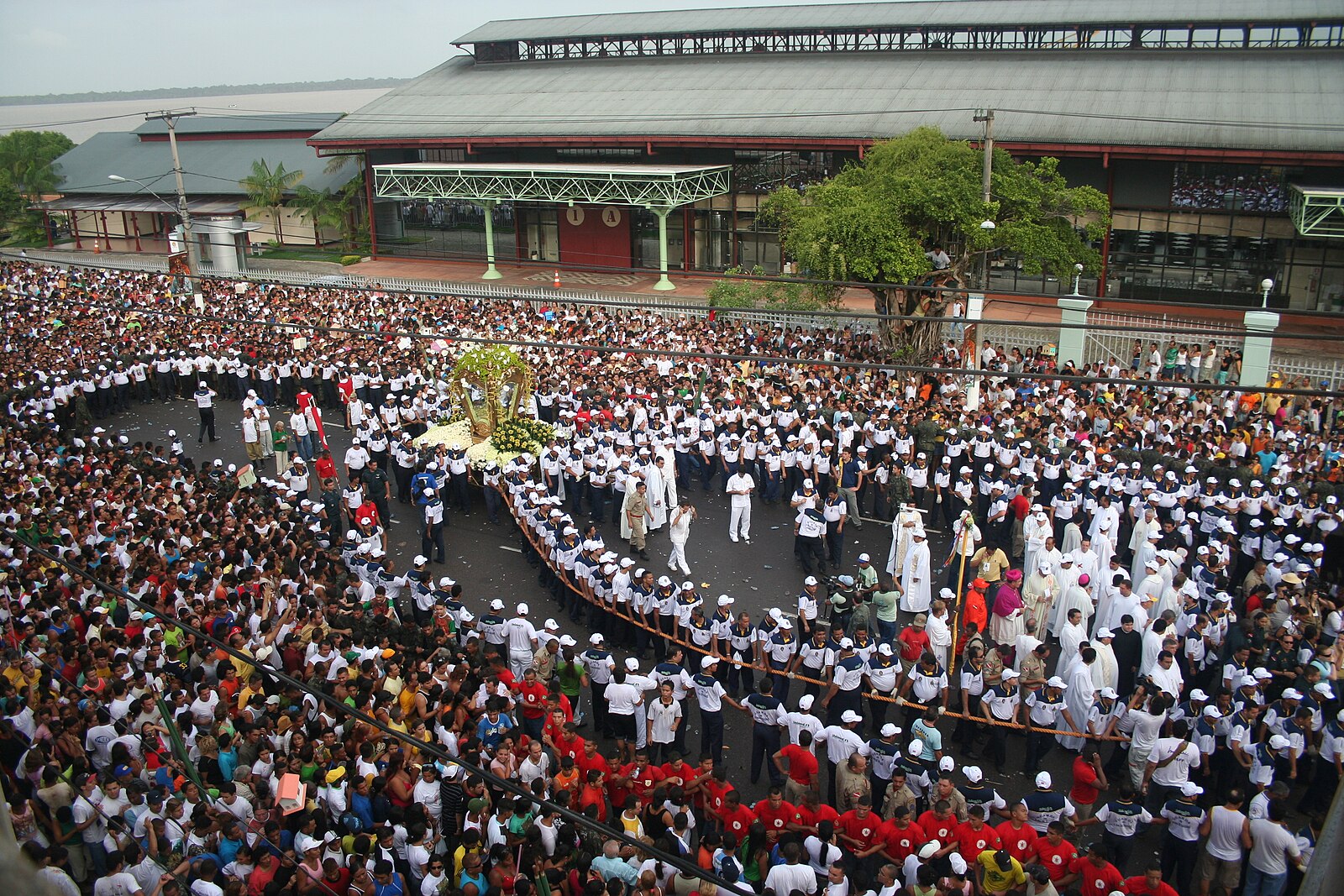
- Círio de Nazaré, second Sunday of October: a procession in Belém listed by UNESCO in 2013 as Intangible Cultural Heritage.
- Our Lady of Aparecida, 12 October: a national holiday and the main feast day at the Aparecida shrine.
- Iemanjá festivities: music, dance and offerings to the sea goddess, notably in the Rio Vermelho district of Salvador.
UNESCO describes the Círio as one of the world’s largest religious gatherings. Celebrations start in August and continue until fifteen days after the procession. Devotees carry a wooden image of Our Lady of Nazareth from the cathedral to the sanctuary.
How Faith Shapes Daily Life
Religion in Brazil is public and sociable rather than private. Strangers say “fica com Deus”, stay with God, as a goodbye. Churches of every kind run charities, schools and social projects, often where public services are thin.
Mixing is common. A Catholic may attend a Candomblé ceremony, and many Brazilians see no conflict in doing so. Afro-Brazilian temples are called terreiros, and visitors should treat them as places of worship.
Faith also shapes family life and public debate. Evangelical leaders speak out on family and moral issues during campaigns. Catholic bishops speak out on poverty and social questions.
What It Means for US Readers
Investors should read the evangelical vote as a key swing factor in the 25 October runoff. A Flávio Bolsonaro win would bring a conservative, church-backed agenda to economic and social policy. A Lula win would keep the current course with a strong Catholic base.
Travellers should plan around religious holidays. Monday, 12 October is a national holiday, with the main celebrations at the Aparecida shrine in São Paulo state. Belém fills up for the Círio, so book early.
Expats will find a secular state and broad tolerance. Dress modestly in churches and terreiros, ask before photographing ceremonies, and expect religious language at work and in politics. Pope Leo XIV, born in Chicago, gives US Catholics a direct link to Brazilian parishes.
What Prediction Markets Say
Real-money bets on Polymarket give Flávio Bolsonaro an 88% chance of winning the presidency, with Lula at 11.5% (11 October, 3:03 a.m. ET). The market has traded about US$180 million in volume. Flávio Bolsonaro’s price has risen 24 points in a week and 33 points in a month.
A separate market on the runoff margin has traded about US$425,000. It gives 48.5% to a Flávio Bolsonaro win by four to eight points, and 26.5% to a win by under four. These are bets, not polls, and they move fast.
Prediction markets · who wins the runoff
Implied chance of winning Brazil’s presidency on 25 October, from traders’ prices.
Polymarket
Flávio Bolsonaro 87.9% · Lula 11.5% (US$180 million traded)
Kalshi (regulated in the US by the CFTC)
Flávio Bolsonaro 88% · Lula 13%
As of 11 October, 4:20 am ET (09:20 Lisbon), updated every 20 minutes. Prices are bets, not polls, and can move fast.
Why we show this: prediction markets turn real-money bets into a live probability that moves within minutes of the news, which is why investors, campaigns and newsrooms in the United States now follow them closely. We show them next to polls and official results, never instead of them.
Why we show this: prediction markets turn real-money bets into a live probability that moves within minutes of the news, which is why investors, campaigns and newsrooms in the United States now follow them closely. We show them next to polls and official results, never instead of them.
What Is Not Known
How evangelicals and Catholics will split on 25 October is not known. Polls show strong leanings, but turnout and late shifts can still move the result.
The published 2022 census tables used here group all evangelical churches together. Membership by denomination, such as the Assemblies of God or the Universal Church, has no 2022 figure in them.
The size of the evangelical caucus in the Congress that takes office in February 2027 is also open. It is an informal, cross-party group, and no official count of its new members exists yet.
Frequently Asked Questions
What is the main religion in Brazil?
Catholicism. In the 2022 census, 56.7% of Brazilians aged ten and over, or 100.2 million people, said they were Catholic.
How many evangelicals are there in Brazil?
The 2022 census counted 47.4 million evangelicals aged ten and over, or 26.9%. In 2010 the share was 22.2%.
Which Brazilian state is the most evangelical?
Acre, where 44.4% of residents aged ten and over were evangelical in 2022, followed by Rondônia and Amazonas.
How many Brazilians have no religion?
About 16.4 million, or 9.3% of people aged ten and over in 2022. The share is highest in Roraima and Rio de Janeiro, at 16.9%.
How do religious groups vote in the 2026 election?
A Datafolha poll published on 1 October 2026 put Flávio Bolsonaro on 52% among evangelicals and Lula on 50% among Catholics.
Is 12 October a holiday in Brazil?
Yes. Law 6,802 of 1980 makes 12 October a national holiday for Our Lady of Aparecida, the patron saint of Brazil.
Sources: IBGE, SIDRA table 9537, 2022 census, people aged 10 and over by religion, https://sidra.ibge.gov.br/tabela/9537; IBGE, SIDRA table 137, 2010 census, resident population by religion, https://sidra.ibge.gov.br/tabela/137; Presidência da República, Constitution of 1988, articles 5 and 19, https://www.planalto.gov.br/ccivil_03/constituicao/constituicao.htm; Presidência da República, Law 6,802 of 30 June 1980, https://www.planalto.gov.br/ccivil_03/leis/l6802.htm; Agência Senado, first-round presidential result, 4 October 2026, https://www12.senado.leg.br/noticias/materias/2026/10/04/flavio-bolsonaro-e-lula-disputam-o-segundo-turno-das-eleicoes-para-presidente; Agência Senado, Chamber of Deputies seats for 2027, 5 October 2026, https://www12.senado.leg.br/noticias/materias/2026/10/05/camara-pl-obtem-a-maior-bancada-federacao-pt-pcdob-pv-e-a-segunda-forca; Folha de S.Paulo, Datafolha vote by religion, 1 October 2026, https://www1.folha.uol.com.br/poder/2026/10/datafolha-lula-tem-50-entre-catolicos-e-flavio-52-entre-evangelicos-no-1o-turno.shtml; Folha de S.Paulo, Datafolha runoff poll, 8 October 2026, https://www1.folha.uol.com.br/poder/2026/10/datafolha-flavio-bolsonaro-tem-52-e-lula-48-em-votos-validos-no-segundo-turno.shtml; Folha de S.Paulo, evangelical caucus after the 2026 vote, https://www1.folha.uol.com.br/poder/2026/10/bancada-evangelica-perde-4-de-5-presidentes-e-urnas-desgastam-velha-guarda.shtml; Folha de S.Paulo, interview with the Archbishop of Aparecida, https://www1.folha.uol.com.br/cotidiano/2026/10/que-ninguem-venha-a-aparecida-para-alimentar-divisoes-ou-animosidades-diz-arcebispo.shtml; CNBB, presidency, https://www.cnbb.org.br/presidencia/; Holy See, Pope Leo XIV, https://www.vatican.va/content/leo-xiv/en.html; UNESCO, Círio de Nazaré, Intangible Cultural Heritage, https://ich.unesco.org/en/RL/cirio-de-nazare-the-taper-of-our-lady-of-nazareth-in-the-city-of-belem-para-00602. All accessed 11 October 2026.
This article was produced by The Rio Times’ automated newsroom system. How we use AI · Report an error · Editorial responsibility: Matthias Camenzind, Editor-in-Chief