Economist Says Long-Term Rates Stop Falling
A senior Brazilian fund economist says global borrowing costs are unlikely to fall back to earlier lows. Brazil’s own central bank rate is still in double digits.

Economy Brief: Brazil
Luis Fernando Lopes, partner and chief economist at Pátria Investimentos, a Brazilian asset manager, says the long fall in long-term interest rates is over. He spoke at an event held by his firm in São Paulo, in remarks reported on Monday 23 November 2026.
Long-term rates set the cost of mortgages, company bonds and government debt. For US investors holding Brazilian bonds or Brazil-focused funds, his view bears on how much further relief to expect.
Key Facts
- Who. Luis Fernando Lopes, chief economist at Pátria Investimentos, a Brazilian asset manager.
- Selic. Brazil’s central bank benchmark rate, the Selic, stands at 13.75% a year.
- Prediction markets. Polymarket, a prediction market, gives “no change” in December 86.5% (US$150,557 traded, 6:28 a.m. ET).
- Power Index. Brazil ranks 1st of 14 in The Rio Times Latin America Power Index, with 74.2 points (November 2026 edition).
- As of. Monday 23 November 2026, 11:30 GMT.
A senior Brazilian fund economist says global borrowing costs are unlikely to fall back to earlier lows. Brazil’s own central bank rate is still in double digits.
Lopes told the audience that “globally, rates are no longer extremely low and have no downward trend”, in our translation from his Portuguese. He described the backdrop as “an environment of fractured globalization”, a world in which trade and investment ties are weakening.
Comparing investments outside the United States, he added, now brings “a surprise”. We have only this one account of the event, so what else he said about Brazil’s own long-term yields is not confirmed.
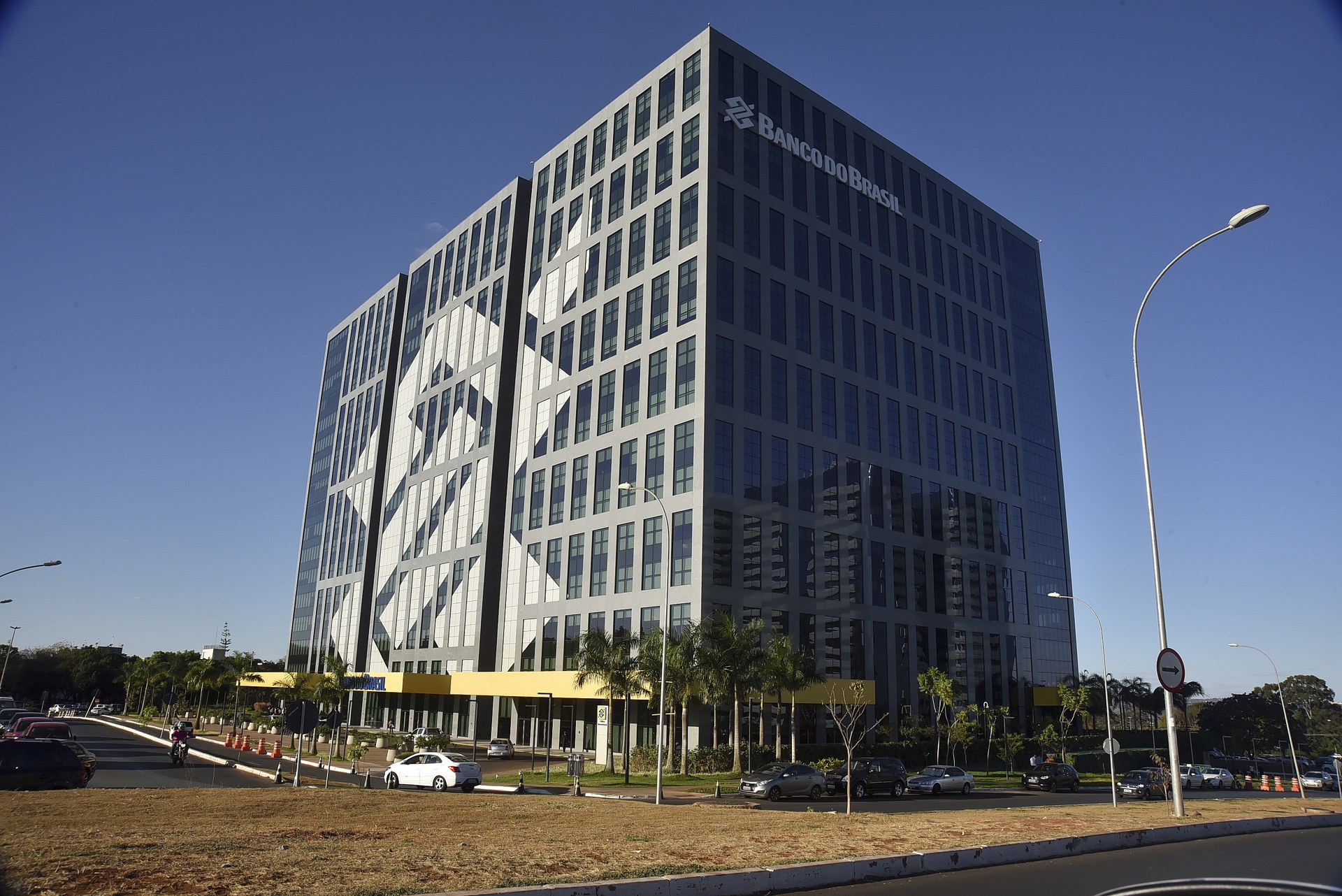
The Banco Central do Brasil, the central bank, publishes the Selic target at 13.75% a year in its official data series, which its monetary policy committee, Copom, sets. The real traded near 5.91 per US dollar in the latest quote from RT, a financial-data provider, on 23 November, so the US$ cost of Brazilian money is high by any rich-country standard.
The bank’s Focus survey of private economists, dated 13 November 2026, put the median forecast for inflation in 2027 at about 5.0%. Its median for the Selic at the end of 2027 was between 12.75% and 13%, depending on the calculation base, so rates stay in double digits for another year.
We did not obtain current long-term yields, such as the government’s inflation-linked NTN-B bond or the B3 exchange’s interest-rate futures curve, so this brief states none. Pátria has not published the remarks in a document we could open.
Frequently Asked Questions
Who is Luis Fernando Lopes?
He is a partner and chief economist at Pátria Investimentos, a Brazilian asset manager. His comments reflect his own view, not a Copom decision.
Does this mean Brazil’s central bank will not cut rates?
No. The Selic is set by Copom, and the remarks concern long-term rates, which also depend on global conditions.
Sources: Banco Central do Brasil, Selic target series 432 (api.bcb.gov.br/dados/serie/bcdata.sgs.432); Banco Central do Brasil, Focus survey expectations data, 13 November 2026 (olinda.bcb.gov.br/olinda/servico/Expectativas/versao/v1/odata/ExpectativasMercadoAnuais); Pátria Investimentos event remarks, São Paulo, 2026.
This article was produced by The Rio Times’ automated AI newsroom. Editorial responsibility: Matthias Camenzind, Publisher and Editor-in-Chief. The Rio Times also runs Ask Rio Times, which answers from 100,000+ of our own articles, the daily Latin America Power Map, and prediction-market odds on elections and markets.. How we use AI · Report an error
Brazil runoff, Sunday, October 25: Brazil runoff start time and results schedule. Latest: Brazil runoff polls, Flávio 51%, Lula 49%.