BRAZIL · RIO DE JANEIRO · CITY GUIDE
Key Facts
- Power Index Brazil ranks 1st of 14 in The Rio Times Latin America Power Index, with 75.0 points (October 2026 edition).
- People The 2022 census counted 6,211,423 residents in the city of Rio de Janeiro, the second most populous in Brazil.
- Economy Rio produced 3.8% of Brazil’s economic output in 2023, the second-largest share of any city, behind São Paulo at 9.7%.
- Politics Mayor Eduardo Cavaliere has led the city since 20 March 2026. Douglas Ruas of the conservative PL was proclaimed governor-elect on 15 October 2026.
- Security The city’s elite patrol unit, the Força Municipal, began work on 15 March 2026. State street robberies fell 20% in early 2026.
- Investment The city plans R$22.1 billion (US$4.1 billion) of investment through 2028, including R$6.3 billion (US$1.2 billion) for transport and 5,000 new buses.
This Rio de Janeiro city guide covers Brazil’s second-largest city, home to 6,211,423 people (2022 census) and known for beaches and mountains. It explains who runs the city in 2026, how safe and well connected it is, and what daily life is like.

Rio de Janeiro at a Glance
Rio de Janeiro is a city of 6,211,423 residents, according to the 2022 census run by IBGE, Brazil’s national statistics office. Only São Paulo is bigger.
Rio was Brazil’s capital until the federal government moved to Brasília in 1960. It is now the capital of the state of Rio de Janeiro, which shares its name.
In 2012 UNESCO, the United Nations cultural agency, listed Rio’s setting between mountain and sea as a World Heritage site. People from Rio call themselves cariocas, and the word appears throughout this Rio de Janeiro city guide.
The city is not the same as its state or its metropolitan area. This guide covers the city itself and shows state and federal decisions where they matter.
How Rio Makes Its Living
IBGE’s municipal accounts for 2023 show Rio producing 3.8% of Brazil’s economic output, the second-largest share of any city. São Paulo led with 9.7%, and the national capital Brasília followed with 3.3%.
Rio’s economy leans on services such as tourism, banking, media, health care and public administration. Petrobras, the state-controlled oil company, and BNDES, the national development bank, both have their headquarters in the city.
The oil fields off the coast of Rio state feed the city’s energy sector. Our guide to Brazil’s natural resources explains why that matters for the national budget.
The city government says it will invest R$22.1 billion (US$4.1 billion) through 2028 on transport, security, flood control and public services. Mayor Eduardo Cavaliere presented the plan to the city’s advisory council, the Conselho da Cidade, in June 2026.
Tourism is a core business, from Carnival to New Year’s Eve parties on Copacabana beach and big sports events. Our guides to the Rio Marathon 2027 and the Rio Open 2027 tennis tournament show how events fill the calendar.
Neighbourhoods Every Visitor Hears About
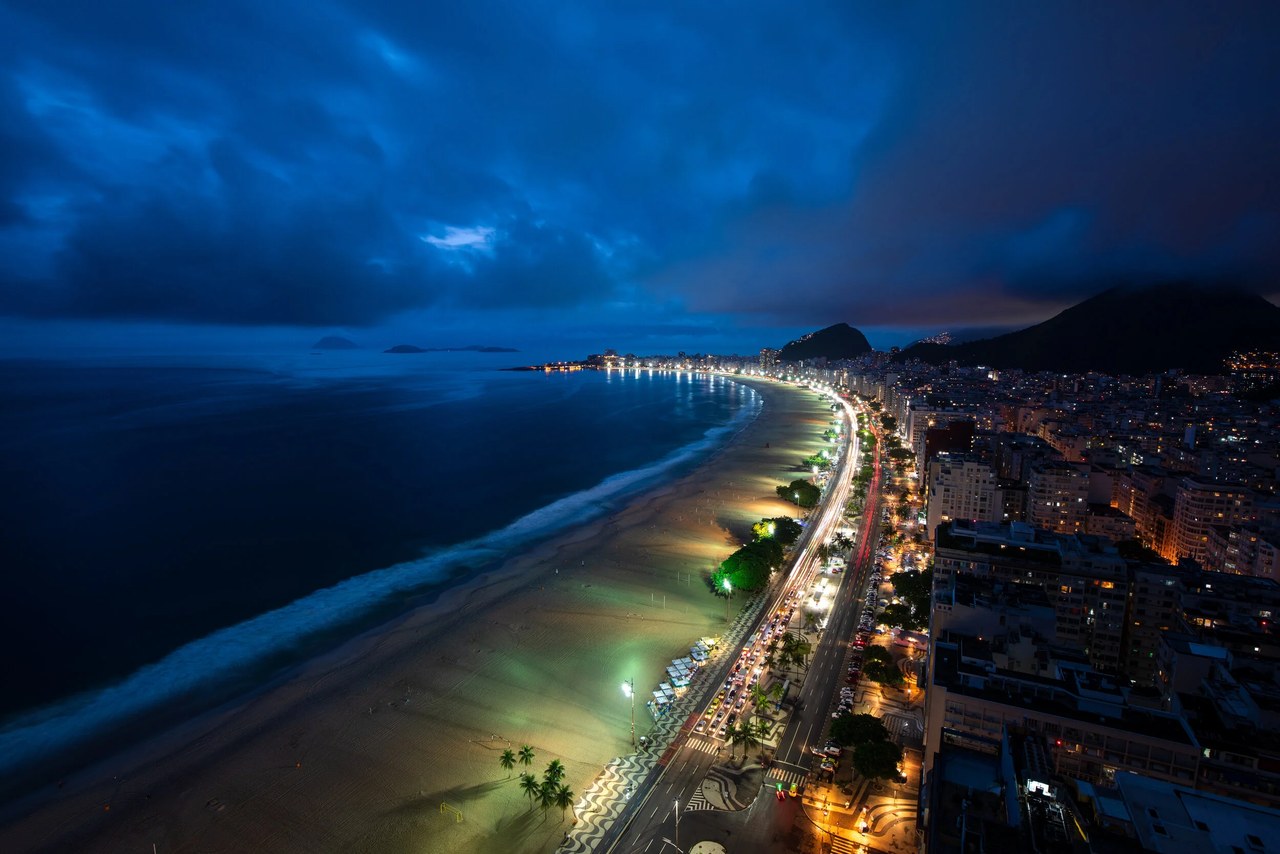
The Zona Sul, or South Zone, holds the beach districts of Copacabana, Ipanema and Leblon, squeezed between ocean and green hills. Copacabana’s seafront avenue and the sunset crowd on Ipanema’s sand are the postcards most visitors know.
The Centro, the historic core, holds old churches, the Municipal Theatre and the Lapa arches, with live samba on weekend nights. Santa Teresa, a hillside district above it, is known for artists’ studios and a vintage tram.
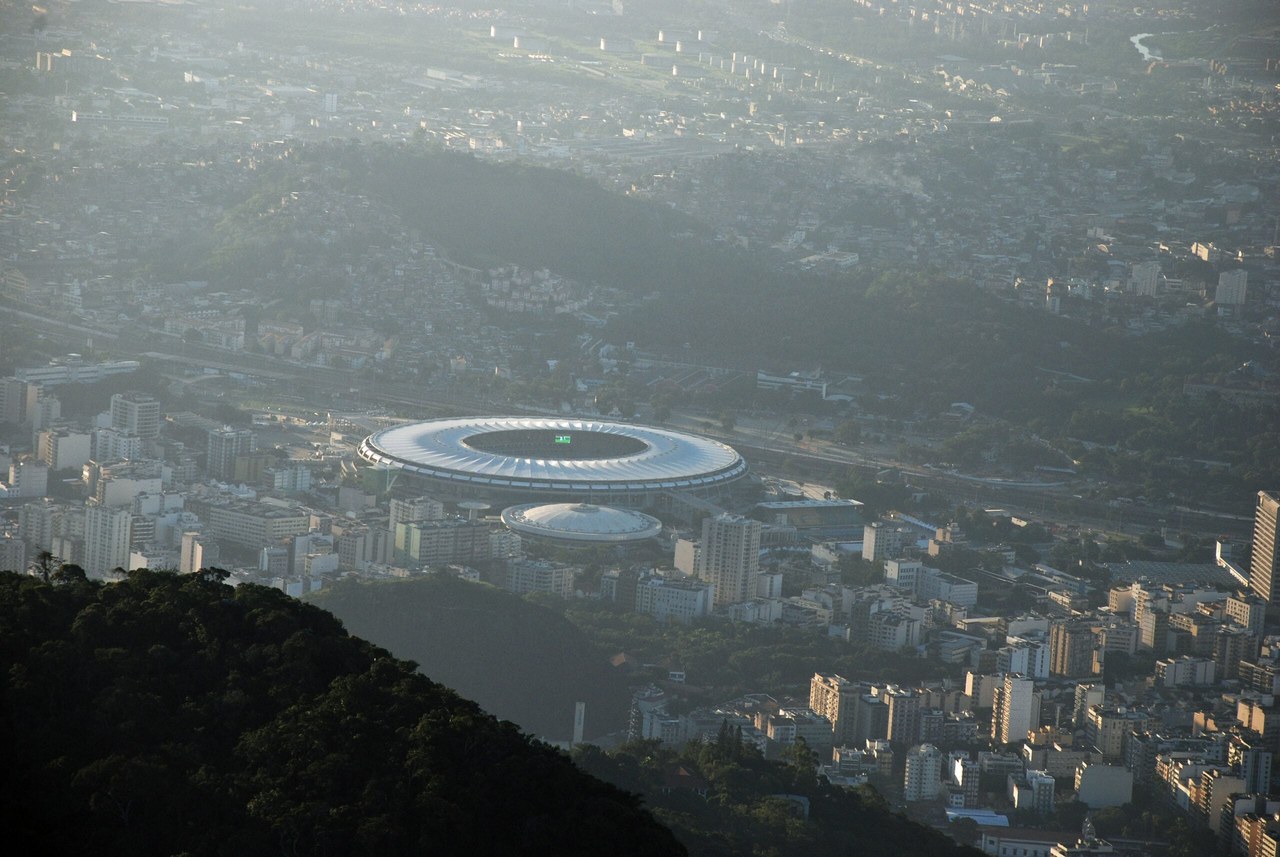
The Zona Norte, or North Zone, is home to the Maracanã stadium and many of the city’s working-class neighbourhoods. Barra da Tijuca, in the far west, is a newer district of wide avenues, malls and gated apartment blocks.
Rio also has hundreds of favelas, dense neighbourhoods built without formal planning, among them Rocinha on the hills above the South Zone. Many lack full public services, and the city’s investment plan includes works in the Rocinha, Alemão, Maré and Acari areas.
- Copacabana and Ipanema: the famous beaches, hotels and restaurants of the South Zone
- Centro and Lapa: historic buildings, theatres and the city’s live-music nightlife
- Santa Teresa: a hillside district of studios, cafes and a vintage tram
- Maracanã and the North Zone: the football stadium and everyday working-class Rio
- Barra da Tijuca: the modern western district of wide avenues and malls
Who Governs Rio de Janeiro
Eduardo Cavaliere has been mayor since 20 March 2026, when Eduardo Paes stepped down to run for state governor. Cavaliere, who had been vice mayor, finishes the four-year term that began in January 2025.
The city council, with 51 members, writes local laws and approves the budget. The mayor runs schools, health clinics, garbage collection, buses and the municipal guard.
The state government sits above the city and controls the military police and the civil police, the state’s two main police forces. It has been in turmoil since 23 March 2026, when Governor Cláudio Castro resigned.
Since then Ricardo Couto, the president of the state court of justice, has served as acting governor. On 24 April 2026 Supreme Court Justice Cristiano Zanin ruled that he stays until the court settles how a replacement is chosen.
Voters chose the next governor on 4 October 2026. Douglas Ruas of the PL, a conservative party, won 50.88% of valid votes after a recount and was proclaimed 15 October 2026.
Eduardo Paes of the PSD, a centrist party, came second with 44.16%. The electoral court threw out 274,411 votes for Anthony Garotinho, whose candidacy was rejected, lifting Ruas above 50%.
Ruas is due to take office in January 2027, and his transition team began meeting the acting governor in October 2026. Until then the state government stays in the hands of Couto.
Nationally, the TSE, Brazil’s electoral court, announced that President Luiz Inácio Lula da Silva won the 25 October 2026 runoff with 51.79%. Rio therefore has a conservative governor-elect and a federal government led by Lula’s Workers’ Party.
Security and Crime in Rio de Janeiro
Security is the issue most visitors ask about, and the answer depends on the district and the hour. The state’s Public Security Institute, known as ISP, publishes the official crime statistics.
ISP data show 24,697 street robberies in the state from January to June 2026, down 20% from the same months of 2025. These figures cover the whole state, not just the city, and count only crimes reported to the police.
The city government created the Força Municipal, an elite unit of the municipal guard, whose operations began on 15 March 2026. By 11 August 2026 the mayor said it had taken about 1,000 people to police stations and was working at 13 hotspots.
On 16 August 2026 the unit moved into Freguesia and Jacarepaguá in the south-west of the city. The city plans R$1 billion (US$185 million) for it and aims for 4,200 agents by 2028.
The city also plans R$600 million (US$111 million) to expand its camera network to 20,000 smart cameras. Policing of the favelas remains mostly a state job, carried out by the military police.
Our national guide to security and crime in Brazil explains how armed groups and police operations shape the wider picture. Visitors should read local advice before choosing where to stay and when to travel.
Transport and Infrastructure
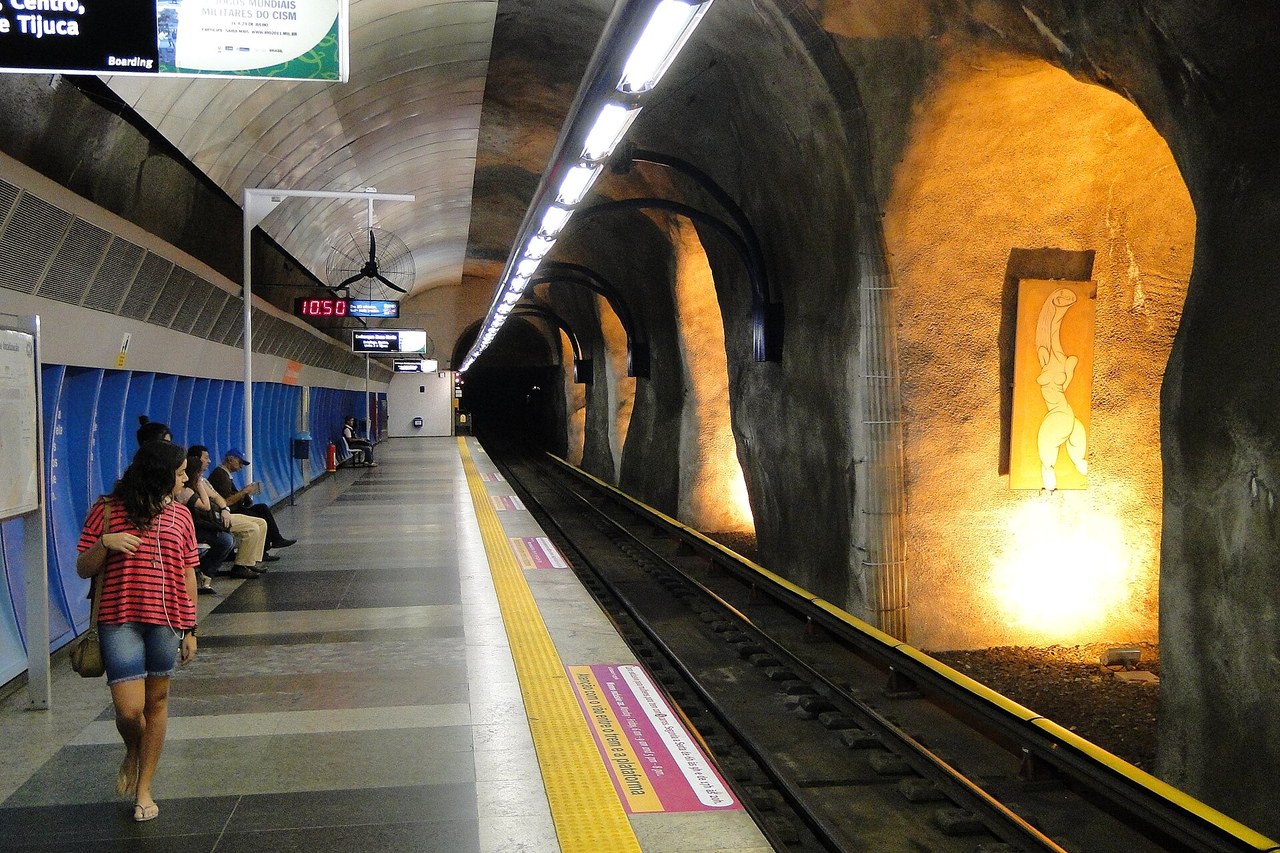
The Rio metro links the South Zone with the Centro and the North Zone. The BRT, a bus system with dedicated lanes, serves the west.
The VLT, a light-rail tram, circles the historic centre and the port. Commuter trains connect the suburbs to the centre.
The city plans R$6.3 billion (US$1.2 billion) for mobility through 2028, the biggest part of its R$22.1 billion (US$4.1 billion) investment plan. It includes 5,000 new buses, BRT expansion, new bus terminals, bike lanes and motorcycle lanes.
Paid street parking is moving to an app called Rio Rotativo Digital. On 16 October 2026 the city extended it to Bangu, Vila Isabel, Cidade Nova and Flamengo.
Galeão airport, officially Antonio Carlos Jobim International, handles most international flights. Santos Dumont Airport, near the centre, handles short domestic routes.
Daily Life and Culture
Carnival, held each February or March, fills the Sambadrome with samba schools and the streets with neighbourhood parties called blocos. It is the best-known event in the city and a large part of its tourism income.
Football is a second religion, and the Maracanã hosts Flamengo, Fluminense and the national team. The city also staged the 2016 Olympic Games.
The beach is the city’s open-air living room, and on Sundays parts of the seafront close to cars. The weather and the hills shape daily plans, since heavy rain can flood streets.
The city’s investment plan includes flood-control works in Jardim Maravilha, Acari and Realengo. Our Rio de Janeiro city page covers life in the city for newcomers.
Key Terms in Plain English
These are the institutions and terms used above. Each one is a government body, a party or a place.
- IBGE: Brazil’s national statistics office, which runs the census and the city output accounts.
- ISP: the Rio state Public Security Institute, which publishes crime statistics.
- TSE: Brazil’s Superior Electoral Court, which runs elections and publishes results.
- PL: a conservative party, the party of governor-elect Douglas Ruas; PSD is a centrist party, the party of Eduardo Paes.
- Favela: a dense neighbourhood built without formal planning, often short of public services.
- Força Municipal: an elite unit of the city’s municipal guard, set up in 2026 to patrol hotspots.
What It Means for US Readers
For US business travellers, Rio is where Brazilian oil, development-bank and media executives work, in a city making 3.8% of output. Investors who follow Petrobras, whose shares trade in New York, are following a company based in this city.
The US State Department publishes a travel advisory for Brazil, which visitors should read before a trip. Our Brazil coverage tracks the national story.
The state’s political turmoil in 2026 matters for contracts and security rules. Check the latest situation before signing anything.
The São Paulo city guide compares Brazil’s two biggest cities. This Rio de Janeiro city guide shows who sets policy in each layer of government.
What Is Not Known
This Rio de Janeiro city guide does not state the city’s 2023 output in reais or its metropolitan population. City-level crime counts for 2026 and the city’s area are also not stated.
Ruas is due to take office only in January 2027, and the exact swearing-in date is not stated here. Daily metro ridership and current fares are not stated.
Frequently Asked Questions
How many people live in Rio de Janeiro?
The 2022 census counted 6,211,423 residents in the city of Rio de Janeiro. It is the second most populous in Brazil.
Is Rio de Janeiro the capital of Brazil?
No. Brasília has been the national capital since 1960, while Rio is the capital of the state of Rio de Janeiro. Any Rio de Janeiro city guide starts from that difference.
Who is the mayor of Rio de Janeiro?
Eduardo Cavaliere has been mayor since 20 March 2026, when Eduardo Paes resigned to run for governor. Cavaliere had been vice mayor.
Who governs Rio de Janeiro state?
Ricardo Couto, the president of the state court of justice, is acting governor. Douglas Ruas of the PL won the 4 October 2026 election and is due to take office in January 2027.
How safe is Rio de Janeiro?
The state counted 24,697 street robberies from January to June 2026, down 20% from a year earlier. Safety varies by district and hour, so visitors should read local advice.
How big is Rio’s economy?
In 2023 Rio produced 3.8% of Brazil’s economic output, the second-largest share of any city. São Paulo led with 9.7%.
What is the Força Municipal?
It is an elite unit of the city’s municipal guard whose operations began on 15 March 2026. The city says it works at 13 hotspots and aims for 4,200 agents by 2028.
Sources: IBGE, Censo Demográfico 2022, results for Rio de Janeiro, Census 2022; IBGE, Produto Interno Bruto dos Municípios, 2023, December 2025; Prefeitura do Rio, Conselho da Cidade investment plan to 2028, June 2026; Prefeitura do Rio, Força Municipal (GM-Rio elite division), August 2026; Prefeitura do Rio, Secretaria Municipal de Transportes, Rio Rotativo Digital expansion to Bangu, Vila Isabel, Cidade Nova and Flamengo, 16 October 2026; Instituto de Segurança Pública do Rio de Janeiro (ISP), crime statistics, data to June 2026; Supreme Federal Court (STF), decision keeping the court president as acting governor of Rio, 24 April 2026; Superior Electoral Court (TSE) and Regional Electoral Court of Rio de Janeiro, 2026 election results and proclamation of Douglas Ruas, October 2026; Superior Electoral Court (TSE), announcement of the 2026 runoff result, 25 October 2026, 25 October 2026.
This article was produced by The Rio Times’ automated newsroom system. How we use AI · Report an error · Editorial responsibility: Matthias Camenzind, Editor-in-Chief
The Rio de Janeiro Guide
What The Rio Times publishes for foreigners in Rio de Janeiro, Brazil.
This month
Coming up in Rio de Janeiro
- Maro Plays Circo Voador in Rio de Janeiro on 3 November 3 Nov
- Hayley Williams in Brazil: Paramore's Voice Solo in Rio on November 9 and São Paulo on November 12–13 9 Nov
- JMSN in Brazil: The 'Soft Spot' Tour Hits Curitiba, Rio de Janeiro and São Paulo on November 11–14, 2026 11 Nov
- Gilberto Gil, 84, Returns to Vivo Rio Stage 13 Nov
Living in Rio de Janeiro
- Rio Carnival 2027 Parade Schedule With Dates and Tickets
- Réveillon Copacabana 2027: New Year's Eve in Rio — Fireworks, Traditions and Guide
- Rio vs São Paulo Safety for Expats, District by District
- Rio's Armed Group Map Put 1.6 Million People Under One Faction
Nightlife
Understand Brazil
Brazil runoff, Sunday, October 25: Brazil runoff: date, poll closing times and when results start. Latest: Brazil runoff polls, Flávio 51%, Lula 49%.
Brazil runoff date: Sunday, October 25, poll closing times and when results start · Brazil runoff polls: Flávio 51%, Lula 49% · Kalshi and Polymarket odds
Rotate for Best Experience
This report is optimized for landscape viewing. Rotate your phone for the full experience.
You've reached your free article limit
Subscribe to The Rio Times for unlimited access to our news, expat and nomad guides and market intelligence on Latin America and Africa.
Keep reading for free
Your first article was on us. Register with your email address to read 6 free articles every month. You will also receive The LatAm Brief: what moved in Latin American markets, politics and expat life, every weekday morning.
The Rio de Janeiro Guide
What The Rio Times publishes for foreigners in Rio de Janeiro, Brazil.
This month
Coming up in Rio de Janeiro
- Maro Plays Circo Voador in Rio de Janeiro on 3 November 3 Nov
- Hayley Williams in Brazil: Paramore's Voice Solo in Rio on November 9 and São Paulo on November 12–13 9 Nov
- JMSN in Brazil: The 'Soft Spot' Tour Hits Curitiba, Rio de Janeiro and São Paulo on November 11–14, 2026 11 Nov
- Gilberto Gil, 84, Returns to Vivo Rio Stage 13 Nov
Living in Rio de Janeiro
- Rio Carnival 2027 Parade Schedule With Dates and Tickets
- Réveillon Copacabana 2027: New Year's Eve in Rio — Fireworks, Traditions and Guide
- Rio vs São Paulo Safety for Expats, District by District
- Rio's Armed Group Map Put 1.6 Million People Under One Faction
Nightlife
Understand Brazil