Dominican Republic Elections and Parties Explained
Abinader is barred from a third run, so the Dominican Republic heads into 2028 with an open race, a built-in runoff and a fight over how much the state pays the parties.
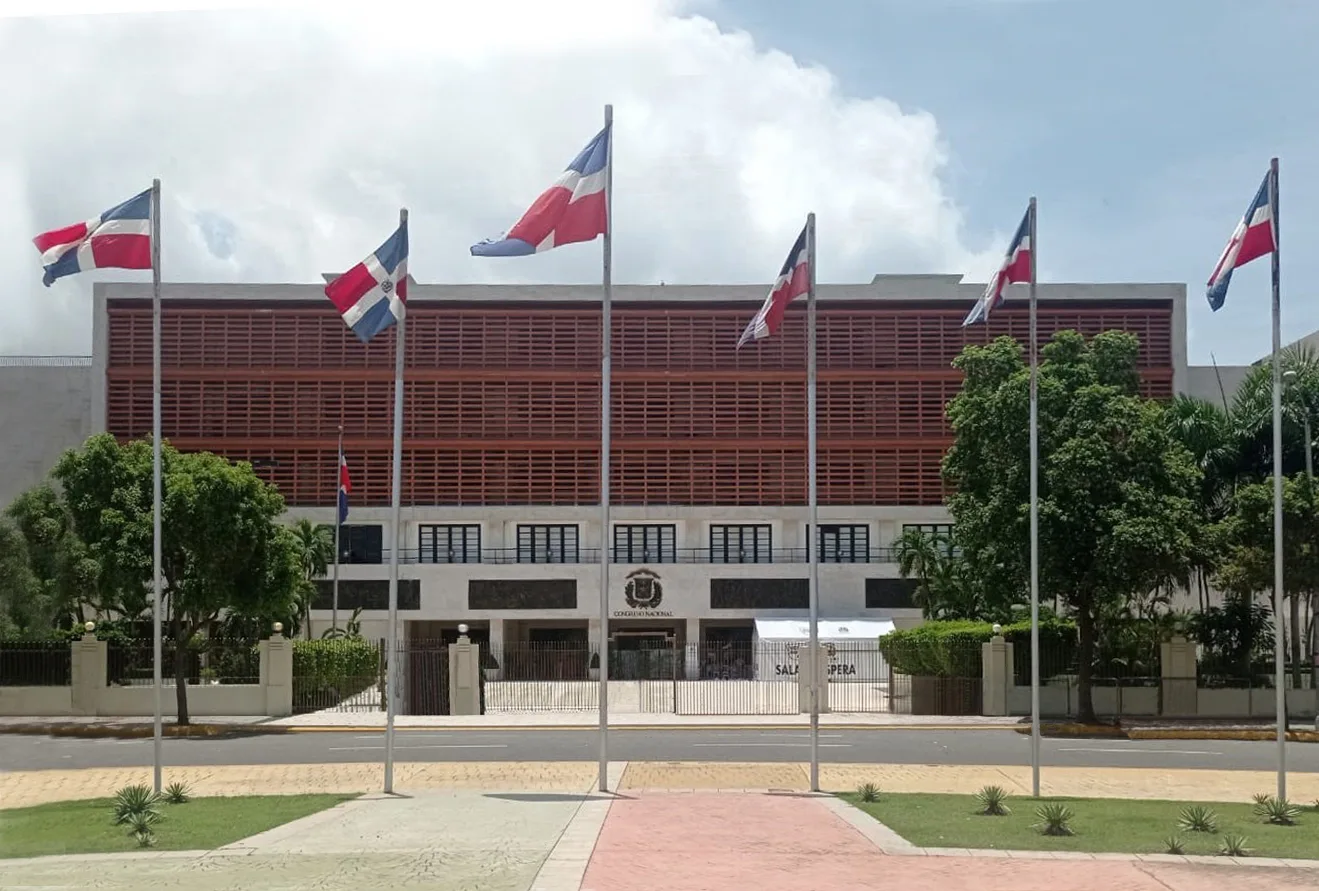
GUIDES · DOMINICAN REPUBLIC
The Dominican Republic will choose a new president on Sunday 21 May 2028, about 18 months from now, and the man who holds the office today cannot stand. Article 124 of the Constitution, proclaimed on 27 October 2024, lets a president serve a second consecutive term and then bars him from the same office and from the vice-presidency for good.
That leaves three big camps looking for candidates: President Luis Abinader's Modern Revolutionary Party (PRM), the Dominican Liberation Party (PLD) and the People's Force (Fuerza del Pueblo, FP) of former president Leonel Fernández. This guide explains the rules, the parties and the calendar for a US reader, and it says plainly what nobody knows yet.
Key Facts
- Who Governing PRM (Modern Revolutionary Party); opposition PLD (Liberation Party) and FP (People's Force).
- Rules Article 124 bars a twice-serving president from running for president or vice-president again.
- Next Presidential vote Sunday 21 May 2028; runoff, if no ticket wins a majority, Sunday 25 June 2028.
- Prediction markets Polymarket: about 70% Yes on an Alofoke party by 30 June 2027 (23 November, US Eastern 3:21 pm).
- As of Monday 23 November 2026, 20:30 GMT
Abinader is barred from a third run, so the Dominican Republic heads into 2028 with an open race, a built-in runoff and a fight over how much the state pays the parties.
Why Abinader Cannot Run Again
Luis Abinader won a second term in the election of Sunday 19 May 2024, so under Article 124 he can never again run for president or vice-president. That is our reading of the article, which says a president “podrá optar por un segundo período constitucional consecutivo y no podrá postularse jamás al mismo cargo” (may seek a second consecutive term and may never again run for the same office).
The Constitution text proclaimed on 27 October 2024 sets a four-year presidential term chosen by direct vote. The same text sets the Chamber of Deputies, the lower house of Congress, at 170 seats, down from the 190 filled in 2024.
Dominican politics was long a duel between two forces. The Dominican Liberation Party (PLD) governed from 2004 to 2020, first under Leonel Fernández from 2004 to 2012 and then under Danilo Medina from 2012 to 2020.
Fernández left the PLD in 2019 and founded Fuerza del Pueblo, which split the old governing camp. Abinader's PRM then won the 2020 election.
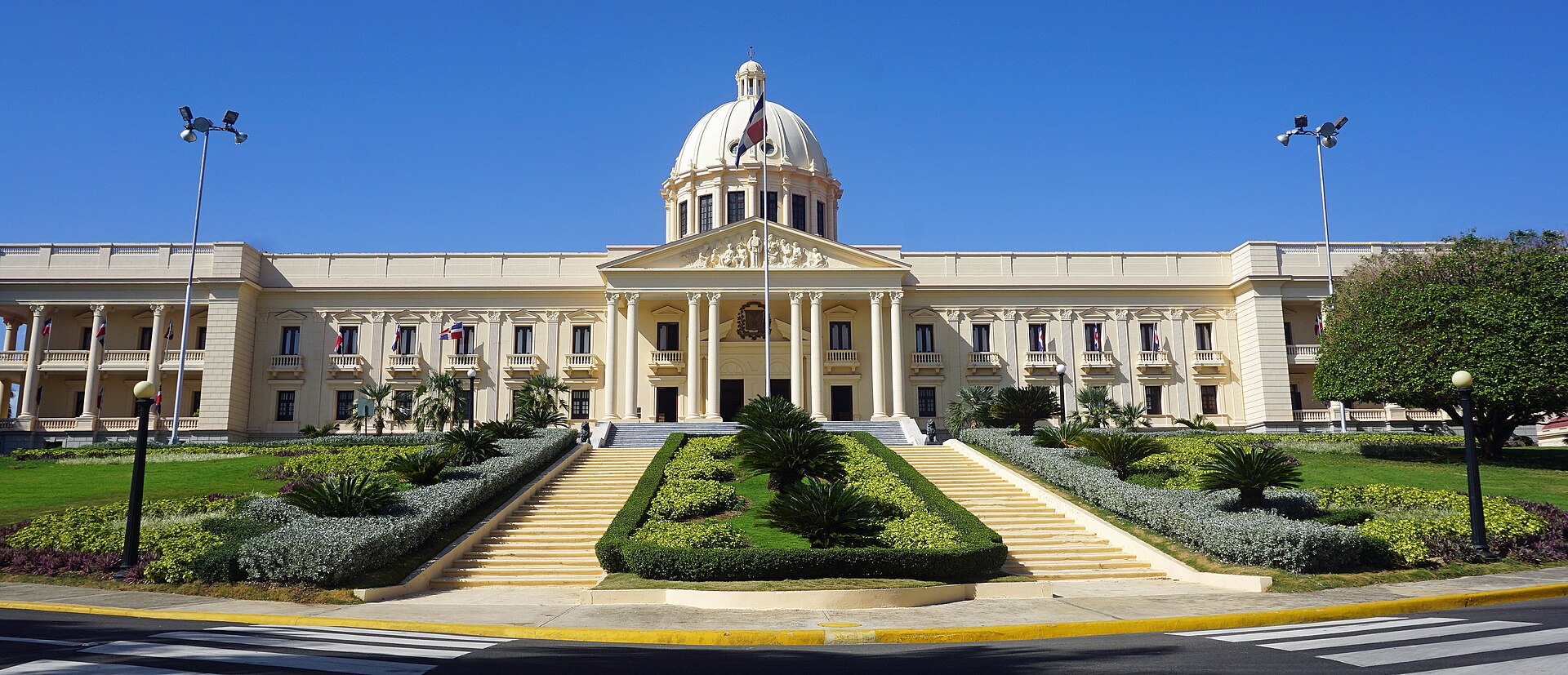
Today former president Danilo Medina leads the PLD and Fernández leads FP. Our guide to who holds power in Santo Domingo covers the presidency and Congress in more depth.
In Plain English
- JCE The Central Electoral Board (Junta Central Electoral), which runs elections and counts the votes.
- PRM Modern Revolutionary Party, the party of President Abinader.
- PLD Dominican Liberation Party, in government from 2004 to 2020.
- FP People's Force (Fuerza del Pueblo), founded by Leonel Fernández in 2019.
- PRD and PRSC Smaller parties: the Dominican Revolutionary Party and the Social Christian Reformist Party.
- Runoff A second round between the top two tickets if nobody wins more than half the valid votes.
- Polymarket A US platform where users trade real-money bets on events; prices are bets, not polls.
How Dominicans Vote
Elections come every four years on the third Sunday of May, according to Article 209 of the Constitution. Voters choose the president, vice-president and legislators that day, while a transitional provision moves the 2028 municipal elections to the third Sunday of February.
A presidential ticket needs more than half of the valid votes to win outright, says Article 209. If no ticket gets there, the top two tickets meet in a second round, a runoff, on the last Sunday of June, and the one with more valid votes wins.
Congress has a Senate and a Chamber of Deputies. Under Article 78 the Senate has one senator for each province and one for the National District, the capital district, which gives 32 seats on four-year terms.
Under Article 81 the Chamber has 158 deputies elected by territorial constituency, with at least two per province. Five more national deputies come from accumulated votes, under rules set by the Constitution and the electoral law.
Seven further deputies represent Dominicans living abroad, which brings the Chamber to 170 seats. Resolution 42-2024 of the Central Electoral Board confirms the Senate total of 32.
What the 2024 Vote Showed
JCE Resolution 41-2024, adopted on Friday 24 May 2024 after the vote of Sunday 19 May, gave Abinader 2,507,297 votes, or 57.44%. Leonel Fernández of FP followed with 28.85%, ahead of Abel Martínez, the PLD candidate, with 10.39%.
Abinader therefore won outright with no runoff. The PLD, which governed for 16 years until 2020, finished third.
Resolution 42-2024 shows the same pattern in the Senate, where the PRM and its allies won 29 of 32 seats and FP and its allies won 3. In the Chamber of Deputies, according to the board’s final count reported by Diario Libre on 24 May 2024, the PRM and its allies took 146 of 190 seats, FP and its allies 27 and the PLD and its allies 12.
Those numbers set the baseline for 2028, when no incumbent will be on the ballot. Whether the opposition will ally is not known, though our report on how the opposition is courting voters and allies tracks the early moves.
The Fight Over Party Money
Parties receive public money, and in 2026 that became a dispute. Article 224 of Law 20-23, the main electoral law, sets the state contribution, the JCE says, at 0.25% of national revenue in a year without elections.
The 2026 Budget Law, dated 16 December 2025, allots 0.12% instead. JCE Resolution 01-2026 of 15 January 2026 then shared out RD$1,620 million (Dominican pesos; about US$27 million at RD$59.54 per US$, the 23 November 2026 market rate).
The government proposed a further 50% cut, which would save about RD$810 million (about US$14 million). José Rijo Presbot, the Director General of the Budget, said on Tuesday 5 May 2026 that the proposal would go to Congress from 1 July: “el dueño del presupuesto es el Congreso” (the owner of the budget is Congress).
The JCE said in its statement of 8 May 2026 that a further cut would undermine the legal framework. It warned of an “impacto negativo en los principios de certidumbre, legalidad e integridad electoral” (negative impact on the principles of certainty, legality and electoral integrity).
Each side has a case: the government points to the power of Congress over the budget, while the JCE points to the percentage fixed in law. Our report on how the 2027 budget stalled over party funds follows the dispute; the latest reports we found, from May 2026, show the cut as a proposal, not enacted.
The 2028 Calendar and the First Hopefuls
The JCE presented its calendar for 2028 on 25 February 2026, through Mario Núñez, its national director of elections. The calendar lists 408 administrative activities and 117 legal deadlines.
Municipal elections fall on Sunday 20 February 2028, and the presidential and congressional elections on Sunday 21 May 2028. A second round, if needed, would be held on Sunday 25 June 2028.
Party primaries must be held by 3 October 2027, and conventions or internal polls may run until 31 October 2027. The start date of the pre-campaign is not known.
No one is a declared candidate, but a poll gives a first picture. ACD Media, a Dominican polling firm, questioned 1,200 people nationwide from 2 to 4 July 2026 and did not state a margin of error.
Among all respondents, in the PRM contest, David Collado, a PRM hopeful, drew 40.4% and Carolina Mejía, another PRM hopeful, 13.5%. In the PLD contest, Gonzalo Castillo, a PLD hopeful, led with 36.6% against 15.4% for Francisco Javier García, another PLD hopeful.
Among the general population, Omar Fernández, an FP hopeful, scored 47% and Leonel Fernández 29.9%, but among FP supporters Leonel leads 67% to 33%. These are hopefuls named in a poll, not formal candidates, and the party primaries are not due until 3 October 2027.
One media figure wants his own party. Santiago Matías, known as “Alofoke”, a Dominican media personality with a large social media following, said in remarks published on Wednesday 22 July 2026 that he is founding a party for 2028.
He declined offers from more than 15 existing organisations, including the PRSC, and said: “Esta decisión obedece a que nuestros objetivos en el escenario político actual necesitan un partido” (this decision is because our goals in the current political scene need a party). He asked supporters to help collect signatures for the JCE.
What the Race Means for US Readers
Dominicans abroad have seven deputies of their own in the Chamber under Article 81. We found no figure on overseas voters, and our guide to the Dominican diaspora in the United States covers the community.
In 2028 no incumbent will be on the ballot, because Article 124 bars Abinader, and the runoff rule means a crowded field can still end in a contest between two tickets. We found no poll newer than July 2026.
Investors and travellers in the United States will watch for continuity, meaning whether the next government keeps today's course. Our report on the PLD feud over its 2028 candidate shows that the old governing party is still choosing.
What Prediction Markets Say
Polymarket, a US-based platform where users trade real-money bets on events, lists the market “Alofoke forms party in DR by June 30, 2027?”. On Monday 23 November 2026 at 3:21 p.m. US Eastern time (ET) the Yes price was about 70%, with US$47,142 traded; the market resolves on jce.gob.do and ends on 30 June 2027.
That price is a bet, not a poll, and traders are wagering on whether a party is registered, not on an election result.
Why we show this: prediction markets turn real-money bets into a live probability that moves within minutes of the news, which is why investors, campaigns and newsrooms in the United States now follow them closely. We show them next to polls and official results, never instead of them.
Frequently Asked Questions
When is the next Dominican election?
Municipal elections are on Sunday 20 February 2028, and presidential and congressional elections on Sunday 21 May 2028, according to the JCE calendar. A runoff, if needed, follows on Sunday 25 June 2028.
Can Abinader run again?
No. Article 124 of the Constitution bars a president who has served a second consecutive term from running again for president or vice-president.
Do Dominicans abroad vote?
Dominicans abroad are represented by seven deputies in the Chamber under Article 81. We found no figure on overseas voters.
How does the runoff work?
If no ticket wins more than half of the valid votes, the top two tickets meet in a second round on the last Sunday of June. The one with more valid votes wins.
Who are the main parties?
The main camps are the PRM (Modern Revolutionary Party), the PLD (Dominican Liberation Party) and FP (People's Force). The PRD and PRSC are smaller parties.
Connected coverage: our Dominican Republic news page tracks the budget fight, the parties and the 2028 calendar as new official figures appear.
Sources: Constitution of the Dominican Republic proclaimed 27 October 2024 (Chamber of Deputies PDF); Central Electoral Board (JCE) Resolutions 41 to 45-2024 of 24 May 2024; JCE calendar presented 25 February 2026; JCE statement of 8 May 2026 on party funding; Law 20-23, article 224; ACD Media poll of 2 to 4 July 2026; Polymarket market page, 23 November 2026; Listín Diario (25 May 2024) and Diario Libre (5 May 2026), Dominican news outlets; Acento, a Dominican news site (25 February, 8 May, 13 July and 22 July 2026).
This article was produced by The Rio Times’ automated AI newsroom. Editorial responsibility: Matthias Camenzind, Publisher and Editor-in-Chief. The Rio Times also runs Ask Rio Times, which answers from 100,000+ of our own articles, the daily Latin America Power Map, and prediction-market odds on elections and markets.. How we use AI · Report an error
Expat Guide to Dominican Republic
What The Rio Times publishes for foreigners who live in or move to Dominican Republic.
Start here
- Dominican Republic Education and Healthcare Explained
- Dominican Republic Security and Crime Explained 2026
- Best Places to Live in the Dominican Republic 2026
- Cost of Living Santo Domingo 2026 — Rent and the Power Question
City guides
Coming up in Dominican Republic
- It's a Fake Wedding in La Romana, 28 November 2026 28 Nov
- Natalia Jiménez Plays Santo Domingo on 29 November 29 Nov
- Dominican Star Yailin Plays Santo Domingo on 5 December 5 Dec
- Festival Presidente Santo Domingo: Dominican Republic Music Event Returns on 11 and 12 December 12 Dec
Understand Dominican Republic