Benin Explained: Wadagni’s New Era, the Cotonou Port Boom and the Jihadist North

GUIDES · BENIN
Key Facts
- —Capital Porto-Novo is the official capital and seat of the National Assembly. Cotonou, the largest city and main port, is where the president and most ministries work.
- —Population About 14.8 million in 2025, according to the World Bank. Women have on average about 4.5 children (2024), so the country is young and growing fast.
- —Currency The West African CFA franc, pegged at 655.957 to the euro. That was about 578 CFA francs to the US dollar at the end of September 2026.
- —Language French is the official language. Fon, Yoruba and dozens of other languages are spoken at home and in the markets.
- —GDP About US$24.6 billion in 2025 (World Bank). Growth was 8.1 percent that year, among the fastest in Africa.
- —Government A presidential republic with no prime minister. Romuald Wadagni has been president since 24 May 2026, on a seven-year term.
Benin explained for newcomers: a small coastal state with a busy port and the largest cotton crop in the CFA franc zone. It also has a jihadist problem in the north and a new president who promises continuity.
Benin matters beyond its size for two reasons. Its port feeds Nigeria and the landlocked Sahel, and its coast is where many Americans, Brazilians and Caribbeans have ancestral roots. Understanding Benin explained properly means holding both the growth story and the narrowing of its politics in view at once.
What kind of country is this?
Benin is a narrow strip of land running about 700 kilometres north from the Atlantic. Nigeria lies to the east, Togo to the west, and Burkina Faso and Niger to the north. The coast is humid and crowded with lagoons. The north is drier savannah, with national parks on the borders.
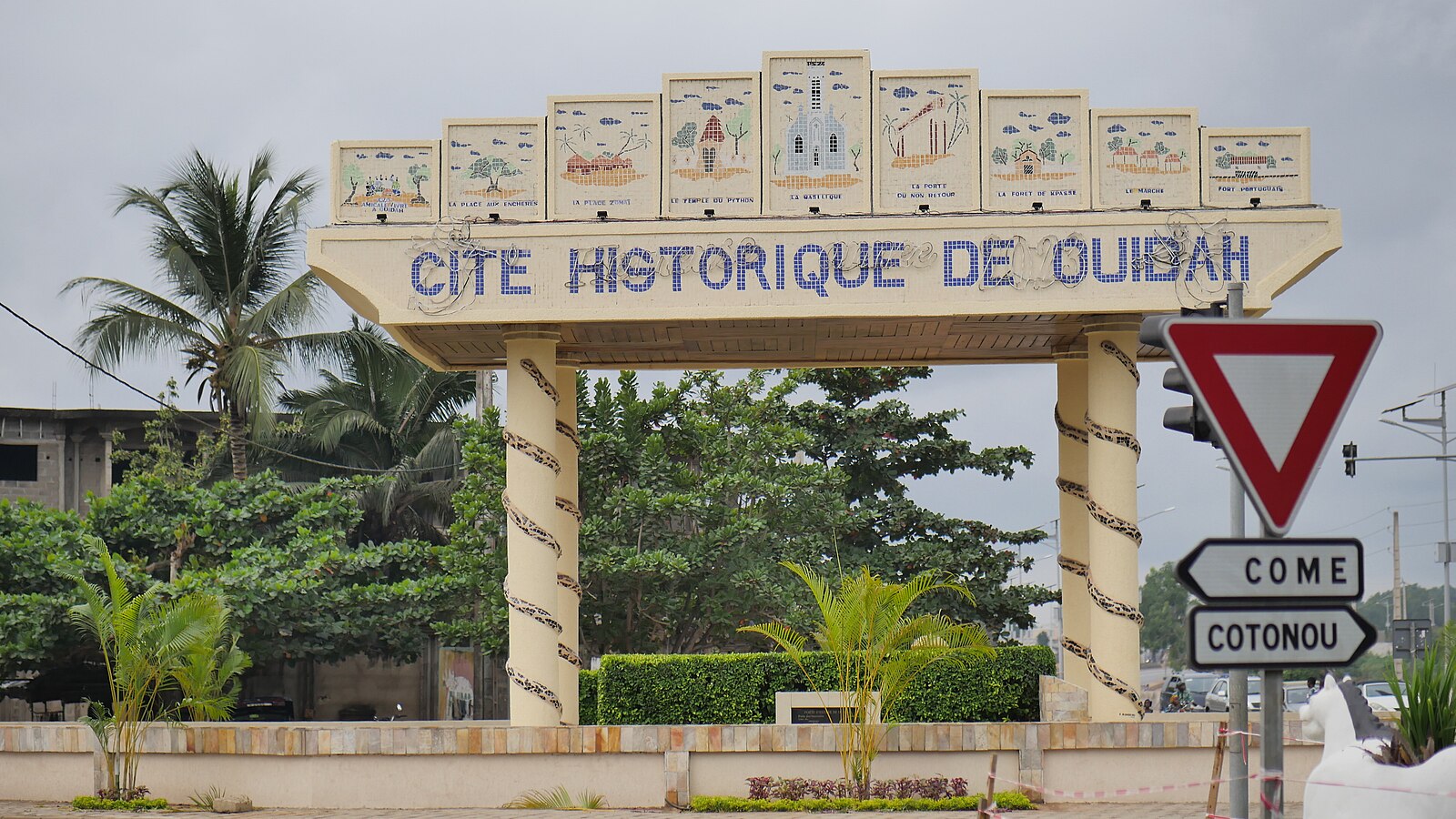
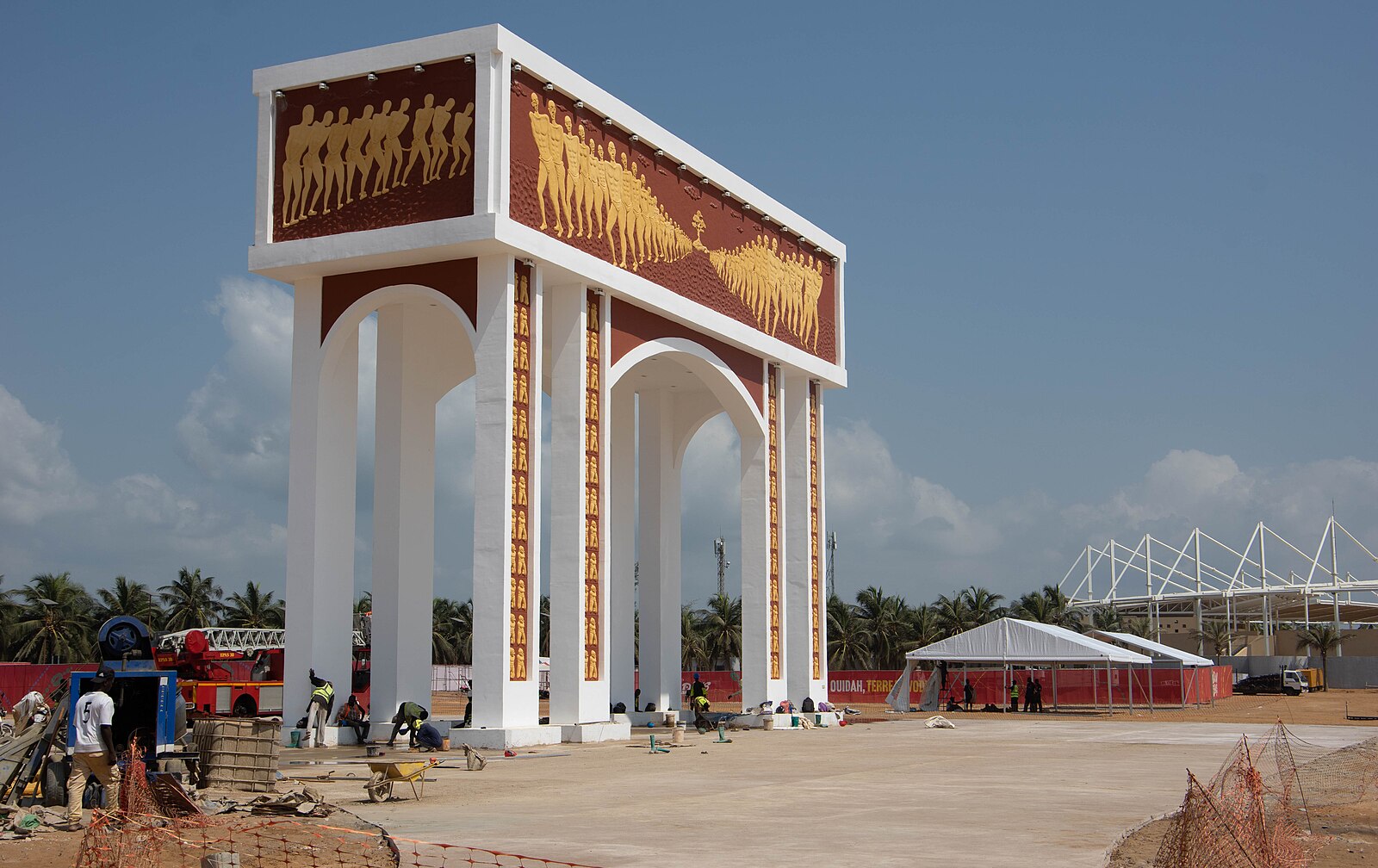
The south was the heart of the Kingdom of Dahomey, which grew rich partly on the Atlantic slave trade. Ouidah, west of Cotonou, was one of the busiest slave ports on what Europeans called the Slave Coast. That history is why Benin now courts the African diaspora in the Americas.
France colonised the territory, and it became independent as Dahomey on 1 August 1960. A string of coups followed. In 1972 Mathieu Kérékou took power and later declared a Marxist-Leninist state, renaming the country Benin in 1975.
The turning point came in 1990. A National Conference of civil society, churches and politicians stripped the military regime of power and wrote a new constitution. Benin became one of Africa’s first democratic transitions of the post-Cold War era.
The 2026 handover was the fifth democratic transfer of power since that conference, according to the Institute for Security Studies. Religion is mixed: Christians, Muslims and followers of Vodun live side by side. Vodun, a root of Haitian vodou and Brazilian candomblé, has its own national holiday each January.
Who runs Benin and how
The president is head of state and government. There is no prime minister. A vice-president, Mariam Chabi Talata, was re-elected on the winning ticket in April 2026.
Romuald Wadagni, then 49, won the presidential election of 12 April 2026 with 94.27 percent of the vote. His only rival, Paul Hounkpè, took 5.73 percent. Turnout was 63.57 percent, and the Constitutional Court confirmed the result on 16 April.
Wadagni, an economist, served as finance minister for about a decade under Patrice Talon. He was sworn in on 24 May 2026 at the Palais des Congrès in Cotonou. His government has 22 ministers and three junior ministers, with Aristide Médenou at the economy and finance ministry.
Talon, a cotton and port-logistics businessman, won the presidency in 2016 and again in 2021. He respected the two-term limit and left office in May. But he did not leave public life.
A constitutional revision adopted in November 2025 and promulgated on 17 December 2025 reshaped the system. It lengthened presidential and parliamentary terms from five to seven years. It also created a Senate that includes former heads of state.
The 25-member Senate was installed in Porto-Novo on 30 July 2026. On 6 August it elected Talon as its first president, with 24 votes in favour and one abstention.
The National Assembly has 109 seats. In the election of 11 January 2026, final results gave all seats to two pro-government parties. The Progressive Union for Renewal took 60 and the Republican Bloc 49. Turnout was 36.7 percent.
The main opposition party, Les Démocrates, won about 16 percent of the vote but no seats. Electoral rules require 20 percent nationally and in each of the 24 constituencies. The party was also unable to field a presidential candidate, because candidates need sponsorship from elected officials.
Critics say the system has narrowed. In December 2021 a special court for economic crimes and terrorism, the CRIET, jailed opposition figure Reckya Madougou. She received 20 years for complicity in terrorism. Law professor Joël Aïvo received 10 years for plotting against the state. Both denied the charges, and the government denies using the courts against opponents.
On 7 December 2025 soldiers led by Lieutenant Colonel Pascal Tigri seized state television and announced a coup. Loyal troops quickly defeated it. Nigeria sent jets and troops at the government’s request, and the regional bloc ECOWAS ordered a standby force deployed. At least 14 people were detained, and Tigri was reported to have fled to Niger.
Live Company IntelligencePorto Seguro S.A — the full investor dossier
Valuation & profitability
Price & risk
$42.8752-wk high
$55.55
Revenue trend · 6y
Ownership
Dividend
How the economy works
Benin’s economy was worth about US$24.6 billion in 2025, according to the World Bank. That is roughly US$1,660 per person. Most people work informally: the World Bank puts informal employment at 90.1 percent of workers.
The first engine is the Port of Cotonou. It handles imports for Benin and serves as a gateway for Niger, Burkina Faso and, unofficially, Nigeria. Since 2018 it has been run under a management contract with the Port of Antwerp, now Port of Antwerp-Bruges. Before 2023 it handled more than 12 million tonnes a year.
The second is cotton. Benin harvested 533,590 tonnes of seed cotton in 2025–26, the most in the CFA franc zone, ahead of Mali. For decades nearly all of it left as raw fibre.
The Glô-Djigbé Industrial Zone, 45 kilometres from the port, was built to change that. It covers 1,640 hectares and spins, weaves and sews cotton on site. Its growth is a central part of the government’s pitch to investors.
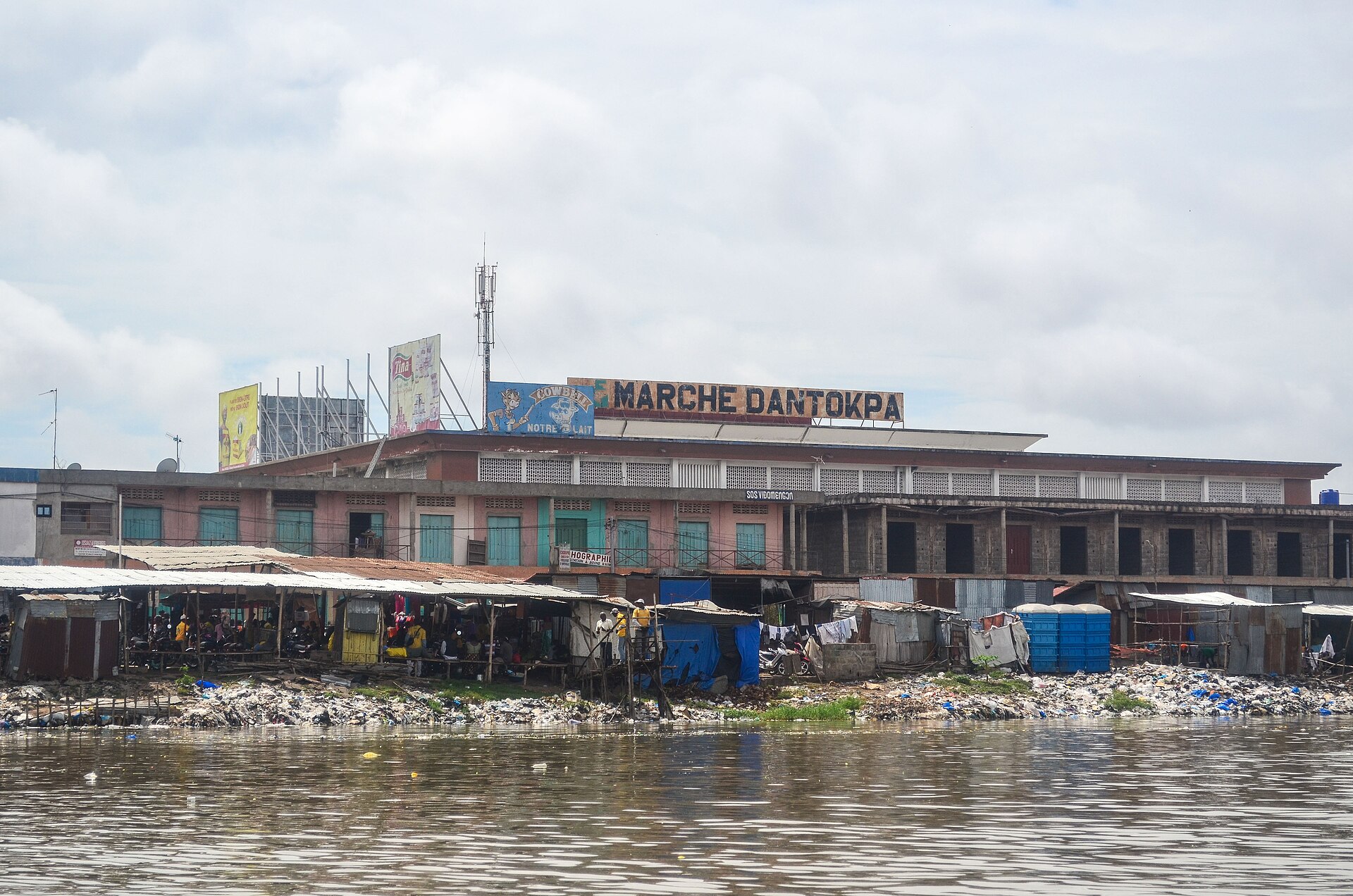
The third engine is trade with Nigeria, much of it informal. Goods flow through Cotonou’s Dantokpa market and across the land border, often to profit from price and tax gaps. Nigerian policy shifts hit Benin quickly.
The numbers have been strong. The World Bank and the African Development Bank both put 2025 growth at 8.1 percent. The International Monetary Fund’s estimate is lower, at 7.5 percent. Inflation was just 1.1 percent in 2025, helped by the CFA franc’s peg to the euro.
Public finances improved under Talon and Wadagni. Benin completed its IMF programmes in February 2026 and has borrowed on international markets, including a US$750 million Eurobond in February 2024. Moody’s raised its credit rating from B1 to Ba3 on 7 August 2026, three notches below investment grade.
Poverty remains high. The World Bank’s latest national survey, for 2021–22, found 36.2 percent of people below the national poverty line. About 72 percent of the workforce is underemployed.
What is happening right now
As of 26 September 2026, Wadagni is four months into a seven-year term. His programme is widely read as continuity with the Talon reform agenda. The budget deficit already met the regional 3 percent target in 2025, according to the World Bank.
The biggest early shift is diplomatic. Relations with the military governments of Niger and Burkina Faso soured after Niger’s July 2023 coup. Niger kept its land border with Benin shut. Niger’s prime minister attended Wadagni’s inauguration, and in early June Wadagni visited Niamey and Ouagadougou.
Both visits ended with joint statements on fighting terrorism and on reopening the border. In late July Niger set conditions for reopening, and talks on judicial and security issues continued. A full return of normal lorry traffic had not been confirmed.
The security picture in the north remains serious. In April 2025, the government said 54 soldiers were killed near the borders with Burkina Faso and Niger. The attack was claimed by JNIM, al-Qaeda’s Sahel affiliate. In early March 2026, 15 soldiers died when militants overran an army base at Kofouno.
Further attacks near the Burkina Faso border on 26 May 2026, two days after the inauguration, killed soldiers on both sides. Officials gave no casualty figure. Benin launched a 3,000-strong northern operation in 2022 and has recruited 5,000 extra soldiers.
Courts are still handling the aftermath of the December 2025 coup attempt. The CRIET has convicted several people in related cases, and proceedings against other political figures were continuing in the summer.
What to watch
The Niger border. A formal, lasting reopening would restore transit trade through Cotonou. It would also test whether the thaw with the Sahel juntas includes real security cooperation.
The northern front. Attacks in the northern border departments of Alibori and Atacora are the clearest indicator. They show whether jihadist groups are entrenching in Benin.
Growth and the budget. The IMF projects 7.5 percent growth for 2026. The 2027 budget will show whether the new team holds the deficit near 3 percent without an IMF programme.
Cotton and Glô-Djigbé. The 2026–27 harvest and the zone’s export and job figures will show whether local processing is truly scaling up.
Political space. Watch whether sponsorship rules change before the next elections, which under the seven-year terms fall in 2033. Without change, the main opposition could stay shut out.
What this means for foreigners
For investors, Benin is one of West Africa’s more predictable economies. The currency is pegged to the euro, inflation is low and the government is committed to its reform programme. The trade-off is concentrated political power and a court system that critics say is used against opponents.
For descendants of enslaved Africans, Benin offers a legal route to citizenship. Law 2024-31 of 2 September 2024 lets people who can document an ancestor deported in the slave trade apply for Beninese nationality. Applications go through the official portal, myafroorigins.bj, launched in July 2025.
For visitors, the south is the usual destination: Cotonou, Porto-Novo, the stilt village of Ganvié and the slave-route sites of Ouidah. The far north, including the W and Pendjari parks, is where most attacks happen. Check your government’s current travel advice before going beyond the main southern cities.
For businesses in Nigeria and the Sahel, Cotonou is an alternative gateway. A lasting reopening of the Niger border would make it more valuable. Continued attacks in the north would raise the cost of the overland routes.
Connected Coverage
Benin Economy Grew 8.1% in 2025 on Port and Factory Work
Moody’s Upgrades Benin’s Sovereign Credit Rating To Ba3
Benin Senate President: Patrice Talon Takes the Top Seat in the New Upper House
Nigeria Sent Its Governors to Benin to Copy a Cotton Park
Niger Explained: The Junta, Uranium, Oil and the Break With West Africa
Togo Explained: The Gnassingbé System, the Port of Lomé and What to Watch in 2026
Sources: Population, output, inflation and poverty from the World Bank; election results from Benin’s Constitutional Court and electoral commission as reported; security incidents from Benin’s government and armed forces as reported by AFP and regional agencies. All accessed 26 September 2026.
- World Bank — population and GDP, World Development Indicators
- World Bank — Benin overview: growth, inflation, poverty and employment
- 2026 presidential election — Constitutional Court final results as compiled
- Institute for Security Studies — Benin hands Romuald Wadagni a growth mandate
- Africanews — Wadagni sworn in, 24 May 2026
- Al Jazeera — Benin’s foiled coup of 7 December 2025
- Al Jazeera — 11 January 2026 legislative election results
- Africanews — Wadagni visits Niger and Burkina Faso
- Africanews — 15 soldiers killed at Kofouno, March 2026
- Ghana News Agency — Benin says 54 soldiers killed, April 2025
- AFP via Ahram Online — Madougou and Aïvo sentenced, December 2021
- Ecofin — Port of Antwerp management contract for Cotonou, 2018
What Is Not Known
Whether the Niger border is fully and durably open. Both governments have committed to reopening it, but the pace and terms of normal trade remain unclear.
How many soldiers and civilians have died in the north. The government does not publish a running toll, and several recent attacks came without official casualty figures.
How much Talon still shapes policy from the Senate. The new chamber can ask for second readings of laws, but how often it will use that power is untested.
How many people have gained citizenship under the diaspora law. Officials have published ceremony figures but no total of applications or approvals.
Frequently Asked Questions
Who is the president of Benin in 2026?
Romuald Wadagni, the former finance minister, has been president since 24 May 2026. He won the 12 April 2026 election with 94.27 percent of the vote and serves a seven-year term.
What is the capital of Benin?
Porto-Novo is the official capital and seat of parliament. Cotonou is the largest city, the main port and the place where the president and most ministries work.
Is Benin a democracy?
Benin has held regular elections and five democratic transfers of power since 1990. Critics note that the main opposition party holds no seats in parliament and could not field a presidential candidate in 2026.
What does Benin’s economy depend on?
The Port of Cotonou, cotton and trade with Nigeria. The World Bank puts 2025 growth at 8.1 percent and GDP at about US$24.6 billion.
Is it safe to travel to Benin?
The south, including Cotonou, Porto-Novo and Ouidah, is the usual destination for visitors. The far north near Burkina Faso and Niger has seen repeated jihadist attacks, so check official travel advice first.
Can descendants of enslaved Africans become citizens of Benin?
Yes. Law 2024-31 of 2 September 2024 lets people who can document an ancestor deported in the slave trade apply for nationality through the official portal myafroorigins.bj.
This article was produced by The Rio Times’ automated newsroom system. How we use AI · Report an error · Editorial responsibility: Matthias Camenzind, Editor-in-Chief