Togo Explained: The Gnassingbé System, the Port of Lomé and What to Watch in 2026

GUIDES · TOGO
Key Facts
- —Capital Lomé, a port city on the Atlantic coast. Togo is a narrow West African state of 56,785 square kilometres, wedged between Ghana and Benin, whose port serves the landlocked Sahel.
- —Population About 8.6 million in 2025, according to the World Bank. Roughly 44 percent live in towns and cities.
- —Currency The West African CFA franc, shared with seven other countries and fixed at 655.957 to the euro. It traded at about 577 CFA francs to the US dollar in late September 2026.
- —Language French is the official language. Ewe in the south and Kabiyè in the north are the main national languages, among about 40 ethnic groups.
- —GDP About US$11.9 billion in 2025, or roughly US$1,380 a head (World Bank). Real growth has averaged about 6 percent a year since 2022.
- —Government A parliamentary republic since the constitution of 6 May 2024. Executive power sits with the President of the Council of Ministers, Faure Gnassingbé, in office since 3 May 2025.
Togo explained for outsiders: a small coastal state run by one family since 1967. Its deep-water port now serves much of the Sahel, and a 2025 switch to a parliamentary system is seen by critics as a way round term limits.
Togo explained in two sentences: it is one of Africa’s smallest countries, yet Lomé runs sub-Saharan Africa’s busiest container port. That matters to any firm shipping to Burkina Faso, Mali or Niger, and to anyone watching how West African rulers keep power.
What kind of country is this?
Togo is a sliver of land. It covers 56,785 square kilometres, roughly the size of Croatia, and has only about 56 kilometres of Atlantic coastline. From that short coast it runs north to the border with Burkina Faso.
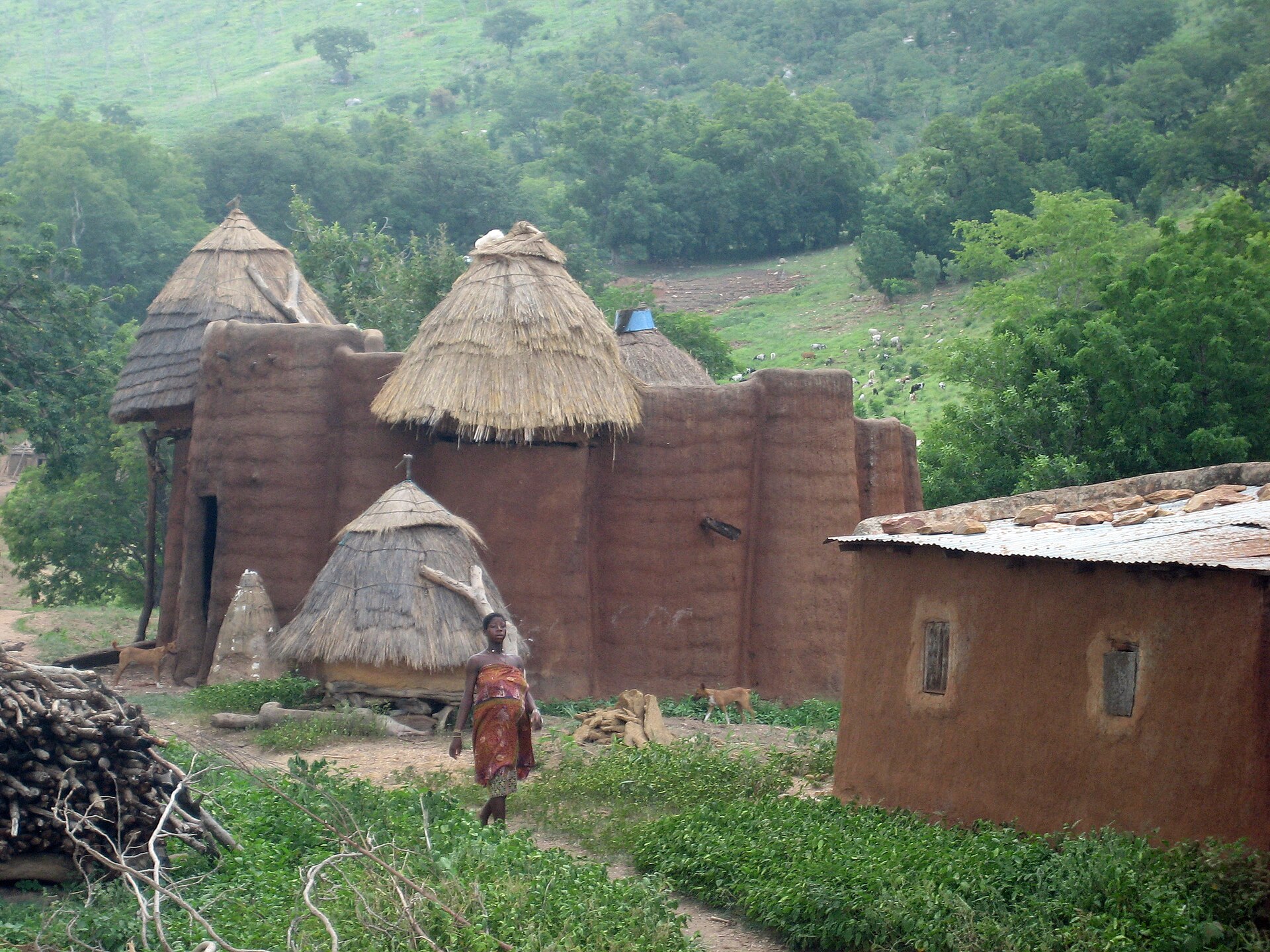
The south is humid, crowded and commercial. Lomé sits right on the coast next to the Ghanaian border, and the port, the markets and most formal jobs are there. The north is drier, hillier and poorer, with farming villages and the towns of Kara and Sokodé.
The divide shows in the numbers. The World Bank puts poverty at 58.2 percent in rural areas against 26.2 percent in towns and cities. About 44 percent of Togolese are urban, so most people still live in the countryside.
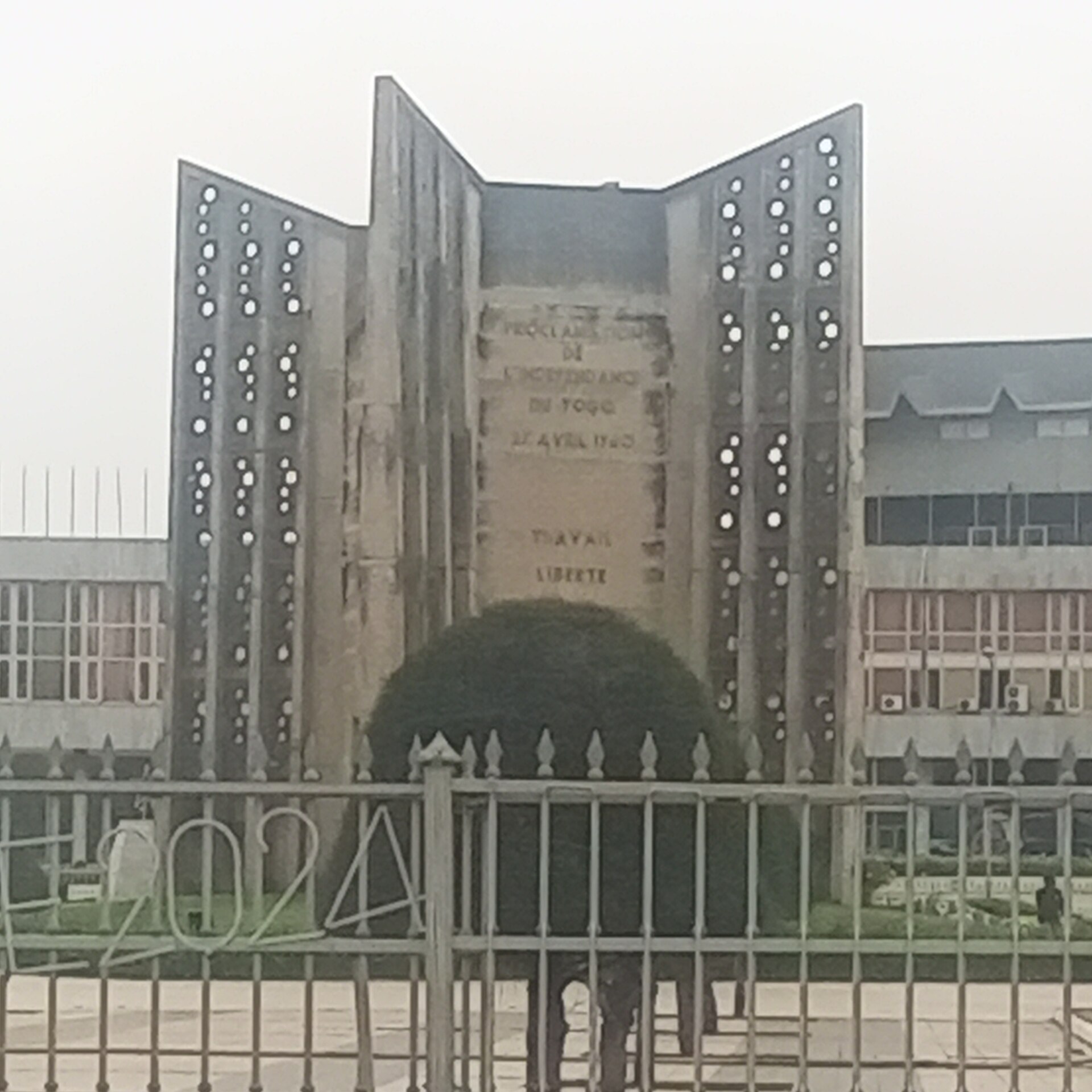
Togo was a German colony before the First World War. France then ran it under a League of Nations mandate and later a United Nations trusteeship. It became independent on 27 April 1960. French remains the language of government, schools and business.
Its people are diverse. There are about 40 ethnic groups, the largest being the Ewe in the south and the Kabye in the north.
Who runs Togo and how
The short answer is the Gnassingbé family. Gnassingbé Eyadéma, an army officer, took power in a coup in January 1967 and ruled until he died on 5 February 2005. The army installed his son Faure Gnassingbé the same day.
Under regional pressure, the son stepped down on 25 February 2005 and ran in an election on 24 April. He won with slightly more than 60 percent in a disputed count. Hundreds of people were killed in the violence that followed, according to a United Nations fact-finding mission.
He was re-elected in 2010, 2015 and 2020, the last time with about 71 percent, according to the Constitutional Court. A 2019 constitutional amendment had already reset the clock on presidential term limits. Then came a bigger change.
On 19 April 2024 the National Assembly adopted a new constitution by 87 votes to none. It was promulgated on 6 May 2024 and turns Togo into a parliamentary republic. The president is no longer chosen by voters but by the two chambers of parliament, for four years, renewable once.
Real power moved to a new office, the President of the Council of Ministers. The holder is chosen by the National Assembly majority and serves six-year terms with no limit, according to the Africa Center for Strategic Studies. Faure Gnassingbé took that office on 3 May 2025. Parliament elected Jean-Lucien Savi de Tové as the largely ceremonial head of state.
The ruling party, the Union for the Republic (UNIR), controls both chambers. It won 108 of the 113 seats in the National Assembly on 29 April 2024, on 61 percent turnout. A new 61-seat Senate followed in 2025. UNIR took 34 of the 41 elected seats, and the head of state appointed the other 20.
Opposition parties call the new system a constitutional coup. In June 2025, young protesters took to the streets of Lomé after the arrest of a rapper critical of the government. Civil society groups said at least seven people died, and the protests faded under heavy policing.
How the economy works
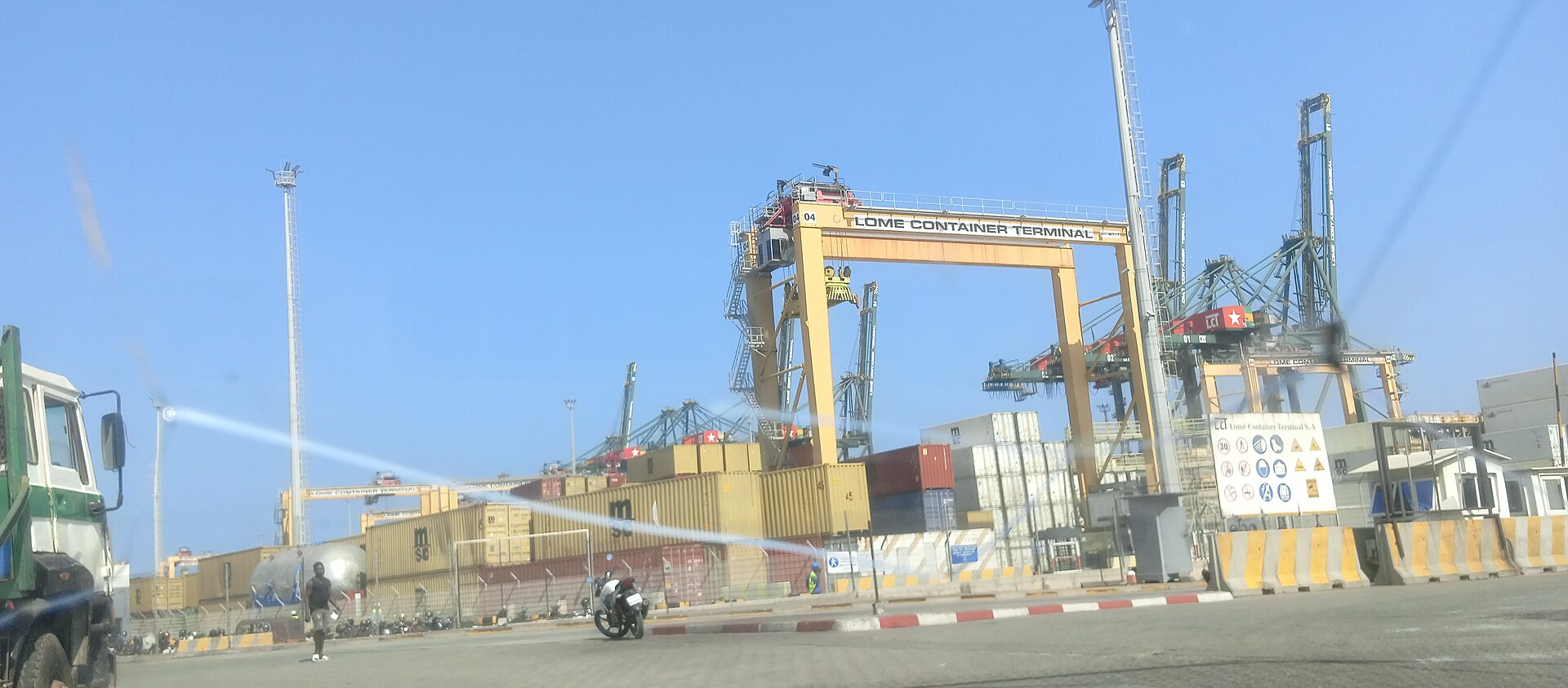
Togo lives off trade. The Port of Lomé is its biggest economic asset, often described as the only natural deep-water port on the West African coast. Dredging finished in September 2025 took its access channel to 18.6 metres.
That depth lets the largest container ships call, with capacities of 19,000 to 24,000 twenty-foot units. The port handled about 2.4 million containers, measured in twenty-foot equivalent units, in 2025, up 16 percent. Lloyd’s List ranked it 91st in the world in its 2026 table, the top container port in sub-Saharan Africa.
Much of the cargo is not for Togo at all. A large share is transhipment, moved between ships, or transit freight trucked north to Burkina Faso, Mali and Niger. When those landlocked countries fell out with other coastal neighbours, Lomé gained traffic. Overall throughput reached 30.64 million tonnes in 2024.
Togo’s own exports are modest and concentrated. In the second quarter of 2026 they reached 295.7 billion CFA francs (about US$513 million), up 29.5 percent. Phosphates led with 15.8 percent, ahead of clinker for cement and refined petroleum products.
India bought 40.6 percent of those exports, Burkina Faso 17.7 percent and Ghana 7.8 percent. Imports in the same quarter came to 562.1 billion CFA francs (about US$974 million). The trade deficit is a permanent feature, paid for partly by port and transit services.
Agriculture still produces about a fifth of output, according to World Bank data. The World Bank expects mining, light manufacturing and new power generation to drive growth. It projects real growth easing from an estimated 5.9 percent in 2025 to 5.0 percent in 2026.
Prices are stable. Average inflation was 0.4 percent in 2025, down from 2.9 percent in 2024, according to the national statistics institute INSEED. The euro peg, run by the regional central bank BCEAO, keeps the currency steady but leaves Togo no independent monetary policy.
The public finances are under an International Monetary Fund programme. The 42-month Extended Credit Facility, approved in March 2024, totals about US$400 million. On 29 June 2026 the IMF board completed two reviews at once, releasing about US$110.8 million.
Parliament adopted the 2026 budget on 29 December 2025 at 2,751.5 billion CFA francs (about US$4.77 billion), up 14.8 percent. The World Bank expects the deficit to narrow from 3.5 percent of output in 2025 to 3.0 percent from 2026. It sees public debt near 64.8 percent of output.
What is happening right now
As of 22 September 2026, the political picture is one of consolidation. Faure Gnassingbé governs as President of the Council of Ministers with overwhelming majorities in both chambers.
The opposition is trying to regroup. On 25 August 2026, eight parties, three political groupings and allied civil society organisations launched a coalition in Lomé. It demands institutional reforms to restore what it calls democratic order, though several major opposition formations stayed out.
One detention is drawing attention abroad. Marguerite Gnakadé, a former armed forces minister and sister-in-law of Faure Gnassingbé, was arrested in September 2025 after calling for his departure. RFI reported on 17 September 2026 that she had spent a year in detention. Earlier reports said she was on hunger strike.
The northern Savanes region remains the security worry. Armed groups linked to al-Qaeda operate across the border in Burkina Faso. A state of emergency has applied since 2022 and was most recently renewed in March 2026. Official figures cited by Africa Defense Forum put the toll at more than 60 dead from January to July 2025. Most, 54, were civilians.
The government is responding with hardware and diplomacy. Togo is expected to receive four Embraer A-29 Super Tucano light attack aircraft, a deal worth about US$82 million. In January 2026 it extradited Burkina Faso’s former junta leader, Paul-Henri Sandaogo Damiba, to Ouagadougou to face trial.
Abroad, Faure Gnassingbé has become a mediator. He has led the African Union’s mediation between the Democratic Republic of Congo and Rwanda since April 2025. On 20 September 2026, a meeting co-chaired by the United Nations Secretary-General and the African Union Commission chairperson endorsed that role.
The economy is holding up. The 2026 Lloyd’s List ranking confirmed the port’s climb, and second-quarter exports jumped. The tax office is also preparing firms for certified electronic invoicing under the 2026 budget law.
What to watch
The first Togo–Russia intergovernmental commission meets in Lomé from 29 September to 1 October 2026. It covers trade, the economy, scientific research and education. Watch whether it produces concrete deals rather than statements.
The African Union mediation on eastern Congo runs on a six-month roadmap from July to December 2026. Progress, or its absence, will shape Faure Gnassingbé’s standing abroad.
The 2027 budget is the next fiscal marker. Last year’s budget cleared parliament on 29 December, after a 43-day shuttle between the two chambers. The IMF programme, which runs into 2027, will set the tone for spending and debt.
Port numbers are the best single gauge of the economy. Watch quarterly trade data from INSEED and container volumes. A border reopening elsewhere in the region could draw Sahel freight away from Lomé.
On security, watch the annual state-of-emergency renewal in the Savanes, due again around March 2027. Any attack near the Burkina Faso border is the other signal. On rights, watch the Gnakadé case and how police handle any opposition rallies.
What this means for foreigners
Entry is straightforward for Africans and needs planning for everyone else. Since 18 May 2026, citizens of all African countries can stay up to 30 days without a visa. They must file an online travel declaration at voyage.gouv.tg at least 24 hours before arrival.
Americans, Europeans and other non-Africans need an e-visa from the same platform. The official site says applications must be made at least five days before arrival and that visa on arrival is suspended. Check fees and processing options there before booking.
Money is simple in one respect. The CFA franc is pegged to the euro, so euro-based costs are predictable. The same currency works in Benin, Côte d’Ivoire, Senegal and the rest of the monetary union.
For business, Togo sells itself as a logistics base. The port, a stable currency and a reform-minded tax office are real advantages. The trade-offs are a small domestic market, rising tax digitisation that foreign firms must plug into, and limited political competition.
Travel north needs care. The US State Department advises against travel to the border region near Burkina Faso and to areas north of Kandé. It says foreigners need special government authorisation to travel in the Savanes.
Politically, foreigners should expect continuity. The system built by the Gnassingbé family has survived coups in neighbouring countries, street protests and a constitutional overhaul.
Connected Coverage
Lomé Port Becomes West Africa’s Deepest Container Hub as Sahel Trade Reroutes
Togo’s Former Armed Forces Minister Is on Hunger Strike After a Year Without Trial
Togo Tells Businesses to Get Ready for Certified Electronic Invoicing
Togo-Flagged Tanker Trend: Iran Claims Strike Near Hormuz, Not Confirmed
Côte d’Ivoire Explained: The Country, the Economy, the Election Aftermath and What to Watch
What Is Not Known
Who follows Faure Gnassingbé. The 2024 constitution removed the old term limits for the head of government, and no successor has been named. The ruling party has not said how it would choose one.
How deep the security threat runs. Official casualty figures for the Savanes appear irregularly. Independent reporting in the north is restricted, and the state of emergency limits access. The true toll of attacks since 2022 is uncertain.
How much of the port’s growth is lasting. Part of Lomé’s gain came from Sahel freight rerouted away from other corridors. If regional borders normalise, some of that traffic could move again, and no public forecast sets out that risk.
When Marguerite Gnakadé will be tried. The prosecution has not published a trial date, and the authorities have not commented publicly on the length of her detention.
When certified e-invoicing starts. The tax office has briefed businesses but has not published a go-live date or full technical specifications.
Sources: Population, output and growth from the World Bank. Constitution and elections from the Inter-Parliamentary Union and the Africa Center for Strategic Studies. Port data from Lloyd’s List via AFP and the Togolese government. Trade and inflation from INSEED via Togo First. Entry rules from voyage.gouv.tg and the US State Department. All accessed 22 September 2026.
- World Bank — Togo population, GDP and growth (open data)
- World Bank — Togo country overview
- IMF — Executive Board completes combined third and fourth ECF reviews, 29 June 2026
- IPU Parline — National Assembly election, 29 April 2024
- Africa Center for Strategic Studies — Togo revises constitution to eliminate term limits
- République togolaise — Port of Lomé ranked 91st by Lloyd’s List
- Togo First — Q2 2026 exports (INSEED data)
- République togolaise — 2026 finance law adopted
- Togo First — UN and AU endorse Togo-led DRC–Rwanda mediation
- Voyage.gouv.tg — official entry and e-visa platform
- US State Department — Togo travel advisory, 9 March 2026
Frequently Asked Questions
Who runs Togo in 2026?
Faure Gnassingbé, as President of the Council of Ministers, the office that holds executive power under the 2024 constitution. He took it on 3 May 2025. Jean-Lucien Savi de Tové is the largely ceremonial President of the Republic, elected by parliament.
Why did Togo change its constitution?
The constitution promulgated on 6 May 2024 turned Togo into a parliamentary republic. The opposition calls it a constitutional coup, because the new head of government serves six-year terms with no limit and is chosen by parliament rather than by voters.
Why does the Port of Lomé matter?
It is a natural deep-water port serving the landlocked Sahel as well as Togo. It handled about 2.4 million twenty-foot container units in 2025, up 16 percent, and Lloyd’s List ranked it the top container port in sub-Saharan Africa.
What currency does Togo use?
The West African CFA franc, fixed at 655.957 to the euro and shared across the West African monetary union. It traded at about 577 CFA francs to the US dollar in late September 2026.
Is it safe to travel to Togo?
Lomé, the coast and the central hills are the usual destinations for visitors. The northern Savanes region, near Burkina Faso, is under a state of emergency. The US State Department advises against travel to the border area and north of Kandé, and foreigners need special authorisation to enter the Savanes.
Do Americans and Europeans need a visa for Togo?
Yes. Non-Africans apply for an e-visa at voyage.gouv.tg at least five days before arrival, and visa on arrival is suspended. Since 18 May 2026, African citizens can stay up to 30 days without a visa after filing an online declaration.
This article was produced by The Rio Times’ automated newsroom system. How we use AI · Report an error · Editorial responsibility: Matthias Camenzind, Editor-in-Chief