Benin Senate President: Patrice Talon Takes the Top Seat in the New Upper House
Benin elected former president Patrice Talon as the first president of its newly created Senate on 6 August 2026, giving the businessman-turned-politician a fresh institutional perch months after he completed two terms as head of state.
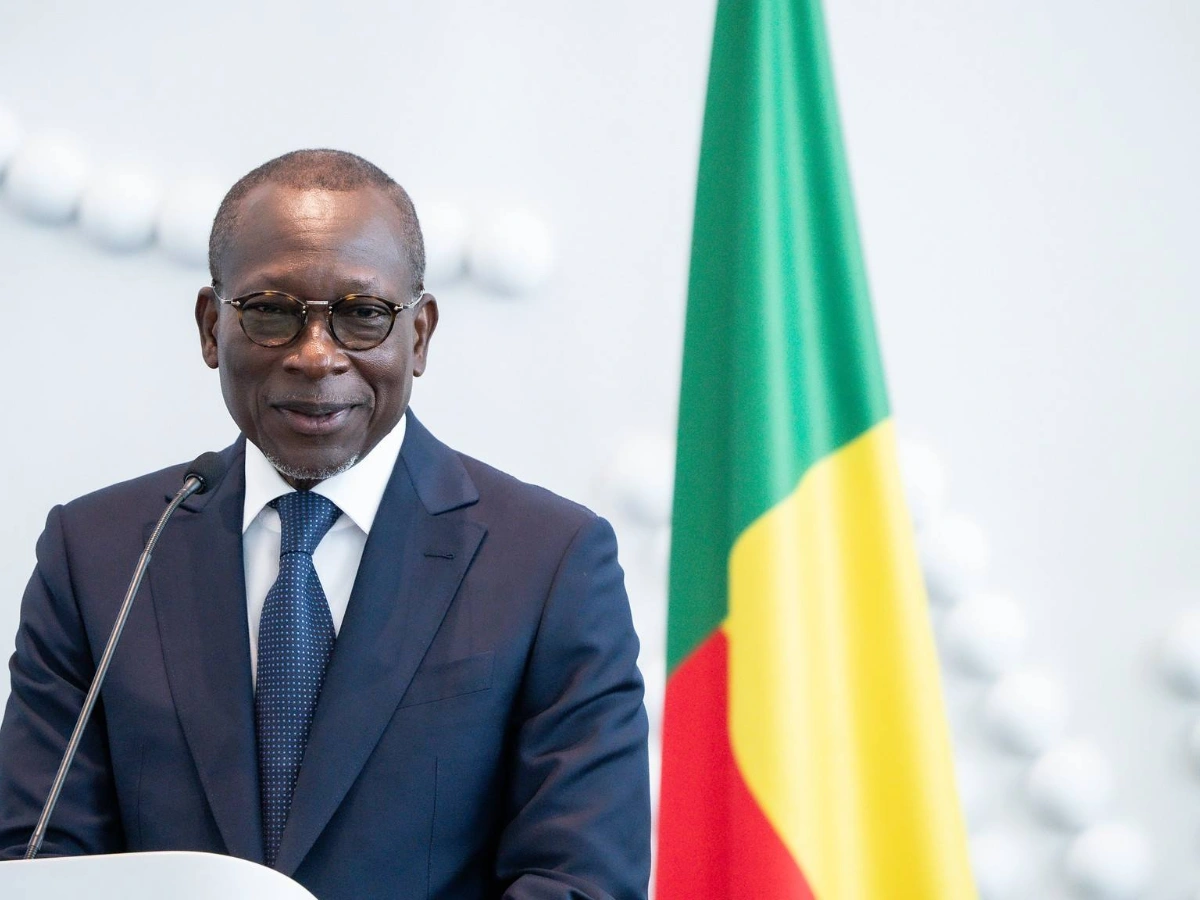
Benin · POLITICS
Key Facts
Senate vote: Patrice Talon was elected president of Benin’s Senate on 6 August 2026 with 24 votes in favour, none against and one abstention.
Chamber installed: The 25-member upper house was formally installed on 30 July 2026 in Porto-Novo, Benin’s capital.
Constitutional origin: A constitutional revision adopted in November 2025 and promulgated on 17 December 2025 created the Senate, turning Benin from a unicameral to a bicameral system.
Mandate length: The Senate’s first mandate runs five years, covering the 2026–2031 legislative term.
Talon’s background: He served as Benin’s president from 2016 to 2026 and built his fortune in cotton and Cotonou’s port, earning the nickname “king of cotton.”
Critics’ concern: Analysts argue the Senate gives Talon a durable institutional platform in a chamber shaped by the political order he left behind.
Benin elected former president Patrice Talon as the first president of its newly created Senate on 6 August 2026, giving the businessman-turned-politician a fresh institutional perch months after he completed two terms as head of state.
A swift vote for the Benin Senate president
Patrice Talon took 24 of the 25 votes cast in the upper chamber, with none against and one abstention. He was elected alongside the rest of the bureau: Louis Vlavonou, the former National Assembly president, as vice-president; Alassane Seidou, a former interior minister, as rapporteur; and Adidjatou Mathys as deputy rapporteur. The result was announced on 6 August 2026, exactly one week after the Senate was formally installed in Porto-Novo on 30 July.
The vote was cleared by the Constitutional Court, which ruled on 3 August that the Senate’s rules of procedure, adopted on 30 July, conformed to the constitution. Talon left the presidency on 24 May 2026, handing over to his former finance minister Romuald Wadagni, who won the election of 12 April. We covered the chamber’s installation in Benin installs its new Senate.
The 25-member chamber is Benin’s first-ever upper house, born from a constitutional revision adopted in November 2025 and promulgated on 17 December 2025. That reform transformed the country’s legislature from a unicameral to a bicameral system.
Talon will lead the chamber for the 2026–2031 legislative term; each post on the executive bureau carries a five-year renewable mandate. Official framing describes the new chamber as a tool to “regulate political life,” strengthen national unity and support state functioning.
From cotton king to Senate president
Before winning the presidency in 2016, he was already Benin’s most prominent businessman, widely known as the “king of cotton” and a dominant force in Cotonou’s port operations.
His two terms as president, from 2016 to 2026, were marked by what the Atlantic Council described as a radical strengthening of the executive branch and a reduction of political competition. The Africa Center for Strategic Studies noted that Benin’s democratic trajectory shifted sharply under Talon, with greater executive dominance and weaker political pluralism.
Germany’s Federal Ministry for Economic Cooperation and Development (BMZ) has acknowledged that Talon’s reforms also delivered state-capacity gains, including higher revenue and improvements in water, energy, education and transport infrastructure. That dual record makes Benin a case study in reform paired with tighter political control.
Live Company IntelligencePorto Seguro S.A — the full investor dossier
Why the Senate matters beyond ceremony
Critics argue the Senate is not simply a revising chamber. Only membres de droit — former heads of state, former National Assembly presidents and former Constitutional Court presidents — could stand for president or vice-president of the chamber. That rule, not general eligibility, is why Talon won. Nicéphore Soglo and Boni Yayi sit in the Senate on the same basis.
Several analysts see the chamber as a mechanism for managing succession after Talon’s exit from the presidency. It could function as a veto or delay point in the legislative process and a way to entrench elite consensus around the post-Talon order.
Foreign Policy reported in 2021 that Benin’s democracy was already under strain after procedural reforms shut opposition parties out of that year’s vote. The new Senate, critics say, adds another layer of institutional architecture that preserves access to state power for the outgoing ruler’s network.
What the Senate may do in practice
The official justification for the reform rests on institutional stability, national unity and a stronger constitutional order. Supporters point to the need for a second chamber that can slow legislation and represent broader societal interests.
Detractors see a buffer for succession management and a platform that keeps Talon politically central without him holding the presidency. The chamber’s composition, heavily shaped by the political order Talon leaves behind, reinforces that reading.
For businesses and foreign partners, the immediate question is whether the new bicameral system slows or stabilises decision-making. The answer will depend on how the Senate exercises its legislative powers in its first session.
What to watch next
The Senate’s early legislative agenda will signal whether it operates as a genuine revising chamber or as a consolidation tool. The first test will be how it handles bills passed by the National Assembly during the 2026–2031 term.
Investors and regional partners will also watch for any shift in Benin’s business climate. Talon’s executive record combined fiscal modernisation with political centralisation, and his Senate role may extend that model into a new institutional phase.
The next milestone is the Senate’s first full legislative session, where the chamber’s real weight in Benin’s political architecture will begin to emerge.
A pattern Latin America knows well
An outgoing president who builds a new chamber and then takes its top seat will read as familiar to anyone who follows the region. It is the institutional version of something Latin America has seen in various forms — a leader who leaves the palace but keeps a constitutional perch, and with it influence over what the successor can do.
For investors the question is narrower: does the Senate make policy more predictable or less? A chamber dominated by the outgoing order argues for continuity in the near term, and for a harder fight whenever Wadagni wants to change direction.
Frequently Asked Questions
When was Patrice Talon elected president of Benin’s Senate?
He was elected on 6 August 2026 with 24 votes in favour, none against and one abstention.
How many members does Benin’s new Senate have?
The Senate has 25 members and was installed on 30 July 2026 in Porto-Novo.
Why is Talon’s Senate presidency controversial?
Critics argue the chamber gives the former president a durable institutional platform in a body shaped by the political order he left behind after two terms in office.
Connected Coverage
For deeper context on how governance models and elite bargains intersect with external investment across the continent, read our pillar Africa: The New Scramble.
Sources
This article was produced by The Rio Times’ automated AI newsroom. Editorial responsibility: Matthias Camenzind, Publisher and Editor-in-Chief. The Rio Times also runs Ask Rio Times, which answers from 100,000+ of our own articles, the daily Latin America Power Map, and prediction-market odds on elections and markets.. How we use AI · Report an error