Who Is Cyril Ramaphosa? South Africa’s President, His Coalition and What to Watch
GUIDES · SOUTH AFRICA
Key Facts
- —Office President of South Africa since 15 February 2018. His second full term began with his inauguration on 19 June 2024 and runs to 2029.
- —Party Leader of the African National Congress (ANC) since December 2017, re-elected in December 2022. The ANC holds 159 of the 400 seats in the National Assembly.
- —Born 17 November 1952 in Soweto, Johannesburg. He is 73.
- —Before politics First general secretary of the National Union of Mineworkers in 1982. Later chief ANC negotiator at the end of apartheid, then a businessman.
- —Government Heads a Government of National Unity, a multi-party coalition formed after the ANC lost its majority in May 2024.
- —Status As of 28 September 2026, back on the campaign trail after doctors booked him off sick on 16 September. The illness has not been disclosed.
- —Money The rand traded at about R16.41 to the US dollar on 28 September 2026, according to market data.
Cyril Ramaphosa explained from the ground up: the miners’ leader who helped write a constitution, made a fortune in business and now holds together South Africa’s first coalition government.
Cyril Ramaphosa is a negotiator before he is anything else. That matters more now than at any point in his career. His party lost its majority in 2024. Almost every law he wants must now be bargained through partners who also compete with him for votes.
Early life and path to power
Matamela Cyril Ramaphosa was born on 17 November 1952 in Soweto, the large township south-west of Johannesburg. He grew up under apartheid, the system of legal racial segregation that ruled South Africa until the early 1990s.
He began studying law at the University of the North, known as Turfloop, in 1972. Student politics brought him to the attention of the security police. He was detained for eleven months in 1974 under the Terrorism Act, and again for six months in 1976 after the Soweto uprising.
He finished a law degree through the University of South Africa, a distance-learning university, in 1981. A year later he became the first general secretary of the National Union of Mineworkers (NUM). Mining was then the core of the economy, and black miners had almost no organised voice.
The union grew from about 6,000 members in 1982 to about 300,000 by 1992. That growth made Ramaphosa one of the most important black leaders inside the country while Nelson Mandela was still in prison.
In 1991 the ANC, newly unbanned, elected him secretary-general. He became its chief negotiator in the talks that ended apartheid. In 1994 he was elected chair of the Constitutional Assembly, the body that drafted the 1996 constitution still in force today.
He was not chosen as Mandela’s successor. Thabo Mbeki was. Ramaphosa left Parliament in 1996 and went into business, where he built the investment group Shanduka. He joined the board of the telecoms company MTN in 2001 and chaired it from 2002 until May 2013.
He returned to front-line politics in December 2012, when the ANC elected him deputy president. He became Deputy President of South Africa under Jacob Zuma in May 2014. That month he announced he would divest from Shanduka, with his family’s interests held in blind trusts in the meantime.
In December 2017 he won the ANC leadership by 2,440 votes to 2,261 against Nkosazana Dlamini-Zuma. Zuma resigned as head of state on 14 February 2018 under party pressure. The National Assembly elected Ramaphosa unopposed the next day.
The current office
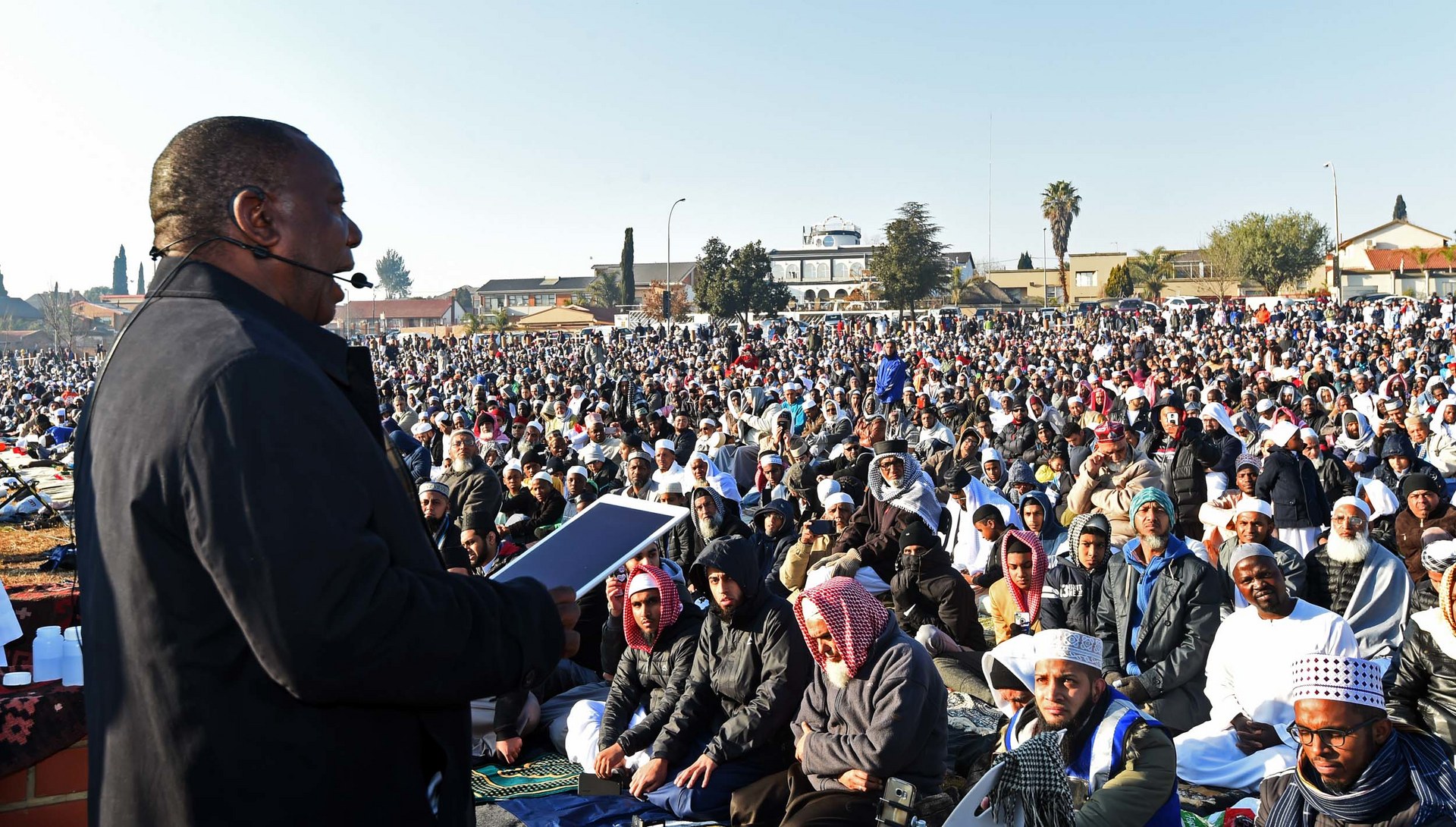
South Africa’s president is both head of state and head of government. Voters do not elect the president directly. They vote for party lists, and the 400-member National Assembly then elects the president.
The constitution allows two terms. The months he served after replacing Zuma in 2018 do not count. A president who fills a vacancy is not treated as serving a full term. His first full term began in 2019 and his second, final one in 2024.
The 2024 election was the break. The ANC’s share fell from 57.50 percent in 2019 to 40.18 percent in May 2024, leaving it with 159 seats. It needed 201 to govern alone. On 14 June 2024 the Assembly re-elected Ramaphosa by 283 votes to 44 for Julius Malema of the Economic Freedom Fighters (EFF).
The votes came from a new Government of National Unity (GNU). Its largest partner after the ANC is the Democratic Alliance (DA), a pro-market party with 87 seats. The DA has been led since April 2026 by Geordin Hill-Lewis, the mayor of Cape Town. The Inkatha Freedom Party and several smaller parties are also in the arrangement.
The deputy president is Paul Mashatile of the ANC. The government does not publish an official membership list for the coalition, so any exact count of parties should be treated with care.
On 16 September 2026 the presidency said doctors had booked Ramaphosa off public engagements after he returned from the BRICS summit in New Delhi. BRICS is a bloc of large emerging economies that includes South Africa, Brazil, Russia, India and China. Ministers stood in for him, and foreign minister Ronald Lamola led the delegation to the United Nations General Assembly.
At the same time, Mashatile was recovering from what his office called a minor medical procedure. No transfer of presidential powers was announced. By 26 September Ramaphosa was campaigning door to door for the ANC in eThekwini, the Durban metro. The presidency has not said what the illness was.
The political model
Ramaphosa governs the way he negotiated in the early 1990s. He builds consensus, moves slowly and avoids open fights inside his party. Supporters call it patience. Critics call it paralysis. Both descriptions point to the same habit.
His main economic tool is Operation Vulindlela, a joint unit of the presidency and the National Treasury launched in 2020. It tracks reforms in electricity, ports, rail, water and visas. The idea is to let private companies invest where state firms have failed, without mass privatisation.
Electricity is the clearest example. Rules were changed so that private companies could build their own generation. In 2026 he backed moving the national grid out of Eskom, the state power utility, into a separate entity. Rolling blackouts, known as load-shedding, have become far less frequent than at their 2023 peak.
Some results are visible. South Africa left the grey list of the Financial Action Task Force (FATF), the global anti-money-laundering watchdog, on 24 October 2025. The grey list flags countries under increased monitoring. Leaving it lowers the compliance burden on banks dealing with the country.
Growth has not followed at the pace he promised. Output fell 0.2 percent in the second quarter of 2026. Official unemployment rose to 33.6 percent in the same quarter, from 32.7 percent in the first. Put simply, one in three people who want work and are looking for it cannot find it. The Reserve Bank raised its policy rate to 7.25 percent on 23 September 2026.
Abroad, he practises what South Africa calls non-alignment. South Africa sits in BRICS and trades heavily with China and the European Union. In December 2023 it brought a genocide case against Israel at the International Court of Justice. That stance has cost him in Washington.
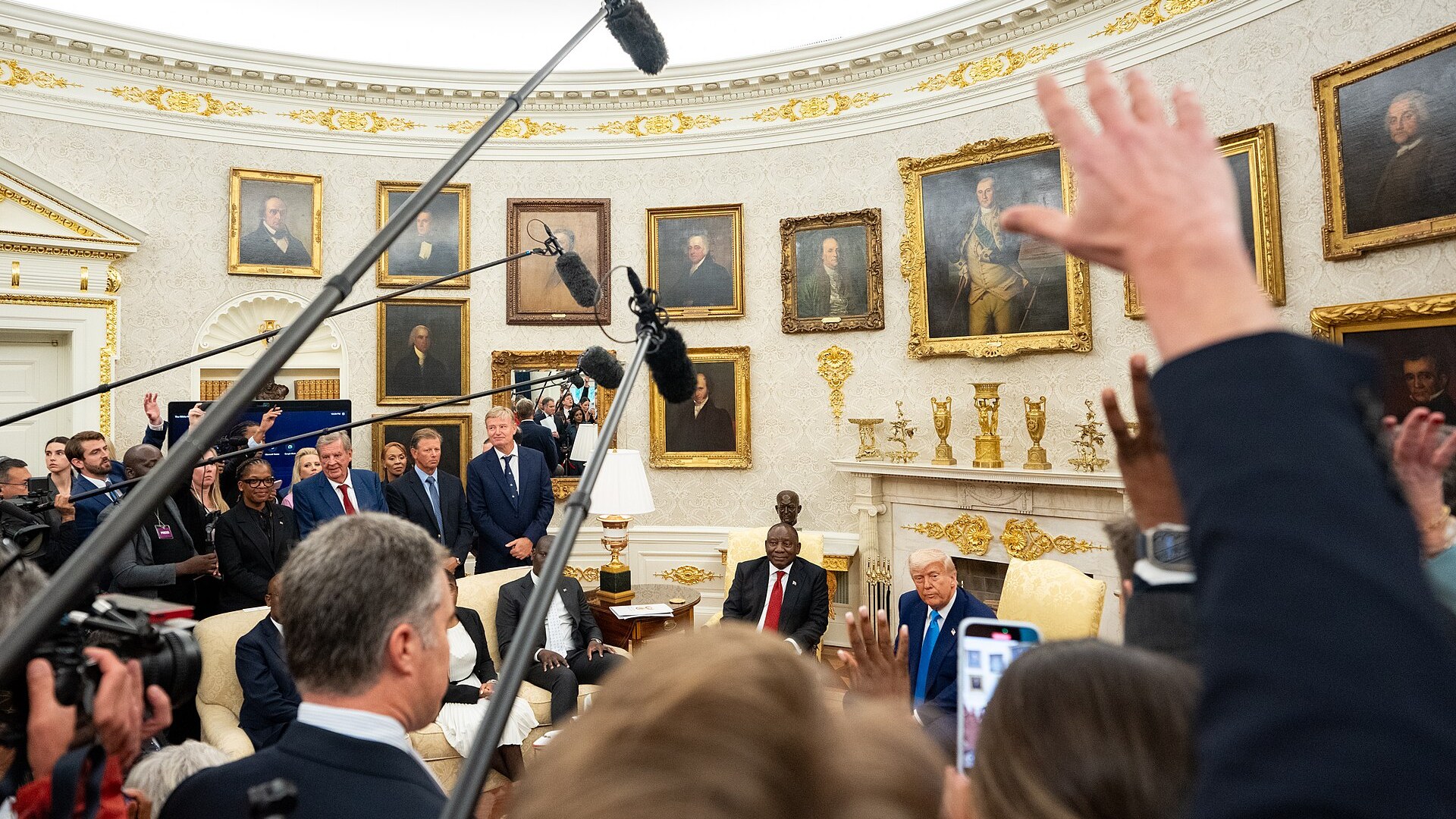
Relations with the Trump administration have been the hardest of his presidency. He met Donald Trump in the Oval Office on 21 May 2025. The United States imposed a 30 percent tariff on South African goods from 7 August 2025. The US Supreme Court struck down the emergency powers behind that tariff on 20 February 2026, and Washington replaced it with other duties. The United States also boycotted the G20 summit that Ramaphosa hosted in Johannesburg on 22 and 23 November 2025.
Controversies and critics
The biggest cloud over him is Phala Phala, his game farm in Limpopo province. On 9 February 2020 thieves took foreign currency hidden in a sofa there. Ramaphosa puts the sum at about US$580,000. The theft was reported to the head of his protection unit rather than through an ordinary police case.
The public learned of it only in June 2022, when a former intelligence chief, Arthur Fraser, laid a criminal complaint. An independent panel led by retired Chief Justice Sandile Ngcobo reported on 30 November 2022. It found a prima facie case, meaning evidence that needs answering, that he may have committed serious violations of the constitution and the law.
On 13 December 2022 the National Assembly voted 214 to 148 not to take the report further. Prosecutors announced in October 2024 that they would not charge him. The matter looked closed.
It reopened on 8 May 2026, when the Constitutional Court declared the 2022 vote unconstitutional and ordered the report sent to an impeachment committee. Ramaphosa then asked the Western Cape High Court to review and set aside the panel’s report. The court heard the case from 2 to 4 September 2026 and reserved judgment. As of 28 September 2026, no judgment had been delivered.
An impeachment committee exists but has stalled. On 24 July 2026 the Western Cape High Court barred it from holding public impeachment hearings until his review is decided, and the committee said it would appeal. It also has no evidence leader, the lawyer who would present the case, and it faces court challenges over that gap. Removal under section 89 of the constitution needs 267 of 400 votes. That is impossible without most ANC members voting against their own leader.
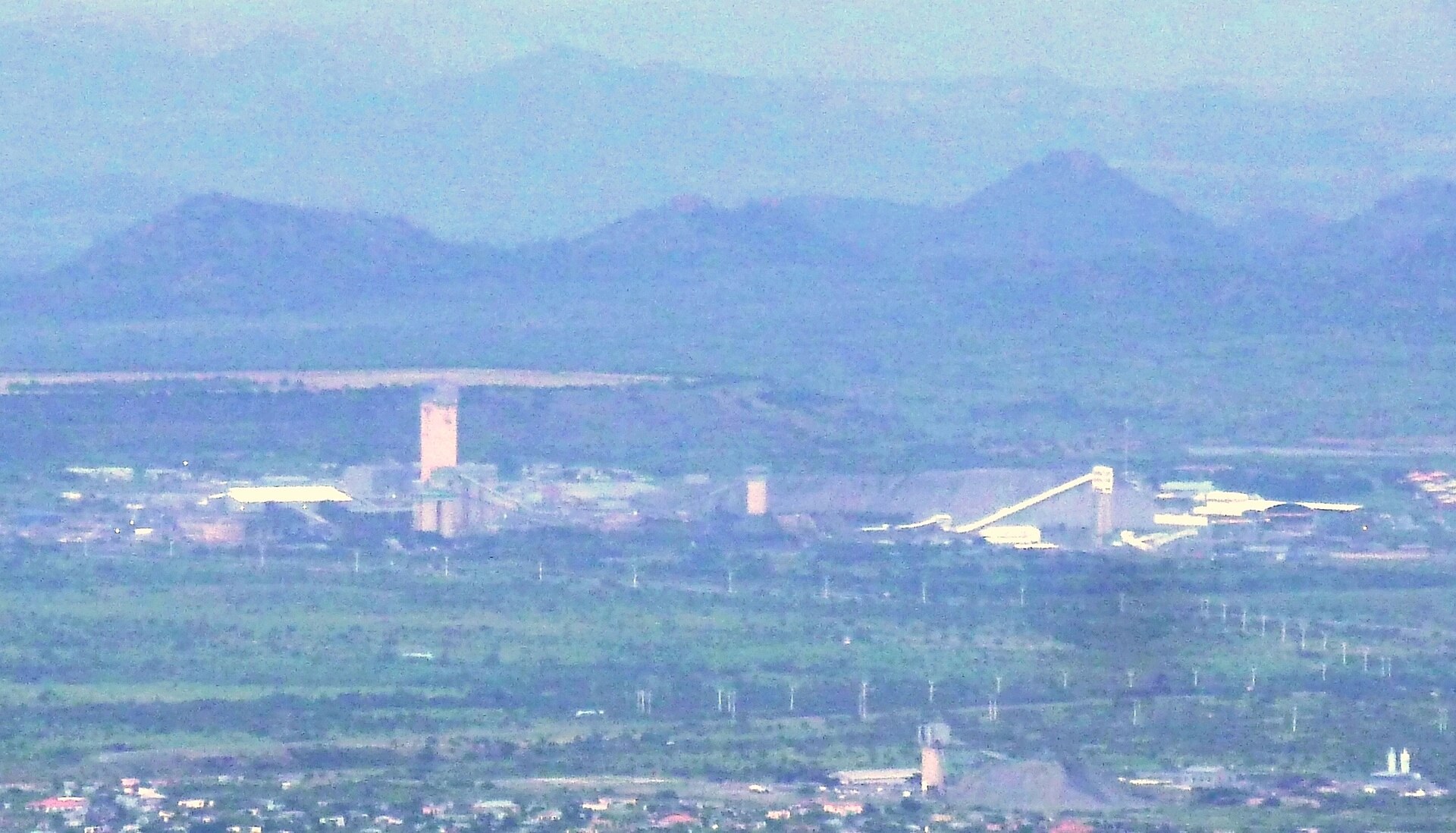
The second shadow is Marikana. In August 2012 Ramaphosa was a director of Lonmin, a platinum miner facing a violent wildcat strike. On 15 August he wrote to colleagues calling for “concomitant action” against what he called criminal conduct. The next day police shot dead 34 miners.
A judicial inquiry, the Farlam Commission, did not find that his emails caused the police operation or its timing. Many mineworkers and critics on the left have never forgiven him, and the episode is raised at almost every election.
Others fault him for his years as Zuma’s deputy, from 2014 to 2018, when corruption known as state capture spread through state companies. He told the Zondo commission, the judicial inquiry into state capture, that he chose to stay and resist from inside.
The newest criticism is about pace. In July 2025 he placed the police minister, Senzo Mchunu, on special leave. He also set up a judicial commission into alleged criminal infiltration of the police. Mchunu was still on leave in September 2026, and commentators openly asked why he had not been dismissed.
What to watch
The Western Cape High Court judgment on the Phala Phala report. If he wins, the report is set aside. The impeachment committee, however, exists by order of the Constitutional Court, so a win may not end the parliamentary process. If he loses, the bar on public hearings falls away and the committee can resume, with its staffing fight unresolved.
His health. The presidency has given no diagnosis and no formal update since 16 September 2026. A president aged 73 who is back campaigning is a good sign, not a medical bulletin.
The local government elections on 4 November 2026. They are the first national test of the ANC since it lost its majority. A poor result would weaken Ramaphosa inside his own party and strain the coalition.
The ANC succession. His second term as party leader ends at the next national conference, due in 2027. The winner there will be the ANC’s likely candidate for president in 2029, when his term as head of state ends.
Washington. Tariffs, visa restrictions on some South Africans and South Africa’s exclusion from the 2026 G20, which the United States hosts, remain unresolved. Each carries direct costs for exporters and for the rand.
What this means for foreigners and investors
Policy under Ramaphosa is predictable in direction and slow in delivery. The coalition adds another brake, because the DA and the ANC must agree. It also adds reassurance, because a pro-market party now sits in the cabinet. Markets have tended to treat coalition stability as the main political risk.
His illness does not change any law, visa rule or tax. If a president is absent, the deputy president acts. If the office falls vacant, the National Assembly must elect a new president within 30 days. That is a rule-bound process, not a constitutional crisis.
Impeachment is also less likely than headlines suggest. The two-thirds threshold is high, and no South African president has been removed under section 89. Zuma left in 2018 because his party turned on him, not because Parliament voted him out.
For daily life, what matters is visas, tax residency, banking and safety. These depend on the rules of government departments, not on the president. The South Africa explained guide covers the country, and the moving guide covers the visa routes.
Connected Coverage
South Africa Explained: The Country, the Coalition Government and What to Watch
Moving to South Africa: Visa Route Decides Everything
South Africa Residency Visa Requirements and How to Meet Them
Taxes in South Africa 2026: Residency and the Exit Charge
Opening a Bank Account in South Africa as a Foreigner
Is South Africa Safe for Expats
Retire in South Africa as a Foreigner
Ramaphosa Asks the Court to Halt His Own Impeachment Inquiry
Sources: Office and health status from the Presidency, the Phala Phala ruling from the Constitutional Court, labour data from Statistics South Africa, the grey-list exit from the National Treasury, and campaign and court reporting from South African media.
- The Presidency — President Ramaphosa booked off public engagements, 16 September 2026
- Constitutional Court — EFF and Another v Speaker of the National Assembly (CCT 35/24), 8 May 2026
- Statistics South Africa — Quarterly Labour Force Survey, second quarter 2026
- National Treasury — South Africa exits the FATF grey list, 24 October 2025
- The Presidency — Deputy President Ramaphosa on the management of his business interests, 26 May 2014
- TimesLIVE — Ramaphosa campaigns in eThekwini, 26 September 2026
- Mail & Guardian — Ramaphosa and Mashatile both off work, 16 September 2026
- Eyewitness News — impeachment committee responds to evidence-leader challenge, 28 September 2026
- ITWeb — Ramaphosa steps down as MTN chairman
What Is Not Known
What illness kept him off duty in September 2026, and whether it limits his work. The presidency has disclosed neither the condition nor any prognosis, which is common practice for heads of state but leaves the question open.
How the Phala Phala review ends. Judgment was reserved on 4 September 2026 and no date for it has been announced. Whichever side loses may appeal, which could push a final answer well into 2027.
Where the money in the sofa came from. Ramaphosa says it was the proceeds of a sale of buffalo to a foreign buyer. That account has never been tested in a court, and the Phala Phala proceedings are about process as much as facts.
How rich he is today. His business interests were placed in blind trusts in 2014, and no current, audited figure for his wealth is public. Estimates in circulation are years old.
Who succeeds him. The ANC has no declared candidates for its 2027 conference, and the outcome of the 4 November 2026 local elections will shape who runs.
Frequently Asked Questions
Who is Cyril Ramaphosa?
Cyril Ramaphosa is the president of South Africa and leader of the African National Congress. A former trade union leader and businessman, he helped negotiate the end of apartheid and has been head of state since February 2018.
Is Cyril Ramaphosa still president of South Africa?
Yes. As of 28 September 2026 he remains president. Doctors booked him off public engagements on 16 September 2026, but he was back campaigning in eThekwini by 26 September. His term runs to 2029.
What is the Phala Phala scandal?
In February 2020 thieves stole foreign currency, about US$580,000 by Ramaphosa’s own account, hidden in a sofa at his Phala Phala game farm. A 2022 panel found he had a case to answer. The Constitutional Court revived impeachment proceedings in May 2026.
Can Ramaphosa be impeached?
Only with a two-thirds vote in the National Assembly, 267 of 400 members. His party, the ANC, holds 159 seats, so removal would need most ANC members to vote against him. No South African president has been removed that way.
What is the Government of National Unity?
It is the coalition that re-elected Ramaphosa in June 2024 after the ANC lost its majority. The ANC and the Democratic Alliance are the two largest members, with the Inkatha Freedom Party and several smaller parties.
How long can Ramaphosa stay in office?
Until 2029. The constitution allows two terms, and his current term, which began in June 2024, is his second. His term as ANC leader ends at the party’s national conference due in 2027.
This article was produced by The Rio Times’ automated newsroom system. How we use AI · Report an error
Read More from The Rio Times