
SOUTH AFRICA · NATURAL RESOURCES
Key Facts
- —The basics South Africa is the world’s top producer of platinum, chromite and manganese ore, also mines coal, gold and iron ore, and had not developed its offshore gas finds as of October 2026.
- —Why it matters Mining produced about 4.8% of real value added in 2025 and employed nearly 471,000 people, and South Africa supplied 49% of US platinum imports from 2021 to 2024.
- —The numbers South Africa mined about 71% of world platinum and 45% of chromite in 2025, and mineral royalties raised about US$584 million from April to August 2026, more than triple a year earlier.
- —Who is who Gwede Mantashe, minister of mineral and petroleum resources, oversees mining rights; Eskom, the state power utility, burned about 108 million tonnes of coal in 2024/25; big miners include Sibanye-Stillwater, Valterra Platinum and Gold Fields.
- —What to watch September mining output figures are due on Thursday, 12 November 2026, and a revised Mineral Resources Development Bill, still being finalised in July 2026, would overhaul the 2002 mining law.
- —Prediction markets Polymarket gives a 76.8% chance that South Africa’s December 2026 annual inflation exceeds 5.0%, and 13.3% for 4.7% to 5.0% (15 October, 8:14 a.m. ET).
- —What it means for you US investors hold South African resource groups through New York listings such as SBSW, GFI, HMY and SSL, and US carmakers and steelmakers depend on its platinum, palladium and chromite.
South Africa sits on the world’s largest known deposits of platinum, chrome and manganese, yet water is scarce and coal dominates power. This guide explains who extracts the country’s resources, who profits and what they cost, as of October 2026.
South Africa resources begin with metals: the country mines more platinum, chromite and manganese ore than any other nation. It also digs coal, gold, iron ore and diamonds, farms on scarce water and fishes two oceans.
For US readers, those mines feed catalytic converters, stainless steel and New York-listed shares. South Africa supplied 49% of US platinum imports and 96% of chromite imports from 2021 to 2024, the US Geological Survey says.
Figures come from Statistics South Africa (Stats SA), the mining industry’s Minerals Council and the USGS Mineral Commodity Summaries 2026. Conversions use the open.er-api.com rate of 15 October 2026, R16.58 per US$.
Daily coverage is in the Rio Times South Africa section, and the guide to who runs South Africa’s economy covers big business. For the political side, see South Africa politics explained, and for geography, the guide to its nine provinces.
South Africa Resources at a Glance
Mining made up about 4.8% of real value added in 2025, calculated from Stats SA national accounts at 2015 prices. Agriculture, forestry and fishing made up about 3.2%, so farming weighs less than mining in output.
The Minerals Council, the industry body, puts mining at 6.2% of nominal GDP in 2025, or R477.1 billion (about US$28.8 billion). Its 65 members produce about 90% of the industry’s output, and it counts nearly 471,000 mining employees in 2025.
Platinum group metals (PGMs) carry the largest weight in Stats SA’s mining production index, at 27.11%, ahead of coal at 26.32%. Iron ore follows at 16.41%, gold at 10.48%, manganese at 5.65%, chromium at 4.08% and diamonds at 2.05%.
Production fell 12.7% year on year in August 2026, and mineral sales dropped 15.1% to R62.3 billion (about US$3.8 billion). The Rio Times report on August mining output breaks the fall down by mineral.
Platinum, Chrome and Manganese Lead the World
Most of South Africa’s platinum comes from the Bushveld Complex, a vast rock formation across North West, Limpopo and Mpumalanga provinces. The USGS says the Bushveld holds the world’s largest resources and reserves of PGMs.
In 2025, South Africa mined an estimated 120 tonnes of platinum, about 71% of the world total of 170 tonnes. It also mined about 70 tonnes of palladium, roughly 37% of world output, second to Russia.
South Africa’s PGM reserves, at about 63,000 tonnes, are about four-fifths of the world total, USGS figures show. PGMs clean exhaust in catalytic converters and go into chemicals, glass, electronics and hydrogen fuel cells.
Chromite, the ore of chromium used in stainless steel, is the second giant. South Africa mined about 23 million tonnes in 2025, some 45% of world output, the USGS estimates.
The Minerals Council puts 2025 chrome ore output at a record 23.9 million tonnes, with sales of R65.5 billion (about US$4.0 billion). Most leaves the country as ore or concentrate, mainly for China, after much of the local ferrochrome smelting industry was mothballed.
Manganese, a steel ingredient also used in batteries, is the third. The USGS estimates South Africa mined 38% of world manganese in 2025, by metal content, and holds about 70% of known resources.
Manganese ore exports reached a record of about 26 million tonnes in 2025, with China taking nearly 67%, the Minerals Council says. Much of the chrome travels by truck to Maputo in Mozambique, straining the N4 highway corridor, the council notes.
Gold, Iron Ore and Diamonds
Gold built Johannesburg, but its weight has shrunk. South Africa mined about 90 tonnes in 2025, under 3% of the world’s 3,300 tonnes, the USGS estimates.
High prices still paid off: the Minerals Council puts 2025 gold sales at about R185 billion (about US$11.2 billion), up 16.8%. The average gold price rose 44.1% in 2025 in dollar terms, and it passed US$5,000 an ounce in late January 2026.
Gold producers include Gold Fields (JSE and NYSE: GFI) and Harmony Gold (JSE: HAR, NYSE: HMY). South Africa’s gold mines are deep and decades old, so costs are high and profits swing with the gold price.
Most iron ore is railed from the Northern Cape to Saldanha Bay, which handles roughly 80% of exports. South Africa supplies around 4% of global iron ore exports, and more than 70% of its shipments go to Asia.
Diamonds made Kimberley famous, but they now carry only a 2.05% weight in the production index. The Minerals Council says lab-grown stones and weak demand have pushed the sector into crisis, and US tariffs still apply to diamonds.

Coal, Eskom and the Search for Gas
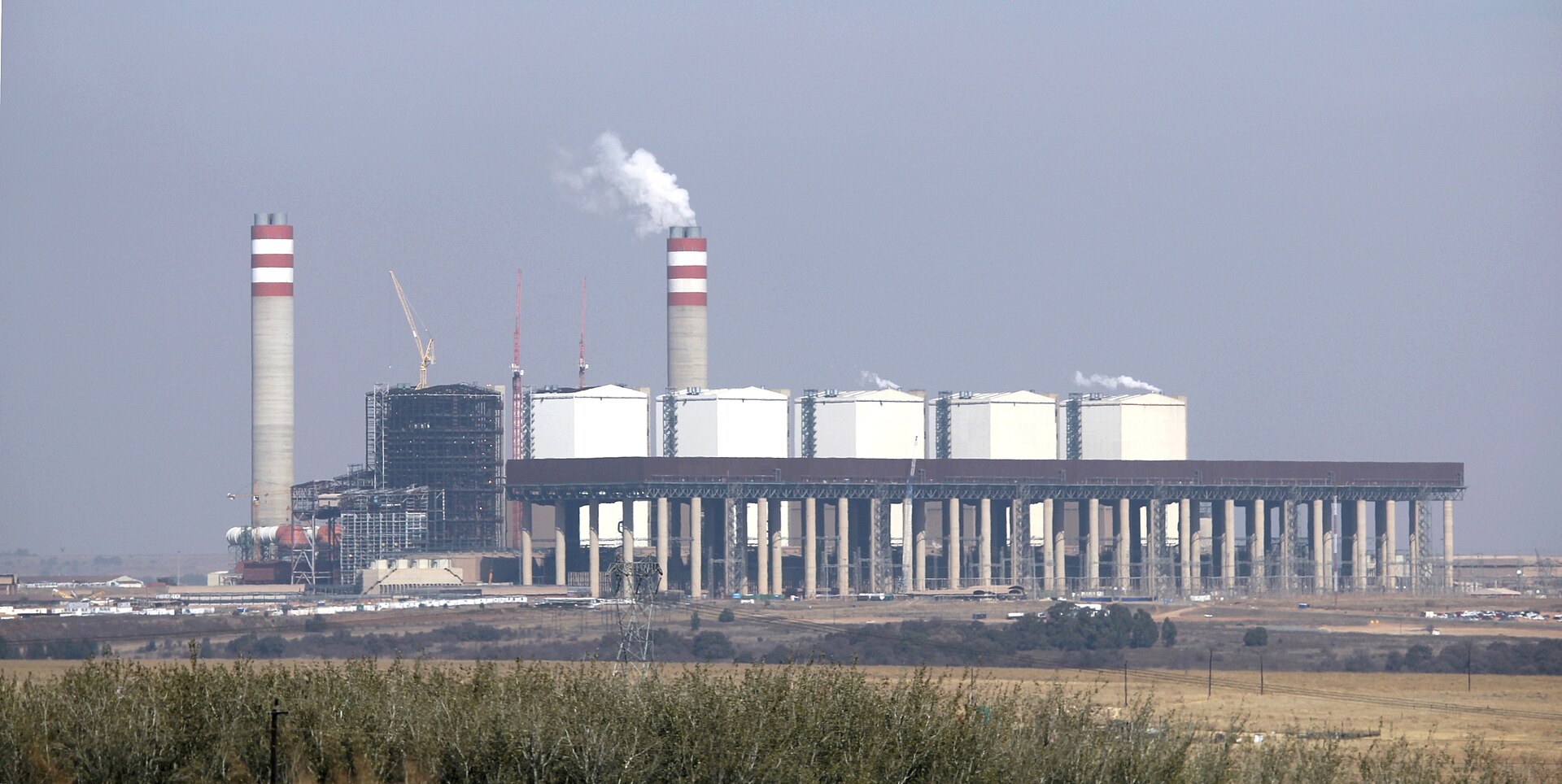
Coal is South Africa’s biggest mineral by volume, with output of about 236 million tonnes in 2025, the Minerals Council estimates. Eskom, the state-owned power utility, burned about 108 million tonnes in 2024/25, and fuel maker Sasol uses 30 to 40 million tonnes.
About 72 million tonnes were exported in 2025, mostly through Richards Bay on the Indian Ocean coast, with India buying about 45%. Coal still made up 58% of installed power capacity in October 2025, when the government presented its new electricity plan.
That plan, the Integrated Resource Plan 2025, foresees about 105,000 megawatts of new capacity by 2039, including 6,000 megawatts of gas power. The debate over how fast to leave coal is covered in the Rio Times report on South Africa’s coal exit.
Sasol, the fuels and chemicals group listed in Johannesburg and as SSL in New York, runs six collieries feeding its Secunda plant. Gas reaches Secunda through the 865-kilometre ROMPCO pipeline from Mozambique, Sasol’s annual US filing shows.
Offshore, a TotalEnergies-led group found gas condensate at Brulpadda in 2019 and Luiperd in 2020, in Block 11B/12B off the south coast. TotalEnergies resigned as operator in July 2024, and Main Street 1549, part-owned by junior explorer Africa Energy, took over in November.
TotalEnergies, QatarEnergy and Canadian Natural Resources have given notice to withdraw, pending approval, and no production right has been granted. A new environmental application for field development and production followed on Monday, 14 September 2026, Africa Energy says.
Farmland, Forests and Fisheries
Only some 12% of South Africa’s land suits crops, and about 1.3 million hectares are irrigated, the government’s 2018/19 yearbook says. Maize dominates the summer-rainfall interior, while the Western Cape is known for wine grapes and fruit.
Agricultural exports reached R268.7 billion (about US$16.2 billion) in 2025, up 9% on 2024, the government said in March 2026. AgriSA, the national farmers’ organisation, puts the rise at 8.8%, and citrus ranked among the strongest export lines.
The old Department of Agriculture, Forestry and Fisheries was split up in 2019. Farming now sits with the Department of Agriculture, and forests and fish with the Department of Forestry, Fisheries and the Environment (DFFE).
Commercial forestry then used about 1.2 million hectares, roughly 1% of the land, with the largest plantation investment in Mpumalanga. Plantations need water use licences, and delays in getting them have held back new afforestation, the yearbook notes.
Hake is the most valuable catch, worth as much as all other marine fisheries combined, DFFE officials told Parliament in 2023. Small pelagic fish, mainly anchovy and sardine, form the largest fishery, with a catch of 274,000 tonnes in 2022.
Abalone and West Coast rock lobster are in trouble, largely because of poaching. The department put rock lobster at 1.3% of its pre-1910 level, and abalone stocks showed no recovery.
Water, the Scarcest Resource
South Africa is rated the 30th driest country in the world, the government’s South Africa Yearbook 2023/24 says. Average rainfall is about 500 millimetres a year, against a world average of 860, and evaporation is very high.
Agriculture uses about 61% of the water, municipal systems 27%, and power, mining, industry, livestock, forestry and conservation share the other 12%. Power stations get the highest assurance of supply, 99.5%, because electricity is treated as strategic.
Just 22 strategic water source areas, covering 8% of the land, supply half of all surface run-off. The Minerals Council names weak water infrastructure as a constraint, and the Rio Times has covered the municipal side of the crisis.
Who Extracts and Who Profits
Under the 2002 Mineral and Petroleum Resources Development Act (MPRDA), the state is custodian of minerals and grants mining rights. Gwede Mantashe, chairperson of the African National Congress (ANC), the largest governing party, heads the Department of Mineral and Petroleum Resources.
Platinum producers include Valterra Platinum (JSE: VAL), the former Anglo American Platinum, demerged from Anglo American in May 2025. Others are Impala Platinum, which runs Impala Rustenburg, and Sibanye-Stillwater (JSE: SSW, NYSE: SBSW), which also mines gold.
Big coal producers include Exxaro and Thungela Resources, and chrome miners include Samancor Chrome. Illegal mining persists: in August 2026 the department was assessing an incident in Nkaneng, Rustenburg, that killed illegal miners.
The state collects royalties under the Mineral and Petroleum Resources Royalty Act of 2008, using a formula tied to profit margins. The basic rate starts at 0.5% of sales and is capped at 5% for refined minerals and 7% for unrefined ones.
Royalties raised R9.7 billion (about US$584 million) from April to August 2026, against R3.0 billion (about US$184 million) a year earlier. The National Treasury budgeted R12.1 billion (about US$733 million) for the full 2026/27 fiscal year, which ends in March.
Corporate income tax from all companies reached R155.8 billion (about US$9.4 billion) over the same five months. Record gold prices and firmer platinum prices lifted profits, which drive the formula, as the Rio Times report on mining taxes explains.
Ownership rules come from the 2018 Mining Charter, which requires 30% Black Economic Empowerment (BEE) ownership for new mining rights. That stake was to include 5% for employees, 5% for host communities and 20% for black entrepreneurs.
On Tuesday, 21 September 2021, the Gauteng High Court ruled the charter is policy, not binding law, and set aside the split. It also upheld “once empowered, always empowered”, so earlier BEE deals keep counting for existing rights.
A draft Mineral Resources Development Bill to overhaul the 2002 law was gazetted for comment in May 2025 and drew industry objections. Government was still finalising a revised version in July 2026, Business Report wrote, leaving investors waiting.
Benefits are concentrated: mining produces nearly a third of North West province’s GDP, the Minerals Council says. Host towns there often have poor municipal services and expect the mines to fill the gap, the council adds.
The Environmental Cost
Burning coal for power drives much of South Africa’s climate footprint. Indicative monthly figures on Eskom’s data portal add up to 204.6 million tonnes of carbon dioxide for the year to March 2025.
Most coal-fired stations stand on the Mpumalanga Highveld east of Johannesburg, where air pollution is a long-standing health concern. The Minerals Council reads the 2025 plan as cutting coal to about 11% of Eskom’s capacity by 2042, from 59%.
Gold mining left a second problem, acid mine drainage: acidic, metal-laden water that fills old mines around Johannesburg. In the Western Basin west of Johannesburg, it has decanted to the surface since 2002, flowing into the Tweelopiespruit stream.
The Trans-Caledon Tunnel Authority (TCTA), a state water agency, built plants to neutralise it, with Sibanye running the Western Basin plant. The Federation for a Sustainable Environment says a long-term desalination plan for the Eastern and Central basins is provisionally deferred to 2040.
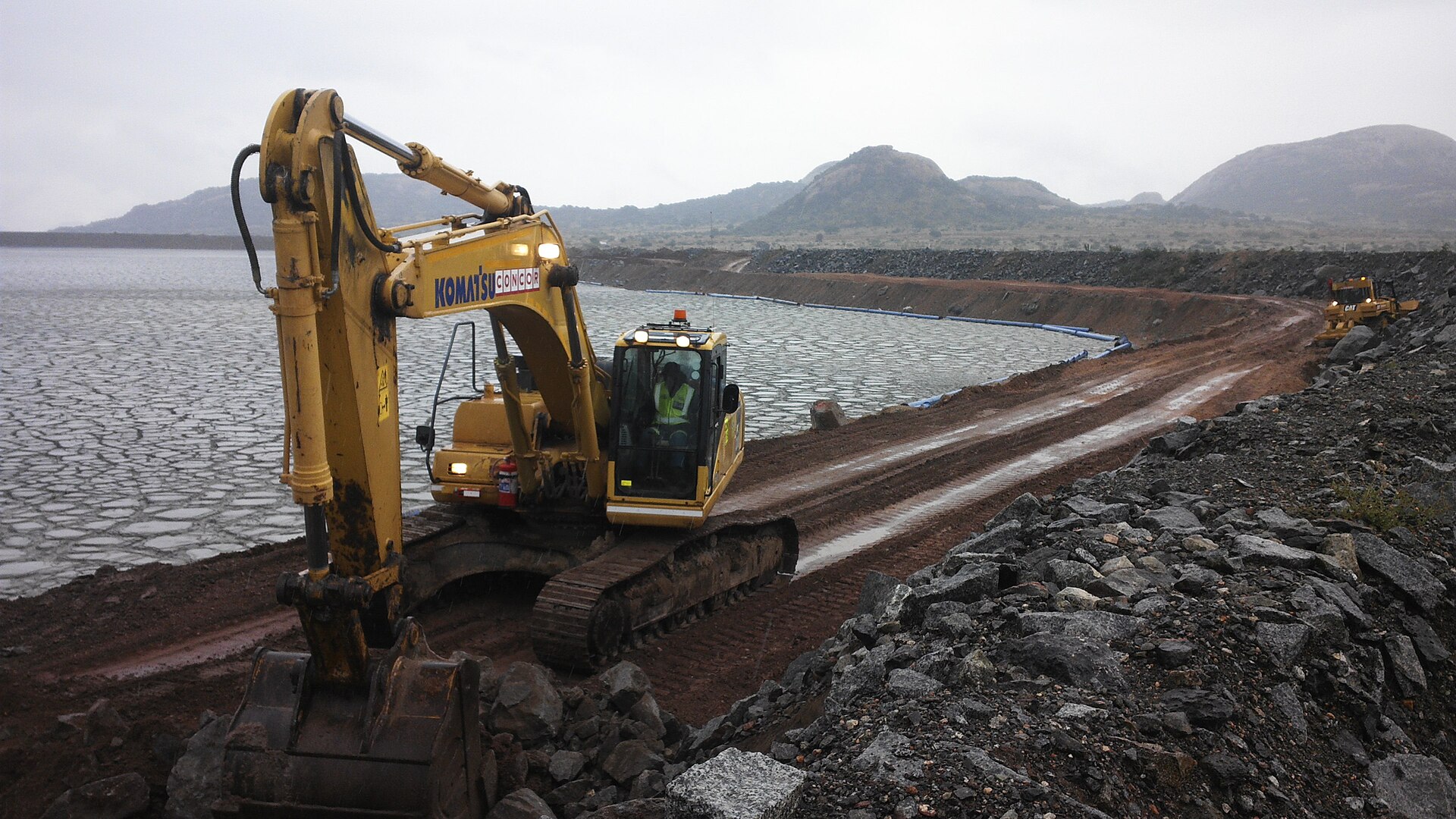
Mines also leave tailings dams, dust and abandoned shafts that can draw illegal miners. Mining deaths hit a record low of 41 in 2025 but topped 50 by late September 2026, the Minerals Council says.
What It Means for US Readers
South African resource groups trade in New York as Sibanye-Stillwater (SBSW), Gold Fields (GFI), Harmony Gold (HMY) and Sasol (SSL). Their results track metal prices, the exchange rate and South Africa’s power and rail bottlenecks.
The rand traded at R16.53 per US$ on 15 October 2026, the South African Reserve Bank’s daily rate shows. A firmer currency trims local revenue: in 2025, local gold prices rose 40.5%, against 44.1% in dollars, the Minerals Council says.
US carmakers rely on South African platinum and palladium, and US steelmakers on its chromite and manganese. The Minerals Council says PGMs were exempt from US tariffs and mining exports were mostly unaffected in 2025.
Travellers meet these resources at the Big Hole in Kimberley, on Johannesburg’s old gold reef and in the Western Cape winelands. Anyone moving to the commercial capital can start with the Rio Times Johannesburg city guide.
What Prediction Markets Say
Polymarket, a crypto-based prediction market, lists bets on South Africa’s annual inflation rate for December 2026, as measured by Stats SA. On 15 October at 8:14 a.m. ET, the bet on inflation above 5.0% was priced at 76.8%.
The 4.7% to 5.0% band stood at 13.3%, and the market had drawn about US$92,700 in total volume. The price for above 5.0% rose about 10 points in the past week.
Stats SA put August 2026 inflation at 4.4%, with fuel prices up 20.0% from a year earlier. September figures are due on Wednesday, 21 October, and the South African Reserve Bank’s policy rate was 7.25% on 15 October.
Why we show this: prediction markets turn real-money bets into a live probability that moves within minutes of the news, which is why investors, campaigns and newsrooms in the United States now follow them closely. We show them next to polls and official results, never instead of them.
What Is Not Known
It is not known when the revised Mineral Resources Development Bill will reach Parliament, or what ownership rules it will contain. The Block 11B/12B partners still need approval for the exits, an environmental authorisation and a production right.
Stats SA plans to publish national accounts rebased to 2022 in October 2026, which could revise mining’s share of output. Up-to-date fish stock, forest cover and Mozambican gas supply figures could not be confirmed from primary sources on 15 October 2026.
Whether the 12.7% drop in August mining output was a one-off will only show in later monthly figures. The September release on Thursday, 12 November 2026, is the next test.
Frequently Asked Questions
What are South Africa’s main natural resources?
South Africa’s main natural resources are platinum group metals, chromite, manganese, coal, gold, iron ore and diamonds, plus farmland, forests and fisheries. Water is scarce, and its offshore gas discoveries had not been developed as of October 2026.
How much of the world’s platinum comes from South Africa?
South Africa mined about 120 tonnes of platinum in 2025, roughly 71% of world output, according to USGS estimates. It also holds about four-fifths of the world’s known PGM reserves.
Is South Africa still dependent on coal?
Yes, coal made up 58% of installed power capacity in October 2025, and Eskom burned about 108 million tonnes in 2024/25. The 2025 power plan foresees new gas, solar, wind and nuclear capacity up to 2039.
Does South Africa produce oil or gas?
South Africa has little oil or gas output of its own, and gas arrives by pipeline from Mozambique. Offshore gas finds at Brulpadda and Luiperd still await a production right and environmental approval.
Who profits from South Africa’s mines?
Shareholders of listed miners, employees and communities with BEE stakes, and the state through taxes and royalties all take a share. Royalties raised about US$584 million from April to August 2026 alone.
Why is water a problem in South Africa?
South Africa is rated the 30th driest country, with average rainfall of about 500 millimetres against a world average of 860. Agriculture uses about 61% of the water, and flooded old gold mines leak acid drainage.
Sources: Stats SA, Mining production and sales, August 2026 (P2041); Stats SA, GDP second quarter 2026 (P0441); Stats SA, CPI August 2026 (P0141); Minerals Council South Africa, Comprehensive Facts and Figures 2025 (October 2026) and Facts and Figures 2025 Pocketbook (February 2026); USGS Mineral Commodity Summaries 2026, platinum-group metals; USGS MCS 2026, chromium; USGS MCS 2026, manganese; USGS MCS 2026, gold; Department of Mineral and Petroleum Resources; National Treasury, revenue to 31 August 2026 (Table 1); Mineral and Petroleum Resources Royalty Act 2008, section 4; South African Reserve Bank, current market rates; SAnews, Integrated Resource Plan 2025 (19 October 2025); Eskom data portal, GHG emissions; Sasol Form 20-F 2026; Sibanye-Stillwater Form 20-F 2025; Harmony Gold Form 20-F 2025; Gold Fields Form 20-F 2025; JSE SENS, Anglo American and Valterra Platinum demerger (2 June 2025); Impala Platinum; Africa Energy, Block 11B/12B; South Africa Yearbook 2023/24, Water and Sanitation; South Africa Yearbook 2018/19, Agriculture, Forestry and Fisheries; Parliamentary Monitoring Group, DFFE State of Fisheries briefing (28 March 2023); TCTA, Acid Mine Drainage Project; Polity, Cabinet approves acid mine drainage report (22 February 2011); Mining Weekly, 1 May 2026; Gauteng High Court, Minerals Council v Minister of Mineral Resources and Energy [2021] ZAGPPHC 623; Fasken, High Court ruling on Mining Charter 2018; Business Day, 20 May 2025; Business Report, 24 July 2026; SAnews, SA agriculture posts record exports (5 March 2026); AgriFocus Africa on the AgriSA trade report, 19 March 2026; open.er-api.com exchange rates (all accessed 15 October 2026).
This article was produced by The Rio Times’ automated newsroom system. How we use AI · Report an error · Editorial responsibility: Matthias Camenzind, Editor-in-Chief
Part of our ongoing coverage
Africa: The New Scramble — the great-power contest over the continent.
Expat Guide to South Africa
What The Rio Times publishes for foreigners who live in or move to South Africa.
Start here
- South Africa Taxes for Expats 2026: What You Pay
- South Africa Remote Work Visa 2026: Rules and Income
- Moving to South Africa: Visa Route Decides Everything, 54,000 Applications Overdue at Home Affairs
- South Africa Residency Visa Requirements and How to Meet Them
City guides
Cape Town, Johannesburg, Durban
Coming up in South Africa
- Mamma Mia Montecasino Season Opens 16 October in Johannesburg, South Africa 16 Oct
- South Africa Hosts 9,000 Energy Delegates in Cape Town, 12-16 October 16 Oct
- Ne-Yo Sells Out Cape Town and Pretoria for 17 and 18 October 17 Oct
- Sjava 10 Year Celebration Tour Ends Sold Out in South Africa on 23 October 23 Oct
Understand South Africa