Who Is Abdelmadjid Tebboune? Algeria’s President, His Power Base and What Comes Next
PROFILE · ALGERIA
Key Facts
- —The man Abdelmadjid Tebboune, born in 1945, is a lifelong civil servant who became Algeria’s president in December 2019.
- —The country Algeria is Africa’s largest country by area, with about 47 million people and an economy built on gas.
- —The mandate He won a second term in September 2024 with 84.3 percent, and the constitution bars a third.
- —The catch Turnout in the July 2026 parliamentary vote fell to a record low of 21.24 percent.
Abdelmadjid Tebboune is the civilian face of a state long shaped by its army and its gas fields. This guide explains who he is, how he rules and what his second term means for outsiders.
Tebboune spent five decades inside the Algerian state before he reached its top office at the age of 74. As of September 2026 he is in his final term, with order at home and open feuds abroad.
Who He Is: The Short Version
Abdelmadjid Tebboune was born on 17 November 1945 in Mécheria, a town on the high plains of western Algeria. He trained at the National School of Administration, the college that produces Algeria’s senior officials, and graduated in 1969.
Algeria, his country, is the largest in Africa at 2,381,741 square kilometres, stretching from the Mediterranean deep into the Sahara. It has about 47.4 million people, uses the dinar as its currency and won independence from France on 5 July 1962.
Tebboune was elected in December 2019, months after mass street protests forced out his predecessor. He was re-elected in September 2024, and the constitution does not allow him to run again in 2029.
From Provincial Governor to Prime Minister
Tebboune began as a wali, the state-appointed governor of an Algerian province. He ran the Saharan province of Adrar from 1983, then Tiaret from 1984 and Tizi Ouzou in Kabylia from 1989.
In 1991 he joined the government as a junior minister for local authorities. After 1999 he served several times under President Abdelaziz Bouteflika, Algeria’s leader from 1999 to 2019.
His longest posting was housing, which he ran from 2001 to 2002 and again from 2012 to 2017. Before that he briefly ran the communication and culture ministry, from December 1999 to June 2000.
In May 2017 Bouteflika made him prime minister, the head of government who answers to the president. He lasted less than three months before Bouteflika replaced him with Ahmed Ouyahia on 15 August 2017.
How He Took Power After the Hirak
In February 2019 huge crowds of Algerians began marching against Bouteflika’s bid for a fifth term. The movement became known as the Hirak, an Arabic word for movement, and Bouteflika resigned on 2 April 2019.
The caretaker government of acting president Abdelkader Bensalah then organised a presidential election for December 2019. Hirak protesters rejected the vote as a charade, citing the five candidates’ ties to the old establishment.
Tebboune won on 12 December 2019 with 58.15 percent, on an official turnout of just over 41 percent. He promised to “extend a hand to the protest movement for a dialogue to build a new Algeria”, Al Jazeera reported.
A new constitution followed in a referendum on 1 November 2020, approved by 66.68 percent of those who voted. It fixed a limit of two presidential terms and described that limit as unchangeable.
In October 2020 Tebboune tested positive for Covid-19 and was flown to Germany for treatment. He returned on 29 December 2020, went back to Germany in January 2021 and came home on 12 February 2021.
In March 2020 he banned all marches and rallies, citing the pandemic. Amnesty International, the London-based rights group, said the authorities were using the pandemic to speed up trials of Hirak activists.
The Power Base: Army, Parties and Gas Money
Real power in Algeria has long been shared between the presidency and the army command. Algerians call this opaque system le pouvoir, French for “the power”.
General Saïd Chanegriha has been army chief of staff since December 2019 and also became minister delegate for defence in November 2024. Nour Taha, writing for the Arab Center Washington DC, described him as “one of the most powerful men in the country”.
Tebboune runs the day-to-day government through prime ministers he appoints and dismisses at will. Since 2019 he has gone through Abdelaziz Djerad, Aymen Benabderrahmane, Nadir Larbaoui and now Sifi Ghrieb.
Ghrieb, a former industry minister, was named acting prime minister on 28 August 2025 and confirmed on 14 September 2025. He kept the job after the July 2026 parliamentary election.
In parliament he relies on the National Liberation Front (FLN), the independence-era party, and the National Rally for Democracy (RND). Smaller pro-government parties and independents complete his majority.
His third pillar is social spending paid for by gas revenue. During the 2024 campaign he promised 450,000 new jobs, higher unemployment benefits, a higher minimum wage and more housing, Arab News reported.
The Record: Elections, Rights and Dissent
Supporters say Tebboune revived a presidency left invisible under Bouteflika, Arab News reported, quoting the Geneva-based analyst Hasni Abidi. “The presidency has shifted from being a phantom institution to a real center of power,” Abidi said.
His 2024 re-election is the most disputed part of his record. The election authority first announced 94.65 percent for him, then the Constitutional Court certified 84.3 percent on 14 September 2024.
The court put his rivals at 9.56 percent for the Islamist Abdelaali Hassani Cherif and 6.14 percent for the socialist Youcef Aouchiche. All three campaigns, including Tebboune’s own, complained of “vagueness and contradictions in the participation figures”, Al Jazeera reported.
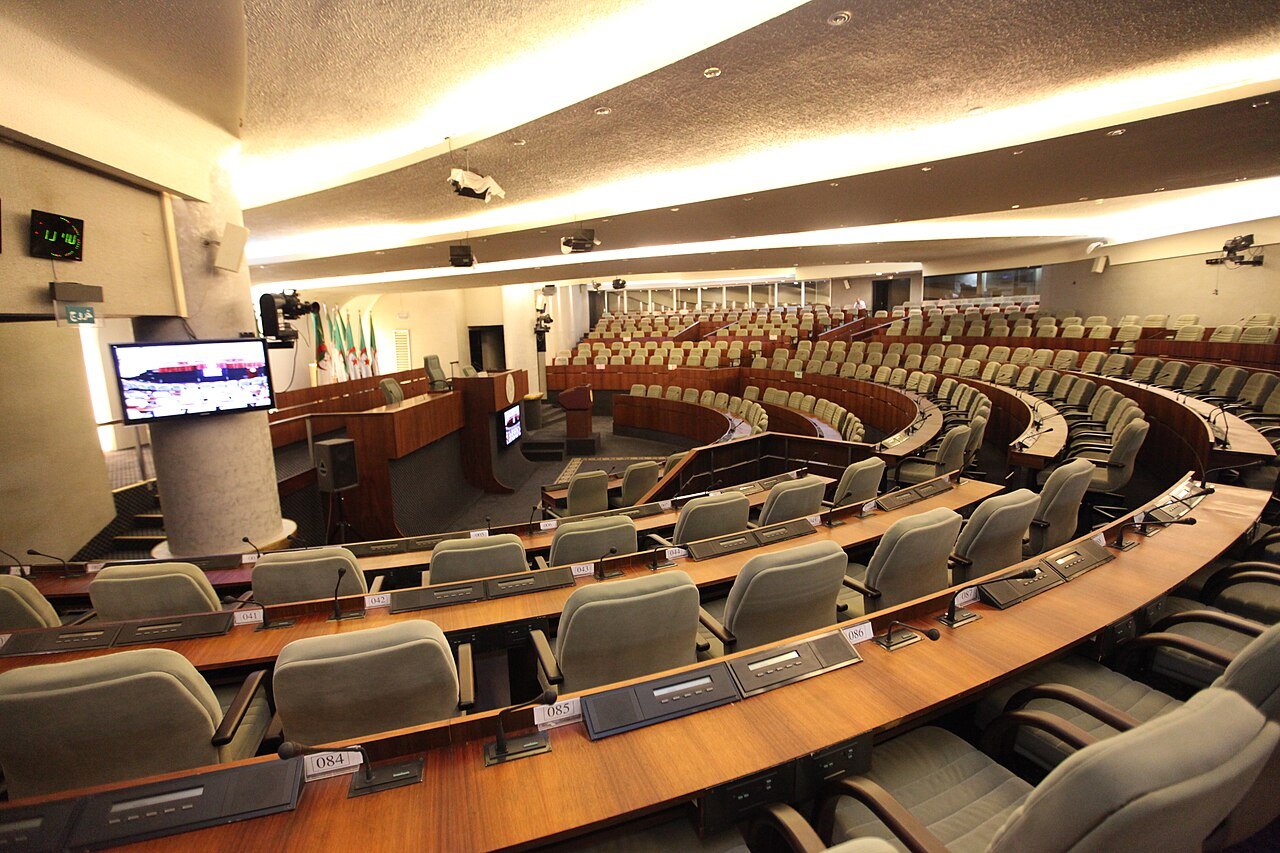
Turnout in the parliamentary election of 2 July 2026 fell to 21.24 percent, the lowest on record, according to the election authority. Its acting head, Karim Khelfane, called the vote transparent and said low participation was not unique to Algeria.
Provisional results gave the FLN 90 of 407 seats, the RND 73 and the Future Front 59. The Islamist Movement of Society for Peace (MSP), which held 65 seats in the outgoing parliament, fell to 43.
Critics read the result differently from the government. Patricia Karam of the Arab Center saw participation “broadened without meaningfully expanding political choice”.
The conservative weekly Le Journal du Dimanche quoted Xavier Driencourt, a former French ambassador, calling Algerian elections a vast farce. The paper argued that Tebboune and General Chanegriha had locked the vote down in advance.
Rights groups point to jailed critics and writers. The French-Algerian novelist Boualem Sansal was arrested in November 2024 and sentenced in March 2025 to five years for undermining national unity.
Tebboune pardoned Sansal on 12 November 2025 after an appeal from German President Frank-Walter Steinmeier, Al Jazeera reported. The presidency said it had accepted the request on “humanitarian grounds”.
The French sports journalist Christophe Gleizes was sentenced in June 2025 to seven years for “glorifying terrorism”. As of August 2026 he remained in prison, and his release depended on a presidential pardon.
The Economy Under Tebboune
Algeria’s economy runs on hydrocarbons, and Sonatrach, the state energy company, is one of Africa’s largest firms. The Gulf business site AGBI noted that Algeria was the world’s ninth-largest gas producer in 2023.
Europe’s search for gas after Russia’s invasion of Ukraine raised Algeria’s weight. Its share of the European gas market rose from 12 percent in 2020 to 19 percent in 2023, the Arab Center calculated.
The International Monetary Fund (IMF), the global lender, estimates growth of 3.9 percent in 2025 and projects 3.8 percent for 2026. It published the conclusions of its annual review of Algeria on 21 September 2026.
IMF staff put the 2025 budget deficit at 10.5 percent of output and public debt at 52.1 percent. “Strengthening economic resilience has become more urgent due to eroded fiscal and external buffers,” mission chief Charalambos Tsangarides said.
The IMF asked for a significant near-term fiscal squeeze and an end to central bank financing of the state. That advice cuts against the subsidies and public jobs that underpin Tebboune’s social contract.
The news site Algérie360 reported both official and street rates for 24 September 2026, a gap every foreign visitor feels. The Bank of Algeria quoted 133.98 dinars per US dollar, against about 238 per dollar on the street.
Tebboune has also reshuffled the central bank repeatedly, dismissing governor Salah Eddine Taleb in January 2026. In September 2026 he named Mohand Bourai as governor of the Bank of Algeria.
Foreign Policy: Morocco, France, the Sahel and the Gulf
Tebboune’s foreign policy rests on old Algerian principles of non-alignment and support for the Polisario Front. The Polisario seeks independence for Western Sahara, a territory Morocco controls and claims as its own.
Algeria cut diplomatic ties with Morocco in August 2021, citing hostile acts. Morocco’s 2020 normalisation of relations with Israel had already deepened the rift.
Relations with France, the former colonial power, broke down after Paris backed Morocco’s claim to Western Sahara in 2024. The Sansal and Gleizes cases and tit-for-tat expulsions of diplomats kept the dispute alive into 2025.
A thaw began in 2026, when French Interior Minister Laurent Nuñez visited Algiers in February. Justice Minister Gérald Darmanin met Tebboune on 18 May 2026 and resumed judicial cooperation after two years, Arab News reported.
To the south, Algeria shot down a Malian military drone near the border town of Tinzaouatène at the end of March 2025. Mali’s military government called it aggression, and both sides withdrew ambassadors and closed their airspace.
On 10 July 2026 Tebboune ordered his ambassador back to Bamako and reopened the skies. The Rio Times covered how Mali and Algeria ended their 15-month rupture.
On 10 September 2026 Algeria severed diplomatic relations with the United Arab Emirates, citing “provocative and hostile acts”. It gave the Emirati ambassador 48 hours to leave and closed its airspace to UAE-registered aircraft.
In an apparent response, Anwar Gargash, adviser to the UAE president, wrote that relations should rest on “rationality” rather than “riddles”. The Emirati foreign ministry said it hoped the decision would be temporary, Al Jazeera reported.
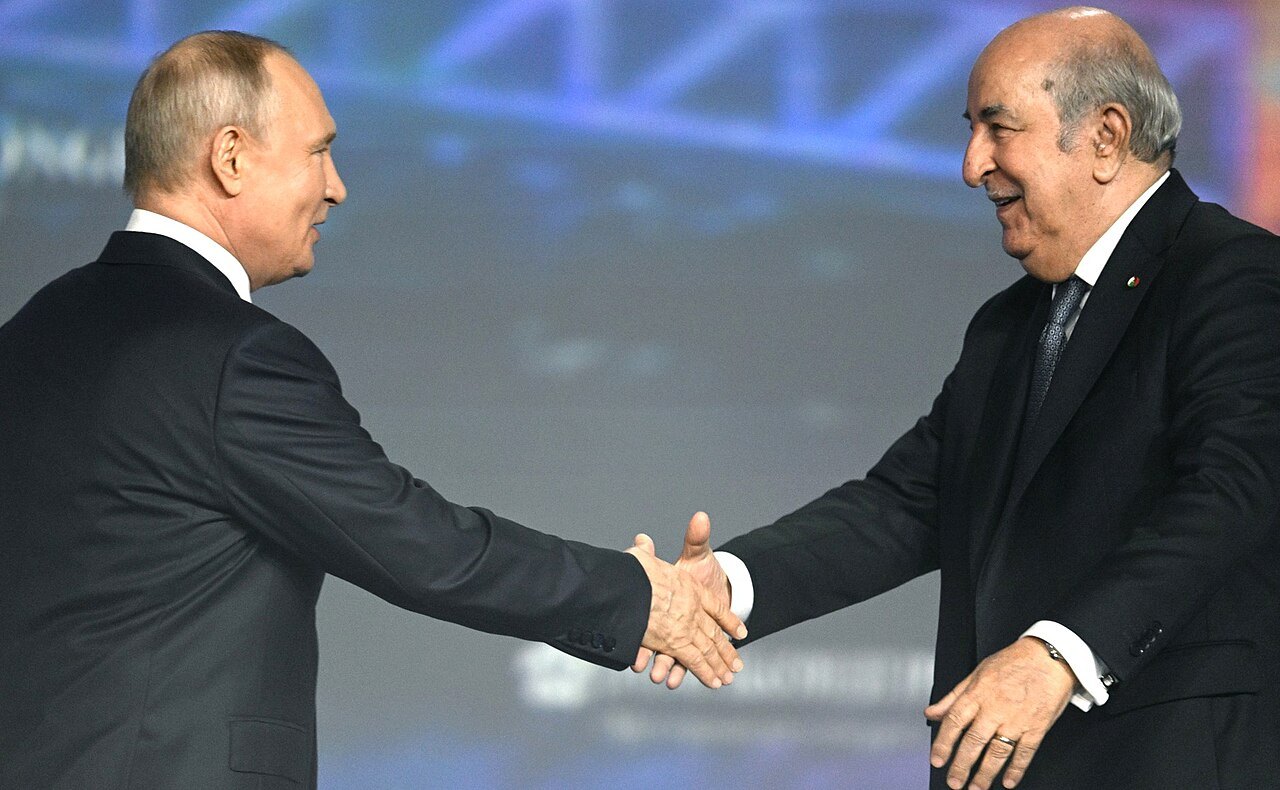
Tebboune has kept close ties with Russia and pledged a deeper strategic partnership on a state visit in June 2023. He also sought to join the BRICS group of emerging economies, which did not admit Algeria in 2023.
What It Means for Foreigners and Investors
For investors, Tebboune offers political continuity and a state that pays its bills from gas income. The flip side is a heavy bureaucracy, rules the IMF says restrict business and trade, and a wide currency gap.
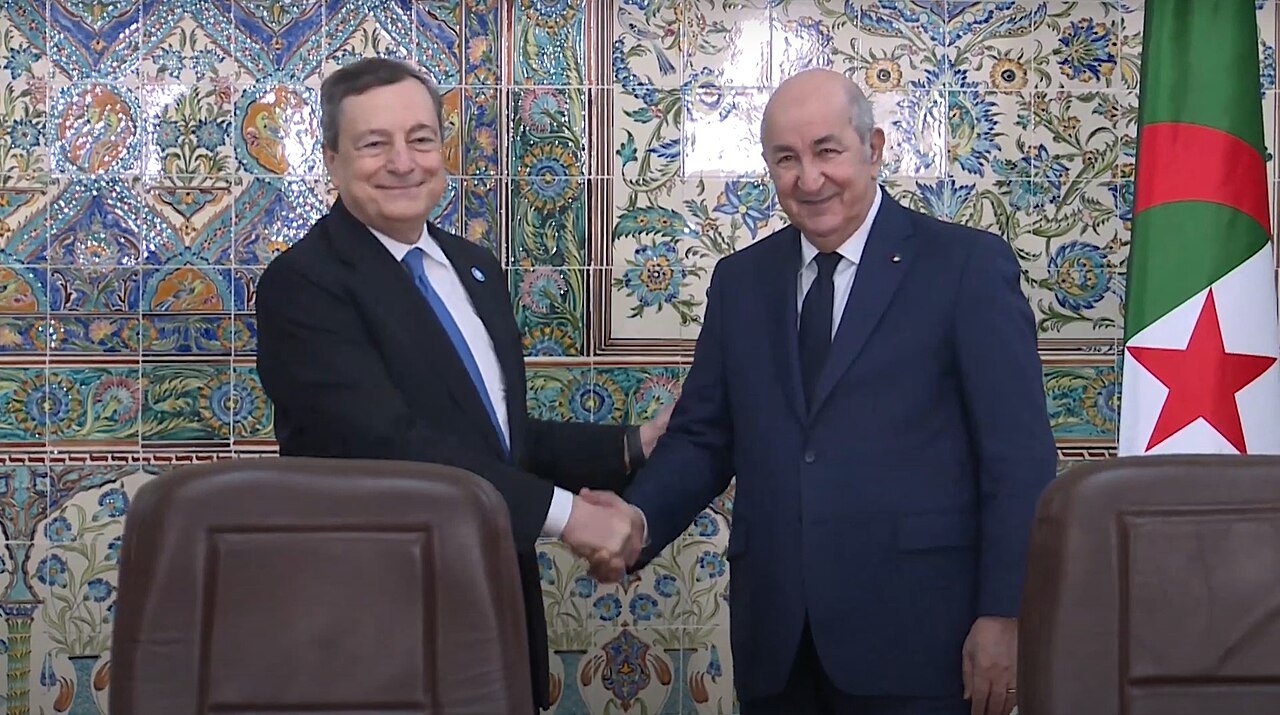
European energy buyers, Italy above all, turned to Algeria after Russia’s invasion of Ukraine. In 2022 Tebboune and Italian Prime Minister Mario Draghi agreed deals that made Algeria Italy’s largest gas supplier.
Visitors and residents should expect a security state with limited room for protest or independent journalism. The Gleizes case shows that contacts with banned groups, even for reporting, can lead to terrorism charges.
For a wider view of the country, the Rio Times guide Algeria Explained covers gas, politics and the economy. It sets Tebboune’s presidency against the country’s history and its record low turnouts.
What to Watch Before 2029
The biggest open question is succession, since the constitution bars Tebboune from a third term in 2029. No clear heir has emerged, and the army’s preference will matter as much as any party’s.
The second test is money. If gas prices fall, the deficits flagged by the IMF will force harder choices between subsidies, wages and investment.
Watch also whether the thaw with France holds and whether Gleizes is freed. A pardon would signal that Tebboune wants calmer ties with Paris, while continued detention would keep the dispute open.
The rupture with the UAE is the newest front, and its economic cost is not yet clear. Commercial flights may continue only until the end of 2026, so the coming months will show how far the break goes.
Frequently Asked Questions
Who is Abdelmadjid Tebboune?
He is the president of Algeria, in office since December 2019 and re-elected in September 2024. He is a career civil servant who served as housing minister and briefly as prime minister in 2017.
How old is Tebboune?
Tebboune was born on 17 November 1945 in Mécheria, in western Algeria. He turns 81 in November 2026.
Can Tebboune run again in 2029?
No, the 2020 constitution limits presidents to two terms and calls that limit unchangeable. His second term runs until 2029.
Who really holds power in Algeria?
Power is shared between the presidency and the army command, led by General Saïd Chanegriha. Critics and many analysts describe this system as le pouvoir.
Why did Algeria cut ties with the UAE?
Algeria accused the United Arab Emirates of provocative and hostile acts when it cut ties on 10 September 2026. The two countries differ over Israel and Western Sahara, and over alleged Emirati influence in North Africa and the Sahel.
This article was produced by The Rio Times’ automated newsroom system. How we use AI · Report an error
Read More from The Rio Times