Algeria Politics Explained, Who Holds Power in 2026
ALGERIA · POLITICS
Key Facts
- —The country Algeria is North Africa’s largest country, with about 47.9 million people in 2026, according to the IMF. It has been independent from France since 1962 and is a presidential republic.
- —Who is in charge President Abdelmadjid Tebboune won a second term on 7 September 2024 with 84.30% of the vote. He is also Minister of National Defence, and Sifi Ghrieb is Prime Minister.
- —Parliament In the 2 July 2026 election, the FLN won 91 of 407 seats in the lower house, ahead of the RND with 74. Turnout inside Algeria was 21.24%.
- —The army General Saïd Chanegriha, the army chief of staff, is the top officer. In September and October 2026 he installed new heads of army security, a military region and the gendarmerie.
- —The next test Local elections for town and province councils are set for 28 November 2026. The FFS and RCD parties say authorities rejected many of their candidate lists.
- —The rules The constitution allows two presidential terms, and Tebboune has said he will not seek a third. His second term runs to 2029.
- —Still open Who would follow Tebboune after 2029 is not known. The army’s exact weight in that choice is not publicly documented.
Algeria politics matters to Americans because the country supplies gas to Europe, wields regional influence and trades with the United States. The president also serves as defence minister and appoints the prime minister, the governors and the heads of the main courts.
This guide explains who holds each post in October 2026 and how the pieces fit together.

Algeria Politics at a Glance
Algeria politics runs on a presidential system set out in the constitution adopted in 2020. The president is head of state and Commander-in-Chief, and he also serves as Minister of National Defence.
The country has about 47.9 million people in 2026, according to the IMF, and 69 provinces called wilayas. A law dated 4 April 2026 raised the number from 58 to 69.
Independence from France came in 1962 after a war led by the FLN, the National Liberation Front. The FLN is still the largest party in parliament after the July 2026 vote.
This guide covers the presidency, the cabinet, parliament and the parties, the army, the courts and the provinces. Every person named below held the post in October 2026.
The President and His Powers
In Algeria politics, the presidency comes first. Abdelmadjid Tebboune won a second term on 7 September 2024 with 7,976,291 votes, or 84.30%, on a turnout of 46.10%.
His two rivals were Abdelaali Hassani Cherif of the Islamist MSP, with 9.56%, and Youcef Aouchiche of the FFS, with 6.14%. The court proclaimed the final results on 14 September 2024.
The constitution sets a five-year term, so his second term runs to 2029. It allows no more than two terms in total.
In a televised interview in February 2026, Tebboune ruled out a third term, according to the African Press Agency. He described a planned constitutional change as technical.
The president appoints the prime minister and chairs the High Council of the Magistracy, the body that oversees judges. He also names the head of the Constitutional Court.
Parliament’s two chambers met in joint session in late March 2026 and approved that amendment by 542 votes, according to state radio. The draft, presented on 24 March by Justice Minister Lotfi Boudjemaa, contained 12 changes.
Among them, presidential candidates must show an education level, and the president may call early local elections. The upper house’s president would serve six years instead of three, according to TSA Algérie.
The Government and Key Ministers
Prime Minister Sifi Ghrieb leads the cabinet. On 21 October 2026 he chaired a government meeting on industry and public works, according to the state news agency APS.
The cabinet meets in two forms. Tebboune chairs the Council of Ministers, as on 18 October 2026, while the prime minister chairs the separate government meeting.
On 1 September 2026 Tebboune changed four ministers. Mohamed Lamine Lebbou took Finance, Sid Ali Khaldi Agriculture, Mohamed Hattab Labour and Mohamed Bouslimani Communication.
On 13 October 2026 he moved Brahim Merad to the Interior Ministry as a Minister of State. The move followed Tebboune’s public criticism of Saïd Sayoud over tomato prices, TSA Algérie reported, and Sayoud kept the Transport portfolio.
- Ahmed Attaf, Minister of State and Foreign Minister, led the national diplomacy day ceremony on 8 October 2026.
- Brahim Merad, Minister of State for the Interior and Local Authorities, has held the post since 13 October 2026.
- Lotfi Boudjemaa, Justice Minister, attended the installation of a new head of the Tribunal des conflits on 7 September 2026.
- Mohamed Arkab, Minister of State for Hydrocarbons, said on 17 October 2026 that oil and gas export earnings reached US$37.5 billion from January to September 2026.
- Mohamed Lamine Lebbou has been Finance Minister since 1 September 2026, when Tebboune appointed him.
Parliament and the July 2026 Election
Parliament has two chambers: the People’s National Assembly (APN), elected for five years, and the Council of the Nation, the upper house.
The APN has 407 seats. Voters chose it on 2 July 2026, and 739 lists with 9,422 candidates ran, according to the electoral authority ANIE.
Constitutional Court President Leïla Aslaoui announced the final results on 18 July 2026. The FLN won 91 seats, the RND 74, the El Moustakbal Front 56, the MSP 43, El Bina 40 and independents 33.
Turnout inside Algeria was 21.24% of 23,872,756 registered voters, according to ANIE. The 2024 presidential vote drew 46.10%.
On 28 July 2026 deputies elected Khalida Boufedech of the FLN as APN speaker. She replaced Brahim Boughali, who had said he would not seek a second term.
Azouz Nasri heads the Council of the Nation. Under the constitution, two-thirds of its members are chosen indirectly and one-third are appointed by the president.
Elections are run by ANIE, the National Independent Electoral Authority. Its president, Saâd Arous, met party leaders on 9 September 2026 before the local vote.
The Ruling Parties and the Opposition
No party holds a majority in Algeria politics. The FLN’s 91 seats are about 22% of the 407.
Twenty-two parties and a group of independents won seats in 2026. The main ones are below.
- FLN, the National Liberation Front: it led the independence war and won 91 seats. Secretary General Abdelkrim Benmbarek told its deputies in September 2026 to back President Tebboune.
- RND, the National Democratic Rally: it won 74 seats and is the second-largest party in the lower house.
- El Moustakbal Front, or Future Front: it won 56 seats and is led by Fateh Boutbig.
- MSP, the Movement of Society for Peace: an Islamist party with 43 seats, led by Abdelaali Hassani Cherif, who ran for president in 2024.
- El Bina movement: it won 40 seats, the fifth-largest group in the lower house.
- FFS, the Front of Socialist Forces: a historic opposition party with 12 seats, led by First National Secretary Youcef Aouchiche.
- RCD, the Rally for Culture and Democracy: a party with 4 seats, led by President Atmane Mazouz.
- Sawt Echaab won 16 seats, and independents hold 33.
The Army and the Security Chiefs
General Saïd Chanegriha is Chief of Staff of the People’s National Army (ANP). He is also Deputy Minister to the Minister of National Defence, a post Tebboune himself holds.
On 28 September 2026 Chanegriha installed General Noureddine Maach as head of the Central Directorate of Army Security. He replaced General Abbas Ibrahim under a presidential decree dated 22 September.
On 5 October he installed Major General Noureddine Haddad as commander of the 1st Military Region. On 8 October he installed Major General Ali Sidane as commander of the National Gendarmerie, under a decree dated 1 October.
The army security and gendarmerie appointments were made by presidential decree, and the army chief carried out the installations. Watching these moves is part of following Algeria politics.
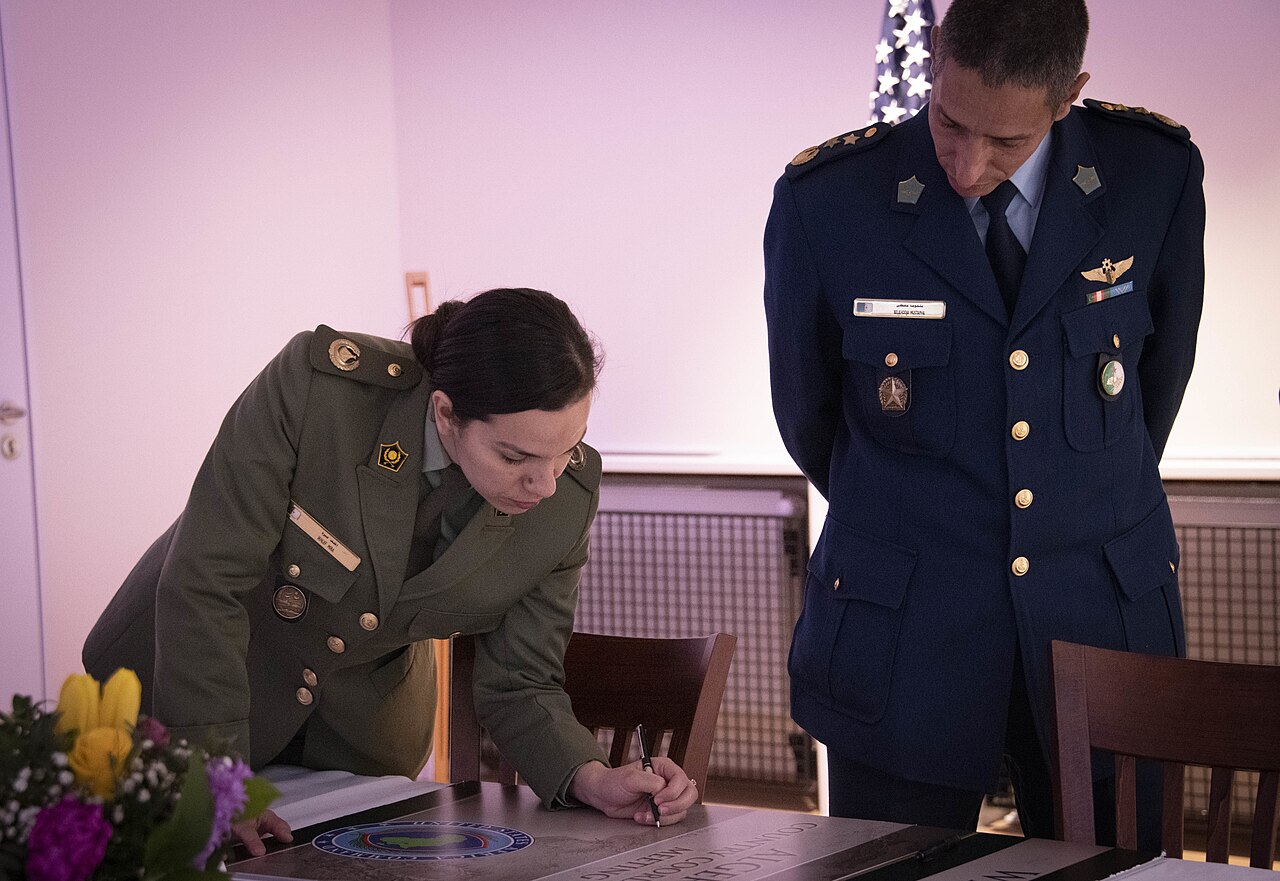
Algeria and the United States keep military contacts. In Stuttgart on 2 February 2023, Algerian officers signed the minutes of a planning meeting that outlined joint activities for three years.
Courts and the Judiciary
The Constitutional Court rules on whether laws and election results respect the constitution. Its president, Leïla Aslaoui, was named by Tebboune and read out the final results of the July 2026 vote.
The High Council of the Magistracy oversees judges and is chaired by the president.
The March 2026 draft would let the president appoint some judges by decree after consulting the council, without its binding opinion.
Justice Minister Lotfi Boudjemaa attended the installation of Nassira Dahou at the Tribunal des conflits on 7 September 2026. That court decides whether ordinary or administrative courts handle a case.
Provinces, Governors and Local Elections
Algeria has 69 wilayas under Law No. 26-06 of 4 April 2026, published in the Official Journal on 5 April. Each wilaya is run by a governor called a wali.
Tebboune appoints the walis, and the Interior Minister, Brahim Merad, oversees local authorities.
Voters will elect the municipal assemblies (APC) and the wilaya assemblies (APW) on Saturday 28 November 2026. The president’s decree calling the vote was published on 30 August.
The FFS says the rejections hit most of its lists and calls them a purge. The RCD says administrative inquiries were slanted against its candidates, Le Matin d’Algérie reported on 20 October 2026.
What It Means for US Readers
US Census Bureau data show US goods exports to Algeria of US$1.28 billion in 2025 and imports of US$2.24 billion. That is a US deficit of about US$0.96 billion.
From January to August 2026, US exports were US$1.00 billion and imports US$1.93 billion. The hydrocarbons minister reported US$37.5 billion in oil and gas export earnings for January to September 2026.
For anyone tracking Algeria politics, three dates matter. They are the local elections on 28 November 2026, the next cabinet changes and the presidential vote due in 2029.
For more, see the Rio Times guides to Algeria’s economy, Algeria’s geopolitics and the Algeria-Morocco rivalry. Our profile of Tebboune, our overview Algeria Explained and the Algeria country page go deeper.
What Is Not Known
It is not known who will succeed Tebboune. The constitution bars a third term, and no party has named a candidate for 2029.
The army’s exact role in choosing leaders is not set out in public documents. Appointments are announced by decree, but the reasons behind them are not.
The total number of local candidate lists rejected ahead of 28 November is not public.
How the March 2026 amendment works in practice is not yet clear. That includes the president’s new power to call early local elections.
Frequently Asked Questions
Who is the president of Algeria in 2026?
Abdelmadjid Tebboune is president. He won a second term on 7 September 2024 with 84.30% of the vote, and he is also Minister of National Defence.
Who is Algeria’s prime minister?
Sifi Ghrieb is prime minister. He chaired a government meeting on 21 October 2026, and the president appoints and can dismiss him.
Which parties hold seats in Algeria’s parliament?
Twenty-two parties and independents won seats on 2 July 2026. The FLN leads with 91 of 407, followed by the RND with 74 and the El Moustakbal Front with 56.
Who commands Algeria’s army?
The president is Commander-in-Chief and Minister of National Defence. General Saïd Chanegriha is army chief of staff and Deputy Minister to the defence minister in Algeria politics.
When are Algeria’s next elections?
Algeria politics next faces local elections for municipal and wilaya assemblies on 28 November 2026. The next presidential election is due in 2029, when Tebboune’s second term ends.
Can Tebboune run for a third term?
The constitution allows no more than two terms, and Tebboune has ruled out a third in a February 2026 interview. Algeria politics could shift only if the rules change, and no such change has been announced.
Sources: APS, Council of Ministers chaired by President Tebboune, 18 October 2026; APS, government meeting chaired by Prime Minister Sifi Ghrieb, 21 October 2026; TSA Algérie, Tebboune replaces four ministers, 1 September 2026; TSA Algérie, Brahim Merad takes the Interior Ministry, 13 October 2026; APS, final results of the 2 July 2026 legislative elections, via AllAfrica, 18 July 2026; Dzair Tube, provisional results handed to the Constitutional Court, 7 July 2026; APS, Khalida Boufedech elected president of the APN, 28 July 2026; Webmanagercenter, final results of the 7 September 2024 presidential election, 14 September 2024; Radio Algérie, Parliament approves the technical constitutional amendment, 26 March 2026; TSA Algérie, the March 2026 constitutional revision draft, 24 March 2026; APAnews, Tebboune defends a technical constitutional amendment, 11 February 2026; Constitution of Algeria, text on Constitute Project, consulted 22 October 2026; DIA Algérie, Chanegriha installs the Gendarmerie commander, 9 October 2026; L’Expression, General Maach heads army security, 28 September 2026; L’Expression, the FLN sets its priorities, 20 September 2026; Horizons, ANIE president receives party leaders, 9 September 2026; APS, law on the new territorial organisation (69 wilayas), 6 April 2026; APS, presidential decree calling the local elections, 30 August 2026; Le Matin d’Algérie, FFS and RCD denounce rejected lists, 20 October 2026; APS, installation of the new head of the Tribunal des conflits, 7 September 2026; APS, hydrocarbon export revenue of US$37.5 billion, 17 October 2026; Le Soir d’Algérie, Ahmed Attaf on national diplomacy day, 10 October 2026; US Census Bureau, trade in goods with Algeria, October 2026; IMF DataMapper, Algeria population, October 2026.
Editorial responsibility: Matthias Camenzind, Editor-in-Chief · Editorial standards · Report an error
Expat Guide to Algeria
What The Rio Times publishes for foreigners who live in or move to Algeria.
Understand Algeria
Rotate for Best Experience
This report is optimized for landscape viewing. Rotate your phone for the full experience.
You've reached your free article limit
Subscribe to The Rio Times for unlimited access to our reporting from across Africa.
Expat Guide to Algeria
What The Rio Times publishes for foreigners who live in or move to Algeria.
Understand Algeria