
GUIDES · ALGERIA
Key Facts
- —Africa in context Algeria is the largest country in Africa by area, at 2,381,740 square kilometres in 2024. It has been a member of the African Union and its predecessor since 25 May 1963.
- —Economy The IMF projects US$331.9 billion in 2026, the fourth-largest economy in Africa after South Africa, Egypt and Nigeria. Fuels were 93.1 percent of goods exports in 2024.
- —People 47.4 million in 2025, against 237.5 million in Nigeria and 118.4 million in Egypt. Income per head is projected at US$6,910 in 2026.
- —Continental bodies African Union member since 1963, plus the Arab Maghreb Union. The AfCFTA agreement was ratified on 7 June 2021.
- —Military US$25.4 billion of spending in 2025, the highest in Africa and 20th in the world.
- —Disputes No diplomatic ties with Morocco since August 2021. Ambassadors and airspace links with Mali were restored from July 2026.
Algeria continent-wide influence rests on Africa’s largest territory, its fourth-largest economy and the gas pipelines that feed Europe. This guide sets out how that weight turns, or fails to turn, into votes, trade and alliances as of October 2026.
Algeria’s Weight in Africa by the Numbers
Algeria covers 2,381,740 square kilometres, the largest area of any African country, on the World Bank’s 2024 figure. The Democratic Republic of the Congo comes next at 2,345,410 square kilometres, and Sudan third at 1,878,000.
About 47.4 million people lived in Algeria in 2025, the World Bank estimates. Most live in the north, while the Sahara covers much of the south.
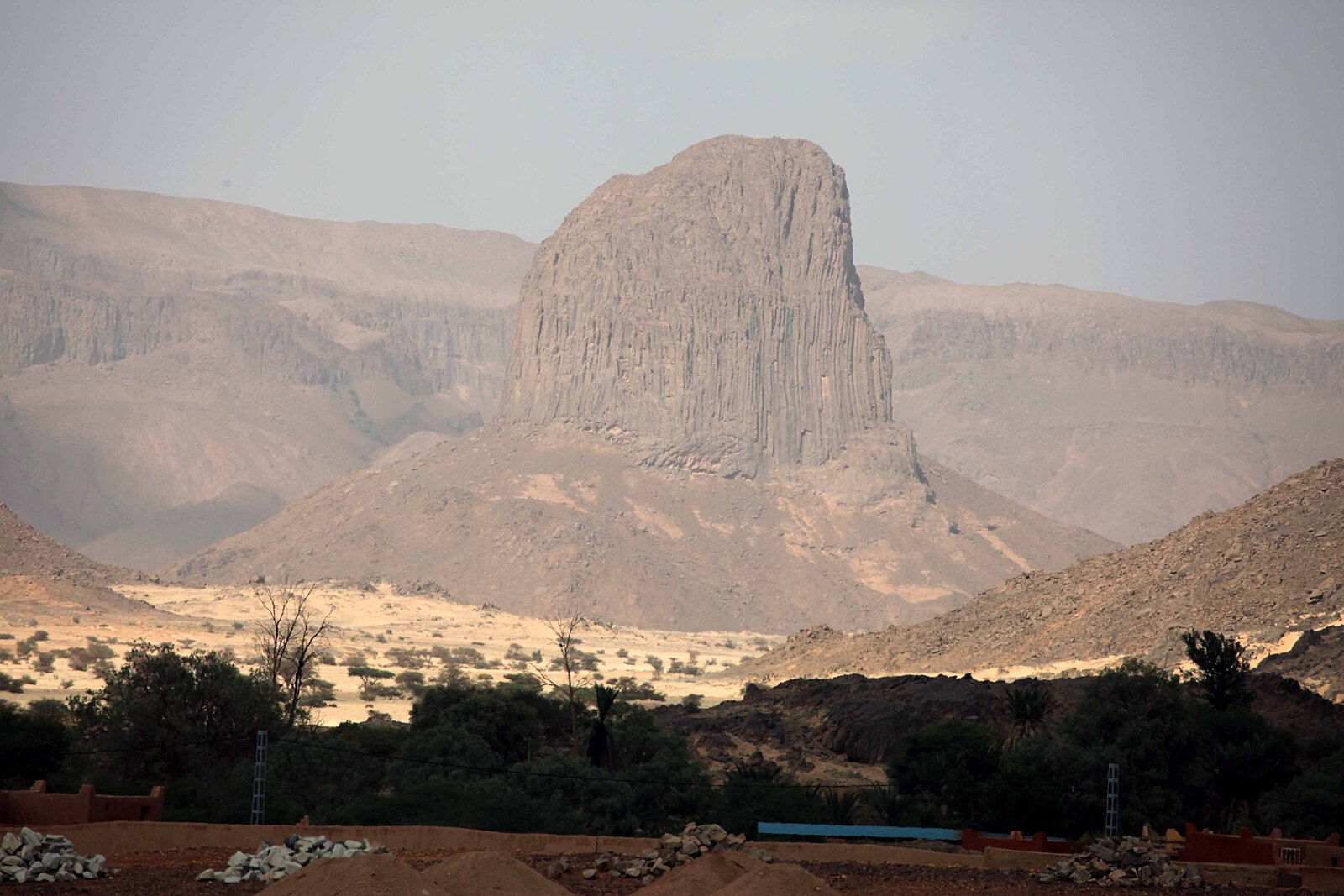
That population is modest by continental standards. Nigeria had about 237.5 million people in 2025, Ethiopia 135.5 million and Egypt 118.4 million, so Algeria’s voice rests on money and geography rather than headcount.
The International Monetary Fund projects Algeria’s economy at US$331.9 billion in 2026 and US$338.9 billion in 2027, in current dollars. Real growth is projected at 3.8 percent for 2026 and 3.2 percent for 2027.
That makes Algeria the fourth-largest African economy in the Fund’s projections for 2026. Only South Africa (US$489.1 billion), Egypt (US$442.9 billion) and Nigeria (US$386.7 billion) are larger.
How Algeria Compares With Its African Peers
Morocco, Algeria’s western neighbour and rival, is projected at US$195.6 billion in 2026, about three fifths of Algeria’s output. Its population is also smaller, at 38.1 million against Algeria’s 48.0 million in the Fund’s 2026 estimates.
Income per head tells a different story from total output. The IMF puts Algeria at US$6,910 in 2026, above Morocco (US$5,141), Egypt (US$4,024) and Nigeria (US$1,594), and just below South Africa (US$7,659).
The wealth rests on hydrocarbons rather than broad industry. Fuels made up 93.1 percent of Algeria’s goods exports in 2024, the World Bank’s data show, against 85.9 percent for Nigeria in 2025 and 0.7 percent for Morocco.
Military spending is the other field in which Algeria leads the continent. The Stockholm International Peace Research Institute (SIPRI) estimated Algeria’s 2025 outlay at US$25.4 billion, the 20th highest in the world.
SIPRI’s separate series on arms imports ranks Algeria 33rd worldwide for 2021 to 2025, with imports down 78 percent from the previous five years. Morocco overtook Algeria as the larger importer, though SIPRI warns that Algiers is secretive and its figures may be too low.
Algeria in the African Union and the United Nations
Algeria joined the Organisation of African Unity, the African Union’s predecessor, on 25 May 1963, the date of the body’s founding. The Union groups it in North Africa with Egypt, Libya, Mauritania, Morocco, Tunisia and the Sahrawi Republic.
Morocco rejoined the Union on 31 January 2017, and the Sahrawi Arab Democratic Republic has been a member since 22 February 1982. Both facts sit at the centre of the Western Sahara dispute that divides Algiers and Rabat inside the same organisation.
The Union’s Peace and Security Council is the body that decides on peacekeeping missions, sanctions and the response to coups. Algeria has long sought influence there, but its current seat and chair could not be confirmed from a primary source.
Algeria also sat on the United Nations Security Council during 2024 and 2025. In late 2025 it spoke for itself, Guyana, Sierra Leone and Somalia in a debate on inspections under the Libya arms embargo.
Its term has ended, and the Council’s 2026 membership list no longer includes Algeria. The African seats are now held by other states, so Algiers has to work through the Union’s own bodies.
Trade Blocs and the AfCFTA
Algeria belongs to the Arab Maghreb Union, founded in 1989 with Libya, Mauritania, Morocco and Tunisia. The union has delivered little while Algiers and Rabat are at odds.
Algeria is not a member of ECOWAS in West Africa, the East African Community or the Southern African Development Community. Its trade links with sub-Saharan Africa therefore run through bilateral deals, the continental free trade area and the planned gas pipeline.
The African Continental Free Trade Area (AfCFTA) is the main continental trade framework. The AU’s status list of 22 May 2026 shows Algeria signing on 21 March 2018, ratifying on 7 June 2021 and depositing its instrument on 23 June 2021.
The agreement itself entered into force on 22 May 2019, according to the Union’s treaty page. No verified figure was available on how much of Algeria’s trade now moves under AfCFTA tariff preferences.
Algeria also joined the New Development Bank, the lender set up by Brazil, Russia, India, China and South Africa, on 19 May 2025, the bank’s member list shows. That is a financing link to the BRICS countries, which is not the same thing as membership of the BRICS group.
Gas Routes From the Sahara to Europe
Gas is Algeria’s strongest card, on the continent and abroad. Algeria is one of the European Union’s main non-Russian gas suppliers, and no verified 2025 volume was available for this guide.
Pipelines run under the Mediterranean to Italy and Spain, and Algeria also ships liquefied natural gas by tanker. Both routes leave Europe exposed to Algerian output and to Algiers’ political choices.
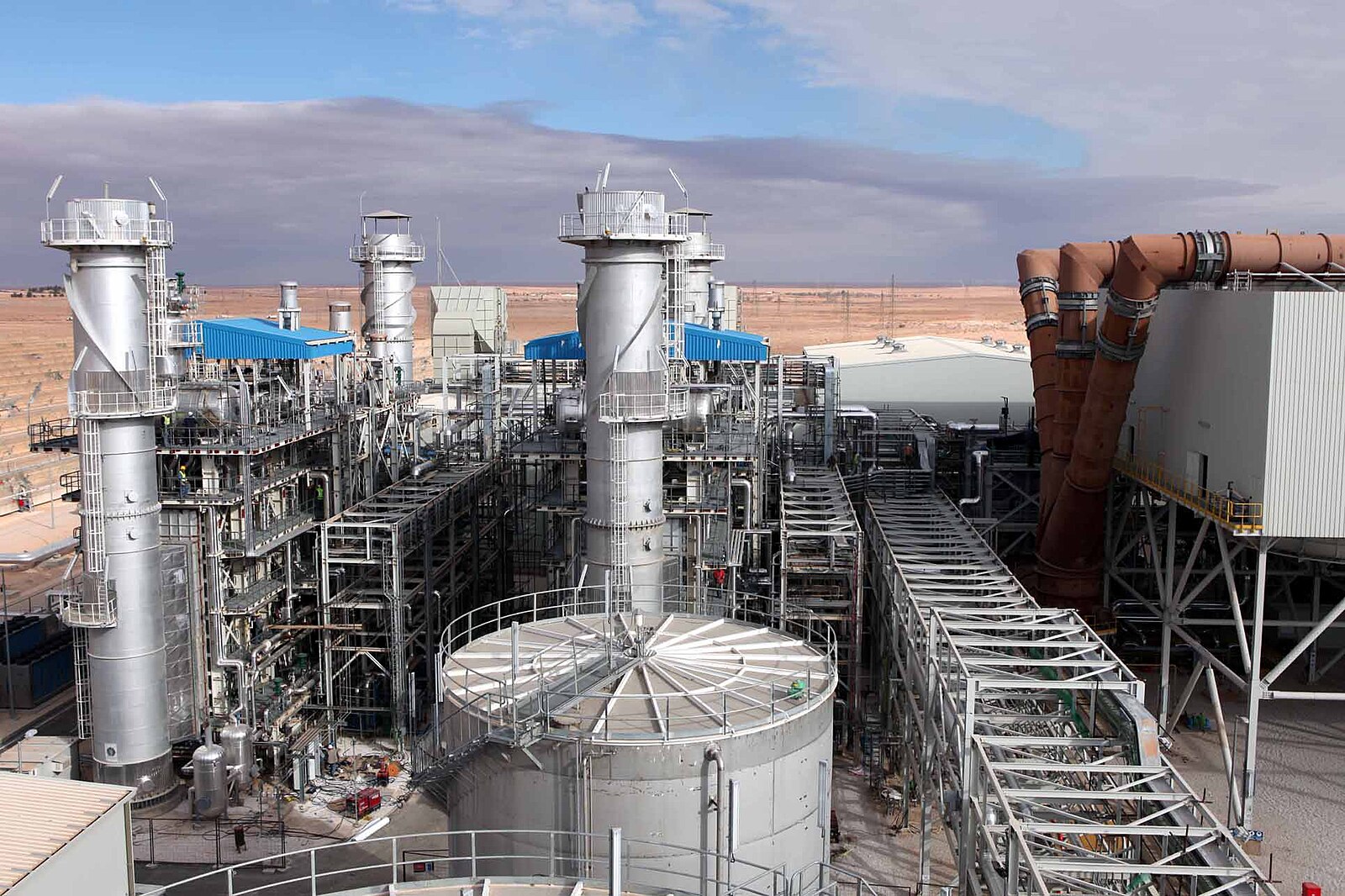
A second route would run south. The Trans-Saharan Gas Pipeline is designed to carry up to 30 billion cubic metres a year over 4,128 kilometres, from Nigeria through Niger to Algeria’s Mediterranean coast.
Sonatrach, Algeria’s state energy company, and Nigeria’s state company NNPC hold 90 percent of the project, with Niger’s SONIDEP holding 10 percent. Algeria said on 4 June 2026 that construction had begun on its own section, starting at the Hassi R’Mel gas hub.
The line would tie Algeria’s gas network to Nigerian supply and give Niger a transit role. Completion depends on financing, security in the Sahel and gas prices, none of which the partners control.
Security, the Sahel and the Southern Border
Algeria has land borders with Mali, Niger, Mauritania and Libya, so unrest in the Sahel reaches Algiers quickly. Its relations with Mali broke down in stages after 2023.
Mali ended the 2015 Algiers peace accord with Tuareg-led rebels, which Algeria had mediated, in January 2024. Mali says Algerian forces downed its army drone on the night of 31 March to 1 April 2025, while Algeria says the drone violated its airspace.
Mali, Burkina Faso and Niger withdrew their ambassadors from Algiers in April 2025, and Algeria did the same. Mali then took the case to the International Court of Justice in September 2025, and the court said it could proceed only if Algeria consents.
Algeria rejected the case as a procedural ploy. On 10 July 2026 Mali announced that it would restore Algeria’s ambassador and reopen its skies, and Algerian media confirmed the restoration of ties.
Algeria’s sharpest recent step came in Niger. After an uprising by special-forces units on the night of 28 to 29 August 2026, Algeria sent four Su-30 fighter jets, a tanker and a transport aircraft to Niamey on 30 August.
Algeria’s defence ministry said the move answered a request from Niger’s authorities and supported the army against an attempt to destabilise the state. The account comes from Fides, the Vatican’s news agency, and other detail of the operation is not independently confirmed.
Algeria had already donated four helicopters to Niger before the jets arrived, the same account says. The deployment shows Algiers willing to project air power to its southern neighbour.
Morocco, Western Sahara and the Maghreb Split
Algeria’s longest-running dispute is with Morocco, over Western Sahara and regional influence. Algeria backs the Polisario Front, the movement seeking independence for the territory, and hosts its camps near Tindouf.
Algeria cut diplomatic ties with Morocco in August 2021, and the land border has been shut since 1994. The rupture removes the most natural trade corridor in North Africa and keeps the Arab Maghreb Union frozen.
On 31 October 2025 the UN Security Council adopted resolution 2797 on Western Sahara by 11 votes in favour, with China, Russia and Pakistan abstaining. Algeria, then a Council member, did not take part in the vote.
The text says negotiations should proceed on the basis of the autonomy plan Morocco proposed in 2007. Algeria argued that this departs from established UN decolonisation doctrine.
The UN mission in the territory, MINURSO, has a mandate that runs until 31 October 2026. Whether the Council renews it, and on what terms, is the next test of Algeria’s diplomatic weight.
Partners and Alliances Beyond Africa
Algeria’s closest external ties are commercial and military rather than treaty alliances. Its gas ties it to Italy and Spain, and its air force flies Russian-built Su-30MKA jets.
Russia’s role as arms supplier has shrunk in the figures. SIPRI says Russian arms exports to Algeria fell substantially between 2016 to 2020 and 2021 to 2025, though Algeria’s imports may be undercounted.
European dependence runs both ways. Italy and Spain need Algerian gas, and Algeria needs European revenue, since fuels make up more than nine tenths of its goods exports.
Current trade and defence figures for China, France, Turkey and the United States are not covered here, because none could be matched to a primary source. Algeria’s membership of the New Development Bank since May 2025 is the one verified link to the BRICS countries’ institutions.
What It Means for US Readers
For investors, Algeria is a gas-exposed market whose weight is felt through European energy prices rather than US-listed shares. Pipeline flows to Italy and Spain, and progress on the Trans-Saharan line, are the signals to watch.
For travellers, the US State Department rates Algeria Level 2, exercise increased caution, in an advisory dated 25 August 2026. It advises against travel to areas near the eastern and southern borders, including Bordj Badji Mokhtar, Illizi, In Guezzam, In Salah, Tamanrasset and Tindouf.
The advisory cites terrorism and kidnapping and also covers long overland journeys in the Sahara without an organised tour group. Expats and business travellers should plan around the northern coast and its main cities.
For policy watchers, the UN decision on MINURSO due by 31 October 2026 and any further Algerian deployments in the Sahel are the items to follow. Both bear on migration, energy security and US relations with North Africa.
What Is Not Known
It is not known whether the Trans-Saharan Gas Pipeline will be finished on schedule, because no verified timetable or total cost was available. Nor is it clear how much more gas Algeria can offer Europe beyond its 2025 volumes.
It is not known whether the restored ties with Mali will hold, or whether Mali’s court case will go ahead without Algeria’s consent. The size of Algeria’s trade with the rest of Africa, and its true level of arms imports, are also uncertain.
Connected Coverage
Frequently Asked Questions
Is Algeria the biggest country in Africa?
Yes, by area. Algeria covers 2,381,740 square kilometres, ahead of the Democratic Republic of the Congo at 2,345,410, on World Bank figures for 2024.
How big is Algeria’s economy compared with the rest of Africa?
The IMF projects US$331.9 billion for 2026, the fourth-largest in Africa. Only South Africa, Egypt and Nigeria are projected to be larger.
Is Algeria a member of the African Union?
Yes, and it has been since the Organisation of African Unity was founded on 25 May 1963. It is grouped by the Union with the North African members Egypt, Libya, Mauritania, Morocco, Tunisia and the Sahrawi Republic.
Has Algeria joined the African free trade area?
Yes. Algeria signed the AfCFTA agreement on 21 March 2018 and deposited its ratification on 23 June 2021.
Why do Algeria and Morocco clash?
They disagree over Western Sahara, where Algeria backs the Polisario Front and Morocco proposes autonomy under its own rule. Algeria cut diplomatic ties in August 2021, and the land border has been closed since 1994.
What is Algeria’s role in the Sahel?
Algeria shares borders with Mali and Niger and has been both a mediator and a rival there. In August 2026 it sent four Su-30 fighter jets to Niger at that government’s request.
Where does Algeria’s gas go?
Algeria sends it to Europe by pipeline to Italy and Spain and ships some as liquefied natural gas. A planned Trans-Saharan pipeline from Nigeria through Niger would add a southern supply route.
Sources: IMF World Economic Outlook database (GDP, per capita income, population, growth); World Bank, Algeria indicators (surface area, population, fuel exports); SIPRI, military expenditure 2025; SIPRI, trends in international arms transfers 2025; African Union, member states and dates of joining; African Union, AfCFTA status list, 22 May 2026; African Union, AfCFTA treaty page; New Development Bank, members; UN Security Council, current members; UN press release on resolution 2804 (2025); American Society of International Law, MINURSO resolution 2797; US State Department, Algeria travel advisory, 25 August 2026; Enerdata, Trans-Saharan gas pipeline, 8 June 2026; Fides via AllAfrica, Niger and Algeria, 31 August 2026; Arab News, Mali and Algeria restore ties, 11 July 2026; The New Arab, Mali’s ICJ complaint, 20 September 2025. All accessed 19 October 2026.
This article was produced by The Rio Times’ automated newsroom system. How we use AI · Report an error · Editorial responsibility: Matthias Camenzind, Editor-in-Chief
Part of our ongoing coverage
Africa: The New Scramble — the great-power contest over the continent.