Who Dominates Trinidad and Tobago, Elites and Regions Explained

TRINIDAD AND TOBAGO · POWER
Key Facts
- What is happening Kamla Persad-Bissessar’s governing United National Congress holds 26 of 41 House seats after the April 2025 election.
- Why it matters Energy brings over 70% of foreign-exchange earnings, so the state and unions shape jobs and money.
- The numbers The 2027 budget plans TTD 63.4 billion (about US$9.4 billion) of spending; oil is about 24% of revenue.
- Who is who Christine Kangaloo is President, Persad-Bissessar is Prime Minister, and Pennelope Beckles-Robinson leads the opposition.
- What to watch The petroleum unemployment levy rises from 5% to 8% on 1 January 2027, and union pay talks continue.
- What it means for you US investors and visitors meet a stable parliamentary system, an energy-dependent economy and a large public payroll.
Two parties tied to the two largest communities, an energy economy and Tobago’s own assembly share power in Trinidad and Tobago. This guide shows the elites, regions and institutions, and who is left out.
Trinidad and Tobago power is shared by two big parties, a few old business groups and the state energy sector. In April 2025 voters gave the United National Congress, the UNC, a large majority.
The country has 1.37 million people, according to the World Bank for 2025. Its income per person was US$18,967 that year.
Related guides cover politics, the economy and ethnic groups. Further reading covers geopolitics and foreign players, and the Caribbean page carries regional news.
In Plain English
- UNC: the United National Congress, the party in government since 2025.
- PNM: the People’s National Movement, the main opposition party.
- THA: the Tobago House of Assembly, the elected body that runs Tobago’s local affairs.
- TPP: the Tobago People’s Party, which holds two House seats.
- TTDF: the Trinidad and Tobago Defence Force, with a regiment, coast guard, air guard and reserves.
- NGC: the National Gas Company, a state company.
- TT dollar (TTD): the local currency; about 6.72 per US dollar, the Central Bank’s midpoint of buying and selling rates on 3 November 2026.
How Trinidad and Tobago Power Is Shared
Power sits first in Parliament. The UNC holds 26 of 41 House seats, the PNM 13 and the Tobago People’s Party 2.
Kamla Persad-Bissessar, the UNC leader and member for Siparia, is Prime Minister. Pennelope Beckles-Robinson of the PNM, member for Arima, became Leader of the Opposition on 6 May 2025.
The Senate has 31 members. The Constitution gives 16 seats to the prime minister, 6 to the opposition leader and 9 to the President, who picks independents.
Christine Kangaloo was elected the seventh President on 20 January 2023. Jagdeo Singh is Speaker, and Wade Mark became Senate President on 23 May 2025.
Women hold 18 of the 73 seats in Parliament, with 10 in the House and 8 in the Senate. The Parliament site gives these counts.
Two Parties, Two Communities
Politics follows the two largest communities. The 2011 census counted 35.4% of people as East Indian and 34.2% as African, with 22.8% of mixed background.
The government told the United Nations in 2025 that the two major parties represent the two major races. It also reported friction between them in politics.
The state shows the same split in other data. African Trinidadians made 42% of complaints to the Equal Opportunity Commission in 2017 to 2019 against 34% of the population.
East Indians made 16% of complaints against 35% of the population. The report does not explain the gap.
The party map also follows geography. Twelve of the PNM’s 13 seats lie in northern Trinidad, including Port of Spain, Diego Martin and Laventille.
The UNC’s seats cover central and south Trinidad, including Caroni, Couva, Siparia and Fyzabad, plus some in the east and north. Only San Fernando East in the south is held by the PNM.
Regions, Port of Spain, the South and Tobago
Port of Spain is the capital and the home of the Red House, where Parliament meets. In July 1990 armed gunmen stormed Parliament there and held the prime minister, eight ministers and six MPs hostage.
South Trinidad is the centre of the oil and gas industry and the UNC’s base. The Pointe-a-Pierre refinery sits there, and the 2027 budget plans a phased restart with a shortlist of investors.

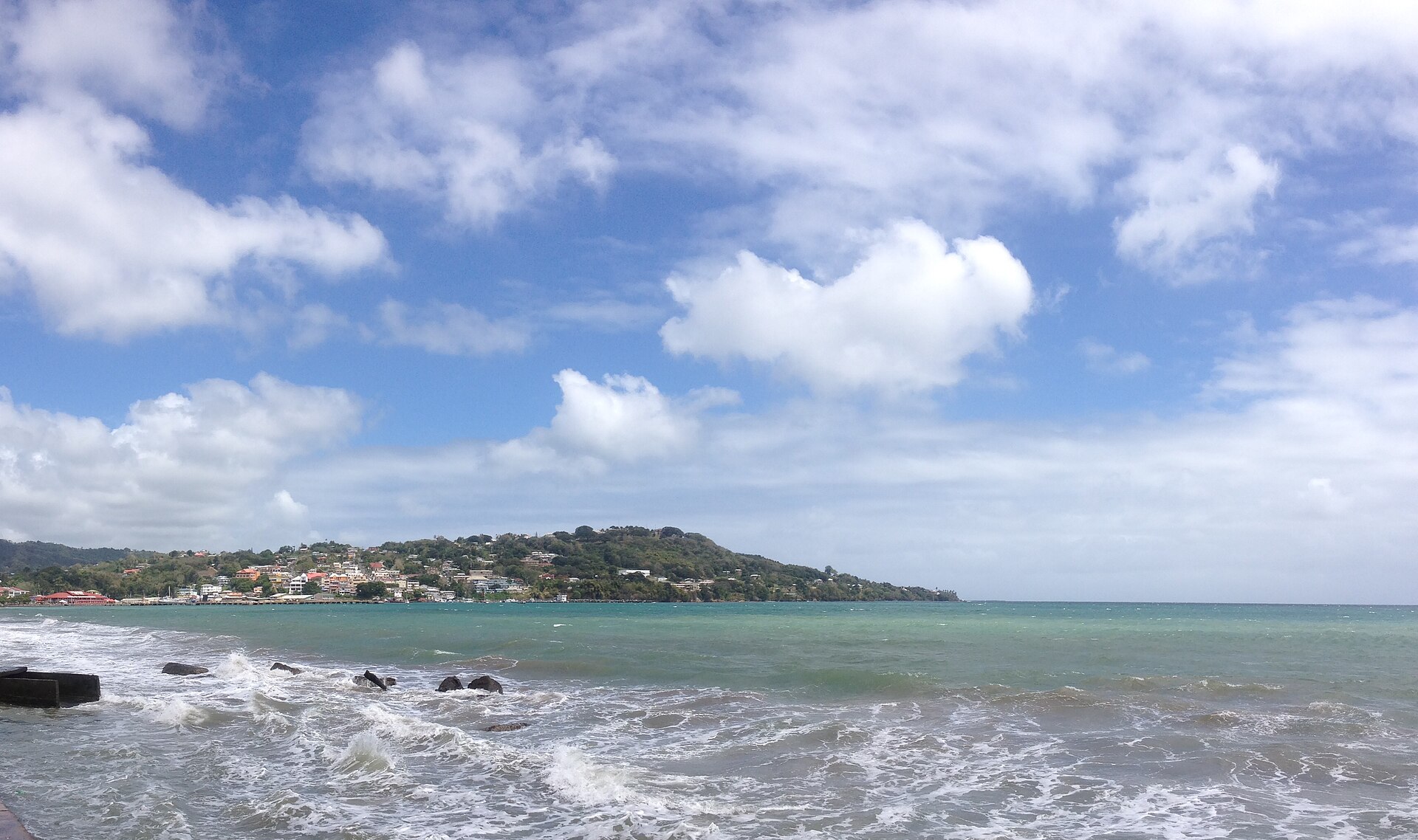
Tobago has its own assembly, the THA, whose first form dates from 1768 and which was re-established in 1980 by Act 37. A 1996 law, Act 40, now governs it.
The 2027 budget gives the THA TTD 2.756 billion (about US$410 million), or 4.35% of spending. Total spending for Tobago is TTD 3.473 billion (about US$517 million), or 5.48%, with ministries adding TTD 716.5 million (about US$107 million).
The Tobago People’s Party holds both Tobago seats: Joel Sampson in Tobago West and David Thomas in Tobago East. It is separate from both national parties.
Business Elites and the Energy Economy
Energy dominates the economy, with more than 70% of foreign-exchange earnings coming from it. Oil revenue is planned at TTD 14.355 billion (about US$2.1 billion), or about 24% of 2027 revenue.
The 2027 budget plans revenue of TTD 59.729 billion (about US$8.9 billion) and spending of TTD 63.368 billion (about US$9.4 billion). The deficit is TTD 3.639 billion (about US$542 million), or 2.1% of GDP.
The budget lifts the unemployment levy on petroleum profits from 5% to 8% from 1 January 2027. That adds TTD 155 million (about US$23 million), and the levy had been 5% since 1989.
The state-owned National Gas Company reported a profit of TTD 3.46 billion (about US$515 million). State firms like it give the government a direct hand in the main industry.
Private power rests on old groups such as ANSA McAL, a private conglomerate founded in 1881. It runs 48 companies with about 5,000 employees, and A. Norman Sabga is its chairman.
The sources checked give no reliable ranking of family fortunes, so this guide names no list of tycoons. Company filings and the budget show who earns what, but not who owns what.
The Military and the Police
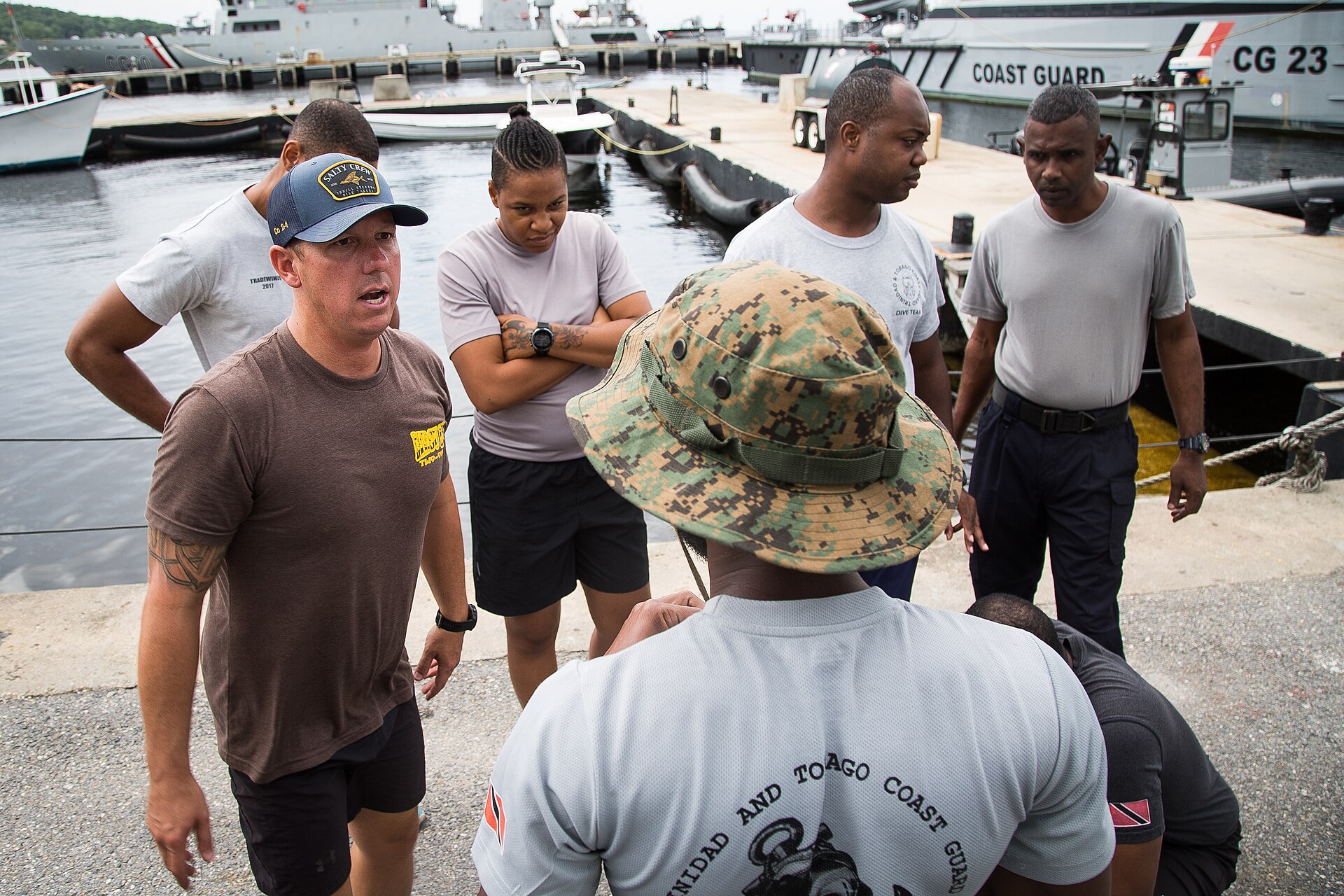
The Defence Force was set up in 1962 under the Defence Force Act. It has four parts: the Regiment, Coast Guard, Air Guard and Reserves.
Commodore Don Polo was appointed Chief of Defence Staff on 7 October 2025. The World Bank puts military spending at 0.94% of GDP in 2025 and the armed forces at about 5,000 people in 2020.
The 2027 budget sets aside TTD 281.8 million (about US$42 million) for arrears owed to Defence Force members. It also describes 30 joint police and army posts.
Civilian politics decides who holds office. The President, elected by Parliament, is the Commander in Chief.
Churches, Temples and Unions
Religion is plural and public. The state keeps holidays for Easter, Eid-ul-Fitr and Divali, plus Spiritual Baptist Liberation Day on 30 March.
The Inter-Religious Organisation, founded in 1973, brings the main faiths together. The Spiritual Baptist day marks a 1917 ban that was repealed in 1951.
Unions carry weight because the state employs many people, and the Public Services Association speaks for about 40,000 public servants. The National Union of Government and Federated Workers covers about 20,000 daily-rated workers.
The budget gives daily-rated workers a 10% raise and sets aside close to TTD 2.5 billion (about US$372 million) for public officers. Talks remain open with the oil workers’ union and several others.
Inequality and Who Is Left Out
A UNICEF study in 2025 found that one in three children lived in multidimensional poverty. The World Bank has no newer Gini figure than 40.2 for 1992, so recent inequality is not measured.
Social grants reached 123,393 pensioners, 15,525 public assistance cases and 27,071 disability grants in fiscal 2026, and 37,066 households received food support. Those figures are small next to a population of 1.37 million.
Venezuelan migrants are among the groups with the least power. An amnesty in May 2019 gave a registration card to work legally and was extended to December 2023.
The country has no refugee law, and a revised refugee policy was still in draft in the 2025 UN report. Indigenous people were 0.11% of the population in 2011.
What It Means for US Readers
Trinidad and Tobago is a parliamentary democracy with regular elections, which gives US firms a predictable setting. Energy is the sector to watch, and the levy rise from January 2027 raises costs for petroleum producers.
Unresolved pay talks with several unions can slow public services. Visitors and investors should also read the US government’s travel advice, which this guide does not summarise.
What Is Not Known
- Wealth lists: no reliable ranking of the richest families was found, so none is given.
- Tobago assembly: seat counts and the Chief Secretary were not confirmed from one clear source, so they are left out.
- 2023 census: the Central Statistical Office lists only the 2011 and 2000 results, so ethnic shares are from 2011.
- Religious shares: current percentages by faith were not found at a primary source.
- Defence leadership: the Defence Force About page is out of date, and the appointment of 7 October 2025 is the latest found.
- Gini: no inequality measure newer than 1992 was found.
Frequently Asked Questions
Who holds power in Trinidad and Tobago?
Prime Minister Kamla Persad-Bissessar and the United National Congress, which holds 26 of 41 House seats. The PNM has 13.
Who is the President of Trinidad and Tobago?
Christine Kangaloo, elected the seventh President on 20 January 2023. The President is Commander in Chief of the Defence Force.
Is Trinidad and Tobago divided by ethnicity?
The 2011 census counted 35.4% East Indian, 34.2% African and 22.8% mixed. The government told the United Nations that the two major parties represent the two major races.
How does Tobago fit into the country?
Tobago has its own elected Tobago House of Assembly. The 2027 budget gives it TTD 2.756 billion (about US$410 million), or 4.35% of spending.
How important is energy to the economy?
More than 70% of foreign-exchange earnings come from energy. Oil revenue is planned at about 24% of government revenue in the 2027 budget.
Does the army run politics in Trinidad and Tobago?
No, the Defence Force is small and answers to the civilian President as Commander in Chief. It was set up in 1962, and elected parties decide who governs.
Who is left out of power?
Poor children, migrants and smaller communities have the least say. A 2025 UNICEF study found one in three children in multidimensional poverty.
Sources: Parliament of Trinidad and Tobago, members and seats; Ministry of Finance, Budget Statement 2027, 12 October 2026; Government of Trinidad and Tobago, report to the UN committee on racial discrimination CERD/C/TTO/15-16, 2025; Trinidad and Tobago Defence Force; Tobago House of Assembly; World Bank open data, Trinidad and Tobago; ANSA McAL, company profile; Central Statistical Office of Trinidad and Tobago, census results; Central Bank of Trinidad and Tobago, exchange rates, 3 November 2026, buying 6.6583 and selling 6.7741 TT dollars per US dollar.
This article was produced by The Rio Times’ automated newsroom system. How we use AI · Report an error · Editorial responsibility: Matthias Camenzind, Editor-in-Chief
Expat Guide to Trinidad and Tobago
What The Rio Times publishes for foreigners who live in or move to Trinidad and Tobago.
Start here
- Moving to Trinidad and Tobago 2026, Step by Step
- Moving to Trinidad and Tobago: Visas, Costs, Work Permits and Daily Life
- Healthcare in Trinidad and Tobago for Expats: Hospitals, Insurance and Costs
- Trinidad and Tobago Taxes for Foreign Residents: 25% Above US$13,200 Allowance, 30% Above US$147,000
Coming up in Trinidad and Tobago
Understand Trinidad and Tobago