Moving to Trinidad and Tobago 2026: Visas, Costs, Work Permits and Daily Life
GUIDES · TRINIDAD AND TOBAGO
Key Facts
- —What it is A standing guide to visas, work permits, living costs and daily life for foreigners moving to Trinidad and Tobago.
- —Who it’s for Energy and finance professionals, Caribbean nationals, spouses of citizens and long-stay remote workers.
- —The rules Most Western visitors enter visa-free, but paid work needs a permit that your employer applies for.
- —What it costs A central one-bedroom flat in Port of Spain averages about TT$6,880 a month (about US$1,017), per Numbeo.
- —Why it matters A 199-day state of emergency ended on 17 September 2026, and a new special-operations law passed Parliament days later.
- —The catch US dollars are rationed at bank counters, so moving money out can be slower than moving in.
Moving to Trinidad and Tobago is easy to start and slow to finish. Entry is simple, but work, residence and money run through permits and queues.
Moving to Trinidad and Tobago means joining a small, English-speaking energy economy of about 1.37 million people, seven miles off Venezuela. This guide sets out entry, permits, costs, safety and daily life as of September 2026.
Trinidad and Tobago is two islands. Trinidad holds the capital, Port of Spain, the gas industry and most people; Tobago is smaller and lives mainly from tourism.
All US$ figures use the Central Bank of Trinidad and Tobago selling rate of TT$6.7661 per US dollar on 25 September 2026. The central bank manages the Trinidad and Tobago dollar (TT$) closely, so the rate moves little.
Entering Trinidad and Tobago: visas and the online arrival card
Most Western visitors need no visa. The UK government says British visitors can stay up to 90 days, with an onward ticket and proof of funds.
The US State Department says American citizens need no visa for stays of 90 days or less. Citizens of most Caribbean Community (CARICOM) states, the regional bloc, also enter visa-free.
Other nationalities may need a visa. The consulate in New York charges US$143 for a multiple-entry visa, including a US$20 service charge.
That consular fee chart took effect on 22 January 2026. Fees at other missions and online may differ.
Since 17 March 2026, every traveller entering or leaving must file an online arrival or departure card at travel.gov.tt. It is free and can be filed up to 72 hours before travel.
Once submitted, the card produces a receipt with two QR codes for immigration and customs officers. It replaced the old paper forms.
Visitors must declare cash worth more than TT$20,000 (about US$2,956) on arrival or departure. A visa-free stamp is not a work or residence right; it only covers a visit.
Work permits: your employer applies, not you
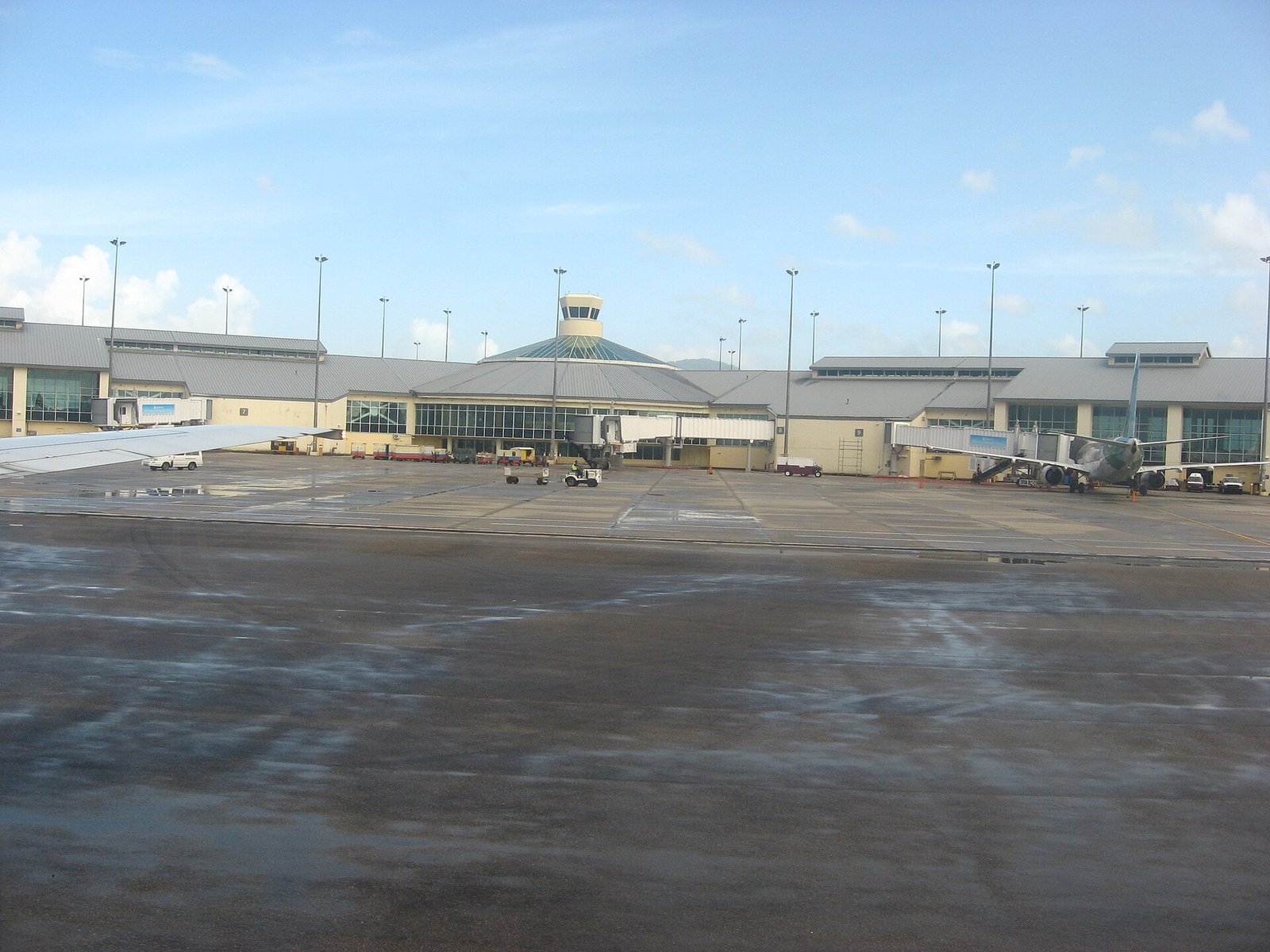
Paid work needs a work permit under the Immigration Regulations. The one exception is a single stint of up to 30 days in any twelve months.
Permits are handled by the Ministry of Homeland Security, the renamed national security ministry. Applications go online through TTBizLink, the government’s trade and business portal.
The employer applies, or an attorney does so for a self-employed person. The ministry asks for applications at least six weeks before the start date.
| Work permit item | Cost or rule (as of September 2026) |
|---|---|
| Processing fee | TT$1,200 (about US$177), non-refundable |
| Duration fee | TT$900 a month (about US$133), minimum TT$2,700 (about US$399) |
| Job advert | At least seven days in daily newspapers, before applying |
| Police certificate | No older than six months |
| Extension | File at least two months before the permit expires |
The monthly fee follows Legal Notice No. 493 of 29 December 2025. The full sum for the approved period must be paid before the permit is issued.
The newspaper advert exists to show that no local candidate was found. Owners and directors of a company do not have to advertise, the ministry’s guidelines say.
After approval, the worker must take the permit to the Immigration Division for an endorsement in the passport. A permit ties you to one employer; it is not a general right to work.
Staying for good: residence, CSME certificates and family routes
Permanent residence has four main routes, the ministry’s residence page says. They are five years of continuous residence, a CSME-based permit, family sponsorship, or marriage to a citizen or resident.
Marriage makes you eligible; it does not make approval automatic. Each application still goes through checks and ministerial discretion, and no official processing time is published.
Caribbean nationals have a faster path. The CSME, or CARICOM Single Market and Economy, lets twelve skill groups work across member states with a Skills Certificate.
Those groups include university graduates, nurses, teachers, artisans, musicians, domestic workers and private security officers. The foreign ministry puts minimum processing at five to six weeks.
The Skills Certificate is not residence and not citizenship. Holders from outside CARICOM do not qualify, so a European or North American still needs a work permit.
For the full rules, see Trinidad and Tobago Visa Rules: Easy Entry, Long Wait to Settle.
What moving to Trinidad and Tobago costs each month
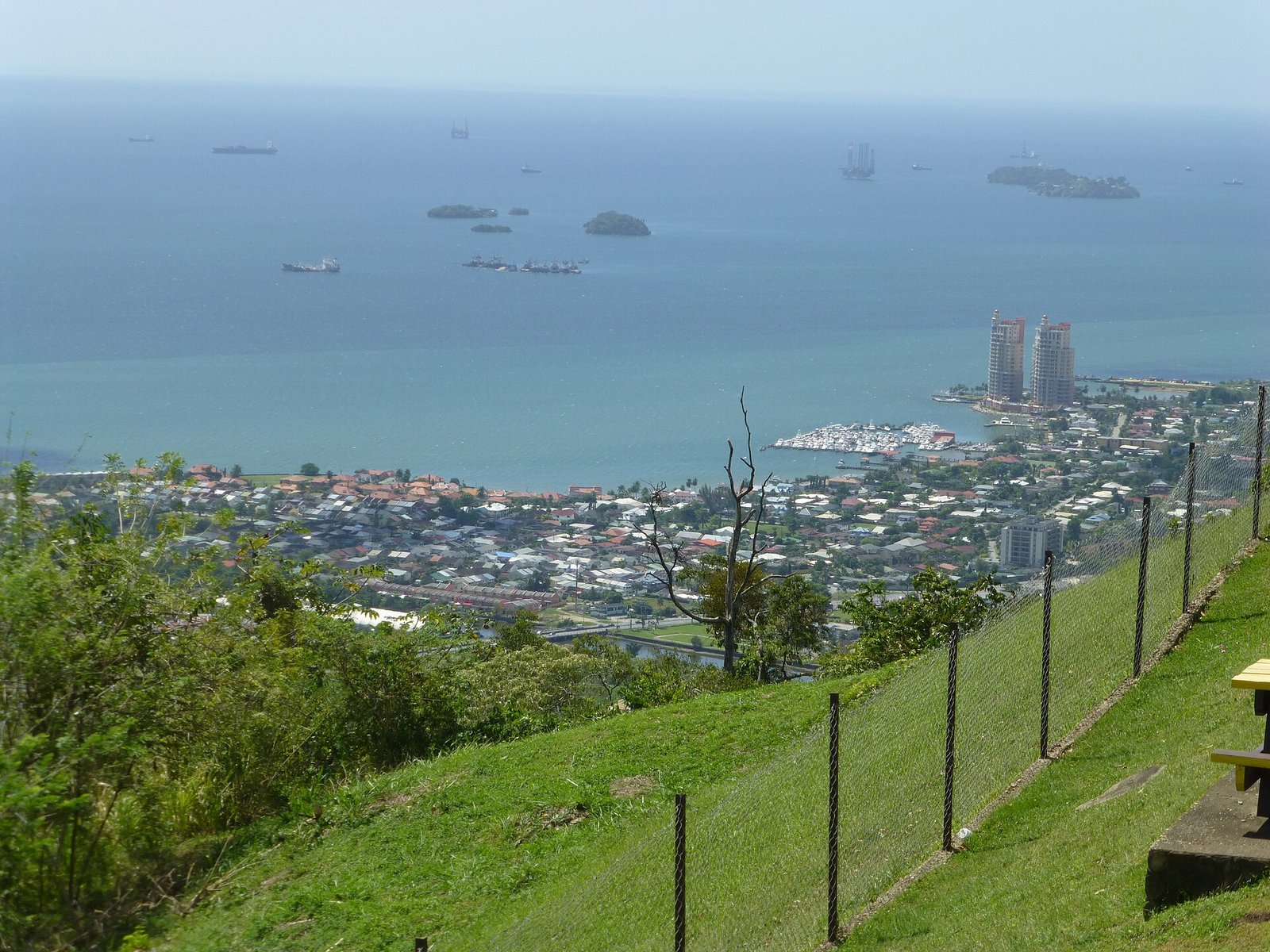
Rent is the biggest bill, and the gap between the centre and the suburbs is wide. Crowd-sourced Numbeo data for Port of Spain, last updated 6 September 2026, give these averages.
| Item (Port of Spain) | Monthly average | In US$ |
|---|---|---|
| One-bedroom flat, city centre | TT$6,883 | about US$1,017 |
| One-bedroom flat, outside centre | TT$3,524 | about US$521 |
| Three-bedroom flat, city centre | TT$14,820 | about US$2,190 |
| Three-bedroom flat, outside centre | TT$8,120 | about US$1,200 |
| Electricity, water, cooling (85 m² flat) | TT$617 | about US$91 |
| Broadband, 60 Mbps or faster | TT$383 | about US$57 |
| Single person, costs excluding rent | TT$7,047 | about US$1,042 |
For scale, Numbeo puts the average local net salary near TT$5,180 a month (about US$766). A central one-bedroom flat therefore costs more than a typical local wage.
The legal minimum wage is TT$20.50 an hour (about US$3.03), in force since 1 January 2024, the Ministry of Labour says. That shows how far expat budgets sit above local pay.
Petrol is cheap by Western standards, at about TT$7.75 a litre (about US$1.15) in Numbeo’s data. International primary school fees average about TT$73,545 a year (about US$10,870).
These are averages from user reports, not official statistics. Gated compounds in western suburbs such as Westmoorings often cost far more; older guides are in Cost of Living in Trinidad 2026.
Money: a managed currency and scarce US dollars
The TT dollar is stable, but US dollars are scarce. Banks ration foreign currency at the counter, and card limits for spending abroad have been cut.
Republic Bank capped US dollar card spending at US$2,500 per billing cycle from 21 August 2025. The central bank linked that cut to an imbalance between dollar demand and supply.
First Citizens, a majority state-owned bank, cut its standard Mastercard limit from US$6,000 to US$2,000 a month from 10 March 2026. Other cards and banks set their own limits.
For a newcomer, the rule is simple. Keep an account abroad, bring money in as needed, and do not count on converting large TT$ sums back quickly.
Inflation is low: the central bank reported headline inflation of 0.3 percent for June 2026. Low inflation does not mean low prices, because many goods are imported.
Safety after the state of emergency
Crime is the main worry for most people moving to Trinidad and Tobago. The police recorded 369 murders in 2025, down from a record of more than 620 in 2024.
That is roughly one killing a day, or about 27 per 100,000 people. Most violence is gang-related and concentrated in specific districts.
A state of emergency, proclaimed on 2 March 2026, ended on 17 September 2026 after 199 days. It let police arrest and search without warrants, and it suspended bail for some offences.
Media tallies put murders at 252 by 10 September 2026, slightly below the same point of 2025. Prime Minister Kamla Persad-Bissessar has said she would not hesitate to declare another emergency.
A new Special Operations Bill passed the Senate on 24 September 2026 by 16 votes to 15. The Senate President’s casting vote broke the tie.
The bill lets the President declare “closed areas”, where entry permits, cordons and curfews can apply.
The US State Department rates the country Level 3, “reconsider travel”, in an advisory issued 13 April 2026. The UK Foreign Office names Laventille, Morvant, Beetham, Sea Lots and parts of downtown Port of Spain as places for extra caution.
Neither warning bans travel or residence. They do mean armed robbery is common, so gated housing, locked car doors and avoiding isolated places after dark are normal habits.
Healthcare, taxes and property in brief
Public hospitals are run by five Regional Health Authorities. The UK Foreign Office says private clinics handle most ordinary problems, but serious cases may need evacuation abroad.
Good private insurance with evacuation cover is therefore the practical minimum. See Healthcare in Trinidad and Tobago for Expats.
Tax follows residence, not passport: spending more than half the year (roughly 183 days) there makes you tax-resident. Income above a TT$90,000 allowance (about US$13,300) is taxed at 25 percent, and above TT$1 million (about US$147,800) at 30 percent.
Details are in Trinidad and Tobago Taxes for Foreign Residents. Foreigners may buy a home on up to one acre in Trinidad without a licence, while Tobago purchases need one; see Buying Property in Trinidad and Tobago as a Foreigner.
Daily life: traffic, water, weather and driving
Traffic is the daily tax on life in north Trinidad. Commutes into Port of Spain from the east and south can take far longer than the distance suggests.
Public transport means state buses and “maxi taxis”, privately run minibuses on fixed routes. Many foreigners drive, and traffic keeps to the left.
A UK licence is valid for up to 90 days, the UK Foreign Office says, after which an international permit is needed. It also warns that highway crashes, often high-speed, are frequently fatal.
Water supply can be interrupted, as WASA, the state water authority, warned for central and south Trinidad in September 2026. Ask landlords about storage tanks and pumps. The rainy season, roughly June to December, brings flash flooding in low areas.
The islands sit south of the main hurricane track. The UK Foreign Office says they are rarely hit by hurricanes but can have severe storms, and earthquakes are a risk.
English is the official language, and Carnival, steelpan and cricket shape the calendar. Tobago runs its own assembly and has a slower, more rural pace than Trinidad.
What this means for you
If you have a job offer, the path is clear but paper-heavy. Push your employer to file six weeks early and budget for permit fees on each renewal.
If you are a Caribbean national with a degree or listed skill, the CSME certificate is usually the faster route. If you marry a citizen, residence is possible but not instant.
Choose housing for security and commute first, price second. Keep savings offshore, and check the Special Operations law before signing a lease near a declared closed area.
Connected Coverage
Trinidad and Tobago Explained: Gas, Politics, the Two Islands and What to Watch
Trinidad and Tobago Visa Rules: Easy Entry, Long Wait to Settle
Healthcare in Trinidad and Tobago for Expats: Hospitals, Insurance and Costs
Trinidad and Tobago Taxes for Foreign Residents
Buying Property in Trinidad and Tobago as a Foreigner: Licences, Prices and the Two-Island Split
Cost of Living in Trinidad 2026: What It Costs to Live as an Expat
Trinidad Ends 199 Days of Emergency Rule With Murders Barely Down
Trinidad and Tobago Special Operations Bill Passes House, Senate Next
Sources: Rules and fees come from the homeland security, foreign and labour ministries and the Central Bank of Trinidad and Tobago. Safety data come from the US State Department, the UK Foreign Office and Trinidad press; prices from Numbeo.
- central-bank.org.tt
- homelandsecurity.gov.tt
- homelandsecurity.gov.tt
- foreign.gov.tt
- foreign.gov.tt
- foreign.gov.tt
- labour.gov.tt
- travel.state.gov
- gov.uk
- newsday.co.tt
- caribbeannationalweekly.com
- guardian.co.tt
- guardian.co.tt
- numbeo.com
- guardian.co.tt
- guardian.co.tt
- guardian.co.tt
What Is Not Known
When the Special Operations law will be brought into force is not known. It takes effect only on proclamation, no closed area had been declared as of 27 September 2026, and none can be until the law is in force.
Whether murders keep falling without emergency powers is not established. The 2026 count was running only slightly below 2025 before the emergency ended.
How long a permanent residence application takes is not published. No official processing time exists, and each decision rests on ministerial discretion.
When the US dollar shortage will ease cannot be predicted. It depends on new gas supply, much of it from fields not yet producing.
The fiscal 2027 budget, which may change fees, taxes or fuel prices, had no confirmed date as of 27 September 2026.
More: Caribbean news in English, every day from The Rio Times.
Frequently Asked Questions
Do I need a visa to move to Trinidad and Tobago?
Not to arrive. Citizens of the US, UK and most CARICOM states can visit visa-free, usually for up to 90 days. Living or working there needs a separate permit, and every traveller must file a free online arrival card at travel.gov.tt before travel.
How much does a Trinidad and Tobago work permit cost?
The employer pays a TT$1,200 processing fee (about US$177) and then TT$900 a month (about US$133) for the approved period. The minimum duration fee is TT$2,700 (about US$399). The ministry asks for applications at least six weeks before the start date.
Can I get permanent residence in Trinidad and Tobago?
Yes, through five years of continuous residence, marriage to a citizen or resident, or family sponsorship. CSME-based permits are another route, and approval is always discretionary. No official processing time is published.
How much is rent in Port of Spain?
Numbeo data from September 2026 put a central one-bedroom flat at about TT$6,883 a month (about US$1,017). Outside the centre the average was about TT$3,524 (about US$521). Gated homes in western suburbs cost more.
Is Trinidad and Tobago still under a state of emergency?
No. The state of emergency ended on 17 September 2026 after 199 days. A Special Operations Bill allowing local ‘closed areas’ passed the Senate on 24 September 2026.
This article was produced by The Rio Times’ automated newsroom system. How we use AI · Report an error
Read More from The Rio Times