Trinidad and Tobago in Latin America, Its Role, Weight and Alliances

GUIDES · TRINIDAD AND TOBAGO
Key Facts
- —In context Trinidad and Tobago is a two-island, English-speaking republic just off the Venezuelan coast. Regional statistics count it in Latin America and the Caribbean, where it holds 0.2 percent of the people.
- —Weight About 1.37 million people in 2025 and an economy of US$25.9 billion, or 0.35 percent of the regional total. Income per person was US$18,967, against US$11,095 for the region.
- —Government Kamla Persad-Bissessar of the United National Congress leads the government after the 28 April 2025 election, which her party won with 26 of 41 seats. Sean Sobers is the minister of foreign and Caricom affairs.
- —Blocs A founder of CARICOM under the Treaty of Chaguaramas of 4 July 1973, a member of the OAS since 1967 and one of the 33 members of CELAC. Port of Spain hosts the Caribbean Court of Justice and the Association of Caribbean States.
- —Energy Natural gas output was about 2.4 billion cubic feet a day in early 2026, 45 percent below the 2014 peak. Energy exports earn more than 70 percent of foreign exchange.
- —Money The Trinidad and Tobago dollar, quoted at TT$6.77 to the US dollar (selling rate, August 2026). The central bank’s repo rate is 3.50 percent.
- —Venezuela Relations reset on 23 September 2026, when Caracas declared the prime minister welcome again. Cross-border gas depends on US licences announced on 13 February 2026.
Trinidad and Tobago is not Latin American in the strict sense, yet it sits a short sea crossing from Venezuela and joins most of the region’s forums. The Trinidad and Tobago continent question matters to US readers because the islands sold US$2.68 billion of goods to the US in 2025 and host a growing US security partnership.
Where Trinidad and Tobago Sits in the Region
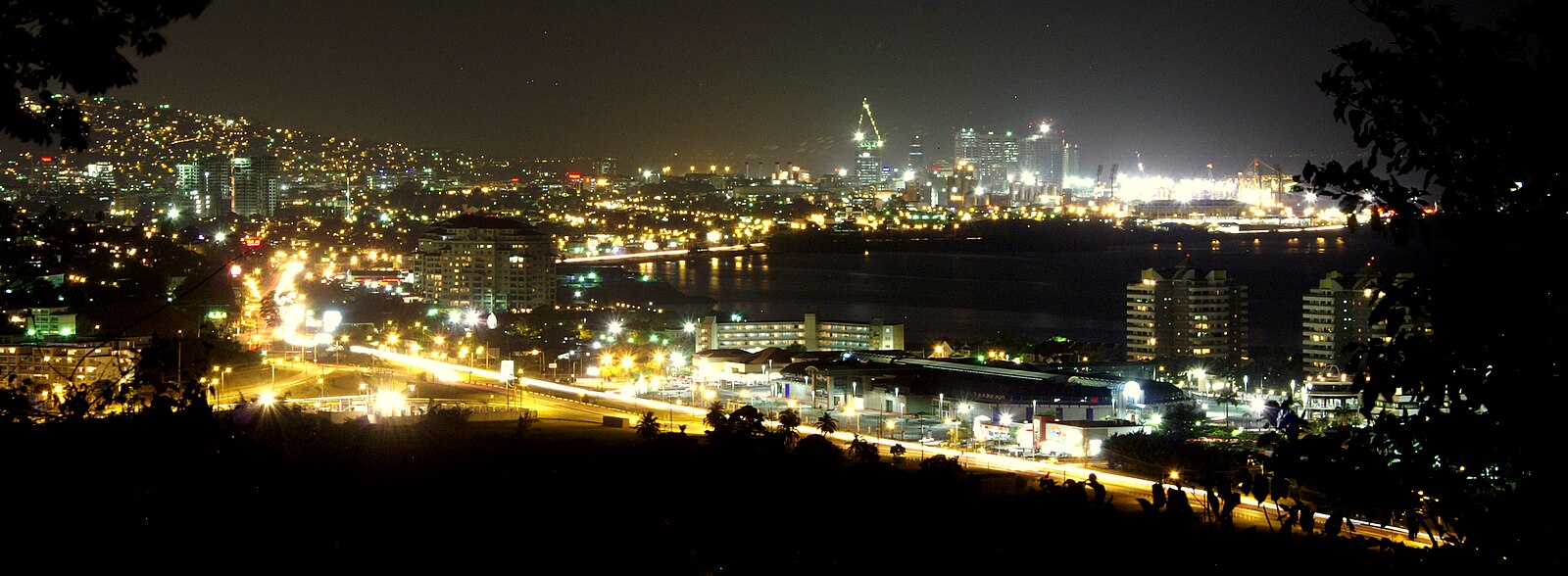
Trinidad and Tobago is a two-island republic at the southern end of the Caribbean, just off Venezuela’s coast. Its people speak English, and most of its diplomacy runs through Caribbean bodies rather than Spanish-language ones.
Regional statistics still count it in Latin America and the Caribbean, so it appears in every continental table. This guide uses that wider frame to set out the Trinidad and Tobago continent question in plain terms.
Prime Minister Kamla Persad-Bissessar leads the government for the United National Congress, which won 26 of the 41 seats on 28 April 2025. Sean Sobers is her minister of foreign and Caricom affairs.
Its Weight in People and Output
The World Bank counted 1,367,764 residents in 2025. That was about 0.2 percent of the 667 million people in Latin America and the Caribbean.
Output of US$25.9 billion was about 0.35 percent of the regional total of US$7.4 trillion. Income per person was US$18,967, well above the regional figure of US$11,095.
Energy exports earn more than 70 percent of foreign exchange, the 2027 budget statement of 12 October 2026 says. That dependence ties growth to gas output.
The Central Statistical Office measured a 0.5 percent contraction in 2025. The Ministry of Finance says real output fell 1.8 percent in the first quarter of 2026.
Headline inflation averaged 0.3 percent in the second quarter of 2026. One US dollar sold for TT$6.77 at the central bank’s average rate in August 2026, so TT$1 is worth about US$0.15.
The central bank held US$5.3 billion in foreign assets in August 2026. Gross official reserves covered 5.8 months of imports at the end of June 2026.
CARICOM, Where It Leads and Where It Clashes
Trinidad and Tobago is one of four founders of CARICOM. The Treaty of Chaguaramas was signed on 4 July 1973, and the bloc now has 15 member states and eight associate members.
Port of Spain hosts the Caribbean Court of Justice, set up on 14 February 2001 and inaugurated in 2005. The Court lists Barbados, Belize, Dominica, Guyana and Saint Lucia as using it for final appeals, while Trinidad and Tobago still goes to the Privy Council.
Under Persad-Bissessar the relationship has turned hard. She left the February 2026 summit in Saint Kitts early, before leaders extended Secretary-General Carla Barnett’s term, and skipped a special meeting on 10 April 2026.
Her government argues that the reappointment broke the Revised Treaty of Chaguaramas, because it was not on the agenda and the Community Council made no recommendation. The summit chair, Terrance Drew of Saint Kitts and Nevis, said leaders acted by the required majority.
At the July 2026 summit in Saint Lucia, leaders agreed that the Community would seek an advisory opinion from the Court under Article 212 of the treaty. The communique says the status quo remains until the Community considers that opinion, and on 28 July 2026 the Court said it had not received a request.
Port of Spain also gives as well as takes. At the same summit it offered the National Prosthetics Centre and the Couva Children’s Hospital for regional use.
The Wider Hemisphere, OAS, CELAC and the ACS
Trinidad and Tobago entered the inter-American system in 1967. It is also one of the 33 members of CELAC, the Community of Latin American and Caribbean States set up in Caracas in December 2011.
Colombia handed the CELAC rotating chair to Uruguay on 21 March 2026 in Bogotá. Montevideo leads the bloc until 2027.
Port of Spain is also home to the Association of Caribbean States, created by a convention signed in Cartagena on 24 July 1994. It has 25 member states and 10 associate members, and its secretariat sits in the St Clair district of the capital.
The islands are not in Mercosur, the southern trade bloc, as either a full or an associate member. Their Latin American trade ties run through CARICOM deals with Costa Rica, the Dominican Republic and Cuba.
A Venezuela trade and investment agreement is also on the books. So is a partial-scope pact with Panama from 2015.
Venezuela, From Rupture to Reset
Venezuela is the neighbour that shapes most of Port of Spain’s foreign policy. Relations broke down in 2025, and in October of that year the National Assembly declared Persad-Bissessar persona non grata after she backed US pressure on Nicolás Maduro’s government.
US forces took Maduro to New York on 3 January 2026, and Delcy Rodríguez, previously vice president, took charge in Caracas. The House of Commons Library notes that Washington restored diplomatic relations with her government in March 2026 and lifted its sanctions on her in April 2026.
On Thursday 3 September 2026 the two governments issued a joint statement, after Foreign Minister Sobers visited Venezuela, that opened what they called a new era. Their roadmap covers trade, energy, agriculture, the environment, culture and collective security.
The prime minister and Rodríguez then met in New York on Wednesday 23 September 2026, on the margins of the UN General Assembly. Their joint statement says the Venezuelan side indicated that Persad-Bissessar is persona grata in Venezuela, and both leaders agreed to make official visits to Caracas and Port of Spain.
Gas is the prize. On 9 September 2026 Persad-Bissessar said she expects Venezuelan gas to reach Trinidad and Tobago within a year, citing agreements signed with BP and talks with Shell.
The history explains the caution. Washington revoked the licences for the Dragon and Manakin-Cocuina gas fields in April 2025, then granted a six-month Dragon licence in October 2025.
The United States as Security Partner
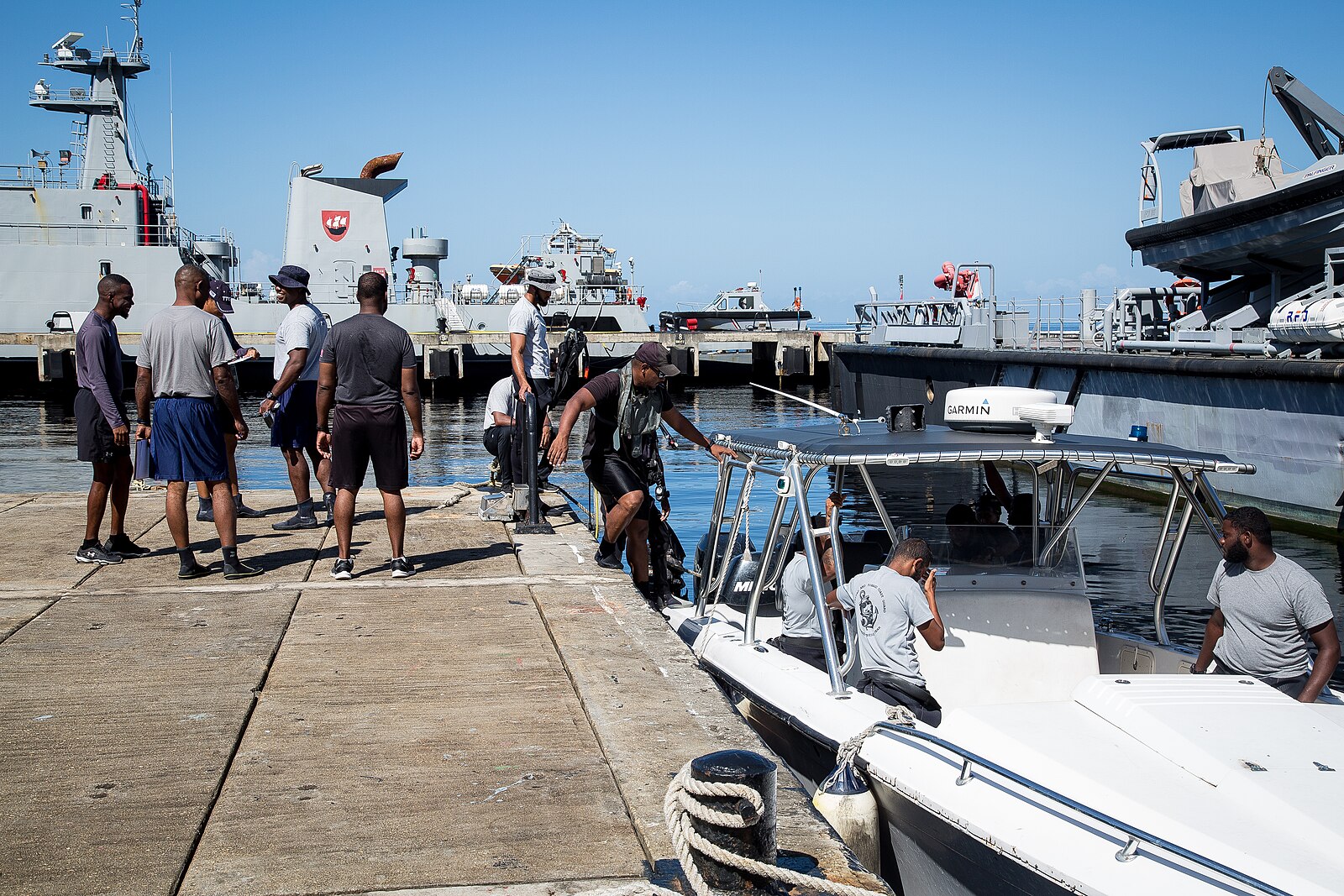
Washington is the partner that Port of Spain has chosen to stand closest to. Newsday, the Trinidad daily, reports that the two governments signed a Status of Forces Agreement in December 2024.
On 15 December 2025 the foreign ministry approved US military aircraft using Piarco and ANR Robinson airports for what the US called logistics and personnel rotations. A US radar that arrived in Tobago in November 2025 had been dismantled by 16 March 2026.
On 25 February 2026 Secretary of State Marco Rubio met Persad-Bissessar in Basseterre and called her country a strong US partner in the Caribbean. The State Department readout says both sides reaffirmed cooperation on energy security and on drug and firearms trafficking.
The prime minister has publicly backed US military operations in the southern Caribbean Sea, a stance many CARICOM leaders did not share. She was also among the leaders invited to a US-hosted summit of Latin American governments in Miami in early March 2026, though no details were public when it was reported.
US goods trade with the islands is close to balanced and favours the United States. In 2025 US exports were US$3.12 billion and imports were US$2.68 billion, a US surplus of US$446 million, according to the Census Bureau.
From January to July 2026 the US sold US$2.01 billion of goods to the islands and bought US$1.86 billion. That left a US surplus of US$159 million.
Gas and the Money Behind Its Diplomacy
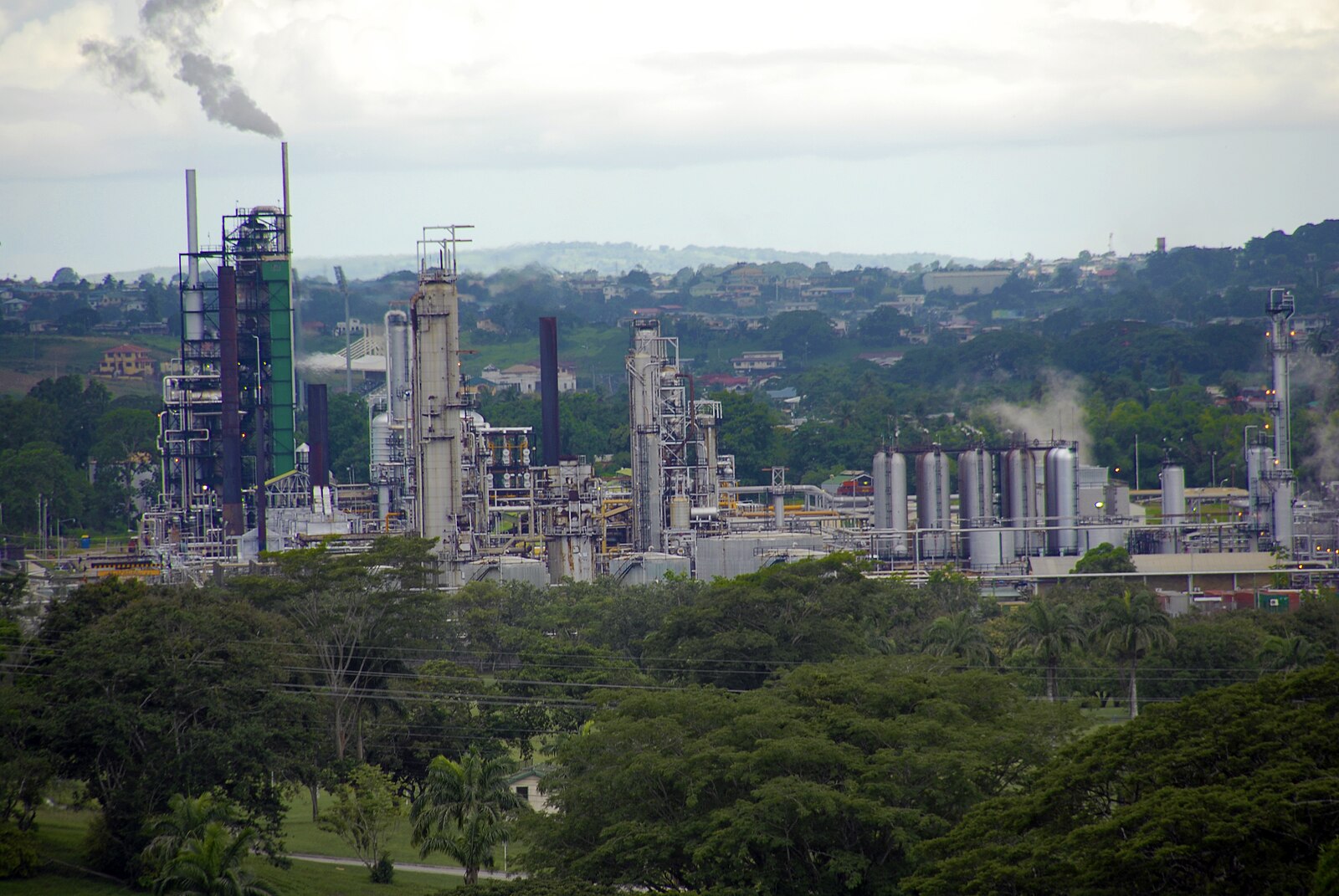
Energy exports bring in more than 70 percent of foreign-exchange earnings, the 2027 budget statement says. Gas output has fallen to about 2.4 billion cubic feet a day from a peak of 4.4 billion in 2014.
The same statement links that fall to the permanent closure of Atlantic LNG Train 1 and several petrochemical plants. Central Bank data show gas production of 2.43 billion cubic feet a day in the first quarter of 2026.
The budget counts on new domestic gas in 2027, led by the Aphrodite and Manatee Plus fields. Manatee Plus is due to give first gas in late 2027, with a peak of 600 million cubic feet a day.
BP’s local arm has secured a licence for Loran Phase II and has agreed to buy Woodside’s 70 percent stake in the Calypso field. Finance Minister Davendranath Tancoo’s statement says the Loran licence could let the country monetise potentially more than 4 trillion cubic feet of cross-border and regional gas through existing infrastructure.
The US general licences announced on 13 February 2026 give a legal framework for certain oil and gas activities in Venezuela and along the shared sea border. Taxes and royalties owed to Venezuela’s government or its state oil company must go to an account that the US Treasury names.
The revised estimate for fiscal 2026 shows a deficit of TT$7 billion (about US$1.03 billion). For fiscal 2027 the budget projects revenue of TT$59.729 billion (about US$8.82 billion) and a deficit of TT$3.639 billion (about US$0.54 billion), or 2.1 percent of GDP.
The budget assumes oil at US$77 a barrel and gas at US$5.00 per million British thermal units. Those are planning figures, not market forecasts.
How It Compares With Its Peers
Trinidad and Tobago has the third-largest economy in CARICOM, behind Haiti at US$32.1 billion and Guyana at US$27.1 billion in 2025. Jamaica followed at US$22.7 billion, while the Dominican Republic, which is outside CARICOM, is far larger at US$127.4 billion.
On income per person Trinidad and Tobago, at US$18,967, trails Guyana at US$32,414 and Barbados at US$28,365 in 2025. It leads the Dominican Republic at US$11,059 and Jamaica at US$8,003.
Guyana is the peer that matters most, because its output of US$27.1 billion in 2025 was larger than the US$25.9 billion of Trinidad and Tobago. Its border dispute with Venezuela is before the International Court of Justice, which held merits hearings from 4 to 11 May 2026.
Against South America the islands are a small, rich and energy-dependent neighbour rather than a continental power. Their influence rests on gas, on the regional institutions in Port of Spain and on a close tie with Washington.
What It Means for US Readers
Investors should read the islands as a gas-supply story with a Venezuelan option. Output is falling, new domestic fields are due only in late 2027, and cross-border gas needs US licences that Washington can change.
US exporters sell more to the islands than they buy, with a goods surplus of US$446 million in 2025. The currency stayed between TT$6.77 and TT$6.78 to the US dollar from April to August 2026, so dollar contracts carry little exchange-rate noise.
Travellers and expats will feel the Venezuelan thaw first through air links and tourism, which the 23 September declaration names as priorities. CARICOM free-movement plans, discussed by leaders in July 2026, depend on a bloc whose unity is now strained.
Connected Coverage
Trinidad and Tobago Explained: Gas, Politics, the Two Islands and What to Watch
Trinidad and Tobago and Its Neighbours in the Caribbean
Trinidad and Tobago’s Foreign Minister Goes to Caracas
Trinidad and Tobago Economy Braces as Gas Output Falls 4.5 Percent
Venezuela in Latin America, Its Role, Weight and Alliances
What Is Not Known
The Caribbean Court of Justice has not issued an advisory opinion on the Secretary-General’s reappointment, and no hearing date was public as of 28 July 2026. Until the Community considers an opinion, it has said the status quo stands.
No date has been made public for the official visits between Caracas and Port of Spain. Nor has a new gas contract with Venezuela been published, and the US licences behind any deal could be changed, as they were in April 2025.
The December 2025 approval for US military flights named only the coming weeks, and no end date was given. The Tobago radar has gone, but the foreign ministry has not said what US presence remains.
Venezuela’s own path is also open. Washington has said the country is not ready for elections, and no date has been set.
Frequently Asked Questions
Is Trinidad and Tobago part of Latin America?
Strictly it is an English-speaking Caribbean country, but regional statistics count it in Latin America and the Caribbean and it is a member of CELAC. It is not a full or associate member of Mercosur.
How big is Trinidad and Tobago compared with the region?
It had 1,367,764 residents in 2025, about 0.2 percent of the regional population. Its economy of US$25.9 billion was about 0.35 percent of the regional total, though income per person was US$18,967 against US$11,095.
Which regional bodies does Trinidad and Tobago belong to?
It is a CARICOM founder from 1973, an OAS member since 1967 and one of the 33 CELAC members. Port of Spain also hosts the Caribbean Court of Justice and the Association of Caribbean States.
Why is Trinidad and Tobago in dispute with CARICOM?
Its government says the reappointment of Secretary-General Carla Barnett broke the Revised Treaty of Chaguaramas. In July 2026 leaders agreed to seek an advisory opinion from the Caribbean Court of Justice.
What is the state of relations with Venezuela?
They reset in September 2026, after a foreign-ministers’ roadmap on 3 September and a leaders’ meeting in New York on 23 September. Cross-border gas still depends on US licences and on deals that have not yet been published.
Why does the United States matter to Trinidad and Tobago?
Washington is a close security partner and a trade partner, with US goods imports from the islands of US$2.68 billion in 2025. It also controls the licences that decide whether Venezuelan gas can reach Trinidad.
Sources: World Bank, World Development Indicators (population, GDP, income per person, 2025); Central Bank of Trinidad and Tobago, Economic DataPack September 2026; Ministry of Finance, 2027 Budget Statement, 12 October 2026; CARICOM, communique of the 51st Heads of Government meeting, July 2026; CARICOM, who we are; Caribbean Court of Justice, about the Court; Association of Caribbean States; US State Department, readout of 25 February 2026; US Census Bureau, trade in goods with Trinidad and Tobago; House of Commons Library, Venezuela since January 2026; Ministry of Trade, Investment and Tourism, trade agreements; Mercosur, member and associated states; FAO, CELAC members; Jamaica Observer, 3 September 2026; Jamaica Observer, 23 September 2026; Jamaica Observer, 13 February 2026; Jamaica Observer, 16 March 2026; Trinidad and Tobago Newsday, 15 December 2025; Caribbean National Weekly, September 2026; Caribbean National Weekly, CCJ statement, July 2026; Jamaica Gleaner, 13 April 2026; Spokesman-Review, 6 July 2026; St Kitts and Nevis Observer, February 2026; Swissinfo, CELAC handover, 21 March 2026; CNC3, Elections and Boundaries Commission results, April 2025. All accessed 19 October 2026.
Editorial responsibility: Matthias Camenzind, Editor-in-Chief · Editorial standards · Report an error
Expat Guide to Trinidad and Tobago
What The Rio Times publishes for foreigners who live in or move to Trinidad and Tobago.
Start here
- Moving to Trinidad and Tobago 2026, Step by Step
- Moving to Trinidad and Tobago: Visas, Costs, Work Permits and Daily Life
- Healthcare in Trinidad and Tobago for Expats: Hospitals, Insurance and Costs
- Trinidad and Tobago Taxes for Foreign Residents: 25% Above US$13,200 Allowance, 30% Above US$147,000
Coming up in Trinidad and Tobago
Understand Trinidad and Tobago
Read More from The Rio Times