Trinidad and Tobago Population and Ethnic Groups Explained
TRINIDAD AND TOBAGO · POPULATION
Key Facts
- People About 1.37 million in mid-2025 (provisional estimate); the last full census, in 2011, counted 1,328,019.
- Age Median age was 32.6 at the 2011 census; in 2025 about 21% are under 15 and 9% are 65 or older.
- Ethnic groups East Indian 35.4%, African 34.2%, mixed 22.8% at the 2011 census; 6.2% did not state a group.
- Faith Roman Catholic 21.6%, Hindu 18.2%, Pentecostal 12.0%, Muslim 5.0% in 2011; 11% gave no answer.
- Where 59% lived in communities classed as urban in 2011; the small island of Tobago had 60,874 people.
- Born abroad 48,783 residents, or 3.7%, were foreign-born in 2011; Guyana, Grenada and Saint Vincent led the list.
- Venezuelans The government has registered Venezuelan migrants since 2019; how many live on the islands is not known.
The Trinidad and Tobago population is about 1.37 million people on two Caribbean islands just off the coast of Venezuela. Its two biggest groups, people of Indian descent and people of African descent, are almost exactly equal in size.

Trinidad and Tobago Population in Plain English
Trinidad is the large island of this two-island country, and Tobago is a small one of about 60,000 people. Its people descend from Indigenous inhabitants, enslaved Africans, Indian workers, Europeans, Chinese, Syrians, Lebanese and newer arrivals.
- Central Statistical Office (CSO): the government agency that runs the census and publishes official population estimates.
- Census: the national head count; the latest full one was taken in 2011, and the next has not yet been published.
- East Indian: the official census label for people descended from Indian workers brought to the islands after slavery ended.
- Indentured labour: a system in which workers signed contracts, often for five years or more, to work on plantations for fixed wages.
- Mixed: people who describe themselves as having more than one heritage, such as African and East Indian.
- Mid-year estimate: the CSO’s calculation of the population on 1 July, used between censuses.
How Many People Live in Trinidad and Tobago
The CSO’s provisional mid-year estimate for 2025 puts the Trinidad and Tobago population at 1,367,764 (686,246 men, 681,518 women). That is about 3% more than the 1,328,019 counted at the 2011 census, or roughly 0.2% growth a year.
Growth has almost stopped in the CSO’s own series, which shows 1,366,725 people for 2020 and 1,367,764 for 2025. These are modelled numbers built from births, deaths and an assumed level of migration, so they are not a new head count.
A Century and a Half of Growth
The islands counted 82,978 people in 1851 and passed one million in the 1980 census, when they reached 1,079,791. Growth then slowed to 0.4% a year in the 1990s and 0.5% a year between 2000 and 2011.
Tobago grew faster than the national average, from 54,084 people in 2000 to 60,874 in 2011, or 1.1% a year. The census report says the Borough of Chaguanas in Trinidad and the parish of Saint George in Tobago grew fastest.

Age, Births and an Ageing Society
The Trinidad and Tobago population in 2025 includes 281,598 children under 15 (20.6%). Another 963,579 people are aged 15 to 64 (70.4%) and 122,587 are 65 or older (9.0%).
The median age, which splits the population in half, was 32.6 years at the 2011 census, up from 28.1 in 2000. Births fell fast, from 19,888 in 2008 to 16,210 in 2018, the last year in the CSO’s published vital statistics.
Deaths rose to 11,564 in 2018. The gap between births and deaths shrank to 3.4 per 1,000 people.
- Total fertility rate: 1.5 children per woman in 2017 and 2018 (provisional), below the 2.1 needed to keep a population stable.
- Life expectancy at the 2011 census: 71.4 years for men and 77.8 years for women.
- In the 2025 estimate women outnumber men only from age 65; the 2011 census showed 100.7 men per 100 women.
Where People Live, Cities and Tobago
The CSO classed 779,449 people, or 59% of those counted in 2011, as urban and 543,097 as rural. The Trinidad and Tobago population is therefore mostly town-based, though a large minority still lives in rural communities.
Tunapuna/Piarco was the largest area with 215,119 people, followed by Couva/Tabaquite/Talparo with 178,410 and San Juan/Laventille with 157,258. Chaguanas, a fast-growing town in the centre of Trinidad, grew from 67,433 to 83,516 between 2000 and 2011.
A Capital That Lost Residents
The city of Port of Spain shrank from 49,031 people in 2000 to 37,074 in 2011, a fall of 2.6% a year. San Fernando, the main city in the south, also fell, from 55,419 to 48,838.
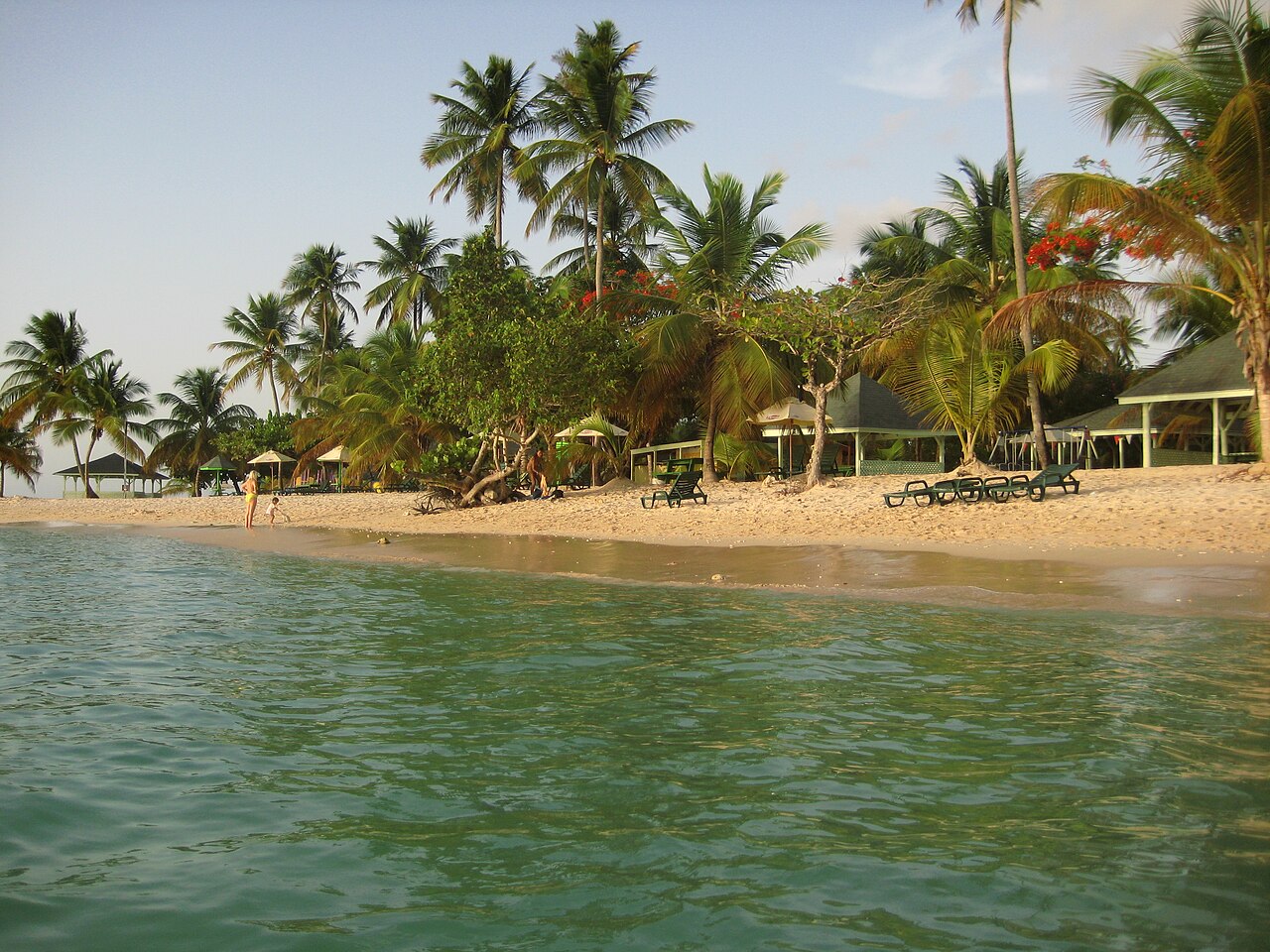
Tobago had 60,874 people in 2011, and 85.2% of them were of African descent while 8.5% were mixed. Its population grew 1.1% a year, twice the national rate.
The Ethnic Groups of Trinidad and Tobago
The Trinidad and Tobago population is counted by ethnic group, and in 2011 three groups made up almost all of the answers. East Indians were 35.4% of the population, Africans 34.2% and mixed groups 22.8%.
All other groups together came to 1.4%, and 6.2% did not answer. The gap between the two largest groups narrowed from 2.5 points in 2000 to 1.2 points in 2011.
East Indians, 35.4%
The census counted 468,524 East Indians, the descendants of workers brought from India to the plantations after slavery ended. Their share fell from 40% in 2000.
Divali, the Hindu festival of lights, and Eid-ul-Fitr, which ends the Muslim fast of Ramadan, are national holidays. The government says the National Council of Indian Culture, formed in 1964, has contributed to the development of Indian culture.
Africans, 34.2%
The 2011 census counted 452,536 Africans, descendants of enslaved Africans brought to the islands. Their share fell from 37.5% in 2000.
The government says that in 1985 it became the first country to declare a holiday for the end of African enslavement. It renamed the holiday African Emancipation Day in April 2024.
Mixed, 22.8%
The mixed share rose from 20.5% in 2000. It splits into 101,363 people of African and East Indian heritage (7.7%) and 200,503 people of other mixtures (15.1%).
The government’s report to the United Nations says years of intermarriage mean many people can boast of a very mixed heritage. The census lists two mixed lines, African and East Indian, and all other mixtures.
Smaller Groups
The census counted 7,832 Caucasians, 4,003 Chinese, 1,029 people of Syrian or Lebanese descent, 837 of Portuguese descent and 1,394 Indigenous people. The census describes Indigenous people as Caribs and Arawaks and added them as a separate group in 2011.
The census puts all groups outside the big three at 1.4% of the population, including a small residual category. Another 6.2% gave no answer.
Religion and Faith in Trinidad and Tobago
Roman Catholics were the largest faith in 2011 with 285,671 followers (21.6%). Hindus followed with 240,100 (18.2%), then Pentecostal, Evangelical and Full Gospel churches with 159,033 (12.0%).
The Pentecostal group more than doubled from 76,327 in 2000, while Hindus fell by 4.3% and Anglicans by 13.6%. Another 146,798 people, or 11.1%, left the question blank, and all shares here count everyone.
- Also counted in 2011: Muslims 65,705 (5.0%), Anglicans 74,994 (5.7%) and Seventh-day Adventists 54,156 (4.1%).
- Spiritual and Shouter Baptists: 75,002 people (5.7%); this African-rooted faith was banned in 1917, and 30 March, the day the ban ended in 1951, is a national holiday.
- Orisha, a West African religion: 11,918 people; Rastafarians: 3,615; no religion: 28,842 (2.2%).
- Spanish: a government labour helpline for Venezuelan workers answers in English, Spanish and French.
- National holidays include Divali, Eid-ul-Fitr, Corpus Christi, Good Friday and Easter Monday.
Migration and the Diaspora
The 2011 census found 48,783 foreign-born residents, 3.7% of the total, and 55.6% of them came from other Caribbean countries. The biggest groups came from Guyana (9,626), Grenada (7,851), Saint Vincent and the Grenadines (6,296) and the United States (5,677).
Venezuela, only a short boat trip from the south-west of Trinidad, then counted just 1,696 people. The government later described a mass irregular entry of Venezuelans and answered it with a 2019 amnesty.
Venezuelan Arrivals and Registration
In May 2019 the government gave Venezuelans already in the country a twelve-month amnesty and issued registration cards that allowed legal work. It told the United Nations that a registration framework now grants a Minister’s Permit, valid for six months and extendable to twelve.
The government says the permit has been renewed every year since 2019. No current official count of Venezuelans on the islands has been published.
Where Trinidadians Go
Households told the 2011 census that 15,455 former members emigrated from 2000 to 2011, with 9,177 (59%) going to the United States. Canada took 1,835 and the United Kingdom 1,582, while 2,433 gave no destination.
The census could not record whole households that left together, so the real number is higher. The CSO says such departures went unmeasured.
How the Groups Live Together
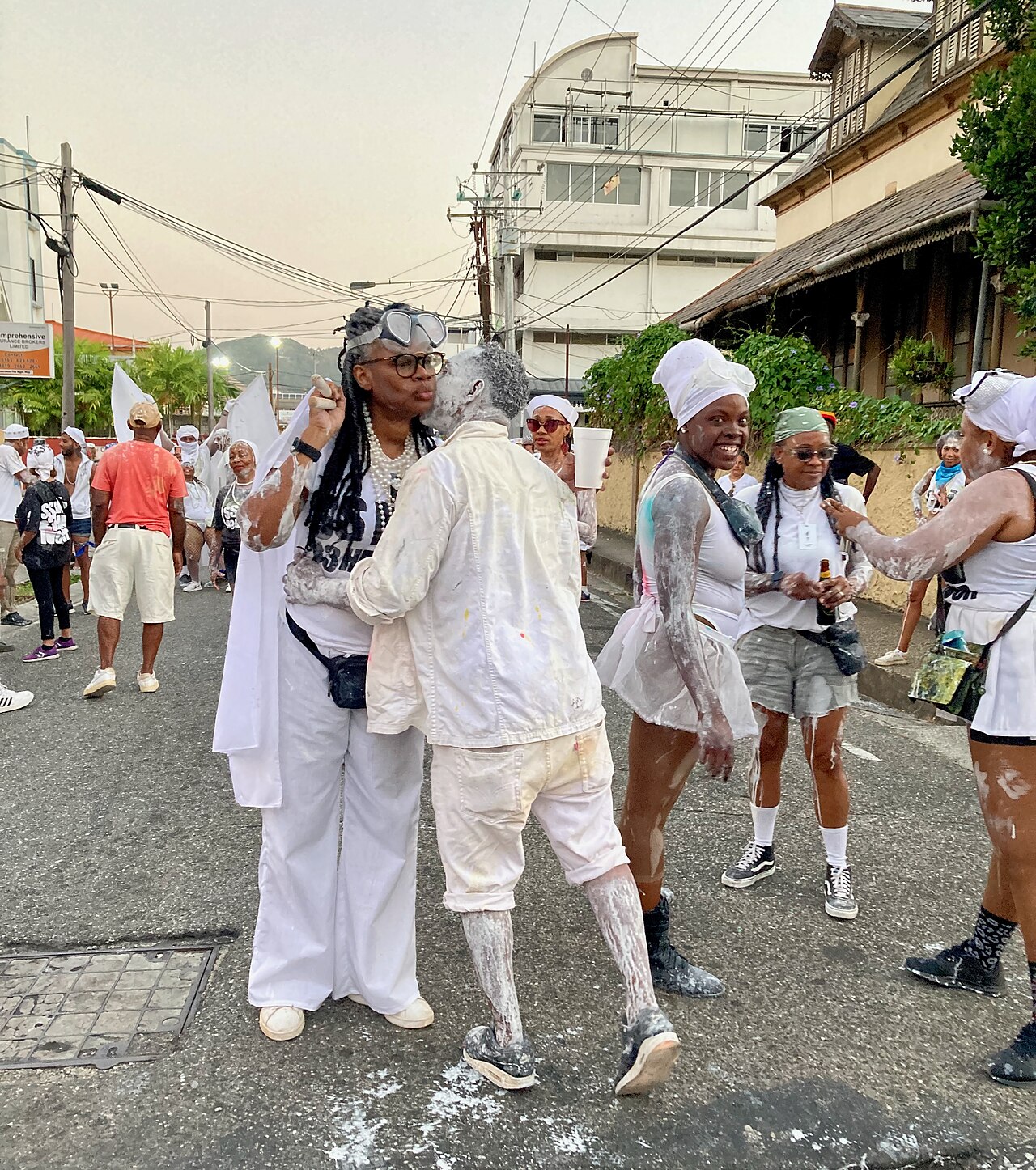
The government told the United Nations in 2025 that people of all backgrounds work, study and worship together in general racial harmony. The same report admits that cultural differences cause friction in politics, where the two main parties represent the two largest communities.
That link is why census numbers are watched closely, and why the growth of the mixed group matters. The government says religious festivals are celebrated by the wider community, including people of other faiths and none.
Protections in Law
The Equal Opportunity Act of 2000 bans discrimination on grounds including race, origin and religion in work, education, services and housing. The Constitution guarantees rights without discrimination because of race, origin, religion or sex.
The government says incidents of racial violence are extremely rare. It also says the police complaints body does not break out complaints by race, so no figures on race-based police complaints exist.
What It Means for US Readers
The United States was the biggest destination for people leaving between 2000 and 2011, taking 59% of those reported. The Trinidad and Tobago population is now ageing and barely growing.
Venezuelan migrants get Spanish-language help through a government labour helpline. Our guide to foreign powers in Trinidad and Tobago shows who courts the islands.
- Where the islands stand between Washington and Caracas: our report on the vote at the United Nations.
- More Caribbean context: Grenada in the Caribbean and Antigua and Barbuda in the Caribbean plus the full Caribbean hub.
What Is Not Known
The last full census took place in 2011, and another was planned for 2023, the government told the United Nations. Yet the CSO census pages list only the 2011 and 2000 results.
The number of Venezuelans living on the islands is not known, and neither is how many will be allowed to stay. Official births and deaths run only to 2018, and mid-year figures since 2011 are estimates, not counts.
Frequently Asked Questions
What is the population of Trinidad and Tobago?
The Trinidad and Tobago population was an estimated 1,367,764 in mid-2025, according to the Central Statistical Office. The last full census, in 2011, counted 1,328,019 people.
What are the main ethnic groups in Trinidad and Tobago?
At the 2011 census East Indians were 35.4%, Africans 34.2% and mixed groups 22.8%. Smaller groups include Caucasian, Chinese, Syrian-Lebanese, Portuguese and Indigenous peoples.
What religions do people follow in Trinidad and Tobago?
Roman Catholics were the largest group in 2011 at 21.6%, then Hindus at 18.2% and Pentecostal churches at 12.0%. Muslims were 5.0%, and 11% gave no answer.
How many people live on Tobago?
Tobago had 60,874 people at the 2011 census, about 4.6% of the country. Some 85.2% were of African descent.
How many Venezuelans live in Trinidad and Tobago?
The number is not known. The government has registered Venezuelan migrants under a framework set up in 2019, but no current official count has been published.
Where do Trinidadians emigrate to?
The United States is the top destination. Households said 15,455 people emigrated between 2000 and 2011. Some 59% went to the United States, 12% to Canada and 10% to the United Kingdom.
Sources: Central Statistical Office of Trinidad and Tobago, Provisional Mid-Year Estimates of Population by Age Group and Sex, 2005-2025, September 2025; Central Statistical Office, 2011 Population and Housing Census Demographic Report, 2011 census; Central Statistical Office, 2011 census tables on individuals (religion, birthplace, urban and rural), 2011 census; Central Statistical Office, 2011 census, persons who emigrated 2000 to 2011, 2011 census; Central Statistical Office, Demographic Profile 2005-2021, February 2022; Government of Trinidad and Tobago, report to the UN Committee on the Elimination of Racial Discrimination (CERD/C/TTO/15-16), 15 July 2025; Central Statistical Office, Population page (census growth table 1851-2011 and migration note), 31 October 2026; Ministry of Homeland Security of Trinidad and Tobago, Work Permit Exemption Extension for Registered Venezuelan Nationals, June 2025.
This article was produced by The Rio Times’ automated newsroom system. How we use AI · Report an error · Editorial responsibility: Matthias Camenzind, Editor-in-Chief
Expat Guide to Trinidad and Tobago
What The Rio Times publishes for foreigners who live in or move to Trinidad and Tobago.
Start here
- Moving to Trinidad and Tobago 2026, Step by Step
- Moving to Trinidad and Tobago: Visas, Costs, Work Permits and Daily Life
- Healthcare in Trinidad and Tobago for Expats: Hospitals, Insurance and Costs
- Trinidad and Tobago Taxes for Foreign Residents: 25% Above US$13,200 Allowance, 30% Above US$147,000
Coming up in Trinidad and Tobago
Understand Trinidad and Tobago
Brazil runoff date: Sunday, October 25, poll closing times and when results start · Brazil runoff polls: Flávio 51%, Lula 49% · Kalshi and Polymarket odds
Rotate for Best Experience
This report is optimized for landscape viewing. Rotate your phone for the full experience.
You've reached your free article limit
Subscribe to The Rio Times for unlimited access to our news, expat and nomad guides and market intelligence on Latin America and Africa.
Keep reading for free
Your first article was on us. Register with your email address to read 6 free articles every month. You will also receive The LatAm Brief: what moved in Latin American markets, politics and expat life, every weekday morning.
Expat Guide to Trinidad and Tobago
What The Rio Times publishes for foreigners who live in or move to Trinidad and Tobago.
Start here
- Moving to Trinidad and Tobago 2026, Step by Step
- Moving to Trinidad and Tobago: Visas, Costs, Work Permits and Daily Life
- Healthcare in Trinidad and Tobago for Expats: Hospitals, Insurance and Costs
- Trinidad and Tobago Taxes for Foreign Residents: 25% Above US$13,200 Allowance, 30% Above US$147,000
Coming up in Trinidad and Tobago
Understand Trinidad and Tobago