Who Runs Trinidad and Tobago’s Economy, the Key Players in 2026
TRINIDAD AND TOBAGO · ECONOMY
Key Facts
- —The country Trinidad and Tobago is a two-island Caribbean republic of about 1.37 million people, just off Venezuela. Natural gas, and the chemicals and liquefied gas made from it, drive its economy.
- —Size and direction Output is projected at TT$181.1 billion (about US$26.7 billion) in 2026, and the Ministry of Finance expects real output to fall 2.2%.
- —The gas Gas output averaged 2,397 million cubic feet a day in the first half of 2026. Half of the gas used goes to liquefied natural gas (LNG).
- —Who holds the keys BP, EOG, Perenco and Shell pump most of the gas. The state-owned National Gas Company (NGC) buys it, sells it and owns the pipelines.
- —Banks and families Republic Financial Holdings had assets of about US$18.8 billion in September 2025. ANSA McAL and Massy are the leading private groups.
- —Decision-makers Prime Minister Kamla Persad-Bissessar, Finance Minister Davendranath Tancoo, Energy Minister Roodal Moonilal and Central Bank Governor Larry Howai all hold office in October 2026.
- —Still open Forecasts disagree, two methanol and ammonia producers have shut plants, and the Government plans to sell loss-making state firms.
The Trinidad and Tobago economy matters to Americans because the islands sold the United States US$2.68 billion of goods in 2025.
Gas output is falling. A small circle of foreign energy majors, state companies, banks and family groups will decide what happens next.

The Trinidad and Tobago Economy in Numbers
Trinidad and Tobago had 1,367,764 people in 2025, according to the provisional estimate of the Central Statistical Office. Real output fell 0.5% in 2025, and the Ministry of Finance projects a 2.2% fall in 2026.
The Ministry puts nominal output, which is output at current prices, at TT$181.1 billion (about US$26.7 billion) for 2026. This guide converts at about 6.78 TT dollars to the US dollar, the Central Bank’s weighted selling rate for July 2026.
Energy sets the tone. The 2027 Budget Statement of 12 October 2026 says more than 70% of foreign-exchange earnings come from energy exports.
The International Monetary Fund (IMF) put the energy sector’s share of the economy at 20.9% in 2025. Its October 2026 forecast sees growth of 0.2% in 2026, while its May 2026 review projected 0.8%.
The Trinidad and Tobago economy has calm prices and softer jobs. Inflation was 0.6% in July 2026, and unemployment rose to 5.4% in the first quarter of 2026 from 4.9% a year earlier.
Budget, Reserves and Savings
The Government plans to spend TT$63.4 billion (about US$9.3 billion) in fiscal 2027, which starts in October 2026. It expects revenue of TT$59.7 billion (about US$8.8 billion) and a deficit of TT$3.6 billion (about US$540 million).
Those sums assume oil at US$77 a barrel and gas at US$5.00 per million British thermal units. The revised deficit for fiscal 2026 is TT$7 billion (about US$1.0 billion).
Gross official reserves stood at US$5.29 billion at the end of August 2026, enough for 6.1 months of imports. The Heritage and Stabilisation Fund, the state’s oil and gas savings account, held US$6.45 billion on 30 September 2026.
Who Controls the Gas
Natural gas drives the Trinidad and Tobago economy as the raw material for LNG, ammonia, methanol and power. The Ministry of Energy and Energy Industries says output averaged 2,397 million cubic feet a day from January to June 2026.
The Government says output peaked at 4.4 billion cubic feet a day in 2014. Output in the first half of 2026 was about 45% below that peak.
Of the 2,240 million cubic feet a day used in the first half of 2026, LNG took 1,128, or about 50%. Methanol plants took 425, ammonia plants 337 and power stations 257.
The Budget Statement lists new fields due in 2027, among them bpTT’s Ginger and Shell’s Manatee. The Government says Manatee Plus could reach a peak of 600 million cubic feet a day from late 2027.
Four companies produce about 97% of the gas. Averages for January to June 2026, in million cubic feet a day, show who holds the supply:
- bpTT, the local arm of the energy group bp: 942, about 39% of the total.
- EOG Resources Trinidad, the local unit of the US producer EOG Resources: 498, about 21%.
- Perenco, an oil and gas company that took over Woodside’s local assets in July 2025: 451, about 19%.
- Shell: 441, about 18%.
- Heritage Petroleum (the state oil company), Touchstone Exploration and Proman Energy together: about 66, under 3%.
The State Companies and the Sell-Off Plan
State firms hold a large place in the Trinidad and Tobago economy, and the biggest is NGC.
The National Gas Company, known as NGC, buys, sells and transports the gas. It owns most of the pipeline network, which runs more than 1,000 km with a capacity of 4.4 billion cubic feet a day.
NGC sits at the centre of gas supply deals. Methanex, a Canadian methanol maker, says it engaged extensively with the Government and NGC but could not agree a new gas contract.
NGC heads a group of more than 30 companies and says its assets exceed US$6 billion. The Budget Statement says NGC earned TT$3.46 billion (about US$510 million) after tax in 2025, its best result in over 10 years.
Its subsidiaries include National Energy Corporation, Phoenix Park Gas Processors (PPGPL) and Trinidad and Tobago NGL Limited (TTNGL).
PPGPL strips propane and butane out of raw gas. TTNGL is the listed company that gives ordinary investors a stake in that business.
TTNGL paid a special dividend of TT$154.8 million (about US$22.8 million) in May 2026, its first payout in almost four years. More than 11,400 shareholders received it, and the TTNGL company profile explains the structure.
Heritage Petroleum is the state oil company that runs the old Petrotrin fields.
It earned TT$817 million (about US$121 million) in the year to 30 September 2025, the lowest in four years. Revenue was TT$7.25 billion (about US$1.07 billion), the Trinidad Express reported.
Heritage’s offshore fields averaged about 15,900 barrels a day in the first half of 2026.
Petrotrin’s Pointe-a-Pierre refinery closed in 2018. The Government says it is weighing proposals from a shortlist of investors for a phased restart.
What the Government Wants to Sell
Prime Minister Persad-Bissessar said in October 2026 that the Government will sell loss-making state firms to private investors. The Trinidad Express named National Quarries Ltd, the Hilton Trinidad hotel and the Magdalena Grand Beach and Golf Resort in Tobago.
CNC3 reported that Caribbean Dockyard and Engineering is also on the list. The same report put Magdalena’s accumulated losses at TT$240 million (about US$35 million), and no sale prices have been announced.
The Opposition calls it a fire sale, and the Prime Minister says the alternative is closure. The Rio Times report on the Prime Minister’s speech covers the Parliament debate.
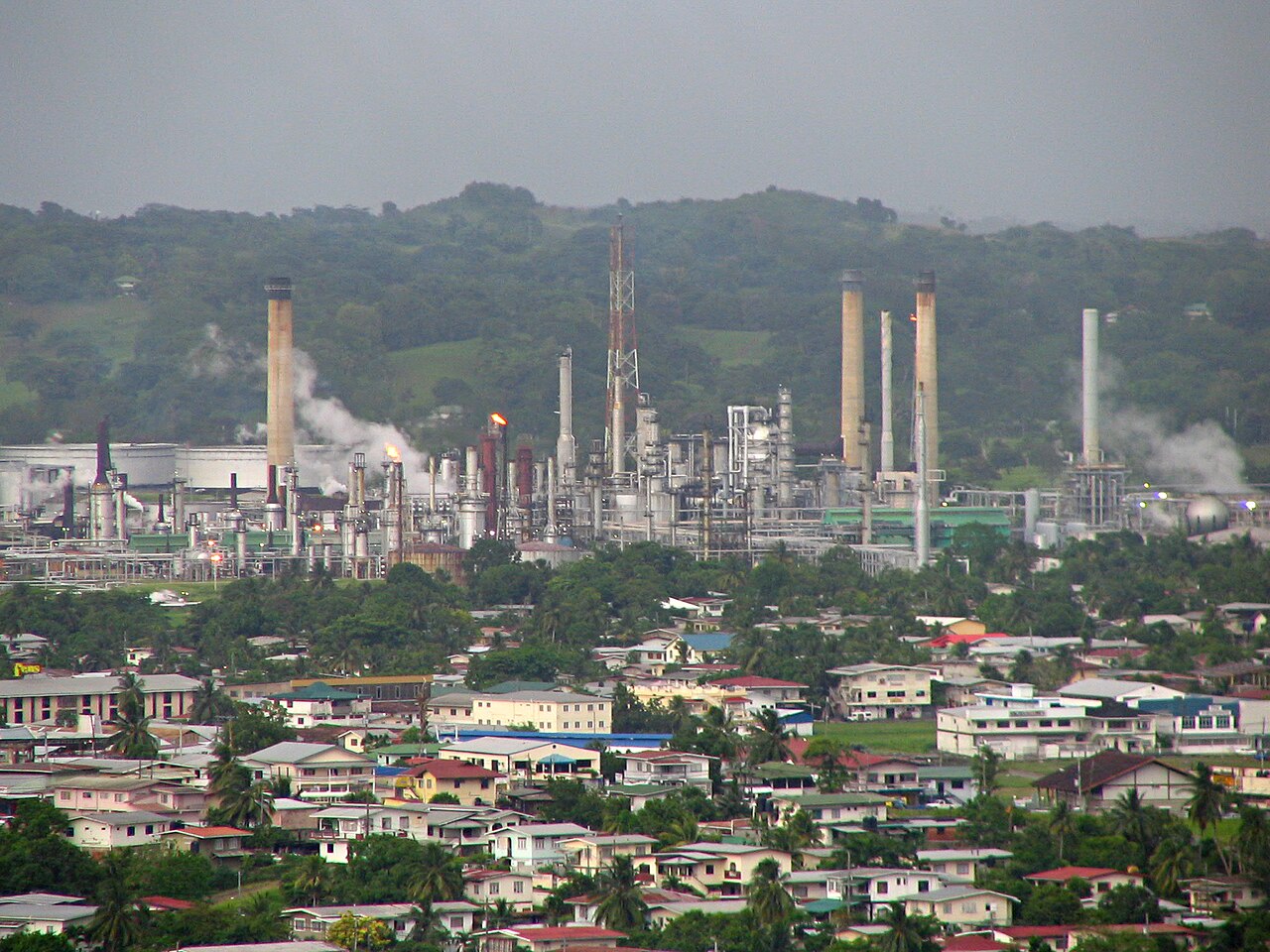
Atlantic LNG and the Point Lisas Plants
Atlantic LNG is the liquefied natural gas export complex that turns gas into a supercooled liquid for ships. Shell and bp hold 45% each, and NGC’s stake rises to 10% in May 2027, the Trinidad Express reported in March 2025.
Train 1, one of its four production lines, has stood idle since 2020, and the shareholders agreed to decommission it. Trains 2, 3 and 4 have a combined gross capacity of about 12 million tonnes a year.
Atlantic LNG produced about 8.9 million cubic metres of LNG from January to June 2026. Train 4 was shut for maintenance in June.
Point Lisas Industrial Estate is the second engine. Its plants made 1.63 million tonnes of ammonia and 2.15 million tonnes of methanol from January to June 2026.
The Chemical Makers
Proman is a Swiss-headquartered, family-owned group that runs methanol, ammonia and fertiliser plants at Point Lisas. Its M5000 plant, rated at 5,400 tonnes a day, is described by Proman as the world’s largest stand-alone methanol plant.
Its ammonia plants run through Caribbean Nitrogen Company and Nitrogen 2000, alongside a fertiliser complex. Its local arm, Proman Energy, is a small gas producer.
Gas shortages have forced closures. Methanex idled its Titan plant, rated at 860,000 tonnes a year, on 15 July 2026, and its Atlas joint venture is also idle.
Nutrien of Canada said on 5 October 2026 it will shut its Trinidad nitrogen operations indefinitely, citing gas constraints. The Rio Times report on the Nutrien shutdown and the Rio Times report on the Titan plant give the detail.
Steel and Other Exports
Pinnacle Steel and Vanadium Corporation and its local subsidiary Ibis Steel plan an initial US$250 million. The Budget Statement says the money will refurbish the former ArcelorMittal plant at Point Lisas.
Non-energy exports reached TT$7.16 billion (about US$1.06 billion) from January to June 2026. A year earlier they were TT$6.46 billion (about US$953 million).
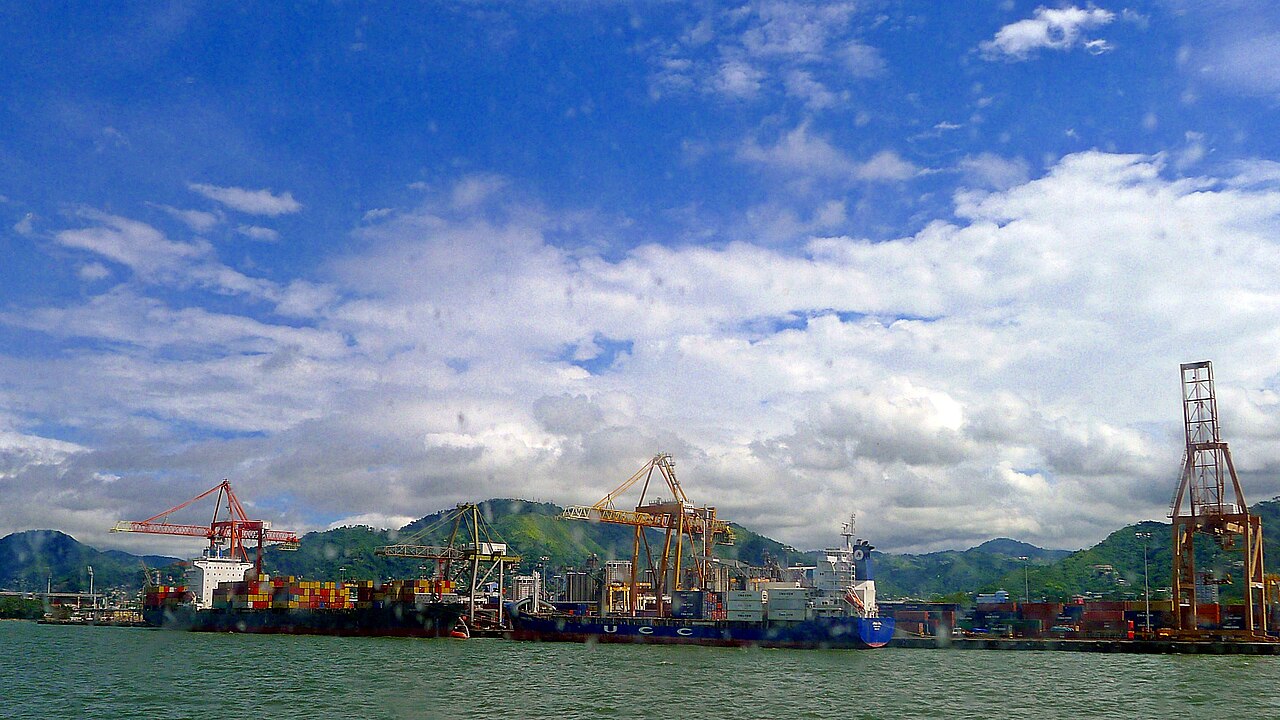
The Banks and the Central Bank
Governor Larry Howai’s Central Bank kept its repo rate at 3.50% on 30 September 2026. The repo rate is the rate at which it lends to commercial banks.
The next rate decision is due on 23 December 2026. System credit rose 3.4% in July 2026, and business lending grew only 0.6% over the year.
Banks move money through the Trinidad and Tobago economy, and Republic Financial Holdings (RFHL) is the biggest bank group by assets. Its banks operate in 16 countries.
RFHL reported total assets of TT$127.1 billion (about US$18.8 billion) at 30 September 2025.
RFHL’s profit after tax was TT$2.20 billion (about US$325 million) for that year. In September 2025 its biggest shareholders were the National Investment Fund Holding Company (29.92%) and the National Insurance Board (18.81%).
The first is a holding company owned by the Government that holds the state’s Republic shares. The second runs the state pension scheme.
The National Insurance Board raised its stake to 21.5% in September 2026, the Trinidad Express reported. Yashmid Karamath chairs RFHL.
Leadership Change at Republic
Karen Yip Chuck is due to become group chief executive on 1 January 2027, subject to regulatory approval. She replaces Richard Sammy, who left on 14 October 2026 before taking the job, the Trinidad Express reported.
The Rio Times report on the banking row and the report on a director’s resignation cover the October 2026 changes.
The Other Banks
The state holds a majority of First Citizens. It earned TT$646 million (about US$95 million) in the nine months to 30 June 2026, down 10.2%.
Its assets were TT$49.6 billion (about US$7.3 billion) at that date.
Scotiabank Trinidad and Tobago is majority-owned by Canada’s Scotiabank, which holds 50.9%. It earned TT$449 million (about US$66 million) in the nine months to 31 July 2026, down 15%.
Its assets were TT$30.7 billion (about US$4.5 billion) in July 2026.

The Business Families and Conglomerates
Private groups sit beside the state in the Trinidad and Tobago economy.
ANSA McAL, founded in 1881, runs about 48 companies in beverages, cars, construction, packaging, banking, media and property. Its chairman is A. Norman Sabga, and David B. Sabga also sits on the board.
Revenue for the six months to 30 June 2026 rose 3% to TT$3.79 billion (about US$559 million). Profit before tax from continuing operations rose 25% to TT$401 million (about US$59 million).
The group reports total assets of TT$20.6 billion (about US$3.0 billion). It announced a financing partnership of up to US$500 million with IDB Invest, the private-sector lending arm of the Inter-American Development Bank.
Massy Holdings
Massy Holdings is the other big listed group, with retail, motor vehicles and machinery, industrial gases and financial services. Its chairman is Robert Riley, the Trinidad Express reported.
Revenue from continuing operations in the nine months to 30 June 2026 was TT$12.65 billion (about US$1.87 billion). Profit fell 32% to TT$370 million (about US$55 million) after a loss on the sale of its Jamaica distribution unit.
Who Sets the Rules
Prime Minister Kamla Persad-Bissessar leads the United National Congress (UNC) government, which took office in 2025. Davendranath Tancoo, her Finance Minister, presented the 2027 budget on 12 October 2026.
Dr Roodal Moonilal is Minister of Energy and Energy Industries. Larry Howai is Governor of the Central Bank.
The People’s National Movement (PNM), which governed before 2025, is the main opposition. Its leader, Pennelope Beckles, told Parliament on 16 October 2026 that the country is in recession.
Colm Imbert, a former finance minister, warned on 17 October that the economy could crash within months. The Prime Minister rejected the recession claim on 19 October, and the Rio Times report on the budget debate sets out both sides.
The Budget Statement says Moody’s kept Trinidad and Tobago’s Ba2 rating and raised the outlook to stable in June 2026. It also says Standard and Poor’s reaffirmed an investment-grade rating in July 2026.
The Government says it borrowed over TT$21 billion (about US$3.1 billion) in 18 months to refinance old debt. It adds that another TT$70 billion (about US$10.3 billion) falls due within five years.
Foreign policy shapes the deals, and the Rio Times geopolitics guide explains who courts the islands.
More coverage sits on the Rio Times Trinidad and Tobago hub.
What It Means for US Readers
The United States sold Trinidad and Tobago US$3.12 billion of goods in 2025 and bought US$2.68 billion, the US Census Bureau reports. That left the United States with a surplus of US$446 million.
For US readers, the Trinidad and Tobago economy is mainly a customer and a supplier of energy and chemicals.
From January to July 2026 US exports were US$2.01 billion and imports US$1.86 billion. For American exporters the islands are a steady buyer.
Investors have few direct ways in. The big producers bp, Shell and EOG trade abroad, and RFHL trades on the local exchange.
Nutrien, which trades in New York and Toronto, said its 2026 nitrogen sales guidance already assumed no Trinidad output. Buyers of methanol and ammonia should watch whether new gas arrives in 2027.
Travellers may see two well-known hotels, the Hilton Trinidad and the Magdalena Grand in Tobago, change owner.
What Is Not Known
The Trinidad and Tobago economy faces open questions. Forecasts for 2026 range from a 2.2% fall to growth of 0.2% or 0.8%.
The Government’s latest quarterly figure, for the first quarter of 2026, showed output down 1.8%.
No sale prices, buyers or timetables have been announced for the state firms. The Government has not said who will run the Pointe-a-Pierre refinery if it reopens.
Whether the 2027 gas fields arrive on schedule is open, as is how much of the new gas goes to LNG rather than chemicals. No restart date has been given for Titan, Atlas or the Nutrien plants.
RFHL’s new chief executive still needs regulatory approval. Why Mr Sammy left before starting the job has not been explained.
Frequently Asked Questions
What is the biggest part of the Trinidad and Tobago economy?
Energy is the biggest part of the Trinidad and Tobago economy. The IMF puts the energy sector’s share of the economy at 20.9% in 2025, and the Government says more than 70% of foreign-exchange earnings come from energy exports.
Who owns Atlantic LNG?
Shell and bp hold 45% each, and the state-owned NGC holds a stake that rises to 10% in May 2027, the Trinidad Express reported in March 2025.
Which are the biggest banks in Trinidad and Tobago?
Republic Bank, part of Republic Financial Holdings, is the largest, with group assets of about US$18.8 billion at September 2025. First Citizens (about US$7.3 billion at June 2026) and Scotiabank (about US$4.5 billion at July 2026) follow.
Is the Trinidad and Tobago economy in recession?
The Trinidad and Tobago economy is projected to shrink 2.2% in 2026 by the Ministry of Finance, and real output fell 1.8% in the first quarter against a year earlier. The Prime Minister rejects the word recession and cites IMF forecasts of growth.
Which state companies is the Government selling?
The Government has named National Quarries, the Hilton Trinidad hotel, the Magdalena Grand resort in Tobago and Caribbean Dockyard and Engineering. No prices or dates have been given.
What currency does Trinidad and Tobago use?
It uses the Trinidad and Tobago dollar, written TT$. The Central Bank’s weighted average selling rate in July 2026 was about 6.78 TT dollars to the US dollar.
Sources: Ministry of Finance, 2027 Budget Statement, 12 October 2026; Ministry of Finance, Review of the Economy 2026, October 2026; Central Bank of Trinidad and Tobago, Monetary Policy Announcement, 30 September 2026; Ministry of Energy and Energy Industries, Consolidated Monthly Bulletins, June 2026, 16 October 2026; IMF, 2026 Article IV Consultation with Trinidad and Tobago, 18 May 2026; Republic Financial Holdings Limited, Annual Report 2025, 2025; ANSA McAL, results for the six months ended 30 June 2026, August 2026; National Gas Company of Trinidad and Tobago, About NGC, October 2026; Nutrien, update on Trinidad nitrogen operations, 5 October 2026; Methanex, update on Trinidad and Tobago operations, 29 June 2026; Proman, About us, October 2026; US Census Bureau, trade in goods with Trinidad and Tobago, October 2026; Trinidad Express, Atlantic LNG stakes and Train 1, 11 March 2025; Trinidad Express, Heritage Petroleum results, 19 September 2026; Trinidad Express, Prime Minister on selling state firms, 16 October 2026; CNC3, Prime Minister on progression, not recession, 19 October 2026; CNC3, Beckles on the budget, 16 October 2026; Trinidad Express, Sammy exits Republic Financial Holdings, 16 October 2026; Trinidad Express, National Insurance Board raises Republic stake, 6 September 2026; Trinidad Guardian, First Citizens nine-month profit, 8 August 2026; Trinidad Guardian, Scotiabank nine-month profit, 9 September 2026; Trinidad Express, Massy nine-month results, 10 August 2026; Trinidad Express, Moonilal meets Perenco, 18 October 2026; IMF, World Economic Outlook database, real GDP growth for Trinidad and Tobago, October 2026; Central Bank of Trinidad and Tobago, latest news (Governor Larry Howai), 20 October 2026; Trinidad Express, Methanex shuts down Titan plant, 16 July 2026; Bank of Nova Scotia, subsidiaries list (Scotiabank Trinidad and Tobago Limited, 50.90%), 2025.
This article was produced by The Rio Times’ automated newsroom system. How we use AI · Report an error · Editorial responsibility: Matthias Camenzind, Editor-in-Chief
Expat Guide to Trinidad and Tobago
What The Rio Times publishes for foreigners who live in or move to Trinidad and Tobago.
Start here
- Moving to Trinidad and Tobago 2026, Step by Step
- Moving to Trinidad and Tobago: Visas, Costs, Work Permits and Daily Life
- Healthcare in Trinidad and Tobago for Expats: Hospitals, Insurance and Costs
- Trinidad and Tobago Taxes for Foreign Residents: 25% Above US$13,200 Allowance, 30% Above US$147,000
Coming up in Trinidad and Tobago
Understand Trinidad and Tobago
Rotate for Best Experience
This report is optimized for landscape viewing. Rotate your phone for the full experience.
You've reached your free article limit
Subscribe to The Rio Times for unlimited access to our news, expat and nomad guides and market intelligence on Latin America and Africa.
Expat Guide to Trinidad and Tobago
What The Rio Times publishes for foreigners who live in or move to Trinidad and Tobago.
Start here
- Moving to Trinidad and Tobago 2026, Step by Step
- Moving to Trinidad and Tobago: Visas, Costs, Work Permits and Daily Life
- Healthcare in Trinidad and Tobago for Expats: Hospitals, Insurance and Costs
- Trinidad and Tobago Taxes for Foreign Residents: 25% Above US$13,200 Allowance, 30% Above US$147,000
Coming up in Trinidad and Tobago
Understand Trinidad and Tobago