Trinidad and Tobago Explained 2026: Gas, Politics, the Two Islands and What to Watch
GUIDES · TRINIDAD AND TOBAGO
Key Facts
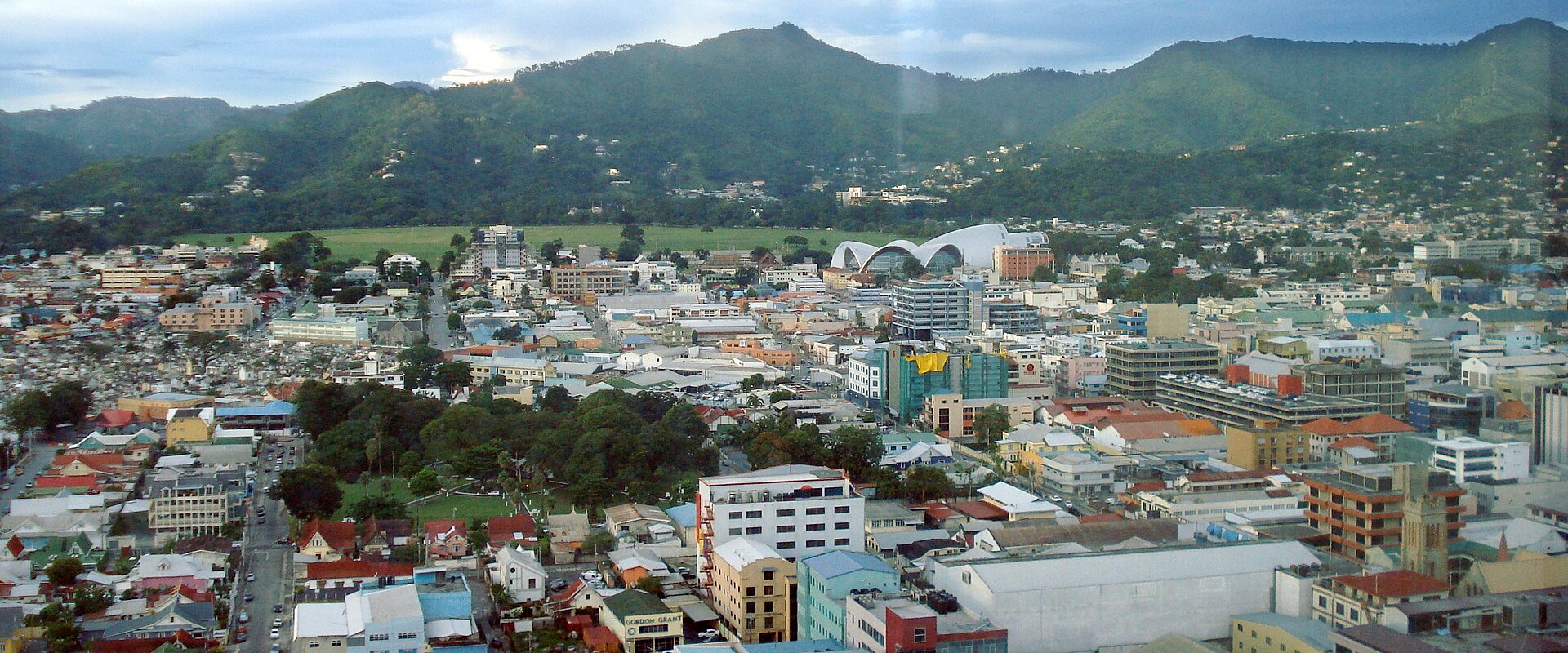
- —Capital Port of Spain, on the northwest coast of Trinidad, seat of Parliament and the government. The whole country covers 5,128 square kilometres, a little smaller than Delaware.
- —Population About 1.37 million in 2025 (World Bank), roughly the population of Estonia or Maine. The large majority live on Trinidad; Tobago holds a small share.
- —Currency The Trinidad and Tobago dollar (TT$), held in a tight managed band. The Central Bank sold US dollars at TT$6.7661 on 25 September 2026, so TT$1 is about US$0.15.
- —Language English is the official language and the language of law, business and schools. Trinidadian and Tobagonian Creole English is what most people speak day to day.
- —GDP About US$25.9 billion in 2025, or roughly US$19,000 per person (World Bank). The IMF expects growth of only about 0.8 percent in 2026.
- —Government A parliamentary republic since 1976, independent from Britain since 1962. Prime Minister Kamla Persad-Bissessar leads; Tobago has its own elected House of Assembly.
Trinidad and Tobago explained for newcomers: a small, English-speaking Caribbean energy exporter seven miles from Venezuela. Its gas, its dollar supply and its politics now hinge on what happens next door.
Trinidad and Tobago explained in one line: it is a gas economy with a Caribbean face. The country of 1.37 million sells liquefied natural gas, ammonia and methanol to the world. When gas output falls, jobs and the supply of US dollars fall with it.
What kind of country is this?
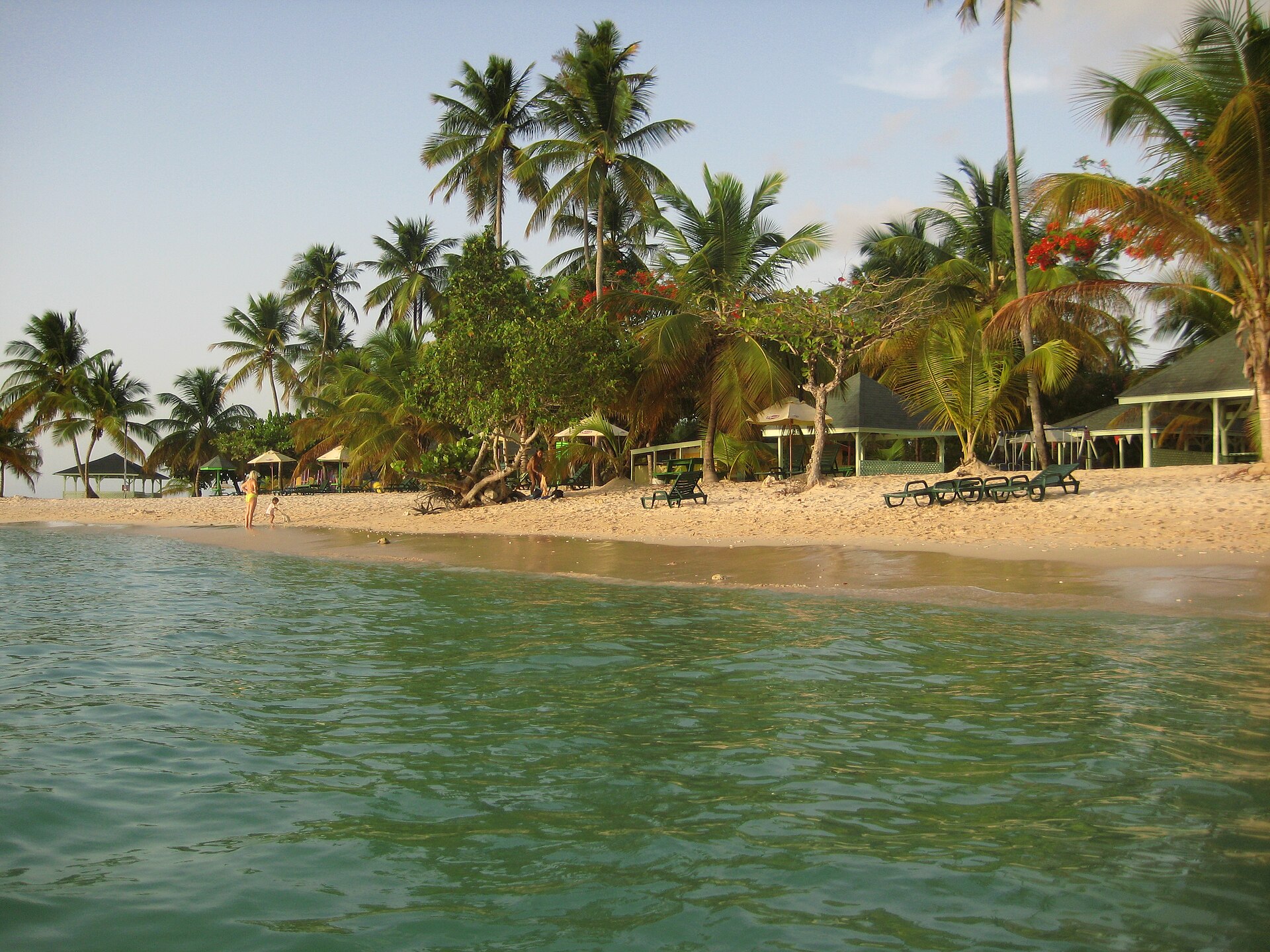
Trinidad and Tobago is two islands off the northeast tip of South America. Trinidad is the large, industrial one, with the capital, the oil and gas industry and most of the people. Tobago, to the northeast, is small, rural and lives mainly from tourism and public spending.
The south of Trinidad sits about seven miles (11 kilometres) from the Venezuelan coast at the closest point. That geography explains a great deal.
The same gas-bearing rocks run under the maritime border. Several fields the country is counting on lie partly or wholly in Venezuelan waters.
The islands were Spanish, then British, and became independent on 31 August 1962. They became a republic in 1976, replacing the British monarch with a president.
Descendants of enslaved Africans and of indentured labourers brought from India form the two largest communities. That divide still shapes voting patterns.
For a visitor, the country is best known for Carnival, steelpan and calypso, and for Tobago’s beaches. For an investor, it means Point Lisas, an industrial estate on Trinidad’s west coast.
There, cheap gas was turned into ammonia and methanol for export. Any account of Trinidad and Tobago explained properly needs both pictures.
Who runs Trinidad and Tobago and how
The system follows the British model. Voters elect 41 members of the House of Representatives in single-seat constituencies, first past the post.
The leader who commands a majority becomes prime minister and forms the Cabinet. The president is head of state, elected by Parliament, and has a largely ceremonial role.
The Senate has 31 members, all appointed rather than elected. Sixteen are chosen on the prime minister’s advice, six on the opposition leader’s, and nine independents by the president. A general election must be held at least every five years, so the next is due by 2030.
At the general election on Monday 28 April 2025, the United National Congress (UNC) won 26 of the 41 seats. The People’s National Movement (PNM), in power since 2015, fell to 13.
The Tobago People’s Party (TPP), an ally of the UNC, took both Tobago seats. Turnout was about 54 percent, according to the Elections and Boundaries Commission.
Kamla Persad-Bissessar, the UNC leader, returned as prime minister. She had held the office from 2010 to 2015 and was the country’s first woman in the post.
Her finance minister, Davendranath Tancoo, presented his first budget on 13 October 2025. The fiscal year runs from 1 October to 30 September.
Tobago is governed differently. The Tobago House of Assembly (THA) runs most local services, from roads to tourism promotion, with money voted by the national Parliament. At the THA election on 12 January 2026, the TPP of Chief Secretary Farley Augustine won all 15 seats.
Roughly half the electorate voted. Greater autonomy for Tobago is a live, unfinished debate.
How the economy works
Gas is the engine. Natural gas output averaged 2,541 million standard cubic feet a day (MMscf/d) in 2025, according to the Ministry of Energy and Energy Industries. That was barely up from 2,539 in 2024.
In 2018 and 2019 output was above 3,500. That is a fall of more than a quarter in six years.
That gas has three main buyers. Atlantic LNG at Point Fortin chills it into liquefied natural gas for shipping.
Its owners are Shell (45 percent), BP (45 percent) and the state-owned National Gas Company, NGC (10 percent). The plant can make 12 million tonnes a year but exported only about 9 million tonnes in 2025, Reuters reported, citing LSEG data.
The rest feeds the petrochemical plants at Point Lisas and the power stations. As gas has tightened, plants have closed. Canada’s Methanex idled its Atlas methanol plant in September 2024.
It idled its Titan plant indefinitely in July 2026 after talks on a new gas contract failed. Nutrien, the Canadian fertiliser group, began shutting its Trinidad plants in October 2025, and Proman, another methanol and ammonia producer, announced job cuts in September 2026.
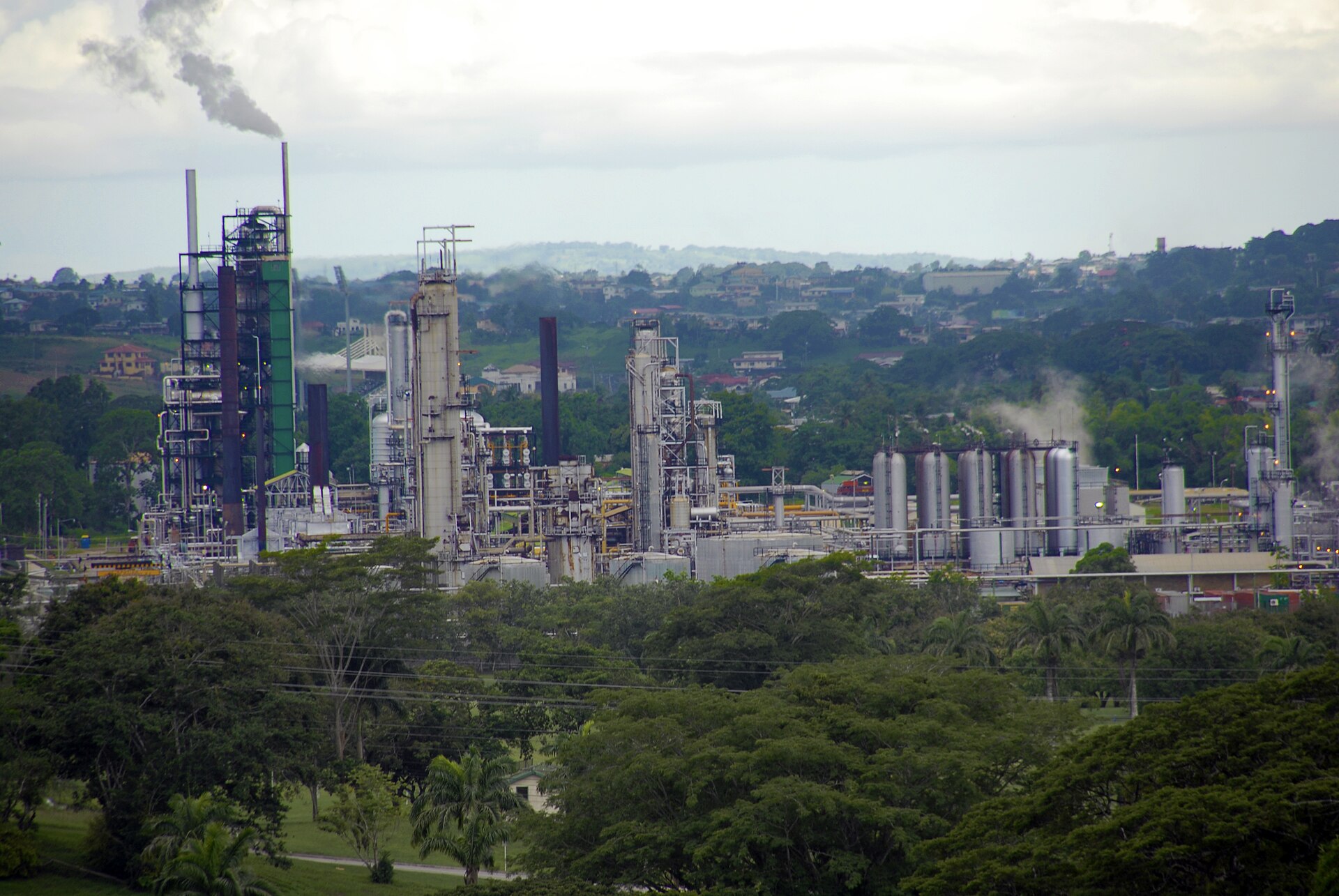
Oil now matters less than gas. Crude and condensate output averaged about 53,700 barrels a day in the first eleven months of 2025, according to ministry bulletins. The state refinery at Pointe-à-Pierre closed in 2018, and business groups still lobby for a restart.
The government has savings to lean on. The Heritage and Stabilisation Fund is a sovereign wealth fund built from past energy windfalls.
Its liquid assets equal about 25 percent of GDP, the International Monetary Fund (IMF) said in May 2026. The IMF also projected a 2026 budget deficit of 4.6 percent of GDP, after 5.5 percent in 2025, with central government debt at 67.8 percent.
Moody’s rates the country Ba2, two notches below investment grade. On 1 September 2026 it moved the outlook from negative back to stable. It cited debt management, the savings fund and an expected rise in hydrocarbon output from late 2027.
What is happening right now
As of 26 September 2026, three stories dominate: Venezuelan gas, the shortage of US dollars and crime policy. All three connect to the fall in gas output. Less gas means fewer dollars and more pressure on the government.
The Dragon field is the best-known Venezuelan prize. It lies in Venezuelan waters and holds about 4.2 to 4.5 trillion cubic feet of gas, according to Reuters reporting.
The plan is for Shell to pipe it to Trinidad for processing. A United States licence issued in 2023 was revoked in April 2025, and a new one was granted in October 2025.
The landscape changed after Nicolás Maduro was removed from power in Venezuela in January 2026 and taken into United States custody. In February 2026 Washington issued general licences for oil and gas work in Venezuela.
Trinidad and Tobago received two licences for cross-border activity. Shell said the new licences allow progress on Dragon.
Shell is preparing to drill, targeting the second quarter of 2027, subject to a final investment decision. Other cross-border fields are moving too.
Shell holds the licence for the first phase of the Loran field, and BP leads the second. In August 2026 BP moved to sell NGC a 20 percent stake in the cross-border Manakin-Cocuina gas field, Reuters reported.
Diplomacy has followed the gas. Venezuela’s National Assembly declared Persad-Bissessar persona non grata in October 2025 over her support for United States military action. Caracas reversed that in September 2026, declaring her persona grata.
On Wednesday 23 September 2026 she met Venezuela’s acting president, Delcy Rodríguez, in New York. The two governments agreed a nine-area cooperation agenda and reciprocal visits, with no dates set.
The dollar shortage is the daily story for businesses. The Central Bank of Trinidad and Tobago (CBTT) keeps the exchange rate nearly fixed.
It allocates the US dollars it sells to banks, recently through a sharing arrangement among authorised dealers. Companies report great difficulty buying dollars to pay foreign suppliers.
A state-owned bank cut foreign-currency limits on credit cards in February 2026. The IMF has urged a gradual move to a more flexible exchange rate.
Reserves improved on borrowing, not earnings. Net official reserves hit US$5.747 billion at the end of July 2026, a two-year high, after a 12-year, US$800 million bond sale on 9 July. After a US$417 million bond repayment, they stood at US$5.2 billion on 19 August, or 6.1 months of imports, the CBTT said.
On crime, the prime minister told Parliament on 16 September 2026 that the state of emergency would not be extended. Emergency powers had been in force under declarations made in 2024 and 2025, allowing detention without charge.
Police recorded a record 624 killings in 2024 and 369 in 2025. The government now plans a permanent law for targeted operations against gangs and violent crime.
What to watch
The 2026/27 national budget comes first. As of 26 September 2026 no date had been announced.
The prime minister has signalled that the exercise will run into October. Watch the oil and gas price assumptions, the deficit target and any change to how foreign exchange is allocated.
The next markers are energy decisions. In September 2026 Shell and NGC settled a pricing dispute over the Aphrodite gas field. First gas is expected in the second quarter of 2027.
Shell’s Manatee field is also due in 2027. A final investment decision on Dragon, and any gas supply agreement with Venezuela’s new authorities, would be the biggest signal of all.
The CBTT publishes the key monthly indicators. Watch net official reserves and the repo policy rate, held at 3.50 percent in June 2026.
Inflation was 0.3 percent year on year in June 2026. The Ministry of Energy’s monthly bulletins show whether gas output holds above or below its early-2026 level of about 2,427 MMscf/d.
On the calendar, Carnival Monday and Tuesday fall on 8 and 9 February 2027, the peak season for visitors and hotel prices. The replacement anti-crime law will be closely watched. So will court challenges from people detained under the emergency.
What this means for foreigners
Getting in is easy; staying is harder. Most North American and European visitors do not need a visa for a short stay, but work permits and residence take time.
Our visa and residency guide sets out each route. Buying property as a foreigner generally requires a government licence, covered in our property guide.
Money is the practical issue. Local businesses and residents struggle to buy US dollars, and bank limits on foreign spending can change with little notice.
Anyone investing should ask, before committing, how profits will be converted and sent home. That question was raised repeatedly at the 2026 Trade and Investment Convention.
The official rate is about TT$6.77 to the US dollar, so a price of TT$100 is about US$15. In August 2026 Tobago hoteliers asked for TT$1 billion (about US$148 million) for the island’s tourism. They said Tobago is not getting the visitors it needs.
Safety needs attention without alarm. The murder rate fell from about 46 per 100,000 people in 2024 to about 27 in 2025. That is still high by North American and European standards.
The government frames the problem as gang violence. Check your own government’s travel advice before going.
Connected Coverage
Buying Property in Trinidad and Tobago as a Foreigner: Licences, Prices and the Two-Island Split
Trinidad and Tobago Taxes for Foreign Residents: 25% Above US$13,200 Allowance, 30% Above US$147,000
Trinidad and Tobago Visa Rules: Easy Entry, Long Wait to Settle
Trinidad and Tobago Economy Braces as Gas Output Falls 4.5 Percent
Sources: Exchange rates, reserves and policy rates from the Central Bank of Trinidad and Tobago, population and output from the World Bank, fiscal projections from the IMF, election results from the Elections and Boundaries Commission, and gas output from the Ministry of Energy and Energy Industries. All accessed 26 September 2026.
- Central Bank of Trinidad and Tobago — exchange rates of 25 September 2026, repo rate and inflation
- World Bank — population, GDP and GDP per person, 2025
- International Monetary Fund — Trinidad and Tobago, 2026 Article IV consultation
- Elections and Boundaries Commission results via Trinidad Guardian — general election of 28 April 2025
- Ministry of Energy and Energy Industries bulletins via Trinidad Guardian — gas output 2022 to 2026
- Central Bank data via Trinidad Guardian — net official reserves, July and August 2026
- Reuters via Offshore Engineer — Shell on Dragon after the February 2026 US licences
- Al Jazeera and AP — end of the state of emergency, September 2026
What Is Not Known
Whether Venezuelan gas actually flows, and when. Licences from Washington are necessary but not enough.
Commercial terms with Venezuela’s acting government, final investment decisions and pipelines are all still needed. The prime minister has said she expects Venezuelan gas within a year; companies have given no firm date.
How durable the rapprochement with Caracas is. The two governments agreed an agenda on 23 September 2026. But Venezuela is run by an acting president, and a change in Caracas or Washington could reverse the thaw.
Whether the exchange rate holds. The IMF has recommended more flexibility and the CBTT has not said it will change course.
Reserves rose in 2026 mainly because of borrowing. If new gas arrives late, the pressure on the currency could grow.
What the budget contains, and when it will be read. As of 26 September 2026 the government had not announced a date. The size of the deficit, and whether it is financed by more borrowing or by drawing on the savings fund, is open.
What happens to the people detained under the emergency. More than 5,800 people were arrested after a March 2026 extension, AP reported.
About 2,250 of them had not been charged by June. Whether they are released, charged or sue the state is unresolved.
Frequently Asked Questions
Who is the prime minister of Trinidad and Tobago in 2026?
Kamla Persad-Bissessar of the United National Congress. Her party won 26 of the 41 seats at the general election of 28 April 2025, ending a decade of People’s National Movement government. She was previously prime minister from 2010 to 2015.
What is the Dragon gas field?
A gas field in Venezuelan waters holding about 4.2 to 4.5 trillion cubic feet, according to Reuters reporting. Shell plans to pipe the gas to Trinidad for processing. After US general licences in February 2026, Shell said it can progress. It is targeting drilling in the second quarter of 2027, subject to an investment decision.
Why is it hard to get US dollars in Trinidad and Tobago?
Gas output has fallen by more than a quarter since 2018 and 2019, so fewer dollars come in, while the Central Bank holds the exchange rate near TT$6.77 per US dollar and allocates what it sells. Businesses struggle to obtain dollars to pay foreign suppliers, and banks limit foreign spending on cards.
How is Tobago governed differently from Trinidad?
Tobago has its own elected Tobago House of Assembly, which runs most local services with money voted by the national Parliament. At the election of 12 January 2026 the Tobago People’s Party of Chief Secretary Farley Augustine won all 15 seats.
Is the state of emergency still in force?
No. On 16 September 2026 the prime minister told Parliament it would not be extended. The government plans a permanent law for targeted operations against gangs and violent crime instead. Police recorded 624 killings in 2024 and 369 in 2025.
This article was produced by The Rio Times’ automated newsroom system. How we use AI · Report an error
Read More from The Rio Times