Côte d’Ivoire Explained 2026: The Country, the Economy, the Election Aftermath and What to Watch
GUIDES · CÔTE D’IVOIRE
Key Facts
- —Capital Yamoussoukro is the official capital, but the presidency and the foreign embassies are in Abidjan, the economic capital. The Abidjan district had 6.3 million people at the 2021 census, one resident in five.
- —Population 32.7 million in 2025 on World Bank estimates, slightly more than Texas. The 2021 census counted 29.4 million, 52.5 percent of them in towns and cities.
- —Currency The West African CFA franc, fixed at 655.957 francs to the euro. That meant about 576 francs to the US dollar on 25 September 2026.
- —Language French is the official language of government, courts and business. Dozens of local languages are spoken, and Dioula serves as a common trading language.
- —GDP About US$99.8 billion in 2025, roughly two-fifths of the output of the eight countries that share its currency. That is about US$3,050 per person, one-thirtieth of the US level.
- —Government A presidential republic under the 2016 constitution. Alassane Ouattara has been president since 2011 and began a fourth five-year term on 8 December 2025.
Côte d’Ivoire explained from the ground up: who holds power after the 2025 election, what drives the economy, and which dates matter next.
Côte d’Ivoire explained starts with a contrast. The economy grew 6.5 percent in 2025, the International Monetary Fund says, and the state cut its deficit and debt ratio. Its politics rest on Alassane Ouattara, 84, who began a fourth term after his two main rivals were barred from the ballot.
What kind of country is this?
Côte d’Ivoire sits on the Gulf of Guinea between Liberia and Ghana, with Guinea, Mali and Burkina Faso along its northern edge. It covers about 322,000 square kilometres, a little more than Italy or the US state of New Mexico. English speakers often say Ivory Coast, but the official name is the French one.
The 2021 census counted 29,389,150 residents, and the World Bank estimates 32.7 million for 2025. The Abidjan district alone held 21.5 percent of them in 2021.
France ruled the territory until independence in 1960. Félix Houphouët-Boigny then governed until his death in 1993, and cocoa-led growth brought decades of relative stability. The years after his death were much harder.
A coup in 1999 was followed by a rebellion in 2002 that split the country between north and south. After the 2010 election, Laurent Gbagbo refused to concede to Ouattara, and a four-month conflict killed around 3,000 people, Reuters reported. A long argument over who counts as fully Ivorian, known as ivoirité, ran through all of it.
That history explains why elections here are tense. The International Crisis Group notes that candidates were also disqualified in the 1995, 2000, 2015 and 2020 presidential elections. Political violence around the 2020 vote killed 85 people.
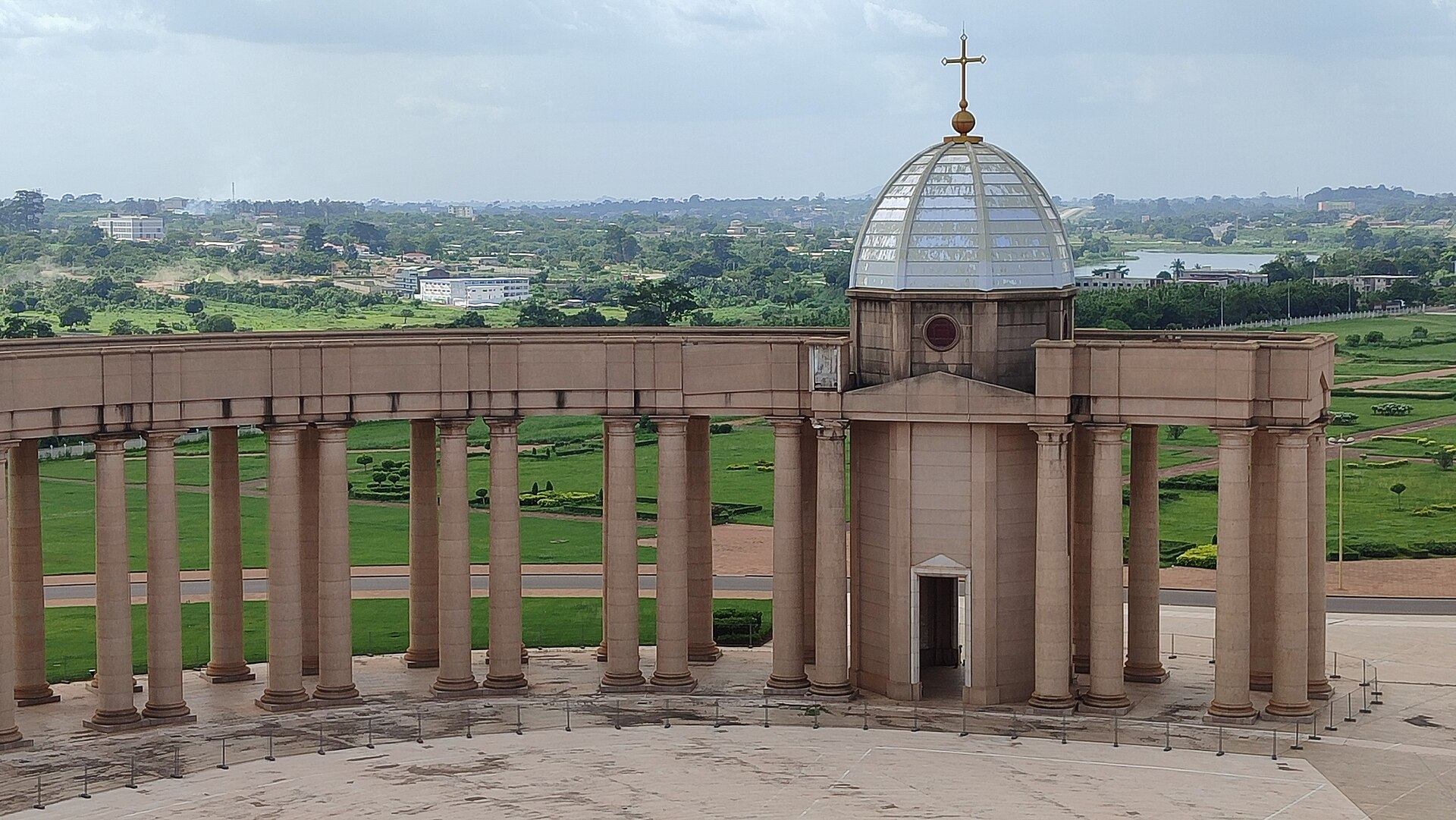
Who runs Côte d’Ivoire and how
Power sits with the president, elected for five years and, under Article 55 of the constitution, re-eligible once. The president chooses a vice-president with parliament’s agreement and appoints the prime minister and the government. The current text is the 2016 constitution, revised in March 2020.
Born on 1 January 1942, Alassane Ouattara is a former IMF deputy managing director and regional central bank governor. He has governed since 2011. In 2020 he argued that the new constitution had reset his term count, a reading his opponents rejected, the Associated Press reported.
On 25 October 2025 he won a fourth term with 89.77 percent of the vote on a turnout of 50.10 percent. The Constitutional Council confirmed the result on 4 November and recorded no formal challenge. Former trade minister Jean-Louis Billon came second with 3.09 percent.
The Constitutional Council accepted five of 60 candidacies, the Crisis Group noted. Laurent Gbagbo was off the electoral roll because of a criminal conviction. A court struck off Tidjane Thiam in April 2025 over French nationality he had acquired in 1987.
Thiam, a former Credit Suisse chief executive, leads the Democratic Party of Côte d’Ivoire (PDCI), the country’s oldest party, now in opposition. His party calls the ruling political; Ivorian media say he has led it from Paris by video since March 2025. The Associated Press described the 2025 vote as marked by low turnout and unrest.
Parliament has two chambers, a 255-seat National Assembly and a Senate. At the 27 December 2025 election, the ruling Rally of Houphouëtists for Democracy and Peace (RHDP) took over three-quarters of seats. The PDCI won 32, a total that held after two constituencies were re-run in February 2026, electoral commission results show.
Prime Minister Robert Beugré Mambé resigned after that vote and was reappointed on 21 January 2026. His 34-minister government, named on 23 January, created a deputy prime minister post for Téné Birahima Ouattara, the president’s younger brother, who keeps the defence ministry. Vice-President Tiémoko Meyliet Koné, also a former central bank governor, has held his post since April 2022.
Succession hangs over everything. Under Article 62, if the presidency falls vacant, the vice-president takes over and serves out the term. If both posts are empty, the prime minister does.
Ouattara’s chosen heir, former prime minister Amadou Gon Coulibaly, died in July 2020, months before that year’s vote. At his swearing-in on 8 December 2025, Ouattara promised a term of “generational transmission”. The ruling party has not named a candidate for 2030.
Africa Confidential and several Ivorian papers report the rise of Téné Birahima Ouattara as a possible heir. Critics in the Ivorian press call that dynastic.
How the economy works
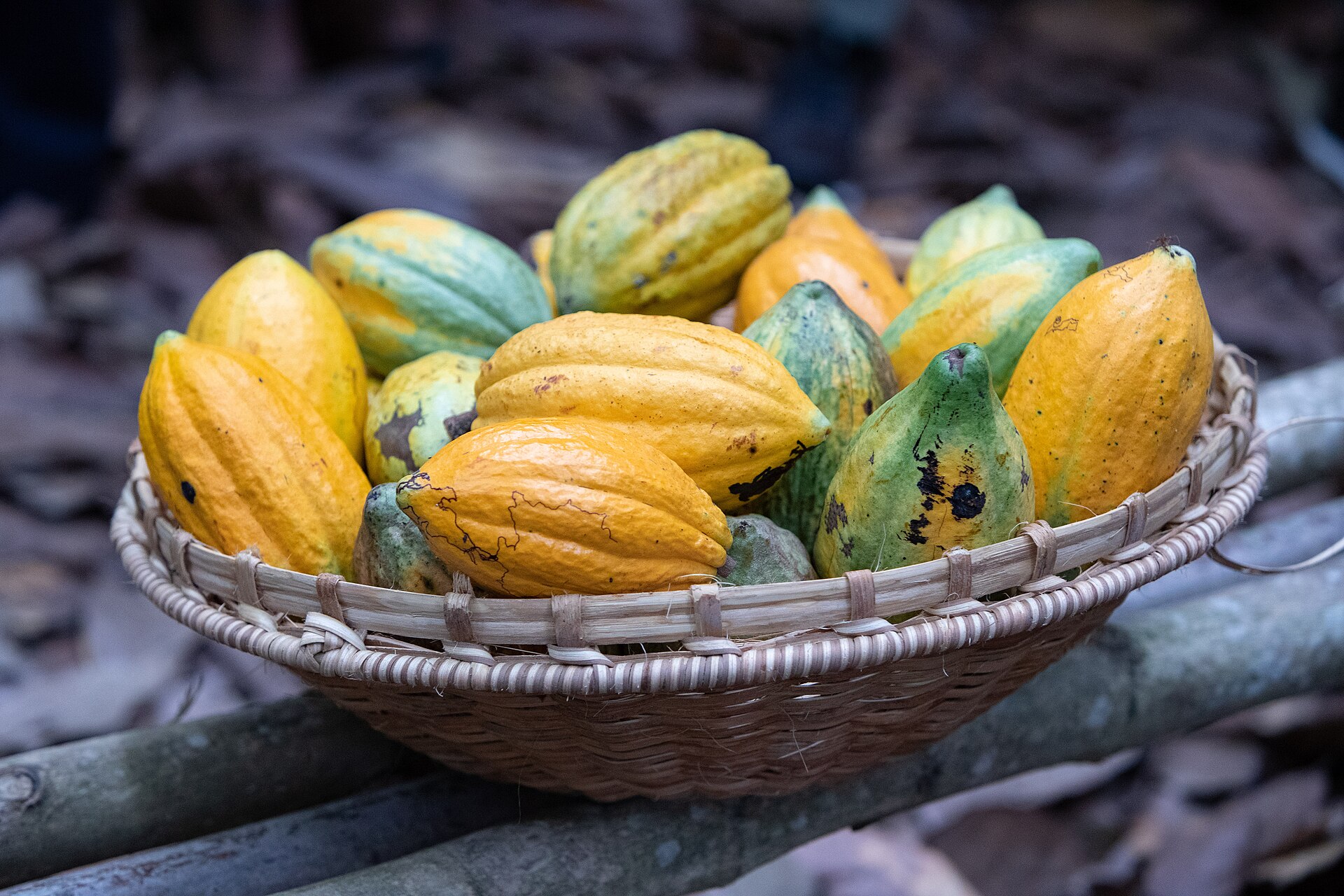
Cocoa is the country’s signature: more than a third of world supply. In 2024/25 Côte d’Ivoire grew about 1.7 million of 4.7 million tonnes, the International Cocoa Organization estimates. That organisation is itself based in Abidjan.
Farm prices are set by the state. The Coffee-Cocoa Council sells much of each crop forward, then fixes a guaranteed farmgate price from those sales. That price climbed from 1,000 CFA francs a kilogram (about US$1.73) in 2023/24 to a record 2,800 (about US$4.86) in 2025/26.
World prices then fell back from their late-2024 records. In March 2026 the government cut the price to 1,200 CFA francs (about US$2.08) to revive sales. It kept that level for the 2026/27 main crop on 1 September, 57 percent below the record.
Oil and gas are the newer story. Italy’s Eni found the Baleine field in 2021, about 70 kilometres off Abidjan, the first commercial discovery in some 20 years. By February 2026 it produced more than 62,000 barrels of oil and 75 million cubic feet of gas a day.
On 25 May 2026, Eni and its partners, the state oil company Petroci and the trader Vitol, approved a third phase. It aims to lift output to 150,000 barrels of oil and 200 million cubic feet of gas a day. In February 2026 Eni also reported Calao South, a find in a complex it ranks second only to Baleine.
The IMF put real growth at 6.5 percent in 2025 and projects 6.0 percent for 2026. It expects inflation to rise from 0.1 percent to 3.3 percent as oil and fertiliser prices climb. The budget deficit fell to 3 percent of GDP in 2025, the regional ceiling.
Public debt fell to 57.1 percent of GDP in 2025 from 59.5 percent, the first decline in more than a decade, according to the IMF. The Fund now rates the risk of debt distress as low rather than moderate. In February 2026 the government sold a US$1.3 billion, 15-year bond with a 6.75 percent coupon.
The currency is the West African CFA franc, issued in Dakar by the Central Bank of West African States (BCEAO). Eight countries use it: Benin, Burkina Faso, Côte d’Ivoire, Guinea-Bissau, Mali, Niger, Senegal and Togo.
It is fixed at 655.957 francs to the euro, about 576 francs to the US dollar on 25 September 2026. France’s Treasury guarantees that convertibility.
A 2019 reform, announced by Ouattara and France’s Emmanuel Macron, ended the duty to hold half the union’s reserves in Paris. French officials also left the central bank’s boards. A planned renaming of the currency as the eco has not yet happened.
The BCEAO’s main policy rate has been 3.00 percent since 16 March 2026, and the bank held it there on 9 September.
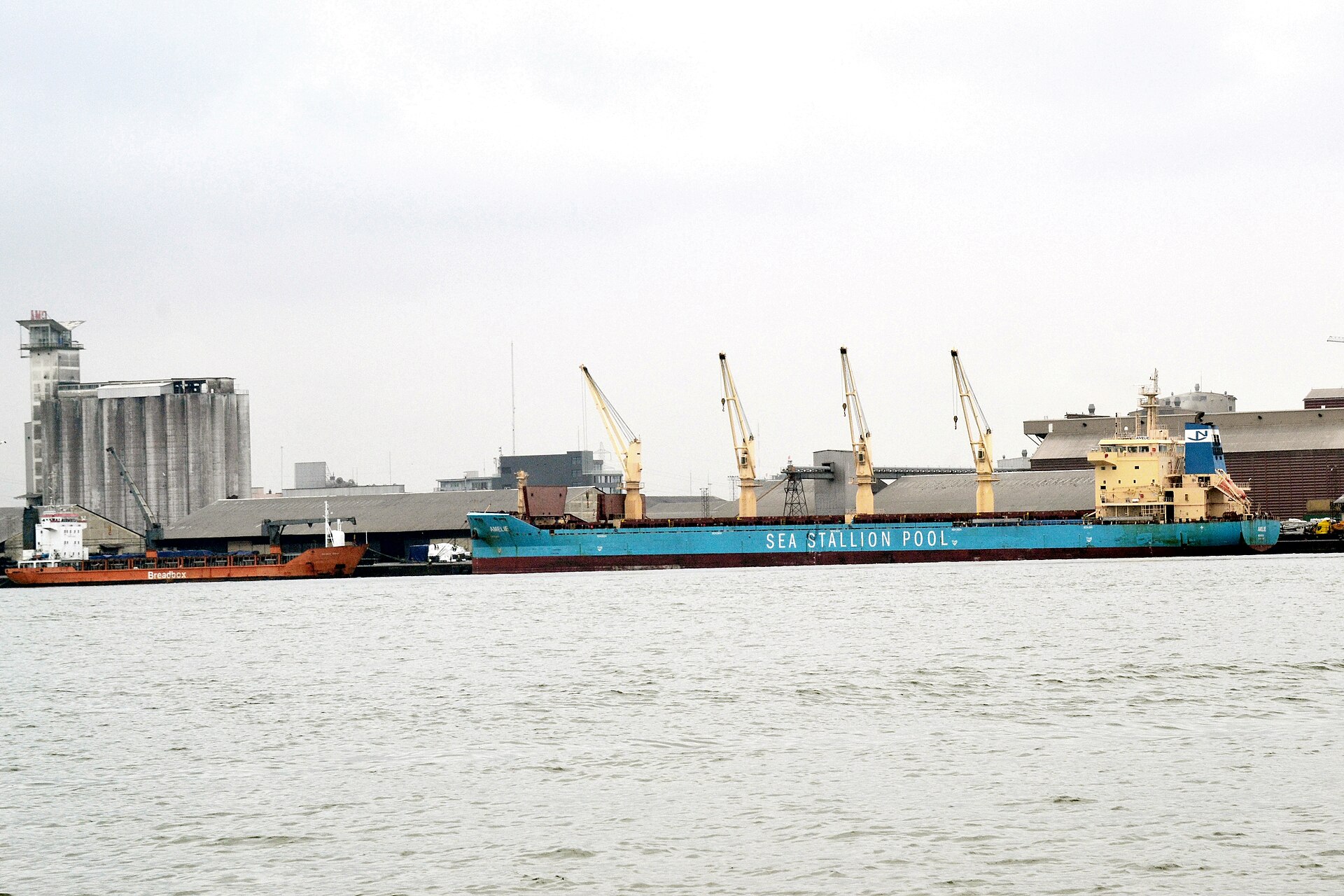
Abidjan is the business capital of French-speaking West Africa. It hosts the headquarters of the African Development Bank, the regional stock exchange known as the BRVM, and a large seaport.
The 2026–2030 development plan budgets 114,838.5 billion CFA francs (about US$199 billion) of investment, 70.2 percent from private firms. At a donor meeting on 8 July 2026, partners pledged 47,820 billion CFA francs, which the government put at US$80 billion. Pledges are not disbursements.
What is happening right now
As of 25 September 2026, cocoa is the most visible pressure point. The main crop opened on 1 September under a new calendar and runs until 28 February 2027. The agriculture ministry estimates the large 2025/26 crop at close to 2.2 million tonnes.
Early private forecasts see 2026/27 output falling 18 to 20 percent. World prices have recovered from their early-2026 lows but remain volatile. Market reports put December cocoa futures in New York at about US$5,300 to US$5,500 a tonne in the week to 23 September.
Growers are paid the fixed local price of 1,200 CFA francs a kilogram (about US$2.08). A rebound on world markets therefore does not reach them directly this season.
On 17 September 2026, Brazil’s state-controlled Petrobras signed production-sharing contracts for eight offshore blocks. It will operate each with 90 percent, and Petroci holds the other 10 percent. No spending figure or drilling timetable has been published.
Thiam remains abroad. In August 2026 the PDCI asked for talks on his safe return and on freeing people it says are held for their views. The government has said he is free to come home whenever he wishes.
Laurent Gbagbo, 81, was re-elected leader of his African Peoples’ Party – Côte d’Ivoire (PPA-CI) in May 2026. He then delegated powers to five senior party figures without naming a successor.
The IMF cited spillovers from the war in the Middle East, including weaker fuel and cocoa revenues. It backed a temporary rise in the 2026 deficit target to 3.8 percent of GDP. The government says it will return to the 3 percent deficit ceiling by 2028.
What to watch
Cocoa arrivals come first. Exporters’ weekly estimates of beans reaching Abidjan and San-Pédro ports give the first test of the forecast drop. The main crop closes on Sunday 28 February 2027, and the price for the following mid-crop is the next decision.
On Wednesday 30 December 2026, the European Union’s deforestation regulation starts to apply to large and medium-sized companies. It requires proof that cocoa and other listed goods sold in the EU did not come from recently deforested land. Micro and small firms outside the timber trade follow on 30 June 2027.
The BCEAO’s rate committee held its third regular meeting of 2026 on 9 September. It meets quarterly, so one more regular decision is due by December. The IMF projects 3.3 percent inflation for 2026, above the union’s 1 to 3 percent target range.
In energy, watch the new floating production vessel for Baleine phase three and the flow test Eni planned on its Murene South-1X well. Petrobras’s drilling schedule for its eight blocks is the other open date.
On the IMF, the US$3.5 billion programme approved in 2023 ended with its final reviews in June 2026. The Africa Report said in May that the government was considering the terms of a new arrangement. Size and timing are not public.
Politically, watch for the ruling party’s 2030 candidate, any talks on Thiam’s return, and the run-up to the 2030 election.
What this means for foreigners
US and British visitors need a visa for every trip. It is an e-visa, requested online before travel and collected on arrival at Abidjan airport. The UK advises applying at least 10 working days ahead, and a yellow fever vaccination certificate is required on entry.
The US State Department rates Côte d’Ivoire at Level 2, “exercise increased caution”, in an advisory dated 18 February 2026. It says not to travel to the northern border region, which borders Mali and Burkina Faso. The UK Foreign Office also notes health screening for arrivals from Ebola-affected countries.
CFA prices move with the euro, so euro earners carry no currency risk and dollar earners carry euro-dollar risk. Roughly 57,600 CFA francs bought US$100 at the September rate. French is essential for daily life, paperwork and contracts.
For investors, the case rests on growth, a euro-linked currency and a low IMF debt-risk rating. The risks are swings in cocoa prices, weather and disease in the orchards, and a succession nobody has yet spelled out. Côte d’Ivoire explained for a newcomer: steady on the surface, with its hardest political question still ahead.
Connected Coverage
Ouattara Keeps Power in Côte d’Ivoire as Its Economy Holds Near 6 Percent Growth
Ivory Coast Holds Its Cocoa Price at a 57% Discount, and 1.1 Million Farmers Feel It
Petrobras Signs Eight Offshore Contracts in Ivory Coast, Crossing the Atlantic
Ivory Coast Wins $80 Billion in Pledges for Its 2030 Plan
Ivory Coast’s Laurent Gbagbo Hands His Party’s Powers to Deputies, Names No Successor
Sources: Constitutional Council, National Assembly, 2021 census, World Bank, IMF, BCEAO, Banque de France, International Cocoa Organization, Eni, Petrobras, the US State Department and the UK Foreign Office, all accessed 25 September 2026. The exchange rate is from open.er-api.com on 25 September 2026, cross-checked against the euro peg and the European Central Bank rate.
- Conseil constitutionnel — final results of the presidential election of 25 October 2025.
- Commission Électorale Indépendante — final results of the February 2026 legislative re-runs.
- Assemblée nationale — 2020 revision of the 2016 constitution, Articles 55 and 62.
- IMF — Executive Board completes final reviews, 24 June 2026.
- World Bank — population and GDP, World Development Indicators.
- Ministère du Plan et du Développement — final results of the 2021 census.
- BCEAO — monetary policy committee decision of 9 September 2026.
- Banque de France — the CFA franc peg, the convertibility guarantee and the 2019 reform.
- International Cocoa Organization — Annual Report 2024/2025, production by country.
- Eni — final investment decision for Baleine Phase 3, 25 May 2026.
- Agência Petrobras — eight production-sharing contracts signed, 17 September 2026.
- Primature — pledges for the 2026–2030 national development plan, 8 July 2026.
- US State Department — country information and Level 2 travel advisory.
- European Commission — EU deforestation regulation application dates.
What Is Not Known
Who follows Ouattara. The constitution says what happens if the office falls vacant, but not whom the ruling party will field in 2030. No candidate has been named, and reporting on the president’s brother rests largely on unnamed sources.
How large the next cocoa crop will be. Private forecasts see a fall of 18 to 20 percent in 2026/27, but weather and tree disease will decide it. The International Cocoa Organization temporarily withheld its 2025/26 production estimates in its latest bulletin.
When new oil flows. Eni has approved Baleine phase three, but its announcement gives target volumes, not a start date. Petrobras has not said what its eight blocks will cost or when drilling starts, and exploration wells often find nothing commercial.
Whether politics opens up. The PDCI renewed its call for talks on Thiam’s return in August 2026, and no formal dialogue has been announced.
Frequently Asked Questions
What is the capital of Côte d’Ivoire?
Yamoussoukro is the official capital. Abidjan, the economic capital, hosts the presidency and the foreign embassies, and its district had 6.3 million people at the 2021 census.
Who is the president of Côte d’Ivoire in 2026?
Alassane Ouattara, in office since 2011. He won a fourth term on 25 October 2025 with 89.77 percent of the vote and was sworn in on 8 December 2025. He turned 84 on 1 January 2026.
Why were Laurent Gbagbo and Tidjane Thiam not on the 2025 ballot?
Gbagbo was off the electoral roll because of a criminal conviction. A court struck off Thiam in April 2025 over French nationality he had acquired in 1987. The Constitutional Council accepted five of 60 candidacies.
What currency does Côte d’Ivoire use?
The West African CFA franc, shared by eight countries and issued by the BCEAO in Dakar. It is fixed at 655.957 francs to the euro, which meant about 576 francs to the US dollar on 25 September 2026.
How much of the world’s cocoa comes from Côte d’Ivoire?
More than a third. The International Cocoa Organization put Ivorian output at about 1.7 million of 4.7 million tonnes in 2024/25. Growers get a fixed price, 1,200 CFA francs a kilogram (about US$2.08) for the 2026/27 main crop.
Do Americans need a visa for Côte d’Ivoire?
Yes. US and British visitors need an e-visa requested online before travel and collected on arrival in Abidjan, plus a yellow fever vaccination certificate. The US rates the country Level 2 but advises against travel to the northern border region.
This article was produced by The Rio Times’ automated newsroom system. How we use AI · Report an error
Part of our ongoing coverage
Africa: The New Scramble — the great-power contest over the continent.
Read More from The Rio Times