Lomé Port Becomes West Africa’s Deepest Container Hub as Sahel Trade Reroutes
Economy · Togo
—The stakes. Togo’s economy now depends on Lomé Port functioning as the deep-water gateway for landlocked Mali, Niger and Burkina Faso after regional border disruptions.
—The date. Dredging completed on 16 September 2025 deepened the access channel to 18.6 metres, allowing fully loaded container ships of 19,000 to 24,000 TEU to call at Lomé.
—The upgrade. An 80 billion CFA franc investment programme aims to lift Lomé Port capacity from 2.0 to 2.5 million TEUs as transshipment volumes keep climbing.
—The politics. The Gnassingbé system has moved toward parliamentary rule, changing how economic and port decisions are framed for foreign logistics investors.
—The signal. Lomé handled 2.06 million TEUs in 2024 and ranked 92nd in Lloyd’s List, the only sub-Saharan African port in the global top 100.
Lomé has stopped being merely Togo’s main port. It is now the maritime pressure valve for a Sahel region cut off from several traditional corridors, with dredging and terminal investment turning a small state into the coast’s largest container-ship landing point.
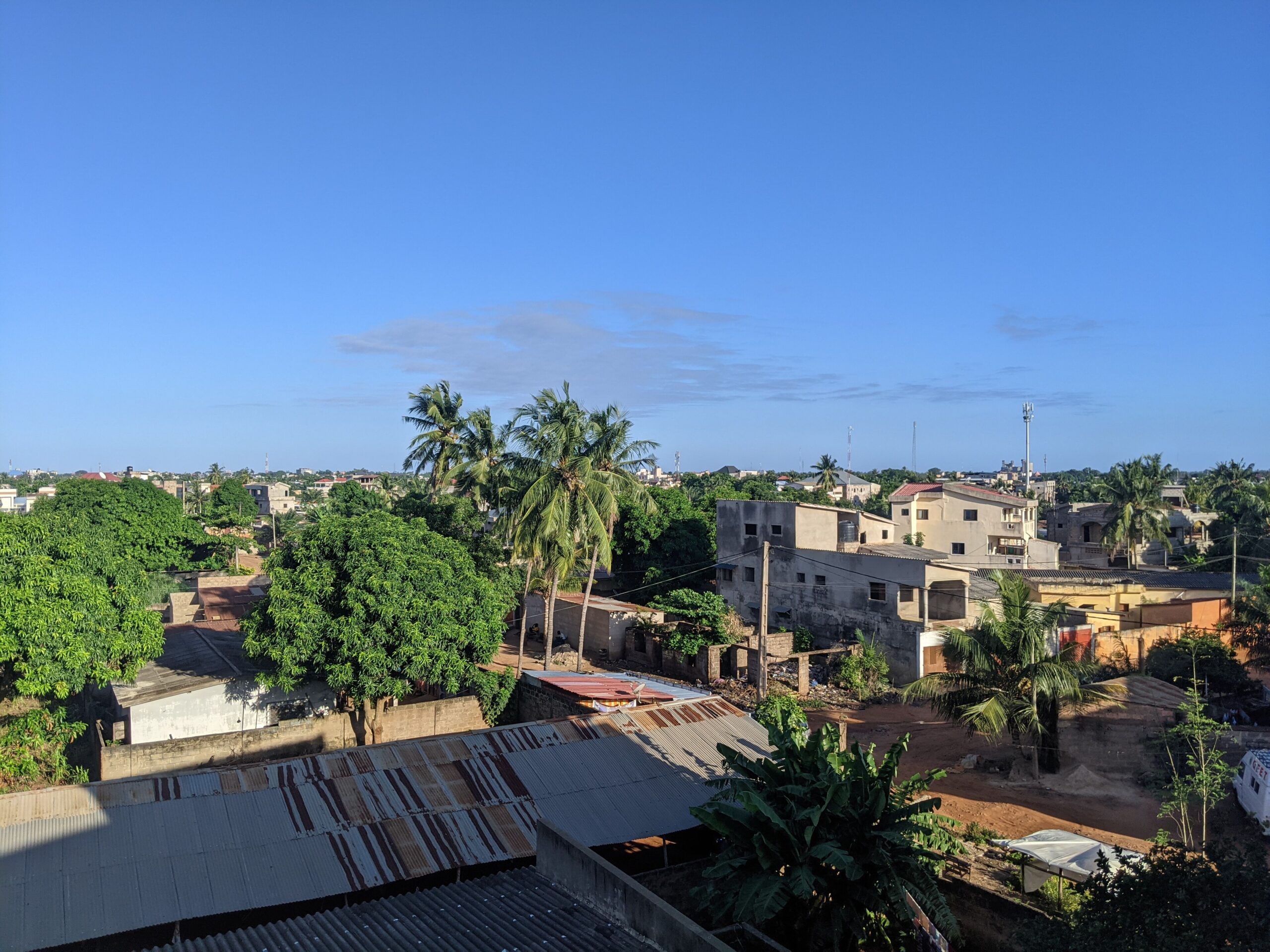
The Depth Advantage That Changed the Race
The Port of Lomé is described as West Africa’s only natural deep-water port on the coast, with a natural draft depth of about 16 metres. This geographic fact underpins everything else about Togo’s current economic role.
From 31 July 2025 to 16 September 2025, Lomé Container Terminal, known as LCT, carried out major dredging works. The access channel now reaches 18.60 metres, the terminal basin 17.60 metres and the fore-basin 17.95 metres.
The turning circle was also widened from 500 metres to 550 metres. These changes allow fully loaded container ships of 19,000 to 24,000 TEU and vessels over 400 metres in length to call at Lomé.
Other measurements point in the same direction. Recent port profiles give Lomé up to 16.6 metres of draft and a 1,050 metre continuous quay, enabling vessels up to 24,000 TEU.
The works cost about €7.5 million (US$8.7 million), equivalent to roughly 4.9 billion CFA francs. They form part of an 80 billion CFA franc investment programme to raise port capacity from 2.0 million to 2.5 million TEUs.
Container Volumes and the Regional Ranking
Lomé handled approximately 1.9 million TEUs in 2023 and around 2.0 million TEUs annually by 2025. This makes it the region’s busiest and most important maritime gateway.
The Rio Times reported that Lomé handled 2.06 million TEUs in 2024, up 8 percent from 1.9 million TEUs in 2023. Lloyd’s List ranked Lomé 92nd among world ports in its 2025 list.
Freight Academy records around 2 million TEUs in 2024, up 5.2 percent. It states Lomé was the only sub-Saharan African port in the Lloyd’s List global top 100.
Figures vary slightly by source, with the Port Authority of Lomé giving 2.0 million TEUs for 2024 and Lloyd’s List 2.06 million, but the trend is upward.
Africa Supply Chain Mag reports that in 2024 Lomé recorded 30.64 million tonnes of overall traffic, up 1.85 percent year-on-year. Nearly 20.2 million tonnes of that was transshipment traffic.
Why the Sahel Now Depends on Lomé
Lomé has become the supply corridor for landlocked Sahelian countries. Terminal Investment Limited, MSC’s terminal arm also known as TiL, says the terminal serves Mali, Niger, Burkina Faso and northern Nigeria.
The geography is decisive. Lomé sits on one of the few natural deep-water harbours between Abidjan and Lagos, and road links extend into the Sahel interior.
After border closures and political ruptures in the region, shippers have rerouted cargo through Lomé. The port now acts as a pressure release for economies that lost access to other coastal corridors.
Ecofin Agency reported in May 2026 that West African ports were absorbing Sahel traffic as the border closures entered a third year. The dredging completed in September 2025 and a €120 million (US$142 million) upgrade programme through 2027 reinforce that position.
Much of the traffic arriving at Lomé is transshipment to smaller feeder ports around the Gulf of Guinea. This means Lomé is not only an import gate but a distribution engine for the wider coast.
The Gnassingbé System and the Constitutional Shift
Togo’s political model has long been identified with the Gnassingbé family system. That system is now adjusting toward parliamentary rule, a change that matters for how port contracts and logistics licences are negotiated.
The 2024 constitution moved executive power to a President of the Council of Ministers chosen by the parliamentary majority, a post without term limits that Faure Gnassingbé took on 3 May 2025. For logistics investors, this changes the decision-making map around port concessions, customs and transport regulation.
Togo’s stability has historically been a selling point for the port. The shift to parliamentary rule is being watched to see whether it preserves that predictability or introduces new political checks.
For foreign operators, the key question is whether port governance remains insulated from parliamentary pressure. Lomé’s rise depends on continuity in terminal concessions and infrastructure spending.
The political adjustment is not a rupture but a recalibration. Investors are watching whether the new balance keeps the port’s commercial logic intact while altering the formal approval process.
Cotton and Phosphate as Export Foundations
Togo’s export base rests on traditional commodities alongside port services. Phosphate and cotton have long anchored the domestic economy even as the port attracts global attention.
Togo’s total second quarter 2026 exports reached 295.7 billion CFA francs, up 29.5 percent year on year, with phosphate the largest single line at 46.7 billion CFA francs. This gives an export value of about US$524 million at the rate of 4 September 2026.
Cotton remains a key agricultural export, feeding into textile and logistics chains that use Lomé for outbound shipment. The port’s container growth does not erase the importance of bulk commodity exports.
The phosphate figure shows how commodity revenues can fluctuate and why port diversification matters. A deep-water container hub provides steadier income than a single mineral cycle.
For logistics investors, cotton and phosphate create base cargo. They also produce demand for warehousing, trucking and customs brokerage even before transshipment volumes are counted.
CFA Franc Membership and Its Stability Signal
Togo is a member of the CFA franc zone, a currency arrangement that fixes the West African CFA franc to the euro. This membership gives foreign investors a predictable exchange rate and transfer framework.
The CFA franc system has faced political debate in the region, but Togo has maintained its membership. For port and logistics investors, that means euro-linked revenue and cost planning.
Currency stability reduces the risk of sudden devaluation in a market where port tariffs, fuel and equipment are often priced in foreign currency. It also simplifies repatriation calculations.
The CFA franc arrangement and Lomé’s port role reinforce each other. The port earns foreign exchange and services the region, while the currency framework keeps trade centred on Togo.
For investors comparing West African gateways, CFA franc membership remains a practical advantage. It lowers the volatility that can erase logistics margins in coastal markets without a hard peg.
Logistics Investment and Terminal Expansion
The investment logic around Lomé is shifting from simple gateway traffic to transshipment hub economics. The port handles mega-ships and redistributes cargo to smaller vessels and road corridors.
The 80 billion CFA franc capacity programme and the €120 million upgrade through 2027 (US$142 million at the rate of 4 September 2026) are the same money, and point to continued terminal expansion.
A second container terminal is under discussion or construction according to Sahel Liberty News. Additional quay space would further increase Lomé’s ability to absorb regional cargo shifts.
The presence of MSC through TiL gives Lomé a global carrier anchor. That relationship ensures scheduled mega-ship calls that smaller West African ports cannot support.
For logistics investors, Lomé’s rise means opportunities in warehousing, trucking, customs processing and feeder shipping. The port’s function is becoming regional distribution, not just Togolese import and export.
Border Closures and the Rerouting Effect
Border closures across the Sahel and coastal West Africa have forced traders to reroute cargo. Lomé has absorbed much of that displaced traffic because of its depth and road connections.
Landlocked Mali, Niger and Burkina Faso now depend on Lomé as a secure corridor. The port is the first stop for goods that previously moved through other coastal states.
The rerouting has turned Lomé into a geopolitical beneficiary. Political instability elsewhere in the region has strengthened Togo’s position as a neutral and open gateway.
Transshipment volumes of 20.23 million tonnes in 2024 show how much cargo is passing through Lomé for other destinations. That is 66 percent of the 30.64 million tonnes handled.
For logistics investors, the border disruption is not a short-term event. It has hardened new supply routes, with Lomé at the centre of a corridor that is becoming structurally important.
What the Numbers Mean for Investors
The port’s 2.06 million TEUs in 2024 is a concrete scale indicator. It places Lomé among Africa’s top container ports and inside the global top 100.
The 8 percent volume growth from 2023 to 2024 suggests the port is growing faster than many regional competitors. The dredging completed in 2025 is meant to accelerate that trend.
Capacity expansion from 2.0 to 2.5 million TEUs gives room for continued growth before congestion becomes acute. The 18.6 metre channel removes the previous size limits on calling vessels.
For an investor, Lomé offers a rare combination of natural depth, a global carrier relationship and a landlocked hinterland with few alternatives. That trio is not easy to replicate on the West African coast.
The main risks are political, not physical. The parliamentary shift and regional instability could alter the rules, but the port’s geographic and infrastructure advantages remain strong.
The Next Phase for Lomé as an Entrepôt
Lomé is evolving from a national port into a regional entrepôt, a trading centre where goods land, break bulk and move onward. The transshipment numbers show most cargo already passes through rather than stops.
The completion of dredging to 18.6 metres and the planned second terminal are meant to lock in that entrepôt role. Port planners are betting on larger ships and longer regional supply chains.
The Sahel corridor gives Lomé a captive hinterland that other West African ports cannot easily match from their current depths. Mali, Niger and Burkina Faso need a reliable deep-water outlet.
The CFA franc and the parliamentary shift create a distinct risk profile. Togo is stable but changing, and investors must price both continuity and political adjustment.
For logistics capital, Lomé represents a bet on regional integration through infrastructure rather than politics. The port is the physical fact that keeps Togo relevant far beyond its small size.
The Big Picture
Latest developments
- Ghana Medical Fund Explores Hungary Health Tie-Up — 3 October 2026
- Ghana’s Mahama Urges Africa to Make Its Own Medicines — 3 October 2026
- Ghana Court Grants MP Baffour Awuah US$850,000 Bail — 3 October 2026
- Ghana Orders National Lottery Revenue Review — 3 October 2026
This article was produced by The Rio Times’ automated newsroom system. How we use AI · Report an error · Editorial responsibility: Matthias Camenzind, Editor-in-Chief