
Politics: South Sudan
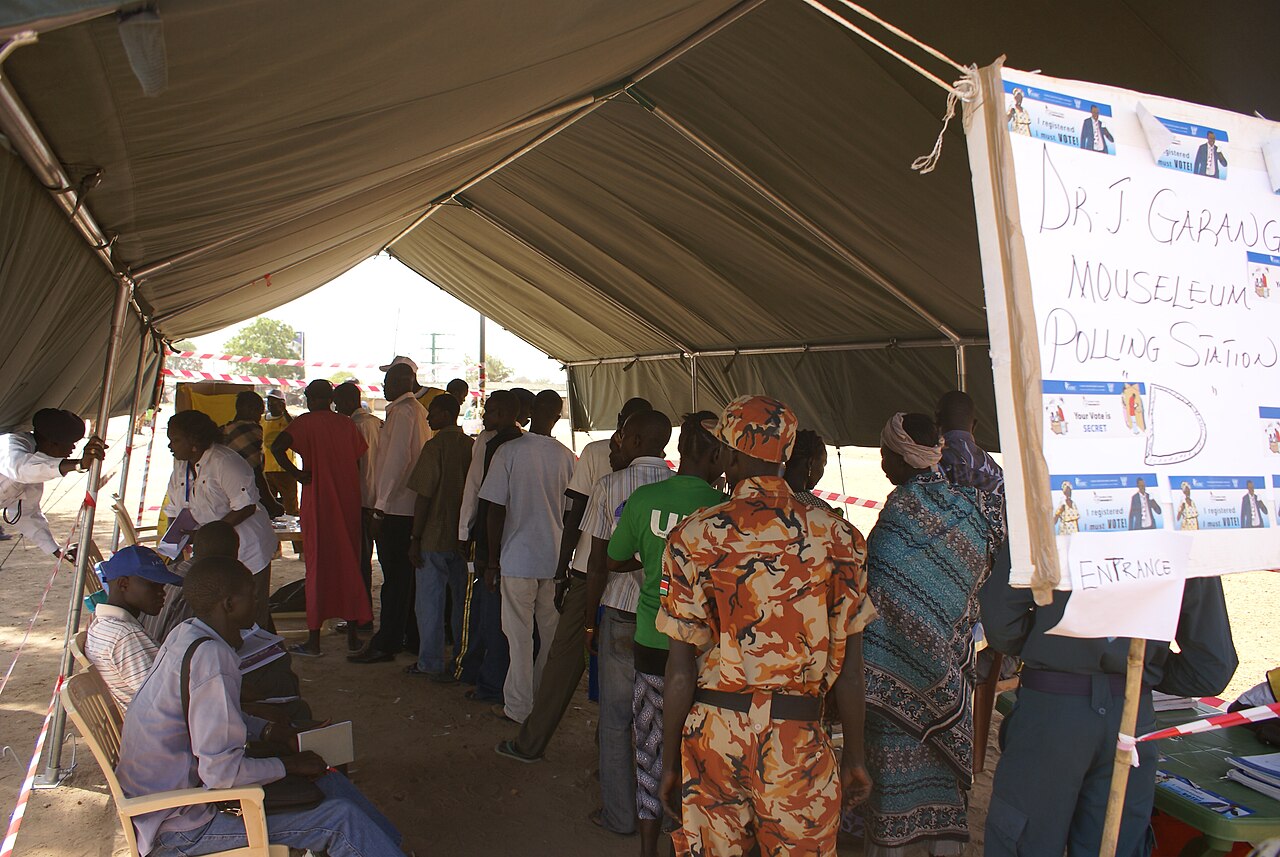
A South Sudanese political party says the country’s election commission has not shown any law that lets it move the national vote. The United Sudan African Party (USAP), one of the registered parties, sent a six-page position paper dated Tuesday 17 November 2026 to the National Elections Commission (NEC), the state body that runs elections.
The commission moved polling day on Saturday 14 November from Tuesday 22 December 2026 to Thursday 11 February 2027, which is 51 days later. If the party is right, the legal footing of the first national election since independence in 2011 becomes a live question.
Key Facts
- Who. United Sudan African Party (USAP), a registered South Sudanese party, wrote to the National Elections Commission.
- What. USAP says the commission cited no law allowing it to move polling day by timetable.
- Dates. Vote moved from Tuesday 22 December 2026 to Thursday 11 February 2027, 51 days later.
- Ask. USAP wants a written legal basis within seven days, which ends Tuesday 24 November.
- As of 18 November 2026, 19:30 GMT.
A party letter turns a date change into a legal question: who has the power to move South Sudan’s first national vote?
How South Sudan Got Here
South Sudan became independent from Sudan on 9 July 2011 and has not held a national election since. The vote was first due in December 2024, and in September 2024 the government extended the transitional period by two years, moving the election to 22 December 2026.
The transitional period, the interim government arrangement created by the 2018 peace deal that ended the civil war, now runs to February 2027, and USAP puts its end at Monday 22 February. The NEC says the earlier date left too little time to prepare, while USAP says in its paper that “South Sudan has waited a long time for its first elections”.
What USAP Argues
USAP says the NEC has not named a provision that lets it change the date by issuing a timetable. “The Commission has not cited a provision empowering it to change the date by timetable,” the party wrote.
The NEC announced the December date on 22 June under the electoral law, and the party argues that moving it needs new legislation or a constitutional amendment, not an administrative decision. It also points to Article 197A(9) of the Transitional Constitution, South Sudan’s interim constitution, which it reads as requiring elections 60 days before the transition ends, making Thursday 24 December 2026 the last lawful day.
The party warns of a “gap in lawful authority” if polling falls after the transition expires. It also objects that the new timetable would publish the provisional voter list, the draft register, from 17 to 23 January 2027, leaving only 19 to 25 days before polling.
What the Commission Says
NEC spokesperson Josephine Achiro said the commission acted under Article 57(1)(c) of the National Elections Act 2012, as amended, the electoral law, which she said lets it adjust the timeline. She said the time left before 22 December was not enough for candidate nominations, the submission of candidate lists and the printing of ballot papers.
We found no direct NEC reply to the USAP paper and no government response by Wednesday 18 November. The commission’s stated legal basis therefore remains the Article 57 citation.
Why It Matters
A vote that rests on a contested legal footing is easier to reject afterwards, and this election is meant to close a transition that began with the 2018 peace deal. The commission is also short of money: its chairman at the time, Abednego Akok Kacuol, said on 22 June 2026 that the election would cost about US$250 million, of which US$21 million had been received.
That is about 8% of the total, which suggests funding as well as law may shape how fast the commission can move. South Sudanese voters and parties are most affected, along with bodies USAP wants consulted, among them the Political Parties Council (the state registrar of parties), the African Union (the continental bloc) and the UN Mission in South Sudan (UNMISS), the peacekeeping force.
What to Watch Next
Voter registration ends on Saturday 28 November under the NEC calendar. The next test is the provisional voter list, the draft register published for public inspection, which USAP says the revised timetable schedules for 17 to 23 January 2027.
USAP gave the NEC seven days from its 17 November paper, which ends on Tuesday 24 November. The party says it prefers dialogue but reserves the right to seek relief from South Sudan’s Supreme Court.
What Is Not Known
USAP’s own leadership is disputed, so it is not settled whose voice the paper carries. The statement is presented as coming from chairman Professor Ajang Bior Duot, while Joseph Malek, a deputy minister of justice, says a court suspended his removal and that the Political Parties Council has restored him as registered chairman.
Bior’s side says the court order is only interim and the case is still pending. We could not check the text of Article 197A(9) of the amended Transitional Constitution, so the 24 December deadline is USAP’s reading, and the NEC has not said whether it accepts it.
What It Means for You
Anyone planning work or travel around South Sudan’s election should treat 11 February 2027 as the commission’s current date, which one registered party now disputes. The US State Department’s travel advisory for South Sudan is the official source for security guidance.
Earlier coverage: South Sudan Delays First Vote to February, South Sudan Election Talks Set to Resume and the election explained. More in our South Sudan hub.
Frequently Asked Questions
When is South Sudan’s election now?
The NEC’s revised calendar sets Thursday 11 February 2027. It was moved from Tuesday 22 December 2026 on Saturday 14 November.
What is USAP?
The United Sudan African Party (USAP) is a registered South Sudanese political party. Its leadership is disputed between the camps of Ajang Bior Duot and Joseph Malek.
What legal basis does the NEC cite?
The NEC cites Article 57(1)(c) of the National Elections Act 2012, as amended. USAP says no provision lets the commission change the date by timetable.
Could the dispute go to court?
USAP says it prefers dialogue but reserves the right to seek relief from South Sudan’s Supreme Court. No filing had been reported by 18 November 2026.
Sources: United Sudan African Party, position paper to the National Elections Commission, 17 November 2026; National Elections Commission, revised election timetable of 14 November 2026 and statement by spokesperson Josephine Achiro; National Elections Commission chairman Abednego Akok Kacuol, election announcement of 22 June 2026; National Elections Act 2012, as amended; statements by the two USAP factions, 2026.
This article was produced by The Rio Times’ automated AI newsroom. Editorial responsibility: Matthias Camenzind, Publisher and Editor-in-Chief. The Rio Times also runs Ask Rio Times, which answers from 100,000+ of our own articles, the daily Latin America Power Map, and prediction-market odds on elections and markets.. How we use AI · Report an error
Horn of Africa and the Red Sea
- Horn of Africa 2026: Why It Matters and Who Backs Whom
- Ethiopia’s Neighbors Explained, Ports, Eritrea, Somalia
- Eritrea Explained 2026, a Red Sea Country Guide
- Somalia Explained: Al-Shabaab, Somaliland, the Ports and the Fight Over a 2026 Vote