South Sudan Restarts Oil Exports as Machar Faces Trial and December 2026 Vote Looms
Economy · South Sudan
—The stakes. South Sudan’s public finances depend almost entirely on oil exported through Sudan, leaving the state exposed to any pipeline or political disruption.
—The restart. Oil flows resumed in January 2025 after the March 2024 pipeline rupture, with an initial target of 90,000 barrels per day.
—The wages. Civil servants faced between eight and thirteen months of salary arrears by January 2026, and public servants reported two years of arrears by August 2026.
—The prices. Annual average inflation reached 234% in fiscal year 2025 while the South Sudanese pound hit an all-time low against the US dollar.
—The politics. Suspended First Vice President Riek Machar has been under house arrest since 26 March 2025 and is now on trial, as Kiir pushes elections for 22 December 2026.
South Sudan has resumed the oil exports that fund nearly all state spending, but the repaired pipeline has not repaired the treasury. A government that cannot reliably pay its own workers is now moving toward an election while its first vice president remains under house arrest and on trial in Juba.
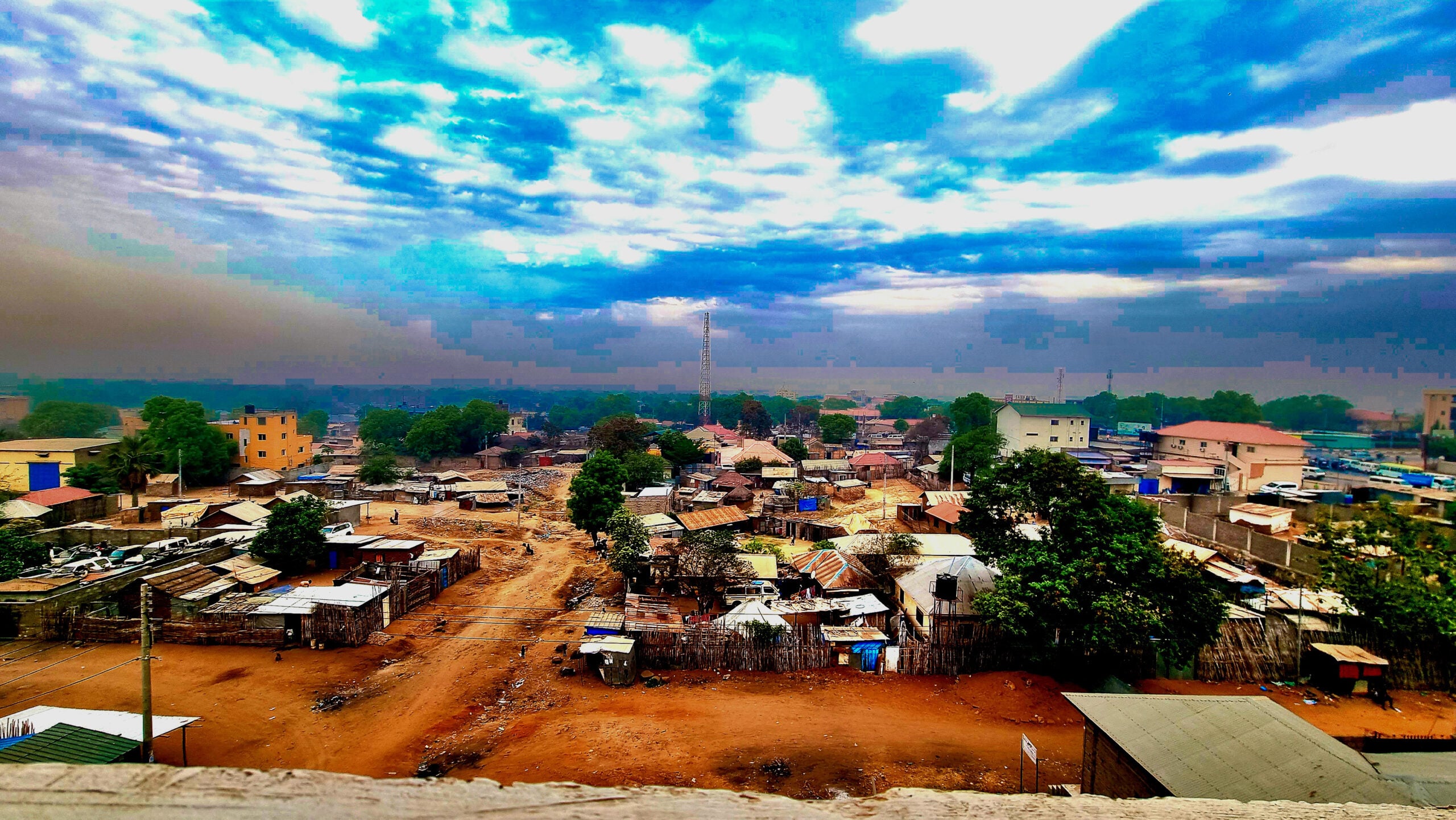
Oil restarts, but the treasury remains hollow
South Sudan’s main export route through Sudan was disrupted in February 2024 after damage linked to the war between the Sudanese army and the Rapid Support Forces.
Sudan declared force majeure on oil deliveries in March 2024, and a major rupture was reported on 20 March 2024 after earlier gelling problems.
Sudan’s military-led government said on 20 October 2024 that the pipeline was ready, and South Sudan set a late December 2024 restart target for Blocks 3 and 7.
Petroleum Minister Puot Kang Chol announced on 7 January 2025 that Dar Petroleum Operating Company would resume operations with an initial target of 90,000 barrels per day.
Oil flows restarted on 8 January 2025 after Sudan lifted
The pipeline that dictates the budget
The oil corridor through Sudan is South Sudan’s main export route, and oil revenue accounts for nearly 90% of government income and about 95% of exports.
That concentration makes the budget hostage to pipeline security, repair timelines, and Sudan’s internal conflict.
A June 2025 report confirmed exports had resumed via Sudan, with petroleum undersecretary Deng Lual Wol saying the line was operational.
Even after the restart, the fiscal damage from the 2024 interruption continued into 2026 through arrears, cash shortages, and currency weakness.
The structure remains unchanged: an oil state with almost no alternative export path and no financial buffer when the pipeline fails.
Civil servants wait for months they have already worked
The World Bank said the cash crunch left civil servants with 8 to 13 months of salary arrears by January 2026.
IMF reporting earlier said public wages were not paid in the first half of 2024, with arrears reaching eight months by end-June 2024.
In December 2024, the Ministry of Finance announced it had started paying one month of salary arrears after workers had gone unpaid for nearly twelve months.
By August 2026, public servants and organised forces said arrears had reached two years, while members of parliament said they were owed about one year and four months.
The government has not reconciled those accounts, leaving the payroll as both a fiscal failure and a political wound.
Hyperinflation and the collapsing pound
The World Bank said annual average inflation, proxied by food inflation, reached 234% in fiscal year 2025.
IMF reporting in November 2024 put inflation at 107.3% year on year at end-July 2024, already a severe acceleration.
BTI’s 2026 country report said inflation rose to 40.2% in 2023 and 120.6% in 2024, with the exchange rate near SSP 4,000 per US dollar in 2024 and early 2025.
Radio Tamazuj reported the black-market rate had reached about SSP 5,000 per US dollar in December 2024 when one month of arrears payments began.
On 12 July 2026, US$100 equaled about SSP 710,000 in the market, showing continued depreciation rather than stabilisation.
A currency with little purchasing power
The World Bank’s 2026 material described the South Sudanese pound as having weakened to an all-time low amid oil-export disruptions and low reserves.
Official and parallel exchange rates diverged sharply, with the World Bank reporting depreciation of 198% at the official rate and 224% on the parallel market, and an average market premium of 41%.
The premium means ordinary buyers pay far more than the official rate for dollars, deepening the cost-of-living crisis.
A local currency figure such as SSP 5,000 per US dollar represents roughly US$0.0002 per pound at the black-market rate, illustrating near-total loss of value.
The result is an economy where government salaries, even when eventually paid, buy far less than they did when the work was performed.
Oil income cannot keep pace with arrears
IMF staff said the government had paid two months of salaries in July and August 2024, except for foreign missions constrained by foreign exchange availability.
The IMF linked the arrears problem to delayed oil receipts, weak fiscal cash management, and plans to repay salaries only gradually as oil flows normalised.
South Sudan recognised salary arrears in the draft fiscal year 2024/25 budget and planned to pay one month of salary every month, with additional repayments expected when oil production restarted.
That plan has not eliminated the backlog, and public-sector workers were still reporting more than eight months owed in August 2026.
The restart of oil exports therefore improved the fiscal outlook on paper but did not quickly clear the accumulated wage debt.
The Kiir–Machar power struggle returns to court
The 2018 peace agreement created a unity government with Salva Kiir as president and Riek Machar as first vice president.
An OHCHR advisory in August 2026 said Machar, suspended as first vice president in September 2025, had been under house arrest since 26 March 2025 and faced trial before a Special Court with senior SPLM-IO officials.
The charges include treason, murder and crimes against humanity, a legal escalation that has destabilised the power-sharing arrangement.
Amnesty-oriented briefing material in January 2026 said Machar and seven allies were standing trial in Juba, with public and media access restricted in at least one session.
A June 2026 BBC report said Machar had been suspended as first vice president and arrested earlier in 2025, and that he had been under house arrest in Juba since March 2025.
A trial that narrows the political space
Media reporting in April 2026 said the justice minister told President Kiir that the Machar case was progressing and approaching completion.
Machar remained under house arrest and facing multiple charges while the government prepared for elections.
Several 2026 sources describe the trial as politically destabilising and as weakening the already strained Kiir–Machar power-sharing deal.
The SPLM-IO and allied opposition figures object to the election plan, arguing it would amount to a sham vote if Machar remained excluded.
That objection frames the December election not as a resolution of the crisis but as a potential trigger for further confrontation.
December 2026: an election without key safeguards
The election date was set for 22 December 2026, and BBC reported on 23 June 2026 that South Sudan had set the date for its long-delayed first-ever election.
President Kiir assented on 22 July 2026 to a bill removing requirements to complete a permanent constitution and national census before elections.
The Transitional National Legislature amended the 2018 peace agreement on 1 July 2026, and the Transitional Constitution (Amendment No. 13) Bill passed on 1 September 2026 and was assented to the following day.
The Council of Ministers approved related constitutional amendments on 7 August 2026, and the National Elections Commission announced elections for 22 December across all ten states and three administrative areas.
The unmanaged conditions around the vote
The election plan exists despite unresolved practical conditions including voter registration, civic education, security arrangements, constituency delimitation, and election-law amendments.
The OHCHR advisory said the government appeared determined to press ahead with elections by December 2026 after removing pre-election requirements.
Opposition figures argue that holding the vote without the census, permanent constitution, and Machar’s participation would produce a sham result.
The government’s framing of difficulties as manageable does not answer questions about whether registration and security can be delivered in months.
For investors, that gap adds electoral risk to the existing fiscal and currency risks.
An oil state that cannot pay itself
South Sudan’s public finances remain highly dependent on oil exports, especially the Sudan pipeline route, and that concentration has now been tested twice in two years.
The 2024 pipeline rupture and Sudan war sharply reduced export capacity and precipitated wage arrears, cash shortages, and currency weakness.
The World Bank explicitly linked the fiscal cash crunch to large salary arrears and inflationary pressure.
Even after the 2025 restart of exports, South Sudan still faced arrears, inflation, and a weak currency by early and mid-2026.
The central contradiction persists: an oil state with revenue potential that still cannot reliably pay its own workers, fund its security forces, or defend its currency.
The Big Picture
Latest developments
- Uganda MPs Demand Answers on Late Land Titles for World Bank Schools — 1 October 2026
- Kenya Demands Exporters’ Paperwork for Imports as Port Agents Push Back — 1 October 2026
- Kenya-Drafted Course Aims to Make Africa’s Ferries and Tourist Boats Safer — 1 October 2026
- Tanzania and Qatar Sign Tax Treaty to End Double Taxation for Investors — 1 October 2026
This article was produced by The Rio Times’ automated newsroom system. How we use AI · Report an error · Editorial responsibility: Matthias Camenzind, Editor-in-Chief
Horn of Africa and the Red Sea
- Horn of Africa 2026: Why It Matters and Who Backs Whom
- Ethiopia’s Neighbors Explained, Ports, Eritrea, Somalia
- Eritrea Explained 2026, a Red Sea Country Guide
- Somalia Explained: Al-Shabaab, Somaliland, the Ports and the Fight Over a 2026 Vote