
PERU · HISTORY
Key Facts
- —The country Andean republic of 34.2 million people, per the 2025 census.
- —Oldest roots Caral, a UNESCO site, flourished between 3000 and 1800 BC.
- —Conquest Pizarro captured Inca ruler Atahualpa at Cajamarca in November 1532.
- —Independence San Martín proclaimed independence in Lima on 28 July 1821.
- —Darkest years A truth commission estimates 69,280 died in the 1980–2000 conflict.
- —What happened Keiko Fujimori was sworn in as president on 28 July 2026.
From Caral and the Incas to Spanish silver, insurgency and a revolving door of presidents, this is Peru’s story for newcomers.
Peru history begins at Caral, which UNESCO calls the oldest centre of civilisation in the Americas. It runs through the Inca Empire, three centuries of Spanish rule and a republic proclaimed in 1821.
As of October 2026, Peru’s 34.2 million people are led by Keiko Fujimori, daughter of former president Alberto Fujimori.
Peru History Before the Incas, From Caral to Chimú
Peru’s story starts in the Supe valley, on the desert coast north of Lima. The Sacred City of Caral-Supe developed between 3000 and 1800 BC, according to UNESCO.
UNESCO, which listed Caral as World Heritage in 2009, puts the site at 626 hectares, about 1,550 acres. Its last phase ended more than 3,000 years before the Inca Empire rose in the 15th century.
Archaeologists from the Ministry of Culture, led by Ruth Shady, keep tracing what came after Caral. In July 2025 they opened Peñico, an urban centre dated to 1800–1500 BC, to visitors.
In July 2026 the ministry reported a ritual offering of 43 wood and bone pieces found there. It says the find shows the Caral tradition continued after the main Caral cities were abandoned.
Later came Chavín de Huántar, a temple centre in the Ancash highlands that UNESCO listed in 1985. UNESCO dates the Chavín culture to between 1500 and 300 BC.
On the southern coast, giant lines and figures were scratched into the desert between 500 BC and AD 500. These Nasca geoglyphs cover about 450 square kilometres, or 174 square miles, UNESCO says.
On the north coast, the Moche, or Mochica, built irrigation canals and peaked toward the end of the first millennium AD. In 1987 archaeologists near Sipán uncovered a Moche lord’s tomb containing gold and silver ornaments.
In the highlands, the Wari culture near today’s Ayacucho built cities and road systems between AD 500 and 1000. The Chimú kingdom then rose on the north coast, with its capital at Chan Chan near Trujillo.
UNESCO calls Chan Chan the largest earthen-architecture city in pre-Columbian America. The kingdom peaked in the 15th century, shortly before the Incas absorbed it.

How the Incas Built an Empire
The Incas began as one of many small Andean groups, based around Cusco. Their conquests accelerated under Pachacuti Inca Yupanqui, who ruled from 1438 to 1471.
Under him and his son, Topa Inca Yupanqui, the Incas came to rule 9 to 16 million people. That estimate comes from the Library of Congress country study of Peru.
The Incas called their state Tawantinsuyu, with Cusco, redesigned in the 15th century, as its capital. The city’s historic centre has been on UNESCO’s World Heritage list since 1983.
A road network, the Qhapaq Ñan, tied the empire together across 30,000 kilometres in six of today’s countries. At its 15th-century height, the empire stretched up to 4,200 kilometres, farther than New York to Los Angeles.
The Incas governed without the wheel or a writing system, keeping records on knotted cords called quipu. Machu Picchu, built in the 15th century at 2,430 metres (nearly 8,000 feet), joined the World Heritage list in 1983.
UNESCO calls Machu Picchu the most significant tangible legacy of the Inca civilisation. It says the site was abandoned after the Spanish conquest.
The empire was weakened just before Europeans arrived. A war of succession between two sons of the emperor Huayna Capac, Huáscar and Atahualpa, ran from 1528 to 1532.
Conquest and the Viceroyalty of Peru
Atahualpa won just as Francisco Pizarro, a Spanish conquistador, arrived in 1532 with about 180 men and 30 horses. Pizarro reached Cajamarca on 15 November 1532 and captured Atahualpa there.
Atahualpa paid a ransom that included about 11 tons of gold objects, yet Pizarro had him executed in 1533. Spanish forces and their Andean allies took Cusco on 15 November 1533.
Pizarro founded Lima on 18 January 1535 as the capital of the new colony. Inca resistance held out at Vilcabamba until 1572, when the last Inca ruler, Túpac Amaru, was beheaded in Cusco.
Epidemics, war and exploitation devastated Andean society. Within 40 years of the conquest, the population fell by about 80% on average, according to estimates the Library of Congress cites.
Until the middle of the 18th century, Lima was the capital of Spain’s dominions in South America, UNESCO notes. Its historic centre has been a World Heritage site since 1988.
Silver drove the colony after the discovery of Potosí, in today’s Bolivia, in 1545. Historian Fredrick Pike called Peru “Spain’s great treasure house in South America.”
Viceroy Francisco de Toledo, who governed from 1569 to 1581, turned the Inca labour draft, the mita, into forced mine work. Indigenous communities were also concentrated into new colonial towns.
Africans, brought as slaves, made up half of Lima’s population for much of the colonial era, the Library of Congress study notes.
In 1780 José Gabriel Condorcanqui, a wealthy local chief descended from the Incas, led a vast revolt as Túpac Amaru II. He was captured in 1781 and executed in Cusco’s main square.
Independence, Guano and the War With Chile
Peru was a royalist stronghold, and independence came largely from outside. José de San Martín, an Argentine general, landed at Pisco in September 1820.
San Martín took Lima and proclaimed independence on Saturday, 28 July 1821. Peru still marks the date, and 28 July 2026 was its 205th anniversary.
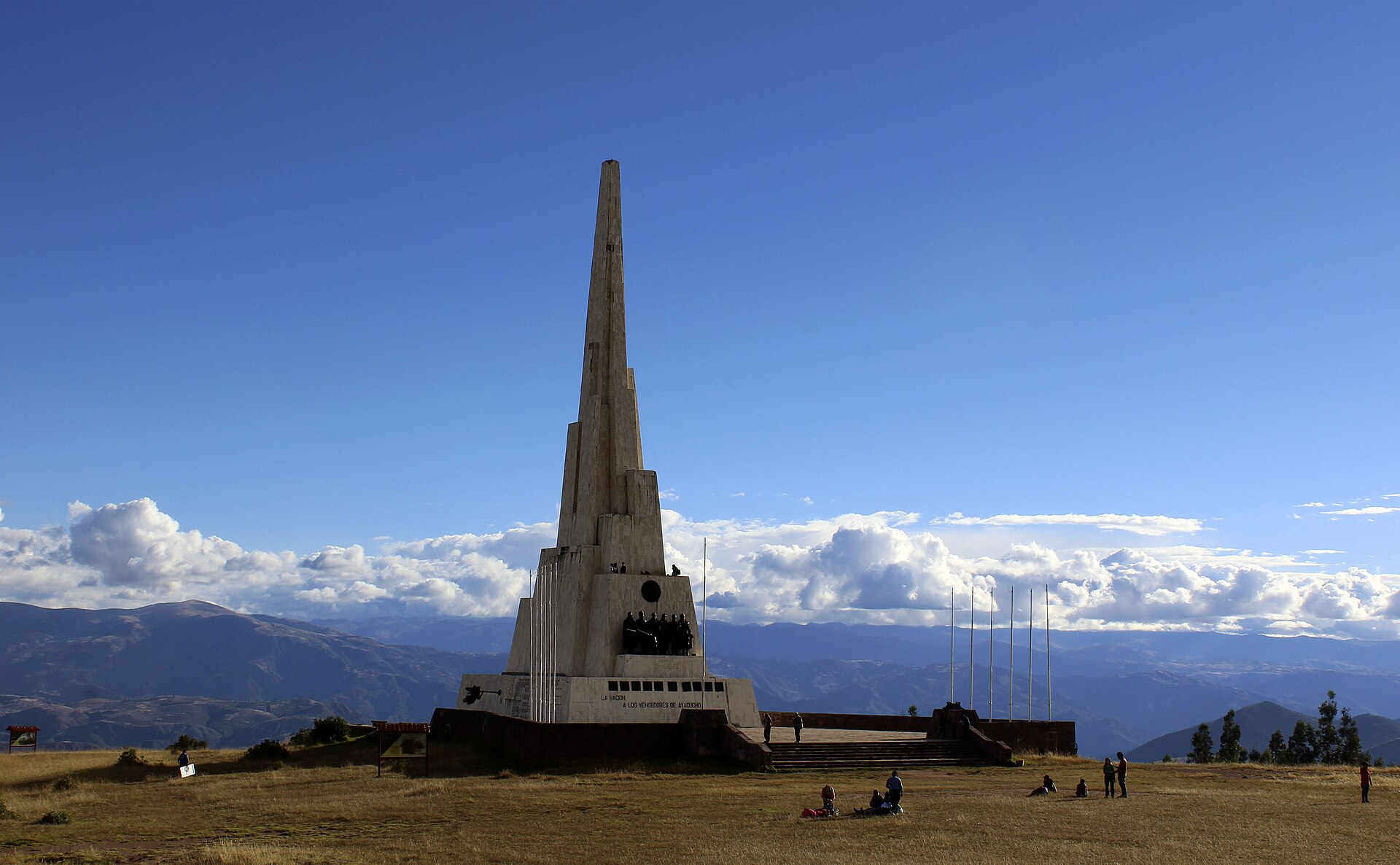
Simón Bolívar, who had freed much of northern South America, won the Battle of Junín in August 1824. On 9 December 1824 his lieutenant, Antonio José de Sucre, defeated the royalists at Ayacucho.
That battle effectively ended Spanish colonial rule in South America, the Library of Congress study says. The young republic then had at least 24 changes of regime between 1821 and 1845.
Stability came with guano, seabird droppings sold abroad as fertiliser, from the 1840s. Peru exported some 12 million tons, earning the state nearly US$500 million at the time.
President Ramón Castilla used the windfall to abolish slavery in 1854 and end the colonial tribute paid by Indigenous people. About 90,000 Chinese indentured labourers arrived between 1849 and 1874.
Chinese workers also built Andean railways under the American engineer Henry Meiggs. Heavy borrowing against guano ended in a foreign debt default in 1876.
In 1879 Peru, allied with Bolivia, was drawn into war with Chile over the nitrate-rich Atacama Desert. Chilean troops took Lima in 1881.
The 1883 Treaty of Ancón ceded the province of Tarapacá to Chile. A 1929 settlement, reached after US mediation, returned Tacna to Peru while Chile kept Arica.
Reform, Military Rule and the Return of Democracy
Coastal exporters dominated the so-called Aristocratic Republic from 1895 to 1914. Augusto Leguía then ruled for 11 years, from 1919 to 1930, opening Peru to foreign loans and investment.
Víctor Raúl Haya de la Torre founded APRA, the American Popular Revolutionary Alliance, in Mexico in 1924. The anti-imperialist movement became a major party and the army’s long-time rival.
José Carlos Mariátegui, a Lima journalist, became the country’s leading Marxist thinker. He argued that Marxism could be fused with Andean traditions of peasant rebellion.
On Thursday, 3 October 1968, the army under General Juan Velasco Alvarado ousted President Fernando Belaúnde Terry. Six days later the junta expropriated the International Petroleum Company, a subsidiary of Standard Oil of New Jersey.
Velasco’s land reform of 1969 was the most extensive in Latin America outside Cuba, the Library of Congress study says. By 1975 half of all arable land had passed to more than 350,000 families.
General Francisco Morales Bermúdez replaced Velasco on 29 August 1975 and prepared a return to civilian rule. After a new constitution in 1979, Belaúnde won the presidency again in 1980 with 45% of the vote.
Shining Path, Hyperinflation and Alberto Fujimori
Democracy returned just as a Maoist insurgency began. The Shining Path, founded in Ayacucho by philosophy professor Abimael Guzmán, started its attacks during the May 1980 elections.
A second armed group, the Túpac Amaru Revolutionary Movement (MRTA), took up arms in 1984. The violence lasted two decades.
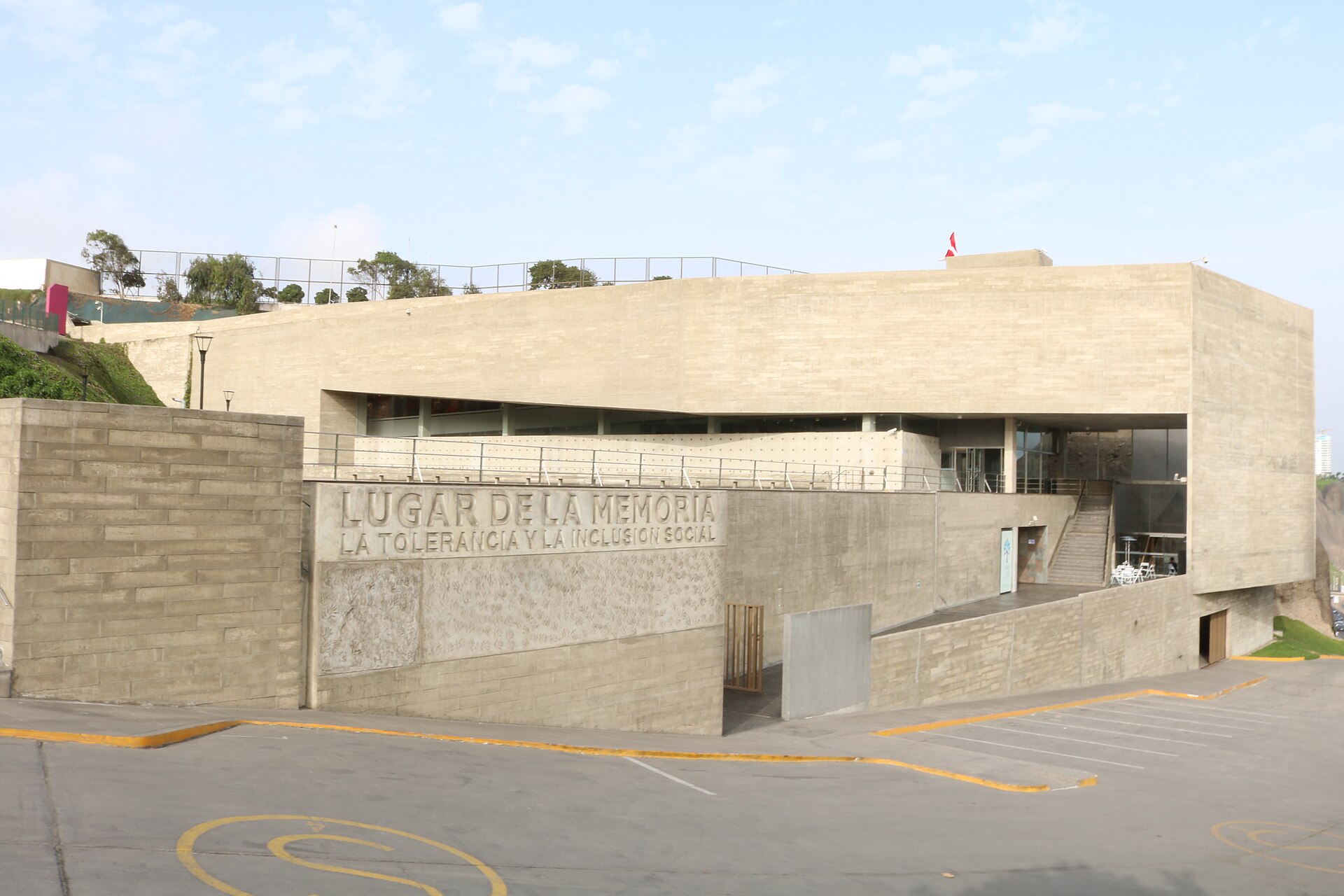
Peru’s Truth and Reconciliation Commission, which reported on Thursday, 28 August 2003, estimates that 69,280 people died between 1980 and 2000. That exceeds Peru’s losses in all its foreign and civil wars since independence, the commission found.
It held the Shining Path responsible for 54% of the deaths reported to it. It also found widespread or systematic abuses by the armed forces in certain places and periods.
Three in four victims had Quechua or another native language as their mother tongue. More than 40% of the dead and disappeared were in the Andean region of Ayacucho.
The economy also unravelled under Alan García of APRA, president from 1985 to 1990. Inflation reached 7,650% in 1990, according to the Library of Congress.
Alberto Fujimori, an engineer and former university rector of Japanese descent, won the June 1990 runoff with 56.5% of all votes cast. He beat the novelist Mario Vargas Llosa.
His “Fujishock” austerity cut inflation to 139% by the end of 1991. On Sunday, 5 April 1992, he closed Congress with military backing, and Washington suspended military and economic aid.
A police intelligence unit captured Guzmán on Saturday, 12 September 1992. A new constitution followed in 1993 and, with amendments, remains in force as of October 2026.
In December 1996 the MRTA seized the Japanese ambassador’s residence and held dozens of people hostage for more than four months. A military rescue, Operation Chavín de Huántar, ended the siege.
Fujimori’s decade in power ended in November 2000. On Tuesday, 21 November 2000, Congress declared the presidency vacant, citing his “permanent moral incapacity.”
In 2009 the Supreme Court sentenced him to 25 years in prison for the Barrios Altos and La Cantuta killings. He died in September 2024, and the government declared three days of national mourning.
The courts still hear cases tied to the insurgency; see this October 2026 report on a Shining Path case.
Corruption Trials and Nine Presidents in Ten Years
Peru held new elections in 2001, and the US-Peru Trade Promotion Agreement took effect on Sunday, 1 February 2009. Political stability proved harder to secure.
Bribes paid by the Brazilian builder Odebrecht reached the presidency. On 21 October 2024 a court sentenced former president Alejandro Toledo to 20 years and six months.
Judges found he took a US$35 million bribe to award Odebrecht two sections of the Interoceanic highway. In April 2025 former president Ollanta Humala and his wife received 15 years for laundering campaign money.
Clashes between presidents and Congress produced rapid turnover at the top. Nine people held the presidency between July 2016 and July 2026:
- Pedro Pablo Kuczynski, president from 2016 until March 2018.
- Martín Vizcarra, sworn in on 23 March 2018.
- Manuel Merino, head of Congress, sworn in on 10 November 2020.
- Francisco Sagasti, sworn in on 17 November 2020.
- Pedro Castillo, sworn in on 28 July 2021, replaced on 7 December 2022 and later tried for rebellion.
- Dina Boluarte, the first woman to hold the office, sworn in on 7 December 2022.
- José Jerí, head of Congress, sworn in on 10 October 2025 after Congress removed Boluarte.
- José María Balcázar, head of Congress, sworn in on 18 February 2026 after Jerí’s censure.
- Keiko Fujimori, elected in 2026 and sworn in on 28 July 2026.
The explainer on Peru’s political instability covers why each one fell.
Keiko Fujimori, candidate of the conservative Fuerza Popular party, won the runoff on Sunday, 7 June 2026. She beat Roberto Sánchez of the left-wing Juntos por el Perú by 49,641 votes, according to ONPE, the elections office.
The JNE, Peru’s electoral court, proclaimed her on Friday, 3 July 2026, and she was sworn in on Tuesday, 28 July 2026. Voters also chose a two-chamber Congress of 60 senators and 130 deputies, the first since 1992.
Fuerza Popular holds 41 of the 130 seats in the Chamber of Deputies, the JNE says. For the current cast of leaders, see the guide to Peru’s politics.
How the Past Shapes Peru Today
The 2026 vote mapped onto an old divide between Lima and the interior. Fuerza Popular won every district of Lima Metropolitana, while Juntos por el Perú carried 78.2% of the country’s districts.
The gap is old: the 19th-century guano boom left the highlands behind the coast, the Library of Congress study notes.
The clause Congress used against Fujimori in 2000, “permanent moral incapacity,” also removed Dina Boluarte in October 2025. It remains available to lawmakers as of October 2026.
The Fujimori name still splits the country: Alberto’s daughter won the presidency by 49,641 votes, a quarter-century after Congress removed him.
Heritage remains a live issue, from Machu Picchu tourism to looted objects; see the latest return of heritage pieces. Ethnic identity, too, has deep roots, explained in the guide to Peru’s population and ethnic groups.
What It Means for US Readers
The United States recognised Peru on 2 May 1826, the State Department’s Office of the Historian says. It adds that diplomatic ties have never been severed.
Relations have had rough patches. In 1968, Velasco’s seizure of a Standard Oil subsidiary strained ties with Washington, US diplomatic records show.
American historian Hiram Bingham reached Machu Picchu in 1911, and Yale’s expeditions of 1911 and 1912 took objects to the US. Under a November 2010 agreement, Yale began returning them in March 2011.
US customs restricts imports of Peruvian archaeological and ethnological material through 9 June 2027. A State Department advisory committee meets on 27–29 October 2026 to review an extension.
The US-Peru trade agreement has been in force since 2009, and Pope Leo XIV links the two countries too. Born in Chicago, he became a Peruvian citizen on 24 August 2015 and served as bishop of Chiclayo, the Vatican says.
INEI, Peru’s statistics office, counted 3.31 million Peruvians who left between 1990 and 2020 and did not return. Of these, 30.2% live in the United States.
In the 2026 runoff, Fuerza Popular won 63.21% of valid votes cast abroad, ONPE says, including in the US.
For travellers, the State Department rates Peru at Level 2, “exercise increased caution,” as of October 2026. It says Machu Picchu and the Inca Trail lie outside its higher-risk areas.
What Is Not Known
Nobody knows how many people the Incas ruled; estimates cited by the Library of Congress range from 9 to 16 million. The truth commission’s 69,280 deaths is its most probable estimate, not a final count.
Archaeologists are still dating Caral’s successors, as the 2026 Peñico offering showed, and UNESCO itself gives two date ranges for Chavín. Whether Washington extends the antiquities agreement beyond 9 June 2027 is not yet decided.
It is also unclear how President Fujimori will govern with 41 of 130 seats in the lower house. Fuerza Popular lacks a majority there on its own.
Frequently Asked Questions
What is the oldest civilisation in Peru?
Caral, in the Supe valley north of Lima, developed between 3000 and 1800 BC. UNESCO calls it the oldest centre of civilisation in the Americas.
When did the Inca Empire fall?
Pizarro captured the Inca ruler Atahualpa at Cajamarca in November 1532, and Spanish forces took Cusco on 15 November 1533. The last Inca stronghold, Vilcabamba, fell in 1572.
When did Peru become independent?
José de San Martín proclaimed independence in Lima on 28 July 1821. Spanish rule effectively ended with the royalist defeat at Ayacucho on 9 December 1824.
What was the Shining Path?
It was a Maoist insurgency founded by Abimael Guzmán that began attacks in May 1980. Peru’s truth commission held it responsible for 54% of the deaths reported to it.
Who is the president of Peru in 2026?
Keiko Fujimori of the conservative Fuerza Popular party, sworn in on 28 July 2026 for a term to 2031. She is the daughter of former president Alberto Fujimori.
Who found Machu Picchu?
The Incas built it in the 15th century, and it was abandoned after the Spanish conquest. American historian Hiram Bingham reached it in 1911, and Yale expeditions studied it in 1911 and 1912.
Why does Peru change presidents so often?
Congress can remove a president for “permanent moral incapacity,” a clause it used in 2000, 2020, 2022 and 2025. Nine people held the office between July 2016 and July 2026.
Sources: UNESCO, Sacred City of Caral-Supe; UNESCO, Chavín; UNESCO, Nasca lines; UNESCO, Chan Chan; UNESCO, Cusco; UNESCO, Machu Picchu; UNESCO, Qhapaq Ñan; UNESCO, Lima; Ministry of Culture, Peñico 2025; Ministry of Culture, Peñico offering 2026; Library of Congress, Peru: A Country Study; Truth and Reconciliation Commission, conclusions; INEI, 2025 census; INEI, emigration 1990-2020; Lima municipality, founding anniversary; Constitutional Court, 28 July 2026; JNE, presidential proclamation; JNE, Congress results; ONPE, 2026 runoff study; Presidency, Balcázar oath; Presidency, Jerí oath; Presidency, Boluarte oath; Presidency, Castillo oath; Presidency, Sagasti oath; Presidency, Merino oath; Presidency, Vizcarra oath; Presidency, 30 July 2026; Congress, 2000 vacancy; Joint Command, Guzmán capture; Judiciary, Fujimori sentence; Constitutional Court, 2009 rulings; Chiclayo municipality, national mourning decree; Judiciary, Toledo sentence; Judiciary, Humala sentence; Judiciary, Castillo case; US Office of the Historian, Peru; FRUS, 1968 coup and IPC; USTR, Peru TPA; Federal Register, import restrictions; Federal Register, advisory committee; Yale News, Machu Picchu collection; Vatican, Leo XIV biography; State Department, travel advisory (all accessed 8 October 2026).
Company profiles: Credicorp Ltd. · more in our LatAm Company Intelligence section.
Editorial responsibility: Matthias Camenzind, Editor-in-Chief · Editorial standards · Report an error