Panama Culture, the Key Figures to Know in 2026
PANAMA · CULTURE
Key Facts
- The country Panama is a Central American nation of about 4.6 million people, known for salsa, jazz, Guna molas, colonial ruins and baseball.
- Why it matters As of October 2026 Panama has six World Heritage sites and five living-heritage elements, and its best-known singer once served as tourism minister.
- Who to know Singer Rubén Blades, pianist Danilo Pérez, writers Abner Benaim and Isabel Burgos, baseball Hall of Famers Rod Carew and Mariano Rivera, jumper Irving Saladino.
- Heritage Portobelo’s forts were listed in 1980, Panamá Viejo in 1997 and the Colonial Transisthmian Route in 2025; the Congo tradition was listed in 2018.
- Sport Panama has played two men’s World Cups, in 2018 and 2026, and has four Olympic medals, the latest a silver in boxing in 2024.
- What it means for you The US travel advisory for Panama is Level 2, Exercise Increased Caution, as of October 2026, in a notice dated 19 August 2026.

As of October 2026, Panamanian culture is best understood through a short list of names: the salsa singer Rubén Blades, the jazz pianist Danilo Pérez, the playwright Isabel Burgos, the writer and film-maker Abner Benaim, the baseball Hall of Famers Mariano Rivera and Rod Carew, and the Guna women who sew molas. This guide explains each one for a reader who knows nothing about the country, with every figure dated and checked against the body that awards or keeps the record.
Panamanian Culture at a Glance
Panama had about 4.57 million people in 2025, which is the World Bank’s latest figure as of October 2026, and its income per person was about US$19,790 that year. The country borders Costa Rica and Colombia, and the World Bank’s 2025 data put its official exchange rate at one balboa to the US dollar, so amounts in this guide are the same in both currencies.
Its culture is not one block, because it draws on Indigenous peoples such as the Guna, on the Afro-colonial Congo tradition and on a Spanish colonial history that left forts and a ruined city. The sections below take those threads one at a time, from a salsa stage to a Caribbean fortress.
The government body for the arts is the Ministry of Culture, known as MiCultura, which a 2019 law created, and its minister in September 2026 was María Eugenia Herrera, who is known as Maruja. Its news pages are the primary source for the prize and heritage items in this guide.
Readers who want the political and economic background can start with the Rio Times guides to Panama politics, the Panamanian economy and Panama geopolitics. The Panama country page, the guide to Panama’s role in Latin America and the guide to Panama and its neighbours in Central America place the country on the map.
Ruben Blades and the Salsa Voice
Rubén Blades was born on 16 July 1948 in Panama, and his official biography calls him a central figure of the New York salsa revolution of the 1970s. It says his albums mix classic Afro-Cuban salsa with rock, jazz and pan-Latin influences, and that his songs are known for eloquent, socially charged lyrics and colourful characters.
The biography counts 12 Grammy and 13 Latin Grammy awards, and says the Latin Recording Academy named him Person of the Year in 2021. It adds that his 2017 album Salsa Big Band was awarded the Latin Grammy for Album of the Year.
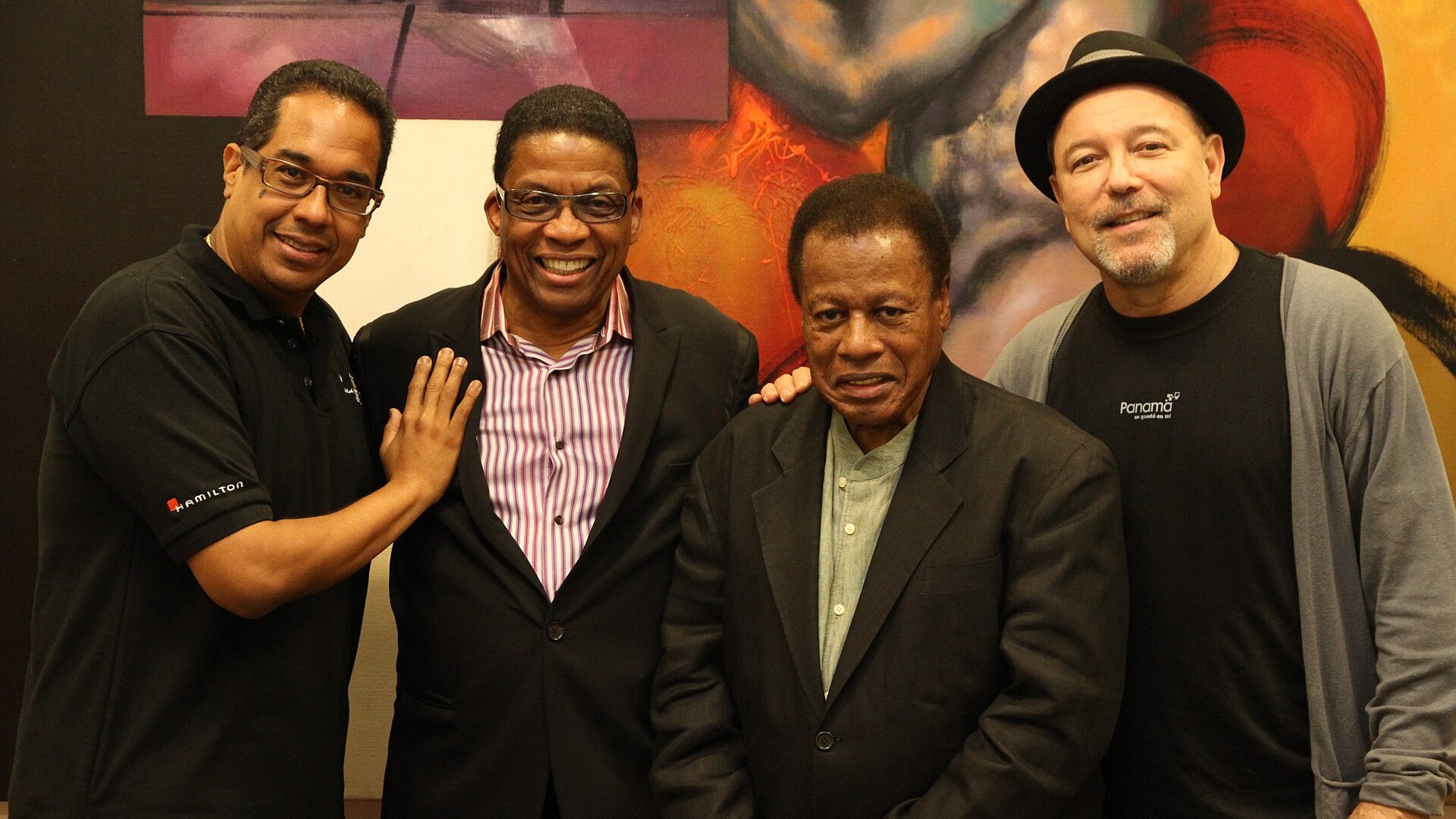
Beyond music, the biography says he holds degrees in political science and law from the University of Panama and a master of laws from Harvard. It also says he ran for president of Panama in 1994 and served as the country’s Minister of Tourism from 2004 to 2009.
His acting work includes eight seasons of the television series Fear the Walking Dead, the biography says, and he is the subject of the 2018 documentary Yo No Me Llamo Rubén Blades, directed by Abner Benaim. The same page, updated in September 2026, says he released a new album, País Portátil, on 21 August 2026.
Danilo Perez and the Jazz Festival
Danilo Pérez was born in Panama in 1965 and began music lessons at the age of three with his father, a bandleader and singer, according to his official biography. By the age of 10 he was studying classical piano at the National Conservatory in Panama, and he later studied jazz composition at the Berklee College of Music.
The biography says he toured and recorded with the Dizzy Gillespie United Nations Orchestra from 1989 to 1992 and joined the Wayne Shorter Quartet in 2000. It adds that the quartet’s album Emanon won the Grammy for best jazz instrumental album in 2019.
His 1998 album Central Avenue features mejoranera, a style of Panamanian folk singing, and his album Panamonk, made after he signed with the Impulse label in 1996, is a tribute to the pianist Thelonious Monk, the biography says. It describes his music as a blend of Panamanian roots, Latin American folk music, West African rhythms and European impressionism.
The Panama Jazz Festival, which Pérez founded in September 2003 and which its site calls one of the most relevant cultural and educational events in Latin America, says it has drawn more than half a million people. The site also says the festival has generated more than US$6 million in national and international scholarships.
As of October 2026 the site lists the 24th Panama Jazz Festival for 14 to 16 January 2027, with a gala concert by Paquito D’Rivera and Pérez at the Ateneo of Ciudad del Saber on the first night. The second night is billed as Bass Extremes, with Victor Wooten and Steve Bailey.
Prize Writers and Film-Makers
The Ricardo Miró National Literature Contest is one of the main literary prizes in Panama, and the Ministry of Culture published its 2026 winners in October 2026, after the judges ruled on 19 October. The ministry says 222 manuscripts competed: 17 essay books, 49 novels, 59 short-story books, 23 plays and 74 poetry books.
Abner Benaim won the short-story prize with his book Vine a morir, which the jury praised for its narrative quality, its humour and its critical look at society, cultural conditioning and family relations. Benaim also directed the 2018 documentary Yo No Me Llamo Rubén Blades, according to the singer’s official site.
Isabel Burgos won the theatre prize with Meme baila, her third Ricardo Miró after Tránsito in 2014 and Los Inocentes in 2018, the ministry says. The prize was 15,000 balboas, or US$15,000, and the three-member jury chose the play unanimously from 23 texts.
The play follows the last nights of the poet Korsi, who tries to finish a poem while an illness causes delirium, and the character Meme, whom the poet killed in his own verses, appears in those visions. Burgos told the ministry she hoped the work would help Panamanians look at their past more critically without ceasing to love it.
IFF Panamá, the country’s international film festival, held its 14th edition in 2026, according to its own site, and its foundation says it was set up in 2012. The festival calls itself the best-attended film festival in Central America, with the Teatro Nacional as its main venue.
Baseball, Boxing and Olympic Medals
The Baseball Hall of Fame says Rod Carew, born on 1 October 1945 on a train in the Canal Zone, was elected in 1991 after a career with a .328 average, 3,053 hits, seven batting titles and 18 All-Star Game selections. It says Mariano Rivera, born in Panama City in 1969, became in 2019 the second Panamanian elected to the Hall.
Rivera pitched for the New York Yankees from 1995 to 2013 and posted a record 652 saves with a career earned run average of 2.21, the Hall says. It adds that he was raised in the fishing village of Puerto Caimito, about 15 miles (about 24 km) from Panama City.
Olympedia, the Olympic history database, has medallist records that add up to four Olympic medals for Panama as of October 2026. The sprinter Lloyd LaBeach won bronze in the 100 and 200 metres at the 1948 London Games, the first medals for the country, and the long jumper Irving Saladino won its first gold in 2008.
The boxer Atheyna Bylon won silver in the women’s middleweight division at the 2024 Summer Games, and she carried the Panamanian flag at the 2020 opening ceremony and the 2024 closing ceremony. Saladino’s personal best in the long jump is 8.73 metres (about 28 feet 8 inches), set in 2008.
FIFA, football’s world governing body, records that Panama’s men have played at two World Cups, in 2018 and 2026, and went out in the group stage both times. It also lists one Women’s World Cup appearance, in 2023, and a round of 16 finish for the under-20 men in 2019.
Panama Viejo, Portobelo and the Colonial Route
UNESCO lists the Archaeological Site of Panamá Viejo and Historic District of Panamá, inscribed in 1997, and describes Panamá Viejo as the oldest European settlement on the Pacific coast of the Americas. Panama’s Ministry of Culture adds that the Salón Bolívar in the historic district is a recognised attribute of the property’s outstanding universal value.
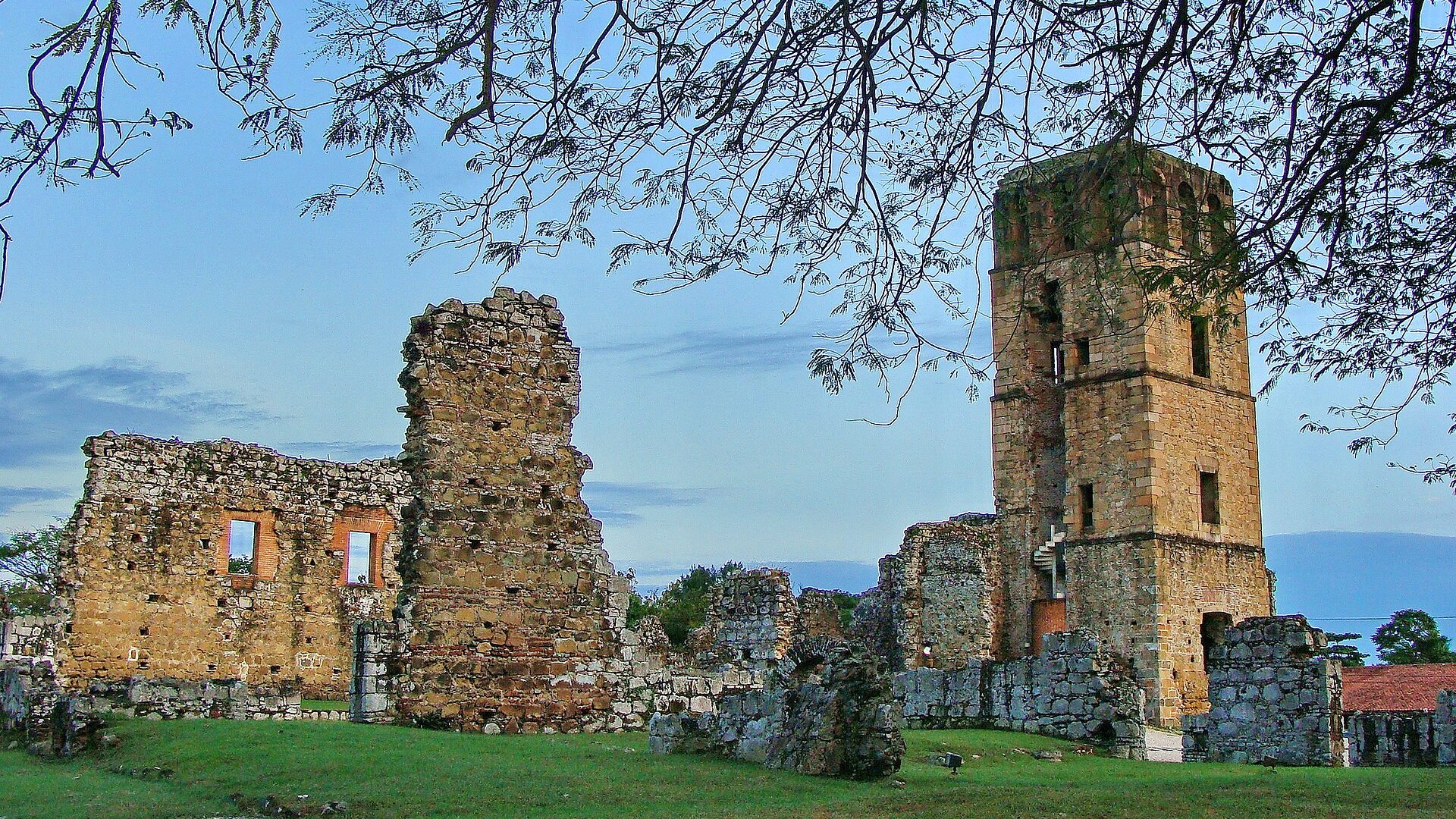
The fortifications of Portobelo and San Lorenzo on the Caribbean coast were inscribed in 1980, according to UNESCO’s list of Panama’s properties. In July 2025 the World Heritage Committee inscribed the first phase of the Colonial Transisthmian Route of Panamá, which the ministry says has six components, among them the Camino de Cruces.
The ministry counts six Panamanian World Heritage sites after that decision, three cultural and three natural. The natural ones are Darién National Park, listed in 1981, La Amistad, listed in 1983 and extended in 1990, and Coiba National Park, listed in 2005.
On 3 September 2026 President José Raúl Mulino inspected the restoration of the San Felipe church and the San Juan de Dios chapel in Portobelo, which the ministry put at 56 percent complete. The work costs 12.2 million balboas, or US$12.2 million, and about 90 percent of the labour is local, the ministry says.
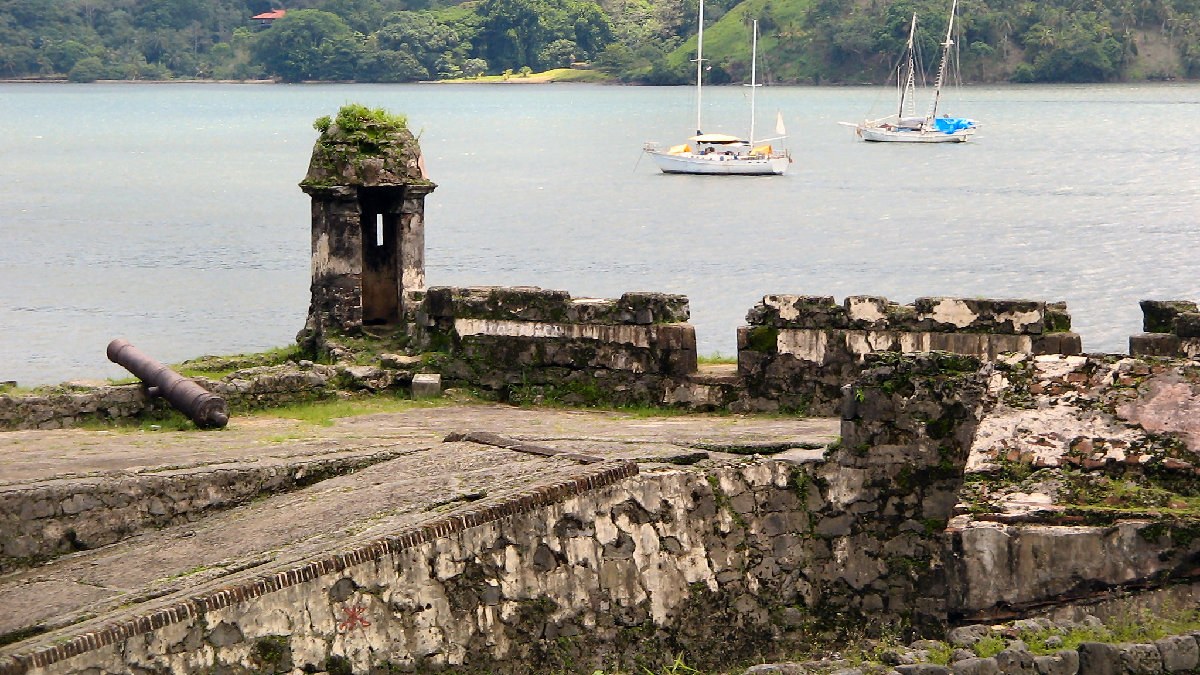
Mulino said he made a promise to the Christ of Portobelo a week before the election to rebuild the church, and the ministry’s schedule called for the front and side facades to be fully restored for the festivities of 21 October. Whether the church was completed on that date is not confirmed at an official source.
Congo, Corpus Christi and Living Heritage
UNESCO lists five Panamanian living-heritage elements as of October 2026, from the pinta’o hat weaving of 2017 to the quincha house of 2025. The hat is made from fibres of five plants and swamp mud worked by hand, UNESCO says, and more than 400 artisans using the traditional techniques have been identified.
The ritual and festive expressions of the Congo culture, listed in 2018, are described by UNESCO as a collective celebration rooted in Black rebels who were enslaved in the colonial period. Participants celebrate their freedom and dance barefoot during a season that runs from 20 January, San Sebastian Day, until Ash Wednesday, when the congos baptize the devils in a symbolic ritual.
Dances and expressions associated with the Corpus Christi festivity were listed in 2021 and combine Catholic tradition with theatre, music, burlesque dances and colourful costumes and masks, UNESCO says. A day before the festival, a performance depicts the battle between good, in the person of the Archangel Michael, and the devil and his legion over the human soul.
In 2023 UNESCO added the sea turtle festival of Armila to its register of good safeguarding practices, a four-day educational event that coincides with the arrival of large leatherback turtles. In 2025 it placed the building of quincha houses, made of clay, hay and natural fibres at community mud meetings, on its list of heritage in need of urgent safeguarding.
Molas and the Guna Revolution
In October 2021 the Ministry of Culture reported a fashion collection by a Panamanian designer inspired by the Guna people, who called the mola the textile art she uses. The designer said the oldest molas have geometric forms and were made, according to legend, to ward off evil.
On 25 February 2026 Panama marked the 101st anniversary of the Dule Revolution of 1925, which the ministry says defended the identity, autonomy and culture of the Guna people. Its article describes forums, craft workshops and traditional dance across the country, and a Bila Iba cultural event in Urracá Park in Panama City.
What It Means for US Readers
A US traveller to Panama faces a Level 2, Exercise Increased Caution, advisory as of October 2026, in a State Department notice dated 19 August 2026 that cites crime. The notice says US government employees need special authorization to travel to the Mosquito Gulf and the Darién region because of safety risks.
Culture is easy to reach in Panama City, where the Panamá Viejo ruins, the historic district and the Biomuseo all stand. The Biomuseo calls itself the only building designed by Frank Gehry in Latin America, and its address is Calzada de Amador 136.
Most of the sources in this guide are in Spanish, so US readers may need translations, but salsa and jazz need none. The balboa was at par with the US dollar in the World Bank’s 2025 data, so the amounts here are the same in both currencies.
What Is Not Known
No official ranking of Panamanian artists, writers or musicians was found, so this guide names figures with a checkable record rather than claiming a definitive list. Reggaeton and pop artists, beauty-pageant winners and other media figures are not covered for that reason.
The dates of Carnaval, of the Corpus Christi festivals and of the Congo season events in 2027 could not be confirmed at an official source, so only the traditions themselves are described. The completion of the Portobelo church restoration, scheduled for the festivities of 21 October 2026, is also unconfirmed.
It is not known whether the January 2027 lineup of the Panama Jazz Festival will change, or when the Miró winners will be staged or published. The festival site and the ministry pages are the places to check.
Frequently Asked Questions
What is Panama best known for in culture?
Panama is best known for the singer Rubén Blades, the pianist Danilo Pérez, Guna molas and colonial sites such as Panamá Viejo and Portobelo. UNESCO lists six World Heritage sites and five living-heritage elements for the country.
Who is Rubén Blades?
Rubén Blades is a Panamanian singer, songwriter, actor and lawyer born on 16 July 1948. His official biography counts 12 Grammy and 13 Latin Grammy awards and says he was Minister of Tourism from 2004 to 2009.
What are molas?
Molas are the textile art of the Guna people of Panama. The Ministry of Culture marked the 101st anniversary of the Dule Revolution, which defended Guna autonomy and culture, on 25 February 2026.
Which Panamanian sites are UNESCO World Heritage sites?
As of October 2026 they are Panamá Viejo and the Historic District, Portobelo and San Lorenzo, the Colonial Transisthmian Route, Darién, La Amistad and Coiba. The ministry counts six after the 2025 inscription of the route.
Who are Panama’s baseball Hall of Famers?
Rod Carew, elected in 1991, was the first Panamanian in the Baseball Hall of Fame, and Mariano Rivera, elected in 2019, was the second. Rivera posted a record 652 saves.
Has Panama won an Olympic gold medal?
Yes, the long jumper Irving Saladino won Panama’s first Olympic gold in 2008. Olympedia’s medallist records add up to four Panamanian Olympic medals as of October 2026, the latest a boxing silver in 2024.
Is it safe for US visitors to travel to Panama?
The State Department rated Panama Level 2, Exercise Increased Caution, in an advisory dated 19 August 2026. Check the current advisory before booking, because levels change.
Sources: Rubén Blades, official biography, updated September 2026; Danilo Pérez, official biography; Panama Jazz Festival, official site, read 30 October 2026; Ministry of Culture, Ricardo Miró 2026 winners, 27 October 2026; Ministry of Culture, Isabel Burgos and Meme baila, 27 October 2026; IFF Panamá, foundation page; Baseball Hall of Fame, Mariano Rivera; Baseball Hall of Fame, Rod Carew; Olympedia, Panama at the Olympic Games; FIFA, Panamanian Football Association record, read October 2026; UNESCO World Heritage Centre, Panamá Viejo and Historic District; UNESCO World Heritage Centre, Panama properties; Ministry of Culture, Colonial Transisthmian Route, 16 July 2025; Ministry of Culture, Portobelo church restoration, 4 September 2026; UNESCO, living heritage elements of Panama; Ministry of Culture, Dule Revolution anniversary, 25 February 2026; Ministry of Culture, molas on the runway, 8 October 2021; Biomuseo, official site; World Bank, Panama population and exchange rate data, 2025; US State Department travel advisories feed, Panama entry of 19 August 2026.
This article was produced by The Rio Times’ automated newsroom system. How we use AI · Report an error · Editorial responsibility: Matthias Camenzind, Editor-in-Chief
Expat Guide to Panama
What The Rio Times publishes for foreigners who live in or move to Panama.
Start here
- Cost of Living Boquete Panama 2026: Rent Above the Average Wage
- Panama Residency Visa Routes in 2026 and What Each One Actually Costs
- Healthcare in Panama 2026, Specialist Visits US$60-300
- Panama Safety for Expats in 2026: One Province Skews Everything
City guides
Coming up in Panama
- InterNations Panama City Masquerade Set for 30 October at Tío Navaja 30 Oct
- Ad Sidera Semper 2026 in Bocas del Toro, Panama: Five Days of Island Festival from October 30 to November 4 30 Oct
- Omar Courtz in Panama: Estadio Emilio Royo on 26 November, Tickets from 25 US Dollars 26 Nov
- Rawayana Panama Concert Set for 10 December 10 Dec
Understand Panama