
NIGERIA · POLITICS
Key Facts
- —The country Africa’s most populous nation, with about 237.5 million people in 2025.
- —What happened A wave of opposition governors has joined the governing APC since mid-2025.
- —The election Presidential and parliamentary vote on Saturday, 16 January 2027; governors 6 February.
- —The players President Bola Tinubu faces Atiku Abubakar, Peter Obi and Seyi Makinde.
- —Prediction markets Polymarket bettors give Tinubu a 71% chance of winning and Obi 24% (7 October, 7:07 a.m. ET).
- —Still open Whether the opposition unites; turnout was about 27% in 2023.
Nigeria has one dominant party, a divided opposition and a president seeking a second term in January 2027.
Nigeria politics in 2026 revolves around President Bola Tinubu and his All Progressives Congress (APC), which governs most of the country’s states. The opposition is split three ways before the presidential election on Saturday, 16 January 2027.
For US readers, the stakes are oil, security cooperation against jihadist groups and the stability of Africa’s most populous country. This guide sets out who holds power as of October 2026, how it is shared and what to watch.
How Nigeria Politics Works
Nigeria is a federal republic built loosely on the US model. A president elected for four years heads both the state and the government, and may serve two terms.
The National Assembly has two chambers: a 109-seat Senate and a 360-seat House of Representatives. Below the federal level sit 36 states, each run by an elected governor, plus the Federal Capital Territory around Abuja.
To win outright, a presidential candidate needs the most votes nationwide. The winner also needs at least a quarter of the votes in two-thirds of the states and the capital territory.
If nobody clears that bar, the 1999 Constitution provides for a second round.
Nigeria spent most of the period from 1966 to 1999 under military rule. The current civilian system dates from 1999, when the generals handed power back to elected leaders.
Politics also runs on unwritten rules, such as balancing the largely Muslim north and the largely Christian south. Many Nigerians expect the presidency to rotate between the two.
Nigeria had about 237.5 million people in 2025, World Bank data show, roughly 70% of the US population. Its economy was worth about US$291 billion that year.
The Presidency and the Inner Circle
Bola Ahmed Tinubu, 74, has been president since 29 May 2023. A former two-term governor of Lagos State, he helped build the APC coalition that first won power in 2015.
He won in 2023 with 8.79 million votes, about 36.6% of the valid vote. The Independent National Electoral Commission (INEC) declared figures that put Atiku Abubakar at about 29.1% and Peter Obi at about 25.4%.
Vice President Kashim Shettima, a former governor of Borno State in the northeast, is again his running mate. He represented Nigeria at the UN General Assembly in September 2026.
Femi Gbajabiamila, a former Speaker of the House of Representatives, is the president’s chief of staff. George Akume, Secretary to the Government of the Federation, coordinates the federal bureaucracy and stood in for Tinubu at events in September.
Bayo Onanuga, special adviser on information and strategy, is the presidency’s main voice. Nuhu Ribadu, the National Security Adviser, co-leads a security working group with his US counterpart.
Tinubu left Nigeria on 30 August 2026 for London and Paris on what the presidency called a working vacation. It said he kept directing the affairs of the nation from abroad.
The presidency also called Atiku’s criticism of his absence from the UN General Assembly irresponsible. He was back in Nigeria by 2 October, when he attended a film premiere.
For a fuller portrait, see the Rio Times profile Who Is Bola Tinubu?, which covers his reforms and the controversies around him.

The Ministers and Officials Who Matter
Nigeria’s cabinet, the Federal Executive Council, has ministers and junior ministers for most portfolios. These are the officials who shape policy most, as of October 2026:
- Taiwo Oyedele, Minister of Finance and Coordinating Minister of the Economy, a tax specialist who replaced Wale Edun after Edun resigned in April 2026, citing health reasons.
- Atiku Bagudu, Minister of Budget and Economic Planning and a former governor of Kebbi State.
- Olayemi Cardoso, Governor of the Central Bank of Nigeria (CBN), which sets interest rates and manages the naira, the national currency.
- Zacch Adedeji, head of the Nigeria Revenue Service, the federal tax agency created by the 2025 tax reforms.
- Christopher Musa, Minister of Defence, a retired general and former Chief of Defence Staff; Bello Matawalle is Minister of State for Defence.
- Lateef Fagbemi, Attorney General of the Federation and Minister of Justice, the government’s chief lawyer.
- Mohammed Idris, Minister of Information and National Orientation, who also coordinates media for Tinubu’s campaign.
- Dele Alake, Minister of Solid Minerals Development and one of Tinubu’s longest-serving allies.
Tinubu credits this team and the central bank with stabilising the economy. His 2023 reforms ended the petrol subsidy and let the currency float.
The Rio Times guide Who Runs Nigeria’s Economy covers the business side in detail.
Several ministers left the cabinet in 2026 to pursue political careers. They included the foreign and power ministers, who resigned before May, according to the presidency.
The APC and a Fractured Opposition
The All Progressives Congress, a merger of opposition parties formed in 2013, has held the presidency since 2015. Its national chairman is Nentawe Yilwatda, according to INEC’s register of parties.
Since mid-2025, a wave of opposition governors has joined it. They include Umo Eno of Akwa Ibom, Peter Mbah of Enugu, Caleb Mutfwang of Plateau and Agbu Kefas of Taraba.
Abba Kabir Yusuf of Kano and Dauda Lawal of Zamfara followed in early 2026. Governors matter because they control state budgets, local patronage and much of the election-day machinery.
The Peoples Democratic Party (PDP), which ruled from 1999 to 2015, has been hollowed out by splits and defections. Its 2027 candidate is Sandy Ojang Onor, 60; Atiku, its nominee in 2023, has left.
The African Democratic Congress (ADC) became the main opposition coalition, chaired by former Senate President David Mark. Its candidate is Atiku Abubakar, 79, vice-president from 1999 to 2007, with former Rivers State governor Rotimi Amaechi as running mate.
Peter Obi, 65, a former governor of Anambra State in the southeast, now runs for the Nigeria Democratic Congress (NDC). His running mate is Rabiu Kwankwaso, 69, a former Kano governor who won about 1.5 million votes in 2023.
On 2023 figures, Obi and Kwankwaso together won about 7.6 million votes, against Tinubu’s 8.8 million. Whether those votes transfer to a joint ticket is one of the central questions of the race.
Oyo State governor Seyi Makinde, 58, declared on 14 May 2026 that he would run for the Allied Peoples Movement (APM). A faction of the PDP backs him, and INEC’s final list confirms him as the APM candidate.
The Labour Party, Obi’s vehicle in 2023, now fields Sunday Chibuzo Okereke. The activist Omoyele Sowore runs for the African Action Congress, and former Cross River governor Donald Duke for the Peoples Redemption Party.
INEC recognises 22 political parties in all. A Rio Times profile of Atiku Abubakar, Tinubu’s main challenger, explains the ADC campaign in more depth.
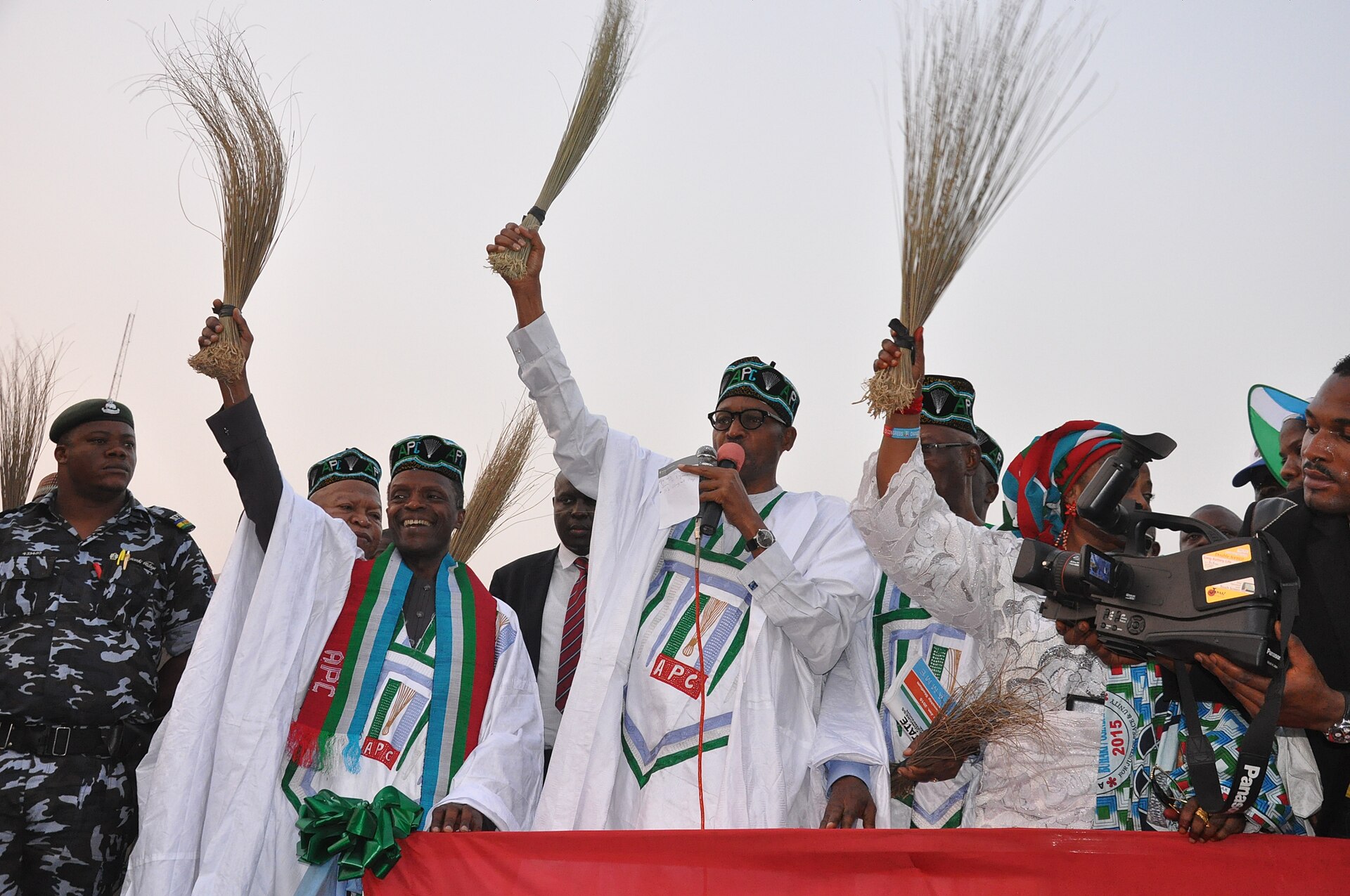
The 2027 Election Race
INEC’s calendar sets the presidential and National Assembly elections for Saturday, 16 January 2027. Governorship and state assembly elections follow on Saturday, 6 February 2027.
The commission’s final list, published in September 2026, names 18 presidential candidates, two of them women. Tinubu is the APC candidate, again with Shettima as running mate.
The rules changed when Tinubu signed amendments to the 2022 Electoral Act on Wednesday, 18 February 2026. The debate centred on how polling-unit results are transmitted electronically.
INEC is led by Joash Amupitan, a law professor sworn in on 23 October 2025. On 5 October 2026 he said the voter register had passed 103 million names.
A big register does not guarantee a big vote. In 2023 INEC accredited about 25.3 million of 93.5 million registered voters, roughly 27%.
Campaigning began after the parties signed a National Peace Accord in Abuja on Tuesday, 18 August 2026. The accord commits candidates to non-violent, issue-based campaigns.
Tinubu’s campaign is run by former Zamfara governor Abdulaziz Yari as director-general, with Imo State governor Hope Uzodimma as secretary. Senate President Godswill Akpabio and Speaker Tajudeen Abbas serve as deputy directors-general.
The economy is the main battleground. The presidency accuses Atiku of planning to restore the petrol subsidy that Tinubu scrapped, calling the idea retrogressive and fiscally unsound.
Generals, Police and Spy Chiefs
The president is commander-in-chief of the armed forces. The security chiefs, as named in State House statements in 2026, are:
- General Olufemi Oluyede, Chief of Defence Staff, the country’s top military officer.
- Lieutenant General Waidi Shaibu, Chief of Army Staff.
- Air Marshal Sunday Kelvin Aneke, Chief of Air Staff.
- Vice Admiral Idi Abbas, Chief of Naval Staff.
- Tosin Ajayi, Director-General of the Department of State Services (DSS), the domestic intelligence agency.
- Muhammed Muhammed, Director-General of the National Intelligence Agency, the foreign intelligence service.
- Olatunji Disu, Inspector-General of Police, confirmed by the Nigeria Police Council on Monday, 2 March 2026.
Threats differ by region: jihadist groups operate in the northeast, and armed gangs known as bandits kidnap for ransom in the northwest. Separatist violence affects parts of the southeast.
The army has grown from eight to 12 divisions to respond faster to attacks, Tinubu said in July 2026. He has also promised state police forces, with safeguards against abuse.
Cooperation with Washington deepened after November 2025, when the two presidents agreed a joint working group on security. The presidency says a coordinated strike on 16 May 2026 killed a senior Islamic State leader near Lake Chad.
Courts, Lawmakers and Governors
The Supreme Court is the final arbiter of disputed presidential elections. Chief Justice Kudirat Kekere-Ekun, sworn in as acting chief justice in August 2024, leads the judiciary as of October 2026.
Presidential election petitions are heard first by the Court of Appeal and then, on appeal, by the Supreme Court. A close outcome in 2027 could end up before her court.
Senate President Godswill Akpabio, a former governor of Akwa Ibom, leads the upper house. Tajudeen Abbas is Speaker of the House of Representatives, and both belong to the APC.
Governors coordinate through the Nigeria Governors’ Forum, chaired by Kwara State governor AbdulRahman AbdulRazaq. Lagos governor Babajide Sanwo-Olu runs the commercial capital, Tinubu’s home base.
Rising figures to watch include Oyedele, the technocrat now steering the economy, and Makinde, the only sitting governor in the presidential race. Kwankwaso, a former two-term Kano governor, gives Obi’s ticket a base in the populous northwest.
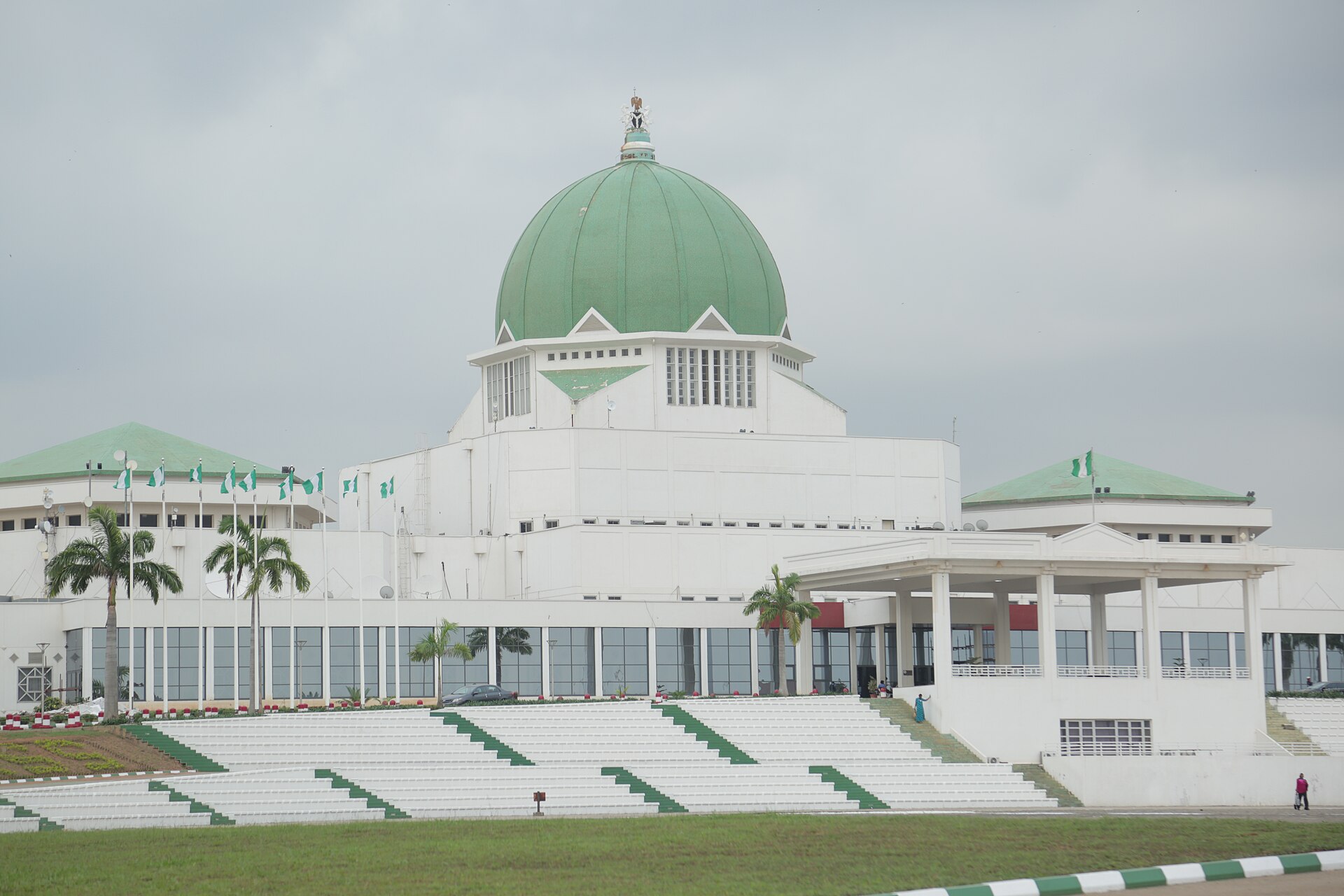
What It Means for US Readers
Nigeria is one of Africa’s largest oil producers and West Africa’s anchor state for security. A smooth or disputed election will shape oil supply, migration and counter-terrorism cooperation with Washington.
President Donald Trump wrote to Tinubu on 6 July 2026 praising his fight against terrorists, the presidency said. The letter singled out violence affecting Christian communities, an issue followed closely in US politics.
The US State Department rates Nigeria Level 3, Reconsider Travel, in an advisory issued on 12 June 2026. It lists large parts of the north and southeast, including Kano, Kaduna and Borno, as Do Not Travel areas.
Investors in Nigerian dollar bonds and Lagos-listed shares should expect election risk to be priced in before January. A disputed result or a runoff would likely weigh on the naira.
Daily coverage of the campaign and the economy is collected on the Rio Times Nigeria page.
What Prediction Markets Say
On Polymarket, bettors gave Tinubu a 71% chance of winning at 7:07 a.m. ET on Wednesday, 7 October 2026. Peter Obi stood at 24%, and about US$128,800 had been bet on the market in total.
The market lists no contract for Atiku Abubakar or Seyi Makinde, so its prices do not cover the whole field. Contracts on Kwankwaso, Amaechi and Sowore traded below 1%.
Why we show this: prediction markets turn real-money bets into a live probability that moves within minutes of the news, which is why investors, campaigns and newsrooms in the United States now follow them closely. We show them next to polls and official results, never instead of them.
What Is Not Known
The state of Tinubu’s health is not publicly documented, and the presidency has released no medical details. It is also unclear whether the opposition will consolidate behind one candidate before January.
Reliable opinion polls are scarce, so the state of the race is hard to measure. A close three-way contest could force a second round, which has not happened since civilian rule returned in 1999.
The final size of the voter register, after objections and clean-up, has not been published. Nor is it known how many voters will collect the cards they need to vote.
Frequently Asked Questions
Who is the president of Nigeria in 2026?
Bola Ahmed Tinubu of the All Progressives Congress has been president since 29 May 2023. His vice-president is Kashim Shettima, a former governor of Borno State.
When is Nigeria’s next presidential election?
The presidential and National Assembly elections are on Saturday, 16 January 2027. Governorship and state assembly elections follow on Saturday, 6 February 2027.
What are the main political parties in Nigeria?
The governing All Progressives Congress controls the presidency and most states. The main opposition tickets run under the African Democratic Congress, the Nigeria Democratic Congress and the Allied Peoples Movement.
Who is running against Tinubu in 2027?
The electoral commission lists 18 candidates in total. The best known challengers are Atiku Abubakar, Peter Obi with Rabiu Kwankwaso as running mate, and Oyo State governor Seyi Makinde.
How does a candidate win Nigeria’s presidency?
A winner needs the most votes and at least 25% in two-thirds of the states and the capital territory. Otherwise the constitution provides for a second round.
Who controls Nigeria’s military?
The president is commander-in-chief, with General Olufemi Oluyede as Chief of Defence Staff. Christopher Musa, a retired general, is the Minister of Defence.
Sources: INEC election calendar; INEC final list of presidential candidates; INEC register of political parties; State House, the cabinet; State House, security chiefs (20 August 2026); State House, economic team (7 August 2026); State House, Edun resignation; State House, 2 October 2026; State House, working vacation; State House, APC campaign council; State House, Electoral Act; State House, Inspector-General of Police; State House, Trump letter; Voice of Nigeria, candidate list; Voice of Nigeria, Chief Justice; Voice of Nigeria, 2023 results; Voice of Nigeria, voter register; ICIR, Makinde bid; World Bank, Nigeria data; US State Department travel advisory; more Nigeria coverage on the Rio Times Nigeria page (all accessed 7 October 2026).
This article was produced by The Rio Times’ automated newsroom system. How we use AI · Report an error · Editorial responsibility: Matthias Camenzind, Editor-in-Chief
Part of our ongoing coverage
Africa: The New Scramble — the great-power contest over the continent.