Nigeria Opposition Presses Tinubu on Subsidy
A policy announced in 2023 is back in the campaign. The opposition says the president must explain it; a former minister points to the law and the finances.

POLITICS · NIGERIA
Nigeria’s opposition African Democratic Congress (ADC) has accused President Bola Tinubu of putting the World Bank’s advice ahead of Nigerians’ welfare when he ended the petrol subsidy. Bolaji Abdullahi, the party’s national publicity secretary, made the charge in an opinion article published this week.
It tests how voters will judge a reform announced on 29 May 2023, because Nigeria votes for president on 16 January 2027. Nigeria is a major oil producer and a member of OPEC, the oil producers’ group, so what its drivers pay at the pump is watched far beyond its borders.
Key Facts
- Who Bolaji Abdullahi, spokesman of the African Democratic Congress, a leading Nigerian opposition party.
- What He says Tinubu followed World Bank advice on fuel without weighing the cost to citizens.
- The reply Babatunde Fashola, a former Lagos governor, defended the removal on TV on Tuesday 17 November.
- Prediction markets Polymarket, a prediction market, gives Tinubu 70% and Atiku Abubakar, the ADC’s disputed candidate, 5% (20 November, 13:56 ET).
- As of 20 November 2026, 19:30 GMT.
A policy announced in 2023 is back in the campaign. The opposition says the president must explain it; a former minister points to the law and the finances.
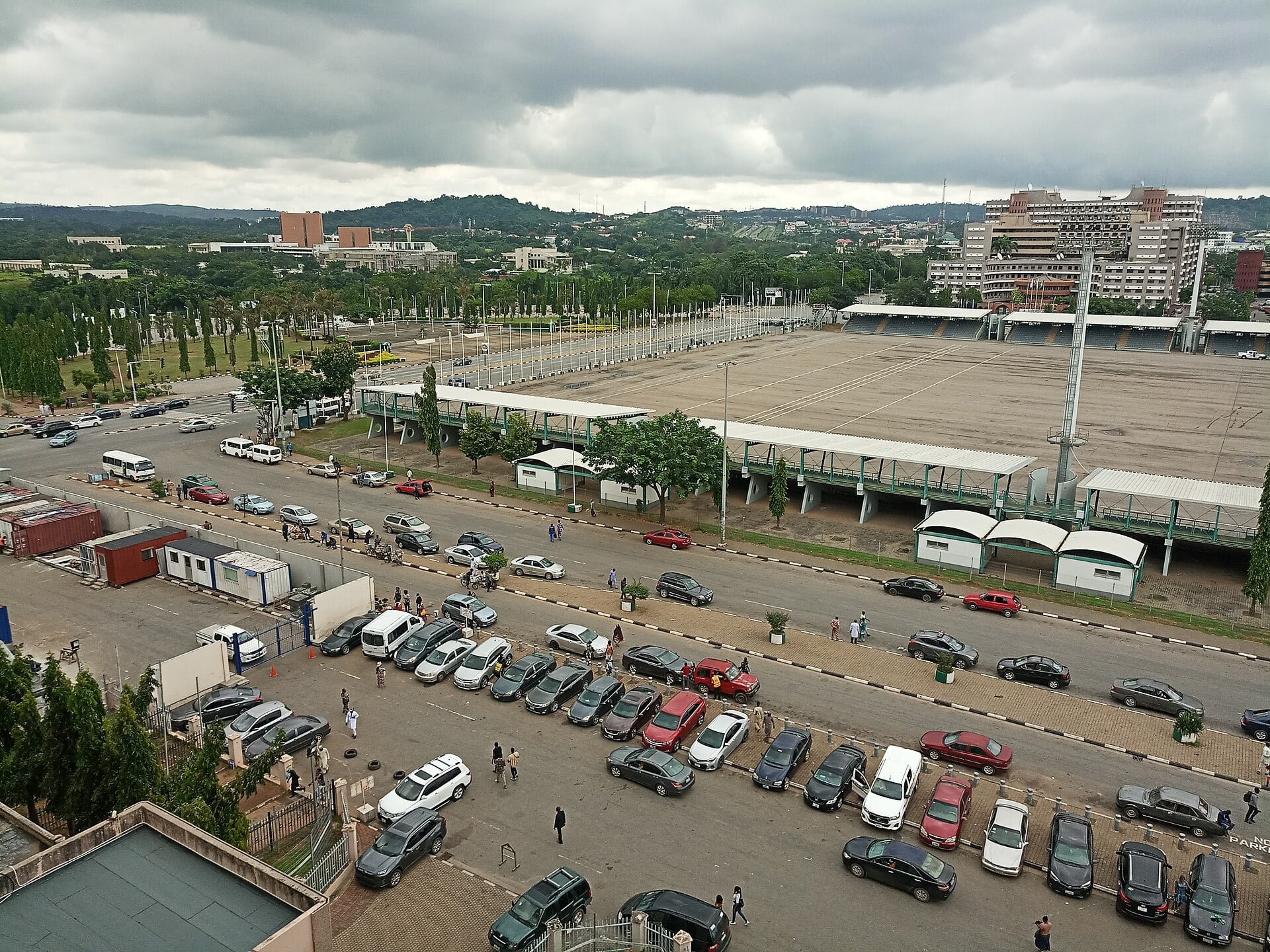
Tinubu announced the end of the petrol subsidy in his inaugural address at Eagle Square, a parade ground in Abuja, on 29 May 2023, saying “The fuel subsidy is gone”. He said the 2023 budget made no provision for subsidy payments, and that the money would be redirected to public spending.
Pump prices rose sharply afterwards. In its June 2022 Nigeria Development Update report, the World Bank had estimated that gasoline subsidies would cost the government about 5 trillion naira (about US$12 billion at the 415 naira to the dollar of 14 June 2022) in forgone revenue that year.
On Tuesday 17 November, Babatunde Fashola, a former Lagos governor and former federal minister, defended the removal in a television interview. He said the lender’s position indicated Nigeria would no longer be financed if it kept paying for petrol, and that the Petroleum Industry Act, the 2021 law that overhauled the oil sector, calls for market-based pricing.
Fashola added that Nigeria would struggle to find the crude and the financing to pay for a subsidy. He also said Atiku’s plan would be hard to finance.
Abdullahi answered in an article titled “Who Governs Nigeria, Tinubu or the World Bank?”. “International institutions are entitled to offer recommendations.
They are not elected to govern Nigeria. The President is,” he wrote.
Abdullahi says the ADC and its presidential candidate, Atiku Abubakar, a former vice president, propose a production subsidy that would use domestic refining to bring fuel costs down. He pointed to the Act’s Domestic Crude Supply Obligation, set out in Section 109, which can require producers to supply crude to domestic refineries, under rules issued by the Nigerian Upstream Petroleum Regulatory Commission, the oil regulator.
Abdullahi noted that the Act was one of the longest-pending bills before it passed in 2021, and argued that any law that deepens citizens’ hardship must be reviewed. He also asked whether the president had weighed alternatives before acting.
Section 109 also says supply should normally run on a willing-seller, willing-buyer basis, at commercially negotiated prices that take international prices into account. Price is therefore negotiated between producers and refiners rather than set by the state.
Atiku’s candidacy is itself in dispute. A Federal High Court, a national trial court, in Abuja ruled on 5 November that the party’s leadership was invalid and nullified its nominations, including his; an earlier ruling on 2 July 2026 had upheld the same leadership, and the ADC says it is appealing.
Fashola also reminded viewers that the previous government was spending close to 90% of its revenue on debt service, which he said made removal inevitable. Abdullahi answers with federal budget figures that, he says, show debt service took about 91% of revenue in the first quarter of 2026, and he asks what has changed since the subsidy ended.
The stakes are fiscal as well as political. In 2022 the World Bank warned that subsidy payments were absorbing crude revenue that would otherwise go to the federation account, which funds federal, state and local governments.
Any subsidy has to be paid for from the same revenue pool, so the argument over the World Bank’s role is also an argument over who pays. The next public test is the campaign itself, with the presidential vote due on 16 January 2027.
What Prediction Markets Say
Polymarket, a prediction market where users bet real money, gave Bola Tinubu a 70.0% chance of winning Nigeria’s presidential election, Peter Obi, a former Anambra governor, 25.0% and Atiku Abubakar 5.0% on 20 November 2026 at 13:56 ET, with about US$161,651 traded across the market. These are bets, not polls.
Why we show this: prediction markets turn real-money bets into a live probability that moves within minutes of the news, which is why investors, campaigns and newsrooms in the United States now follow them closely. We show them next to polls and official results, never instead of them.
Frequently Asked Questions
Did the World Bank order Nigeria to end the fuel subsidy?
The World Bank urged it in public reports, and Fashola says the lender’s position was that financing depended on it. The ADC argues recommendations are not instructions.
What does the ADC want instead?
It proposes a production subsidy that uses domestic refining to cut fuel costs, and says the oil law already allows support for local refineries.
Sources: World Bank, Nigeria Development Update, June 2022 (press release); Petroleum Industry Act 2021, Section 109; Bolaji Abdullahi’s opinion article “Who Governs Nigeria, Tinubu or the World Bank?” (full text); Babatunde Fashola’s interview of 17 November 2026; Polymarket.
Related coverage: Tinubu rules out a subsidy return, IMF warns Nigeria off the subsidy, ADC appeals the Atiku ticket ruling and more in Nigeria news.
This article was produced by The Rio Times’ automated AI newsroom. Editorial responsibility: Matthias Camenzind, Publisher and Editor-in-Chief. The Rio Times also runs Ask Rio Times, which answers from 100,000+ of our own articles, the daily Latin America Power Map, and prediction-market odds on elections and markets.. How we use AI · Report an error