
NIGERIA · ELECTIONS
Key Facts
- —The country Nigeria is Africa’s most populous country, with more than 220 million people, and returned to civilian rule in 1999.
- —The background Turnout is low: in 2023 only about 27% of the 93.5 million registered voters were accredited to vote.
- —Why now Nigerians elect a president and parliament on Saturday, 16 January 2027, and state governors three weeks later, on 6 February.
- —What happened Nigeria’s electoral commission, INEC, said on Monday, 5 October, that the voter register now exceeds 103 million.
- —The numbers That is about 10 million more than in 2023, and 71% of voters are now aged 35 or older.
- —What it means for you Investors in Nigerian bonds and the naira will weigh election risk until a winner is declared.
- —Prediction markets Polymarket bettors give President Bola Tinubu a 71.5% chance of re-election (6 October, 1:42 p.m. ET).
- —Still open How many new names survive objections, and how many voters collect the cards they need to vote.
Nigeria’s voter roll has grown by about 10 million since 2023, but it is older, and turnout remains the real test.
The Nigeria voter register now holds more than 103 million names, about 10 million more than in 2023, the electoral commission says. Its chairman, Joash Amupitan, gave the figure in Abuja, the capital, on Monday, 5 October.
A breakdown released on Tuesday shows an older electorate, with 71% of voters aged 35 or over. The numbers matter for US investors and policymakers because they set the stage for the 16 January presidential election.
What the Electoral Commission Announced
The Independent National Electoral Commission (INEC) is the federal body that registers voters and runs national elections. Amupitan is a law professor and Senior Advocate of Nigeria, a title given to leading lawyers.
Speaking at a Nigerian Guild of Editors workshop on Monday, he said the national register “is now over 103 million”. He said three rounds of registration since August 2025 had captured more than 10.6 million new applicants.
The commission says it has finished a biometric check designed to weed out double registrations. It has also bought 57,000 new devices that verify voters’ fingerprints and faces at polling units.
At a national stakeholders’ meeting in Abuja on Tuesday, INEC put the total at 103.43 million, Premium Times reported. Voice of Nigeria, the state broadcaster, reported Monday’s figure, and Channels Television carried the state breakdown.
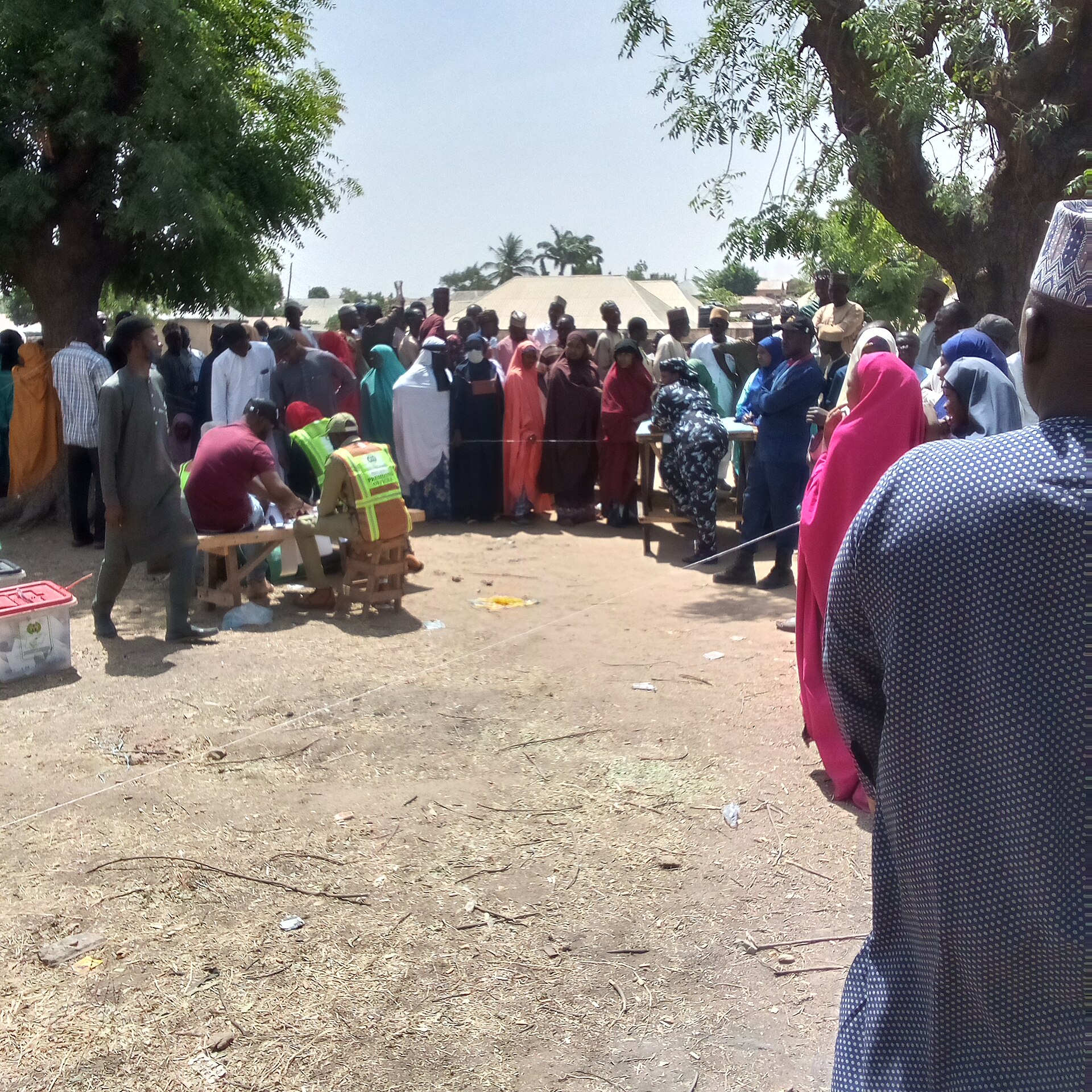
An Older Electorate Than in 2023
Voters aged 35 to 49 are now the largest group, at 41.83% of the register. Those aged 18 to 34 make up 28.79%, against 39.65% in 2023, Premium Times reported.
Voters aged 50 to 69 account for 22.22%, and those aged 70 or older for 7.16%. Men make up 51.75% of the register and women 48.25%.
INEC did not explain the fall in the youngest group’s share. The register also lists 232,658 voters with disabilities.
Where the Voters Are
Lagos, the commercial hub, has the most voters at 7,488,633, followed by Kano with 6,570,276 and Kaduna with 4,662,640. Lagos alone holds about 7% of the national register.
Ekiti, in the southwest, has the fewest, with 1,055,708. The Federal Capital Territory around Abuja has 1,772,043, according to the breakdown reported by Channels Television.
The full register equals nearly half of the country’s estimated population. Registration, however, is only the first step.
Why Turnout Is the Real Test
A large register does not mean a large vote. In 2023, INEC accredited 25.29 million of 93.47 million registered voters, about 27%, according to its declared results.
Bola Tinubu won the presidency that year with 8,794,726 votes, under a tenth of the register. He now seeks a second term for the All Progressives Congress (APC), the governing party.
INEC’s final list, published in September, contains 18 presidential candidates. They include Atiku Abubakar, a former vice-president running for the African Democratic Congress, and Peter Obi, who came third in 2023.
Only voters holding a permanent voter card, or PVC, can cast a ballot. Collection of the cards begins on Friday, 9 October, alongside a public display of the register for claims and objections.
What It Means for US Readers
Nigeria is a major oil producer and a security partner of the United States in West Africa. The January vote will decide who sets its economic and security policy for the next four years.
Investors in Nigerian eurobonds, the government’s dollar bonds, tend to price in election risk well before polling day. A disputed or delayed vote could weigh on the naira and on Lagos-listed shares.
Americans with family in Nigeria should keep the January and February dates in mind when planning travel. They should also check the US State Department’s Nigeria travel advisory before booking.
What Prediction Markets Say
On Polymarket, bettors gave Tinubu a 71.5% chance of winning the presidency at 1:42 p.m. ET on Tuesday, 6 October. Peter Obi stood at 24%, and about US$128,800 has been bet on the market in total.
Polymarket lists no contract for Atiku Abubakar, so its prices do not cover the full field. The odds reflect bettors’ views, not the size or mood of the new register.
Why we show this: prediction markets turn real-money bets into a live probability that moves within minutes of the news, which is why investors, campaigns and newsrooms in the United States now follow them closely. We show them next to polls and official results, never instead of them.
What Is Not Known
The published figures do not show how many new registrations were rejected as duplicates, or how many old entries were removed. The total could still change after the claims and objections period.
INEC’s own website still displayed the 2023 total of about 93 million on Tuesday. It is also unknown how many people will collect their voter cards before January.
What Comes Next
Voter cards become available from Friday, 9 October, and the register goes on public display for claims and objections. The presidential and parliamentary vote follows on Saturday, 16 January 2027.
Governorship and state assembly elections are set for Saturday, 6 February 2027. A bigger register does not mean a bigger turnout, and a market price is not a forecast of the result.
Frequently Asked Questions
How many registered voters does Nigeria have?
About 103.4 million, according to the electoral commission. That is about 10 million more than the 93.47 million registered for the 2023 election.
When is Nigeria’s next presidential election?
The presidential and National Assembly elections are set for Saturday, 16 January 2027. Governorship and state assembly elections follow on Saturday, 6 February 2027.
What is INEC?
The Independent National Electoral Commission is the federal body that registers voters and runs elections in Nigeria. Its chairman is Joash Amupitan, a law professor.
What is a PVC?
A permanent voter card is the card Nigerians must present to vote. Collection of new cards starts on Friday, 9 October.
Who is running for president?
INEC’s final list has 18 candidates, including President Bola Tinubu of the governing APC. Former vice-president Atiku Abubakar and Peter Obi, who came third in 2023, are also standing.
Sources: Independent National Electoral Commission (election date, statutory notices); INEC statutory notice, January 2027 elections; Voice of Nigeria (revised election timetable);Voice of Nigeria; Premium Times; Channels Television (state breakdown); TheNigeriaLawyer; Channels Television (final candidate list); Voice of Nigeria (2023 results) (all accessed 6 October 2026).
Editorial responsibility: Matthias Camenzind, Editor-in-Chief · Editorial standards · Report an error