Who Dominates Nigeria, Elites and Regions Explained

GUIDES · NIGERIA
Key Facts
- —Country Africa’s most populous nation: a federal republic of 36 states plus Abuja, the Federal Capital Territory, under the 1999 constitution.
- —Who holds power President Bola Tinubu of the All Progressives Congress (APC), in office since 29 May 2023 (as of October 2026).
- —Next test Presidential and National Assembly elections on Saturday, 16 January 2027. INEC cleared 18 presidential candidates on 12 September 2026.
- —Money Oil states receive at least 13% of natural-resource revenue under the constitution. The naira traded at ₦1,330.69 per US dollar on 9 October 2026 (Central Bank of Nigeria).
- —Who is left out In 2025, 69.6% of Nigerians lived below the World Bank’s US$4.20-a-day poverty line. Women held 4 of 107 Senate seats in January 2025 (IPU).
- —Prediction markets Polymarket gives Bola Tinubu a 72.5% chance of winning the 2027 presidential election (11 October, 3:02 a.m. ET).
Nigeria power sits with a small circle: the president, 36 state governors, the security chiefs, a few tycoons and senior faith leaders. Decisions made inside that circle shape oil output, the naira and the safety of more than 230 million people. For US investors, travellers and policymakers, it also decides who sits across the table after the January 2027 election.
This guide maps who holds power in Nigeria as of October 2026, and who is left outside. For the country’s people and languages, see our companion guide to Nigeria’s population and ethnic groups.
How Power Is Built Into the Constitution
Nigeria’s 1999 constitution creates a federal republic of 36 states, plus Abuja as the Federal Capital Territory. It gives the president, not a prime minister, command of the executive and the armed forces. Each state has an elected governor and assembly, and the country has 774 local government councils.
A winning presidential candidate needs the most votes and a quarter of the votes in two-thirds of the states and Abuja. That rule forces every serious candidate to build alliances across regions. A pure ethnic or regional campaign cannot win.
The constitution also requires government to “reflect the federal character of Nigeria”. In practice, ministers, top civil servants and military commanders are spread across the states. Critics call it a quota system, supporters a guarantee of national unity.
Oil and tax revenue flows into the Federation Account. The Federation Account Allocation Committee (FAAC), which joins the federal, state and local tiers, shares it monthly. The constitution guarantees oil-producing states at least 13% of revenue from natural resources, a rule known as derivation.
The scale is large. In June 2026, according to the National Bureau of Statistics, FAAC paid ₦818.68 billion (about US$615 million) to the federal government. States received ₦759.14 billion (about US$570 million) and local councils ₦534.28 billion (about US$400 million).
Oil-producing states took a further ₦188.13 billion (about US$141 million) as their 13% derivation share that month. All dollar values in this guide use the central bank’s rate of ₦1,330.69 per US dollar on 9 October 2026. That is why governors watch the monthly FAAC meeting so closely.
The Presidency and the Political Class
Bola Ahmed Tinubu, a former governor of Lagos State, has been president since 29 May 2023. He leads the All Progressives Congress (APC), the governing party. His running mate for 2027 is again Vice President Kashim Shettima, according to INEC’s final candidate list.
The National Assembly is led by Senate President Godswill Akpabio and Speaker Tajudeen Abbas of the House of Representatives. Both are senior APC figures at the head of the legislature that passes the president’s budgets. In early October 2026, Akpabio said the legislature would keep partnering with the Tinubu administration, Premium Times reported.
Abuja itself is run by Nyesom Wike, the Minister of the Federal Capital Territory. A former Rivers State governor, he is a senior figure in the divided opposition Peoples Democratic Party (PDP) but serves in the APC-led federal government. He backs Tinubu for 2027 and is the kind of power broker Nigerians call a godfather.
Governors are the other centre of gravity. They control state budgets, local councils and party machinery in their states. Presidential candidates court them because they can deliver delegates at primaries and turnout on election day.
For 2027, INEC’s final list shows former Vice President Atiku Abubakar, 79, running for the African Democratic Congress (ADC), an opposition coalition. His running mate is former Rivers governor Rotimi Amaechi. Peter Obi, 65, runs for the opposition Nigerian Democratic Congress (NDC) with former Kano governor Rabiu Kwankwaso.
The PDP, which governed from 1999 to 2015, has fielded Sandy Onor. Omoyele Sowore stands for the small African Action Congress (AAC). Of the 18 presidential candidates, 16 are men.
Regions, Ethnic Groups and the Zoning Deal
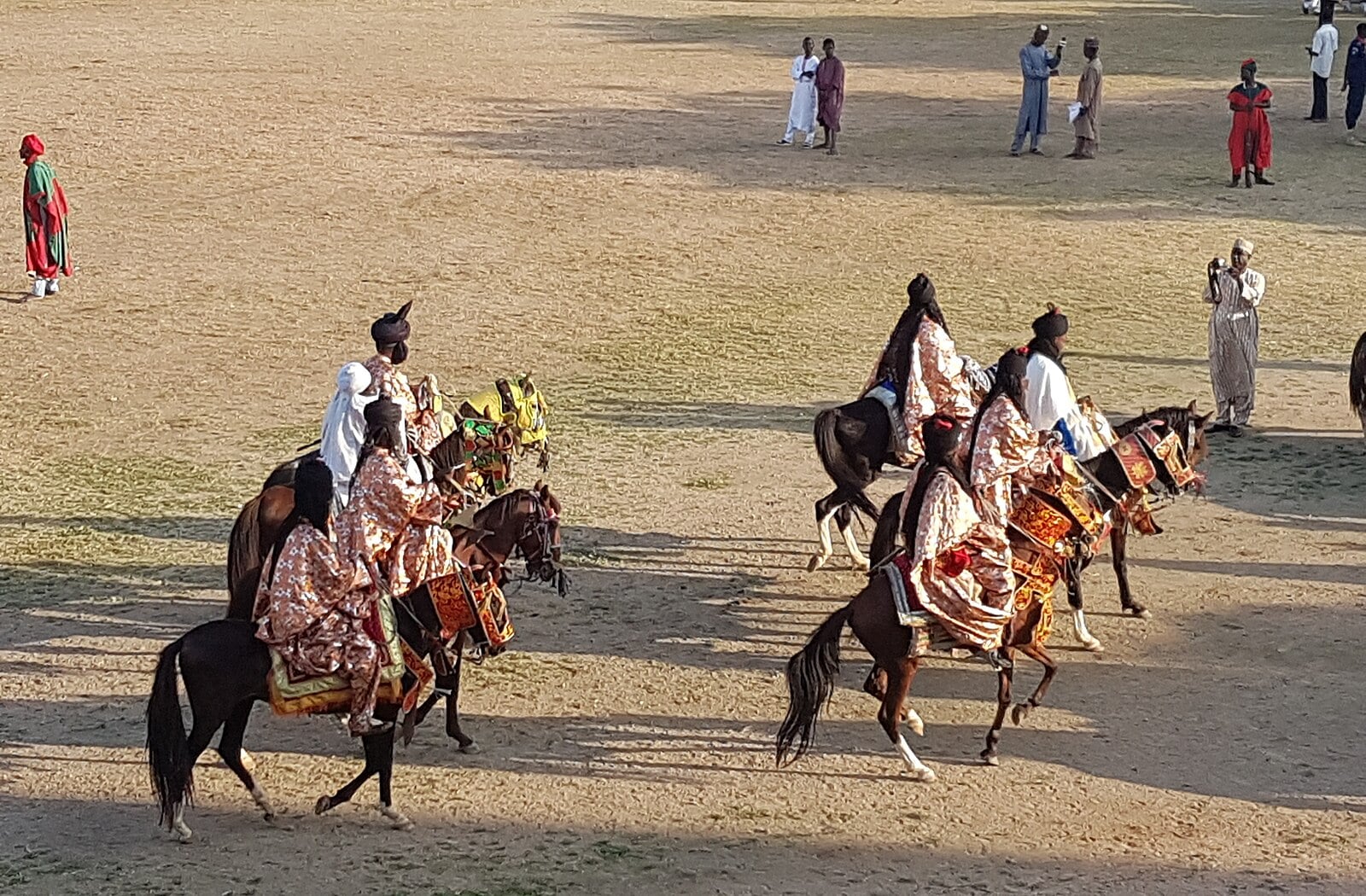
Nigeria has many ethnic groups, but three carry the most political weight. The Hausa and Fulani dominate the north-west and much of the north-east. The Yoruba lead the south-west, and the Igbo the south-east.
Politicians group the 36 states into six informal zones: north-west, north-east, north-central, south-west, south-east and south-south. The south-south holds the oil-producing Niger Delta. The north-central “Middle Belt” is home to many smaller groups and is split between Christians and Muslims.
Since the return to civilian rule in 1999, the main parties have tried to rotate the presidency between north and south, an unwritten deal called zoning. Tinubu, a Yoruba politician from the south-west, followed the late Muhammadu Buhari, a northerner. Opposition tickets for 2027 also pair northern and southern names.
In the north, emirs and the Sultan of Sokoto still carry moral authority with millions of voters.
The Military and the Security Chiefs
A coup in January 1966 ended the First Republic. A counter-coup that July led to the civil war of 1967 to 1970. Military governments ruled from 1966 to 1979 and again from the end of 1983 until 1999.
General Abdulsalami Abubakar, the last military head of state, handed power to an elected government in 1999. Retired generals have held top civilian posts ever since, including the current defence minister.
As of October 2026, the Chief of Defence Staff is General Olufemi Oluyede, and Lieutenant General Waidi Shaibu heads the army. Sunday Aneke leads the air force. Christopher Musa, a retired army general, is Minister of Defence, and Nuhu Ribadu is National Security Adviser.
Serving and retired officers were arrested in late September 2025 over an alleged plot to overthrow Tinubu. On Thursday, 3 September 2026, Musa said the plot was genuine. Suspects were on trial at a General Court Martial and the Federal High Court, he said.
The armed forces are stretched across several fronts. They fight jihadist groups in the north-east, armed gangs in the north-west and communal violence in the Middle Belt. Those campaigns give the security chiefs a direct line to the president.
Business Tycoons and the State
Nigeria’s richest people are business founders. On the Forbes Africa billionaires list of 9 March 2026, Aliko Dangote led with US$28.5 billion. Abdulsamad Rabiu, founder and chairman of BUA Group, followed with US$11.2 billion.
Mike Adenuga had US$6.5 billion on the same list, and Femi Otedola US$1.3 billion. Forbes lists Dangote’s wealth under manufacturing and Otedola’s under energy, sectors where licences and state rules matter. Dangote’s group spans cement and oil refining.
That is why business and politics are hard to separate in Nigeria. Fuel import rules and foreign-exchange policy can decide which companies win or lose. Our guide to who runs Nigeria’s economy covers the central bank, NNPC Ltd and the listed giants in detail.
Emirs, Bishops and the Pulpit
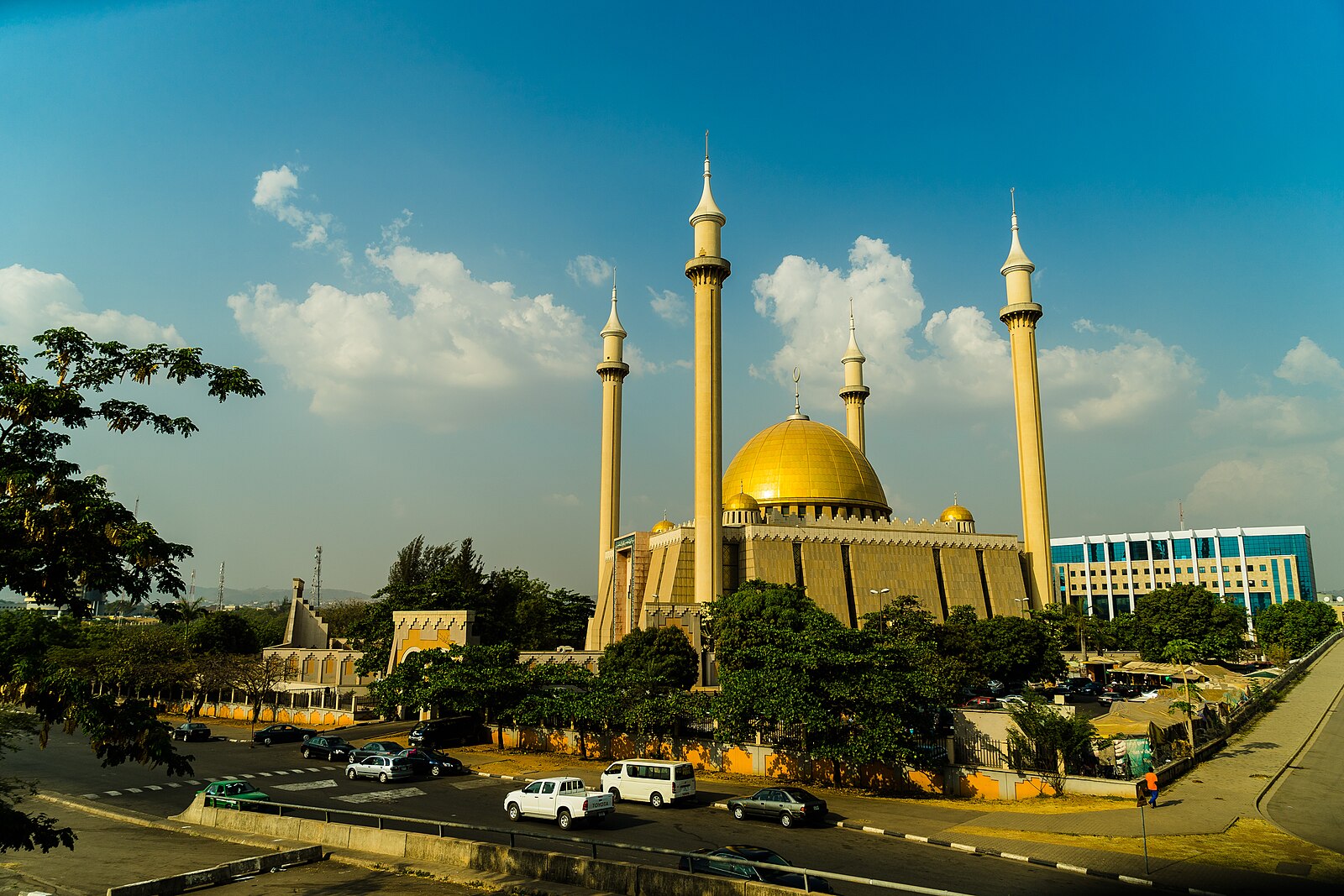
Religion is a political force in its own right. The US State Department’s religious freedom report, citing Pew Research Center estimates for 2015, puts Nigeria at about 50% Muslim and 48.1% Christian. Islam dominates the north-west and north-east, and Christianity the south-east and south-south.
The senior Muslim figure is the Sultan of Sokoto, Muhammadu Sa’ad Abubakar III. He is also President-General of the Nigeria Supreme Council for Islamic Affairs (NSCIA), the main Muslim umbrella body. In September 2026 he told politicians to avoid insults and inflammatory remarks before the 2027 vote.
The Christian Association of Nigeria (CAN), founded in 1976, speaks for most churches. Its president, Archbishop Daniel Okoh, marked CAN’s 50th anniversary on 2 October 2026 with a warning against religious and ethnic campaigning. The Sultan and Okoh co-chair the Nigeria Inter-Religious Council.
Traditional rulers, such as the emirs of the north and the Ooni of Ife in Yoruba land, hold no elected office. Candidates still seek their blessing. In late September 2026, Obi and Kwankwaso visited the Sultan in Sokoto and called for unity and security.
Unions, Workers and Who Is Left Out
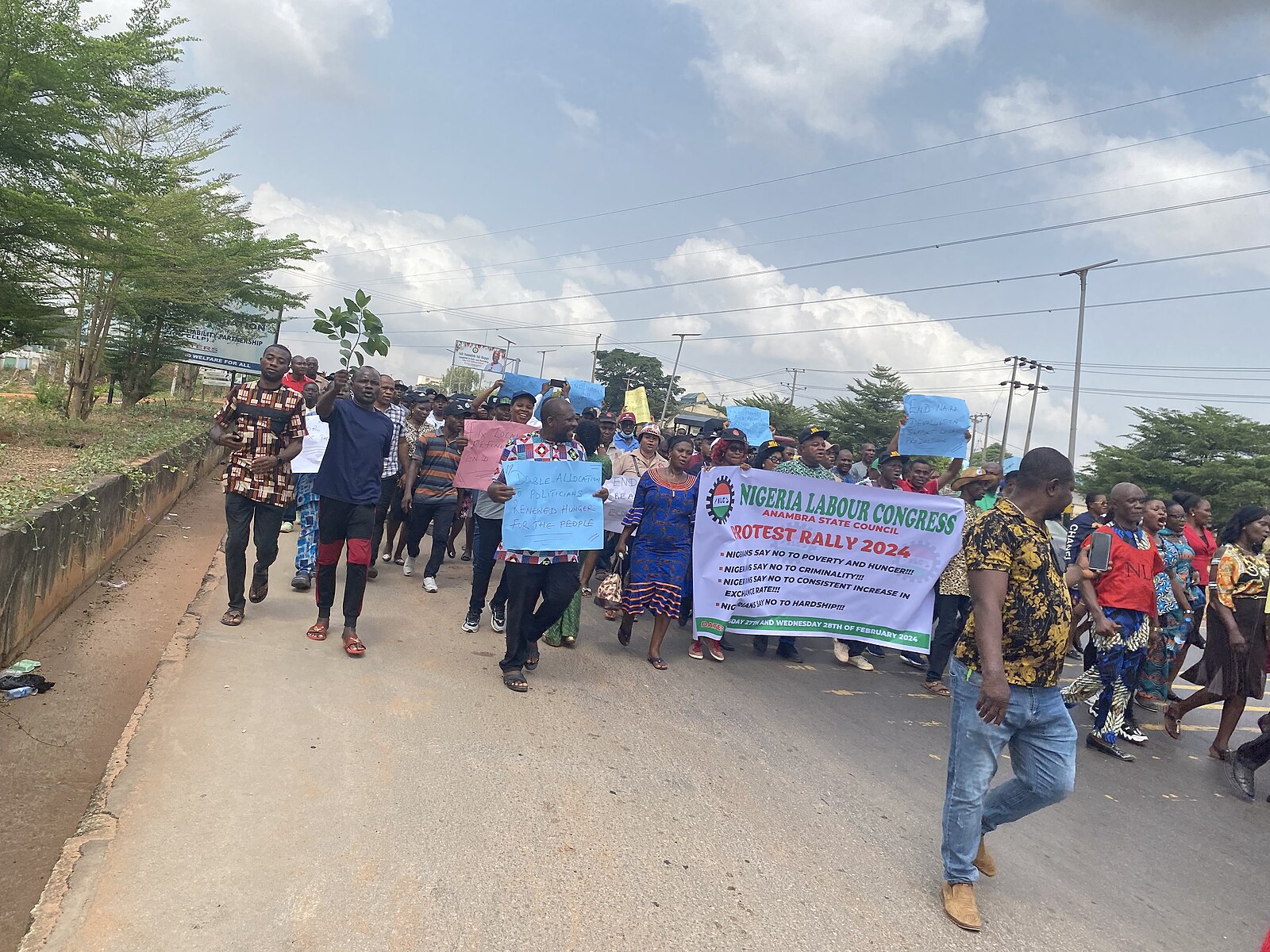
The Nigeria Labour Congress (NLC), led by Joe Ajaero, is the main national workers’ federation, able to call nationwide strikes and protests. The national minimum wage is ₦70,000 (about US$53) a month. In 2026 the NLC argues that this floor is no longer enough and wants a review.
In early October 2026, Ajaero accused the Tinubu government of failing to engage with labour. In September 2026 the NLC also urged union leaders to seek political office, so that labour can shape policy directly.
Most Nigerians sit far from all these power centres. In 2025, 69.6% of Nigerians lived below the World Bank’s US$4.20-a-day poverty line, and 123 million lived in extreme poverty. Poor households spend up to 70% of their income on food, the bank says.
Poverty has a clear map. The National Bureau of Statistics found 133 million Nigerians, or 63%, multidimensionally poor in 2022, measuring health, schooling and living standards. About 65% of them lived in the north, and 72% of rural residents were poor against 42% in towns.
Women are almost absent from the top. According to the Inter-Parliamentary Union, they held 4 of 107 sitting Senate seats and 15 of 356 House seats in January 2025. Only 2 of the 18 presidential candidates for 2027 are women.
What It Means for US Readers
Investors. Nigeria’s policy is made by a small group around the president, the central bank and a few tycoons. Watch the 16 January 2027 vote, FAAC payouts and fuel and currency rules, which move earnings at Nigerian banks and consumer firms. Our report on Fitch’s improved outlook for Nigeria tracks how rating agencies read the reforms.
Washington. The United States re-designated Nigeria a Country of Particular Concern over religious freedom in late 2025. A joint working group has met since, and security ties have deepened. Nigeria is buying 12 AH-1Z Viper attack helicopters from the United States, the US Mission said in September 2026.
Travellers and expats. The State Department rates Nigeria at Level 3, “Reconsider travel”, in an advisory issued on 12 June 2026. Several northern and southern states carry a Level 4 “Do not travel” warning. Expect extra checkpoints and rallies in the weeks before the January vote.
What Prediction Markets Say
Polymarket, a crypto-based prediction market, gives Tinubu a 72.5% chance of winning the 2027 election (11 October, 3:02 a.m. ET). Peter Obi stands at 23%. No other candidate is priced above 1%.
About US$130,000 has been traded on the market, US$82,000 of it on Tinubu’s contract. Prices have barely moved over the past month, with Tinubu down half a point. These are bets, not polls, and Atiku Abubakar does not appear among the priced candidates.
Why we show this: prediction markets turn real-money bets into a live probability that moves within minutes of the news, which is why investors, campaigns and newsrooms in the United States now follow them closely. We show them next to polls and official results, never instead of them.
What Is Not Known
Nigeria has not held a census since 2006, so the exact size and balance of its ethnic and religious groups are estimates. That gap feeds every argument about zoning, revenue and representation.
The outcome of the trials over the alleged 2025 coup plot is not known, and the government has released few details. A suit by Atiku and the ADC alleges that Tinubu submitted a forged certificate. It is pending at the Federal High Court, and Tinubu and the APC deny it.
It is also unclear whether the opposition will consolidate behind one candidate before January. How much money flows from business groups to campaigns is not disclosed in any complete public record.
Frequently Asked Questions
Who has the most power in Nigeria?
The president, Bola Tinubu of the All Progressives Congress, in office since 29 May 2023. He commands the executive and the armed forces under the 1999 constitution. The 36 state governors, the security chiefs and a few business tycoons also hold great influence.
When is Nigeria’s next presidential election?
Presidential and National Assembly elections are set for Saturday, 16 January 2027. INEC cleared 18 presidential candidates, including Tinubu, Atiku Abubakar of the ADC and Peter Obi of the NDC.
What is zoning in Nigerian politics?
Zoning is an unwritten deal under which the main parties try to rotate the presidency between the north and the south. It grew out of the return to civilian rule in 1999 and still shapes how tickets are built.
Who are the richest people in Nigeria?
On the Forbes Africa billionaires list of 9 March 2026, Aliko Dangote led with US$28.5 billion. Abdulsamad Rabiu had US$11.2 billion, Mike Adenuga US$6.5 billion and Femi Otedola US$1.3 billion.
Who heads Nigeria’s military?
As of October 2026, General Olufemi Oluyede is Chief of Defence Staff and Lieutenant General Waidi Shaibu heads the army. Christopher Musa is Minister of Defence and Nuhu Ribadu is National Security Adviser.
How poor is Nigeria?
In 2025, 69.6% of Nigerians lived below the World Bank’s US$4.20-a-day poverty line, and 123 million lived in extreme poverty. Poverty is deepest in the north and in rural areas.
Sources: Constitution of the Federal Republic of Nigeria 1999 (Constitute Project), https://www.constituteproject.org/constitution/Nigeria_2011; INEC, https://inecnigeria.org/; Central Bank of Nigeria exchange rates, https://www.cbn.gov.ng/rates/ExchRateByCurrency.html; World Bank Nigeria overview, https://www.worldbank.org/en/country/nigeria/overview; National Bureau of Statistics, MPI 2022, https://nigerianstat.gov.ng/news/78; IPU Parline, Senate, https://data.ipu.org/parliament/NG/NG-UC01/; IPU Parline, House, https://data.ipu.org/parliament/NG/NG-LC01/; US State Department religious freedom report, https://www.state.gov/reports/2023-report-on-international-religious-freedom/nigeria/; US State Department travel advisory, https://travel.state.gov/content/travel/en/traveladvisories/traveladvisories/nigeria-travel-advisory.html; Forbes Africa billionaires 2026, https://www.forbes.com/africa-billionaires/; Premium Times, INEC presidential list, https://www.premiumtimesng.com/news/headlines/909126-2027-tinubu-atiku-obi-15-others-make-inec-final-presidential-candidates-list-full-list.html; Premium Times, FAAC June 2026, https://www.premiumtimesng.com/business/business-news/912454-faac-disburses-n3-40tn-to-three-tiers-in-june-up-from-n3-18tn-in-may-nbs.html; Premium Times, coup trial, https://www.premiumtimesng.com/news/top-news/907360-coup-plot-real-suspects-now-on-trial-says-defence-minister.html; Premium Times, security council, https://www.premiumtimesng.com/news/top-news/904105-tinubu-orders-preparation-of-nigerias-five-year-security-threat-assessment-defence-plan.html; Premium Times, CAN at 50, https://www.premiumtimesng.com/news/more-news/914141-can-marks-50th-anniversary-warns-politicians-against-weaponising-religion-ethnicity-regional-sentiments.html; Premium Times, US helicopters, https://www.premiumtimesng.com/news/headlines/913427-nigeria-to-buy-12-us-attack-helicopters.html; Premium Times, Atiku suit, https://www.premiumtimesng.com/news/top-news/910161-court-orders-atiku-to-serve-tinubu-with-2027-eligibility-suit-through-apc.html (all accessed 11 October 2026).
This article was produced by The Rio Times’ automated newsroom system. How we use AI · Report an error · Editorial responsibility: Matthias Camenzind, Editor-in-Chief