
GUIDES · NIGERIA
Key Facts
- —Country A West African federal republic of 36 states plus the Federal Capital Territory, Abuja, the seat of the presidency.
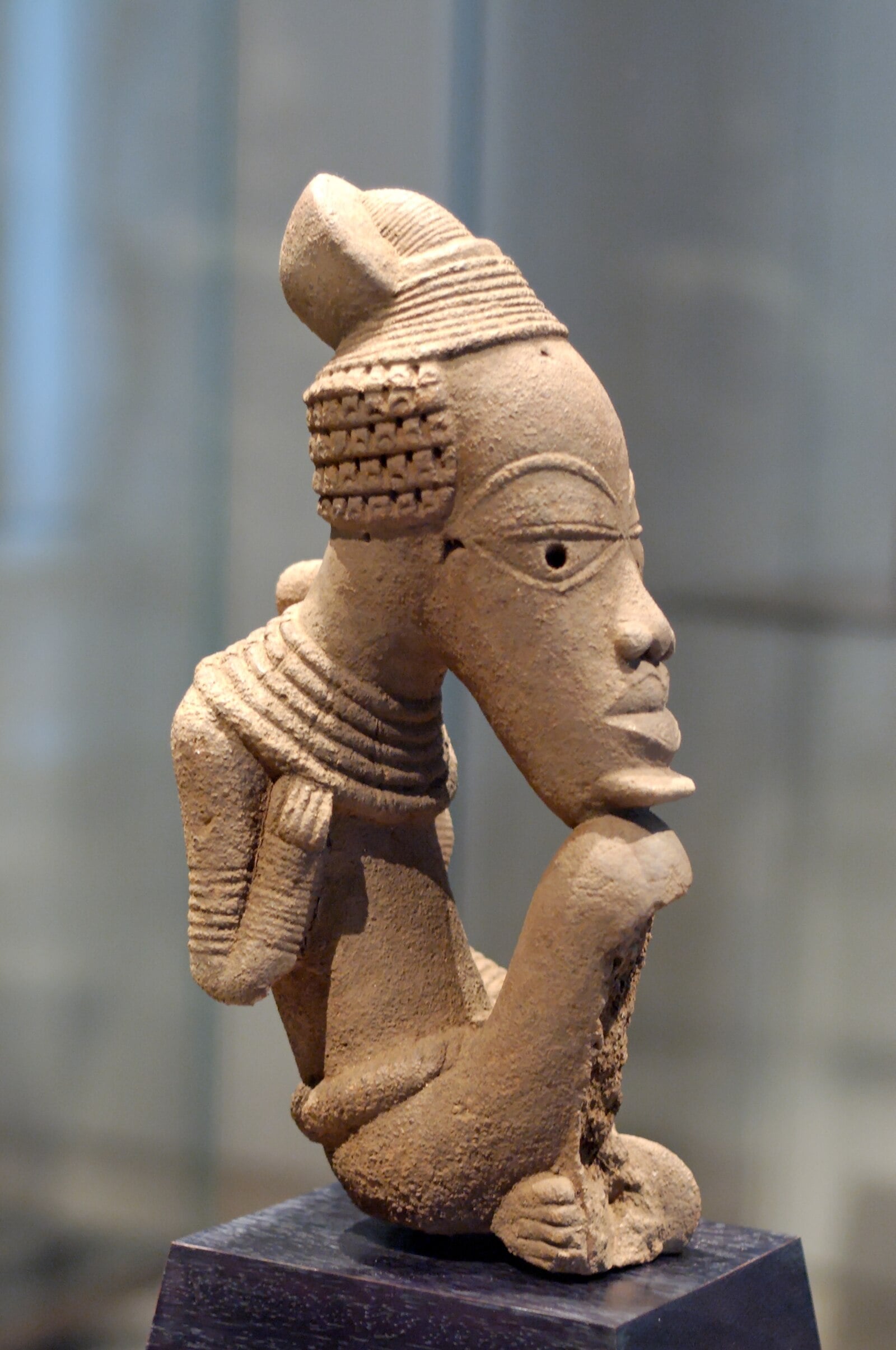
- —Deep roots Nok terracottas from about 500 BC to AD 200 are the oldest known figurative sculpture south of the Sahara (Metropolitan Museum of Art).
- —Colonial birth Britain merged its northern and southern protectorates into one Nigeria on 1 January 1914.
- —Independence 1 October 1960 from Britain; a republic from 1 October 1963. The United States recognised Nigeria on independence day.
- —Civil war Biafra declared secession on 30 May 1967; its collapse began on 24 December 1969 and ended in January 1970.
- —Democracy Civilian rule since 29 May 1999. The next presidential and National Assembly election is on Saturday 16 January 2027 (INEC).
- —Prediction markets Polymarket gives President Bola Tinubu a 73.5% chance of winning the 2027 election and Peter Obi 23.5% (12 October 2026, 10:08 a.m. ET).
Nigeria history runs from ancient sculptors and medieval kingdoms to British conquest and independence in 1960. A civil war and decades of military rule followed, then unbroken civilian rule since 1999.
For a US reader, that past explains why Nigeria’s regions bargain so hard over oil, power and the presidency. It also frames the next turning point, the presidential election of 16 January 2027.
Ancient Roots: Nok, Ife and Igbo-Ukwu
People have lived in what is now Nigeria for a very long time. Britannica notes that the oldest fossil remains, found at Iwo Eleru near Akure, date to about 9000 BC.
The Nok culture of the central plateau is the first society to leave a striking artistic record. The Metropolitan Museum of Art dates its terracotta figures to between 500 BC and AD 200.
Tin miners near the village of Nok, on the Jos Plateau, unearthed the first known head in 1943.
The Met calls Nok one of the earliest African centres of ironworking and terracotta figure production. Many questions remain open, because most pieces were dug up without a documented archaeological context.
In the south-west, Ife grew from about the sixth century as a cluster of some 13 hamlets, according to the Met. Between about 1200 and 1500 it became a flourishing centre of naturalistic bronze, terracotta and stone sculpture.
Ife matters far beyond art. Yoruba tradition treats it as the place where the world began, and Yoruba kings trace their lineage there.
Ife remains the seat of Yoruba sacred kingship. Its king, the oni, judges whether other Yoruba kings may wear beaded crowns.
In the south-east, excavations at Igbo-Ukwu revealed hundreds of ritual vessels and regalia cast in bronze or leaded bronze. The Met says they may date to as early as the ninth century, though that date remains disputed.
Their makers are seen as forebears of the Igbo people.
Kingdoms, Caliphates and City-States
Long before Britain drew Nigeria’s borders, the region held several powerful states. In the north-east, Arabic writers first noted Kanem in the ninth century.
Muslims gained a foothold in its ruling family in the 11th century. By the 12th century its rulers had moved west of Lake Chad, where Borno became dominant.
Further west lay the Hausa states, including Daura, Katsina, Kano, Zaria and Gobir. Britannica records that Islam reached them from the Mali empire in the 14th century.
In the south-west, the Yoruba kingdom of Oyo was founded in the 14th century. By the 17th century its cavalry dominated western Yorubaland.
Its later collapse set off Yoruba wars that lasted until 1886.
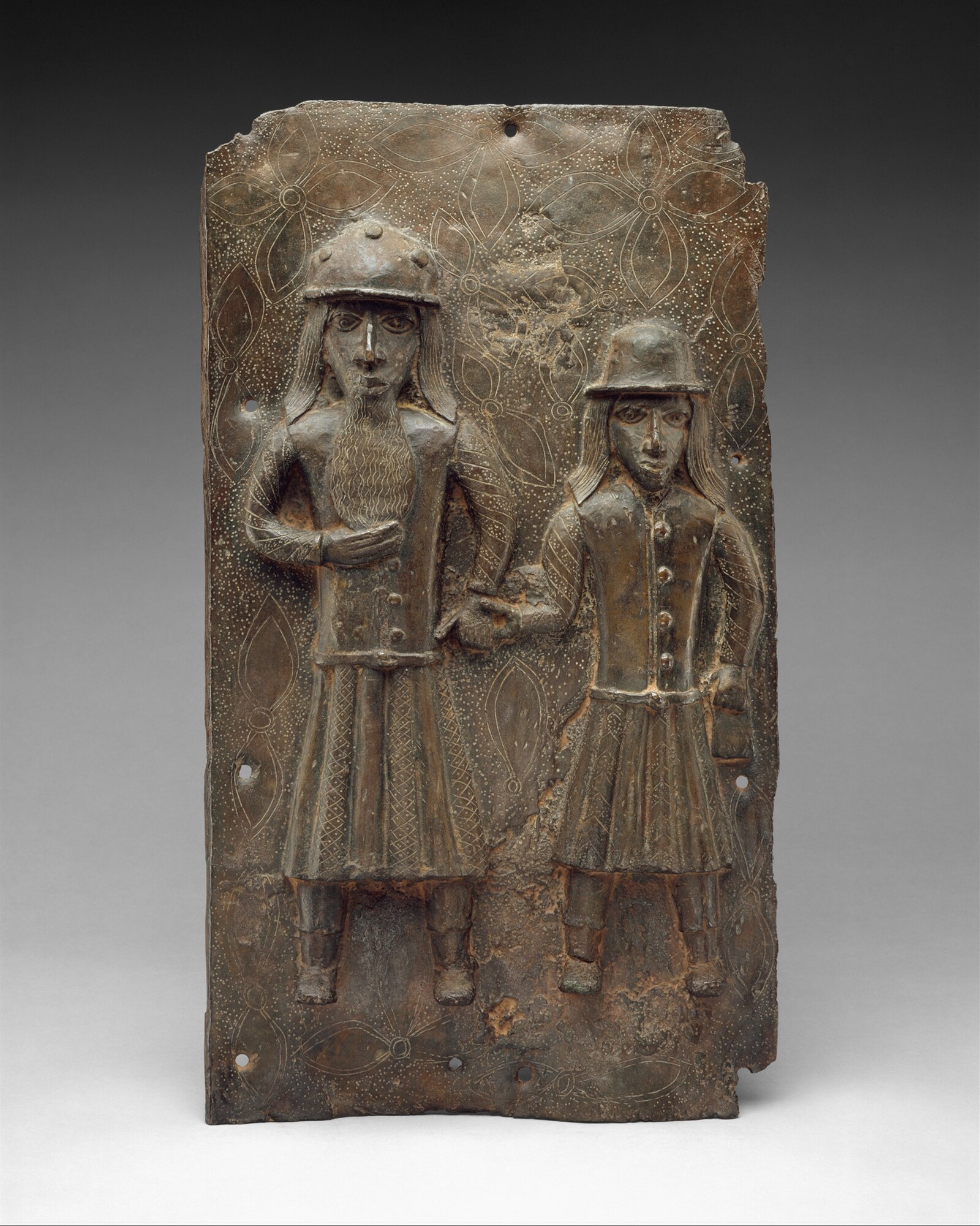
The British Museum describes the Kingdom of Benin as a major West African city state from the medieval period. Its famous brass and bronze works were made from at least the 1500s.
The Portuguese arrived in the 15th century and traded with its kings.
In 1804 the Muslim scholar Usman dan Fodio called his followers to rise against rulers he judged unjust. The jihad that followed created a caliphate with its seat at the new town of Sokoto.
When Usman died in 1817, Muhammad Bello succeeded him as leader of the faithful.
UNESCO’s World Heritage list reflects this long past. Sukur, a hilltop settlement in Adamawa State, was inscribed in 1999.
Its recorded history of iron smelting reaches back to the 16th century.
The Slave Trade and the Arrival of the British
The Atlantic slave trade reshaped the coast. At its height in the 17th and 18th centuries, the city-states of the Niger Delta were principal outlets for captives, Britannica notes.
Britain moved in step by step. It shelled Lagos in 1851 and annexed it in 1861.
Trade on the Niger fell under the Royal Niger Company, chartered in 1886. The company’s charter was revoked on 1 January 1900, and Britain ruled the north and south as two protectorates.
Conquest followed. In January 1897 a British trade mission on its way to Benin City was attacked.
A British force captured the city in February, partly burned the Oba’s palace and sent the Oba into exile. Thousands of objects were taken, including more than 900 brass plaques, the British Museum says.
In the north, British forces completed the conquest of the Sokoto emirates by 1903. The looted Benin works remain a live diplomatic issue.
In October 2021, Nigeria formally asked the British Museum to return Nigerian antiquities, and the museum says it remains open to discussion.
One Colony From Many Peoples, 1914 to 1960
On 1 January 1914, following the recommendations of Sir Frederick Lugard, Britain amalgamated its northern and southern protectorates. The merger joined the conquered emirates of the north with the coastal and forest south.
That union, made for British convenience, still shapes Nigerian politics.
Britain ruled the north largely through existing emirs and chiefs, a system known as indirect rule. In 1922 a new legislative council included elected members from Lagos and Calabar.
In 1923 Herbert Macaulay founded the first Nigerian political party.
Nationalism grew in the 1930s and 1940s. The Nigerian Youth Movement emerged in 1934.
In 1944 Macaulay joined Nnamdi Azikiwe, an Igbo nationalist educated in the United States, in a new party, the NCNC. Azikiwe led it after Macaulay’s death in 1946.
Constitutions came quickly after the Second World War, starting with a more representative system in 1946. The Macpherson constitution of 1951 created a central House of Representatives.
The Lyttelton constitution of 1954 set up a fully federal system.
The Western and Eastern regions gained internal self-government in 1957. The Northern region, at its own request, followed in 1959.
Abubakar Tafawa Balewa, a northerner, had been prime minister since 1957 and led Nigeria to independence on 1 October 1960.
Independence, Coups and the Civil War
Washington recognised the Federation of Nigeria on 1 October 1960, and an American embassy opened in Lagos that day. The source is the State Department’s Office of the Historian.
President Dwight Eisenhower’s congratulatory letter reached Balewa on 2 October.
Nigeria became a republic on 1 October 1963. Regional rivalries, disputed elections and a contested census strained the young federation.
Britannica calls January 1966, when army officers staged the first coup, the point of no return.
In July 1966 northern officers staged a countercoup. The military head of state, General Johnson Aguiyi-Ironsi, was assassinated, and Yakubu Gowon came to power.
On 30 May 1967 the eastern leader Chukwuemeka Odumegwu Ojukwu declared the secession of the east as the Republic of Biafra. Fighting began in early July 1967.
The war ended after Biafra’s final collapse began on 24 December 1969 and Ojukwu fled to Côte d’Ivoire on 11 January 1970.
The war’s human toll was enormous, and estimates of the dead still vary widely. Its memory still shapes politics in the south-east.
Oil, Soldiers and the Long Wait for Democracy
An oil boom transformed the state in the 1970s. Gowon was overthrown in July 1975 and fled to Britain.
His successor, General Murtala Mohammed, was assassinated in February 1976 during a failed coup attempt.
General Olusegun Obasanjo, head of state from 1976 to 1979, handed power to an elected government. Shehu Shagari of the National Party of Nigeria narrowly won the 1979 presidential election, opening the Second Republic.
The military seized power again on 31 December 1983.
General Ibrahim Babangida took over in a bloodless coup in August 1985 and promised a return to civilian rule. On 12 June 1993, Moshood Abiola of the Social Democratic Party won the presidential election, Premium Times recalls.
He beat Bashir Tofa of the National Republican Convention. Babangida’s junta annulled the result.
Protest forced Babangida out in August 1993, and General Sani Abacha seized power in November. Abiola was arrested in June 1994 and died in detention in 1998.
Abacha’s sudden death in June 1998 opened the door to elections in early 1999.
The State Department sums up the era plainly: from 1966 to 1999, Nigeria experienced a series of military coups. The only break was the Second Republic of 1979 to 1983.
Nigeria now marks 12 June, the date of the annulled 1993 vote, as Democracy Day.
The Fourth Republic, 1999 to 2026
Obasanjo, by then a civilian, was sworn in on 29 May 1999 and re-elected in 2003. The period since is called the Fourth Republic, the longest stretch of civilian rule in Nigeria’s history.
In the Niger Delta, the oil-producing south, local protests evolved into coordinated militant action in 2006. The government introduced an amnesty programme for militants in 2009.
Umaru Musa Yar’Adua won the disputed 2007 election, and Goodluck Jonathan succeeded him. In those years the Islamist group Boko Haram rose in the north-east.
The US State Department still advises Americans not to travel to Borno, Yobe and northern Adamawa states.
Muhammadu Buhari served two elected terms from 2015 to 2023. Bola Ahmed Tinubu of the All Progressives Congress (APC), the governing party, was elected president on 25 February 2023.
His vice-president is Kashim Shettima.
How the Past Shapes Nigeria Now
Three legacies stand out. The first is the 1914 merger.
Politicians still weigh north against south when they build national tickets and cabinets.
The second is federalism and oil. The regional rivalries of the 1950s and 1960s did not end with the war.
They returned as disputes over how oil revenue is shared, which fed the unrest in the delta.
The third is the memory of military rule. Democracy Day, the delta amnesty and a steady election calendar all aim to keep the army out of politics.
Civilian rule has now lasted without a break since 29 May 1999.
What It Means for US Readers
For investors, Nigerian history explains the risks behind the headlines. Regions bargain over oil money, insecurity persists in the north-east, and policy can swing with each new government.
Two-way US trade in goods with Nigeria topped US$8.1 billion in 2022, according to the State Department.
For travellers, history is visible in Lagos, Benin City, Kano and Ife, from palaces to city walls. The State Department issued its Nigeria advisory at Level 3, “Reconsider travel”, on 12 June 2026.
Check it before you go.
For anyone following the 2027 vote, the past sets the stakes. INEC, the electoral commission, has set the presidential and National Assembly elections for 16 January 2027.
Governorship and state assembly elections follow on 6 February 2027.
Connected Coverage
Who Is Bola Tinubu? Nigeria’s President, His Reforms and the 2027 Race Explained
Who Dominates Nigeria, Elites and Regions Explained
Nigeria Population and Ethnic Groups Explained
Nigeria Geopolitics Explained 2026
What Prediction Markets Say
On Polymarket, a real-money prediction platform, traders gave Tinubu a 73.5% chance of winning in 2027. That price was taken on 12 October 2026 at 10:08 a.m. ET.
Peter Obi stood at 23.5%, and no other contract was above 1%.
The market had traded about US$130,000 in total volume, most of it on the Tinubu contract. These are bets, not polls.
The market has no contract for Atiku Abubakar, the ADC candidate. It also still lists names that are not on INEC’s final presidential list.
Why we show this: prediction markets turn real-money bets into a live probability that moves within minutes of the news, which is why investors, campaigns and newsrooms in the United States now follow them closely. We show them next to polls and official results, never instead of them.
What Is Not Known
Nobody knows exactly how many people died in the civil war of 1967 to 1970. Estimates differ widely, and no full official count exists.
The age and meaning of much early art is still uncertain. The Nok and Igbo-Ukwu dates rest on limited excavations, and many Nok pieces were removed without records.
The outcome of the 16 January 2027 election is open. INEC has published 18 presidential candidates, and the turnout and the shape of any run-off are unknown.
Frequently Asked Questions
When did Nigeria become independent?
Nigeria became independent from Britain on 1 October 1960 and became a republic on 1 October 1963. The United States recognised it on independence day.
Who created Nigeria as one country?
Britain did. On 1 January 1914, following the recommendations of Sir Frederick Lugard, it merged its northern and southern protectorates into one colony.
What was the Biafran war?
It was Nigeria’s civil war. The Eastern region declared itself the Republic of Biafra on 30 May 1967, fighting began in July, and Biafra collapsed in January 1970.
How long was Nigeria under military rule?
Soldiers ruled from the first coup in January 1966 until 29 May 1999, except for the civilian Second Republic of 1979 to 1983.
Why is 12 June Democracy Day in Nigeria?
It marks the presidential election of 12 June 1993, won by Moshood Abiola and annulled by the military government of Ibrahim Babangida.
When is the next presidential election in Nigeria?
INEC has fixed the presidential and National Assembly elections for Saturday 16 January 2027, with governorship and state assembly elections on 6 February 2027.
Sources: Metropolitan Museum of Art, Nok Terracottas; Metropolitan Museum of Art, Ife; Metropolitan Museum of Art, Igbo-Ukwu; UNESCO, Sukur World Heritage Site; British Museum, Benin Bronzes; Britannica, Nigeria: History; Britannica, The Sokoto Jihad; Britannica, The Arrival of the British; Britannica, Nigeria as a Colony; Britannica, Independent Nigeria; Britannica, Military Regimes 1983 to 1999; US State Department, Office of the Historian, Nigeria; US State Department, US Relations With Nigeria; US State Department, Nigeria Travel Advisory; INEC, Election Calendar; INEC, 2027 Presidential Final List of Candidates; State House, Abuja; Premium Times, 32 years later, IBB regrets annulling 1993 presidential election; Premium Times, Democracy Day 2026. All accessed 12 October 2026.
Editorial responsibility: Matthias Camenzind, Editor-in-Chief · Editorial standards · Report an error
Part of our ongoing coverage
Africa: The New Scramble — the great-power contest over the continent.
Expat Guide to Nigeria
What The Rio Times publishes for foreigners who live in or move to Nigeria.
Start here
- Davido Lagos Residency Books Three National Theatre Nights in Nigeria
- Nigeria Visa and Residency: US$2,000 Residence Card, US$15 Daily Fine for Overstaying
- Healthcare in Nigeria for expats and what it actually costs
- Taxes in Nigeria for Expats Under the New Regime
City guides
Coming up in Nigeria
- What to Do in Lagos in October 2026 12 Oct
- Felabration Lagos: Fela Kuti's Birthday Week Is Set for 12-18 October at the Afrika Shrine 12 Oct
- Dave Lagos Concert Set for 16 and 17 October 17 Oct
- Lagos Church Opens Free Camp Meeting on 21 October 2026 21 Oct
Understand Nigeria