MOROCCO · REGIONS
Morocco runs on twelve regions, and three of them generate more than 58 per cent of the national economy. The rest of the country, from the Atlas oases to the Atlantic desert coast, shares the other 41.6 per cent.
This guide explains the 12 regions, their main cities and the 75 provinces and prefectures inside them. It also covers the regional economy, the status of Western Sahara and what the map means for a foreigner choosing where to live or travel.
Most population and economic figures come from the High Commission for Planning (HCP), Morocco’s official statistics office. The 2024 census counted 36,828,330 people on 1 September 2024.
Key Facts
- What Morocco has 12 regions, set by a February 2015 decree, and 75 provinces and prefectures.
- People The 2024 census counted 36,828,330 residents; Casablanca-Settat alone has 7,688,967, or 20.9%.
- Money Three regions produced 58.4% of national output in 2024: Casablanca-Settat, Rabat-Salé-Kénitra and Tanger-Tétouan-Al Hoceima.
- Western Sahara The UN lists it as non-self-governing; Morocco administers its main southern regions and claims sovereignty.
- For you US citizens need no visa up to 90 days; the US travel advisory is Level 2.
Morocco has twelve regions, each with a capital, a regional council and its own economy. Casablanca-Settat leads, while the southern regions are the smallest and the most politically sensitive.
How Morocco Got Its Twelve Regions
Until 2015 Morocco had sixteen regions. A decree of 20 February 2015 redrew the map to twelve larger ones, as part of what the government calls advanced regionalisation, a drive to give regions more power.
Organic law 111-14 on regions (a law that carries out the constitution), adopted in 2015, gave each region an elected council and a president. Provinces and prefectures sit below the regions, and each region is made up of several of them.
The 2024 census tables use these same twelve regions. The list below follows those tables.
The 12 Regions and Their Main Cities
The list below gives each region’s 2024 census population from the HCP, its regional capital and its largest or best-known provinces and prefectures. A prefecture is a mainly urban unit, while a province mixes towns and countryside.
- Tanger-Tétouan-Al Hoceima: 4,030,222 residents. Capital: Tangier. Main units: Tanger-Assilah prefecture (1,494,413), Tétouan (611,928), Larache, Al Hoceima and Chefchaouen.
- Oriental: 2,294,665 residents. Capital: Oujda. Main units: Oujda-Angad prefecture (572,454), Nador (565,987) and Berkane.
- Fès-Meknès: 4,467,911 residents. Capital: Fès. Main units: Fès prefecture (1,256,172), Meknès prefecture (942,945) and Ifrane.
- Rabat-Salé-Kénitra: 5,132,639 residents. Capital: Rabat. Main units: Kénitra (1,284,247), Salé (1,089,554), Skhirate-Témara (783,475) and Rabat prefecture (515,619).
- Béni Mellal-Khénifra: 2,525,801 residents. Capital: Béni Mellal. Main units: Béni Mellal (580,327), Khouribga (525,145), Azilal and Khénifra.
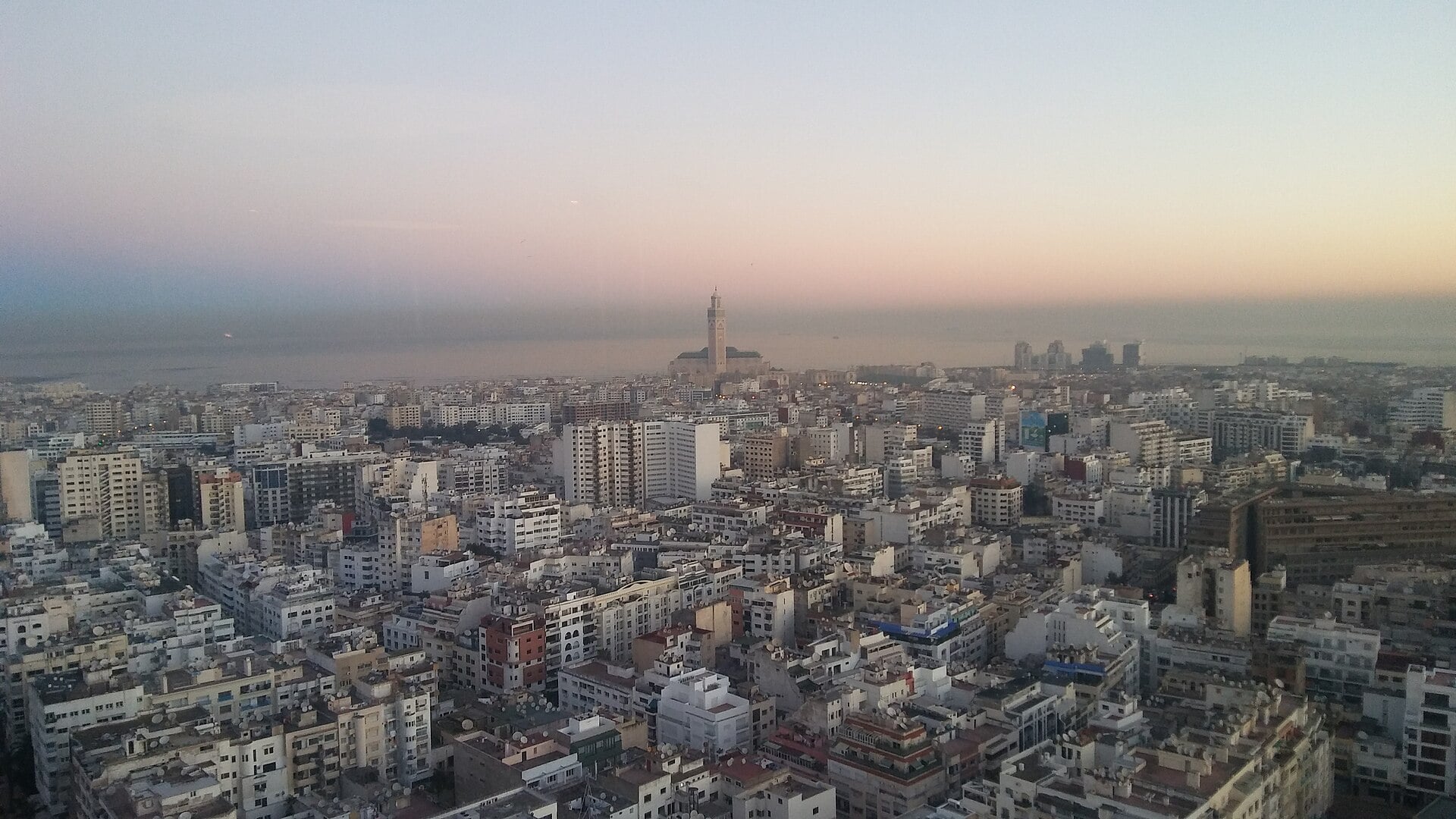
- Casablanca-Settat: 7,688,967 residents. Capital: Casablanca. Main units: Casablanca prefecture (3,218,036), El Jadida (914,367), Settat and Mohammedia.
- Marrakech-Safi: 4,892,393 residents. Capital: Marrakech. Main units: Marrakech prefecture (1,571,580), Safi (719,671), Essaouira and Al Haouz.
- Drâa-Tafilalet: 1,655,623 residents. Capital: Errachidia. Main units: Errachidia (427,572), Ouarzazate, Zagora, Tinghir and Midelt.
- Souss-Massa: 3,020,431 residents. Capital: Agadir. Main units: Taroudannt (858,162), Agadir-Ida-Ou-Tanane prefecture (721,431), Inezgane-Aït Melloul prefecture (636,916) and Tiznit.
- Guelmim-Oued Noun: 448,685 residents. Capital: Guelmim. Main units: Guelmim (196,267), Sidi Ifni, Tan-Tan and Assa-Zag.
- Laâyoune-Sakia El Hamra: 451,028 residents. Capital: Laâyoune. Main units: Laâyoune (295,555), Es-Semara, Boujdour and Tarfaya.
- Dakhla-Oued Ed-Dahab: 219,965 residents. Capital: Dakhla. Main units: Oued Ed-Dahab (195,467) and Aousserd.
The 12 regions hold 13 prefectures and 62 provinces, 75 units in all, according to the HCP census tables. Five regions hold 71.2% of the population: Casablanca-Settat, Rabat-Salé-Kénitra, Marrakech-Safi, Fès-Meknès and Tanger-Tétouan-Al Hoceima.
Where the Money Is: Regional Economy
The HCP’s regional accounts for 2024, published in July 2026, show a tight concentration of wealth. Casablanca-Settat produced 32.3% of national gross domestic product (GDP, the value of everything the economy makes), Rabat-Salé-Kénitra 15.5% and Tanger-Tétouan-Al Hoceima 10.7%.
Five middle regions share 33.8%: Marrakech-Safi 8.7%, Fès-Meknès 8.2%, Souss-Massa 6.6%, Béni Mellal-Khénifra 5.3% and Oriental 5.1%. Drâa-Tafilalet contributes 3% and the three southern regions together 4.8%.
Casablanca-Settat leads in heavy activity, with 36.5% of its output from what the HCP calls secondary activities (manufacturing, mining, energy, water and construction), against 25.6% nationally. Tanger-Tétouan-Al Hoceima follows at 33.7%, and the two regions together supply 59.9% of the sector’s national value added.
Farming and fishing matter most in Fès-Meknès, at 24.6% of regional output, then Drâa-Tafilalet at 19.3%, Dakhla-Oued Ed-Dahab at 17.3% and Souss-Massa at 17.1%. Casablanca-Settat has the smallest farm share of output, 3.7%.
Growth in 2024 was fastest in Laâyoune-Sakia El Hamra at 7.6%, Dakhla-Oued Ed-Dahab at 7% and Souss-Massa at 6.8%, against a national 4.4%. Casablanca-Settat grew 4.3% and Rabat-Salé-Kénitra 3.5%, both below the national pace.
Output per head tells a different story from total output. Dakhla-Oued Ed-Dahab led at 92,904 dirhams (about US$9,300), ahead of Laâyoune-Sakia El Hamra and Casablanca-Settat, while Marrakech-Safi was lowest at 28,692 dirhams (about US$2,900), the HCP reports.
The HCP also says the gap between regions widened slightly in 2024. The average absolute gap in regional GDP rose from 83.6 billion dirhams (about US$8.4 billion) to 90.9 billion dirhams (about US$9.1 billion).
Dollar values use the market rate of 9.97 dirhams per US dollar on 17 November 2026, applied to the 2024 figures. The HCP figures are semi-final estimates, so we round the dollar values.
Western Sahara: How the Map Treats It
Western Sahara is a territory on Africa’s Atlantic coast that Morocco and the Polisario Front, the Sahrawi independence movement, both claim. The United Nations lists it as a non-self-governing territory, which means its final status has not been settled.
Morocco says the territory is part of the kingdom and offers an autonomy plan under Moroccan sovereignty, which it presented to the UN in 2007. The Polisario Front, which proclaimed the Sahrawi Arab Democratic Republic, calls for a referendum on self-determination.
The United States has recognised Moroccan sovereignty since a presidential proclamation of December 2020. The UN still lists the territory as non-self-governing, and UN Security Council members are divided on the issue.
The UN peacekeeping mission, MINURSO (the UN Mission for the Referendum in Western Sahara), was extended in October 2025 until 31 October 2026. On Friday 30 October 2026 the Security Council did not adopt either draft to renew it, and a Russian no vote blocked the US text.
Morocco administers the regions of Laâyoune-Sakia El Hamra and Dakhla-Oued Ed-Dahab, which together held 670,993 people in the 2024 census. The HCP groups them with Guelmim-Oued Noun as the “Southern Provinces”, with 1,119,678 residents, or about 3% of the national total.
Those regional borders are Moroccan administrative lines that overlap largely, though not entirely, with the territory, and the UN does not treat them as settling its status. Our Western Sahara explainer covers what changed after the mission lapsed.
Reading the Map as an Expat
Choose a region by the work or lifestyle you need, not by the map alone. Casablanca-Settat is the business hub, with the biggest city and the largest share of industry and services.
Rabat-Salé-Kénitra holds the capital, the royal institutions and the foreign embassies, and our Rabat city guide explains daily life there. Marrakech-Safi is the tourism and hospitality centre, with the lowest output per head of any region.
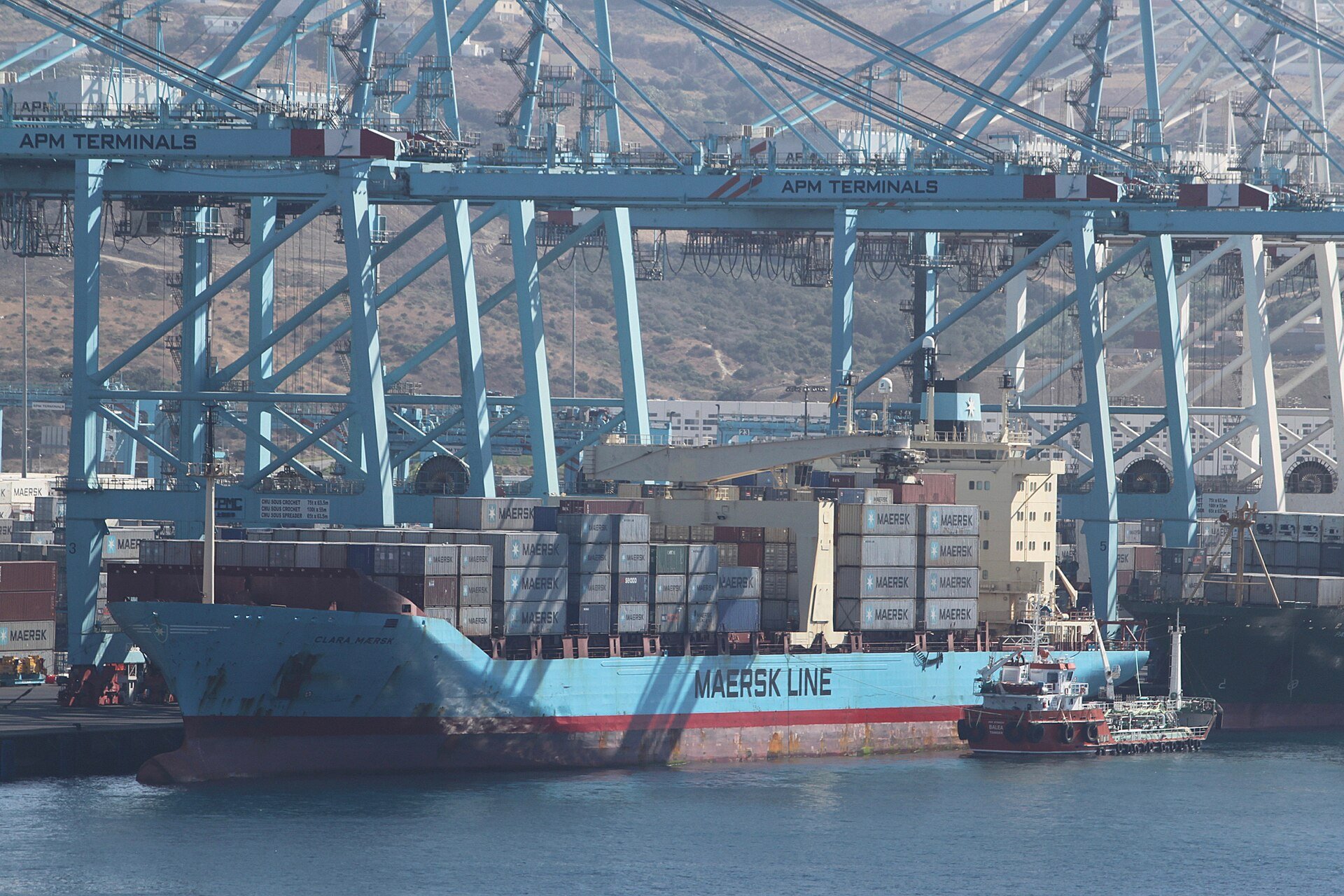
Tanger-Tétouan-Al Hoceima faces Spain across the Strait of Gibraltar and is home to a major port complex, so it suits logistics and export work. Souss-Massa, around Agadir, combines a mild Atlantic climate with the farming and fishing economy.
The US State Department rates Morocco Level 2, exercise increased caution, because of terrorism risk, in an advisory dated 4 September 2026. Its Morocco country page says US citizens need no visa for stays of 90 days or less.
For travel ideas, see our Morocco winter travel guide, and for the power behind the map, read how elites and regions shape the country. More coverage sits on the Rio Times Morocco page.
What We Do Not Know
We could not read the Official Gazette text of the 2015 decree, so the capitals above are cross-checked from the regional and census tables rather than the decree itself. Regional figures for 2024 are semi-final estimates, and the HCP may revise them.
The status of Western Sahara remains open. Morocco, the Polisario Front and the UN Security Council members hold different positions, and no agreed settlement exists.
How UN activity in the territory will be organised after the mission’s mandate lapsed on 31 October 2026 is not yet clear.
Frequently Asked Questions
How many regions does Morocco have?
Morocco has 12 regions, set by a decree of 20 February 2015 under the regionalisation reform. They are split into 75 prefectures and provinces: 13 prefectures and 62 provinces in the 2024 census tables.
What is the biggest region of Morocco?
Casablanca-Settat is the biggest by people and by economy. It counted 7,688,967 residents in the 2024 census and produced 32.3% of national output in 2024.
What is the difference between a province and a prefecture in Morocco?
A prefecture covers a mainly urban area, such as Casablanca or Rabat, while a province covers a larger mix of towns and countryside. Both sit inside a region and are listed together in the census.
Is Western Sahara part of Morocco?
Morocco says yes and administers much of the territory. The UN lists Western Sahara as a non-self-governing territory, the Polisario Front demands a self-determination vote, and the United States has recognised Moroccan sovereignty since December 2020.
Which Moroccan region is best for expats?
It depends on the need. Casablanca-Settat suits business, Rabat-Salé-Kénitra suits government and embassy work, Marrakech-Safi suits tourism and Souss-Massa suits a mild coastal life.
Do US citizens need a visa for Morocco?
The State Department says US citizens need no visa for tourist stays of up to 90 days. Check passport rules and the current advisory on travel.state.gov before booking.
Sources: High Commission for Planning (HCP), legal population, 2024 census; HCP, regional accounts for 2024; HCP, Southern Provinces demographic note, September 2025; United Nations, list of non-self-governing territories; US State Department, Morocco travel advisory, 4 September 2026.
This article was produced by The Rio Times’ automated AI newsroom. Editorial responsibility: Matthias Camenzind, Publisher and Editor-in-Chief. The Rio Times also runs Ask Rio Times, which answers from 100,000+ of our own articles, the daily Latin America Power Map, and prediction-market odds on elections and markets.. How we use AI · Report an error
Expat Guide to Morocco
What The Rio Times publishes for foreigners who live in or move to Morocco.
Start here
- Cost of Living in Morocco in 2026
- Is Morocco Safe? Level 2 Advisory, Violent Crime Down 10%
- Best Places to Live in Morocco for Expats 2026, Ranked
- Renting in Morocco 2026: Leases, Deposits and Rents
City guides
Coming up in Morocco
- What to Do in Marrakech in November 2026 20 Nov
- Manal Plays Casablanca on 21 November 2026 21 Nov
- Visa For Music Rabat Returns for 13th Edition, 18 to 21 November 21 Nov
- Zamane Festival Runs 3 to 6 December in M'Hamid El Ghizlane 3 Dec
Understand Morocco