Who Dominates Morocco, Elites and Regions Explained

GUIDES · MOROCCO
Key Facts
- —The country A North African kingdom of 36.8 million people (2024 census), and a US free trade partner since 2006.
- —Who rules King Mohammed VI, on the throne since 1999. Under the 2011 constitution he commands the armed forces and is Commander of the Faithful, the top religious authority.
- —The government Fatima Ezzahra El Mansouri of the Authenticity and Modernity Party (PAM), appointed on 29 September 2026. On 12 October she announced a four-party majority of 207 of 395 seats.
- —The money The royal holding Al Mada is the main shareholder of Attijariwafa bank. Morocco holds 50 of the world’s 73 billion tonnes of phosphate reserves, per the US Geological Survey (2026).
- —Inequality A Gini index of 40.5 in 2022, back to the level of the 2000s, according to the High Commission for Planning (HCP). The richest fifth of households accounts for 48.1% of consumption.
- —Prediction markets Polymarket gives a 90.6% chance that Aziz Akhannouch is out as head of government by 31 December 2026 (13 October, 8:57 a.m. ET).
Morocco power sits in two layers: a palace that keeps the army, religion and strategy, and elected parties that run day-to-day government. As of October 2026 the elected layer is changing hands, with a new head of government still naming her cabinet.
For US investors and visitors, knowing which layer decides what is the key to reading the kingdom.
This guide maps the people and institutions behind both layers: the King and his advisers, the generals and police chiefs, the business groups, the mosques, the unions and the regions. It also sets out who is left out, using official data on inequality, poverty and language.
Parties and ministries are covered in more detail in a separate politics explainer linked below.
The Palace and the Makhzen at the Top
King Mohammed VI has reigned since July 1999, when he succeeded his father, Hassan II. The 2011 constitution, adopted after the Arab Spring protests, makes him head of state and “supreme arbiter” between institutions (Article 42).
It also makes him supreme head of the Royal Armed Forces (Article 53).
Moroccans use the word makhzen for the palace establishment: the royal court, its advisers and the senior officials the King appoints. The word originally meant a storehouse, and the royal palace in Fez is still called Dar al-Makhzen.
In practice the makhzen is less a fixed group than a chain of appointments that runs from the palace to every province.
That chain is written into the constitution. Article 49 lets the Council of Ministers, which the King chairs, decide on the central bank governor, ambassadors, regional walis and provincial governors.
The same article covers the heads of internal security and of strategic state companies.
The best-known royal adviser is Fouad Ali El Himma. On 12 October 2026 Le Monde called him a very influential adviser who has known the King since the royal college.
He also founded PAM, the party that won the 23 September 2026 election.
Succession is also fixed in law. Article 43 passes the crown from father to son in direct male line, which makes Crown Prince Moulay El Hassan the heir.
The King can dissolve parliament by decree under Article 51, and his messages to parliament may not be debated there (Article 52).
The Army, Police and Intelligence Services
The Royal Armed Forces (FAR) report to the King as their supreme head under Article 53. Their day-to-day head is the Inspector General, General Mohammed Berrid.
In June 2026 he met the French chief of defence staff in Paris, and in July he visited the US Africa Command headquarters in Stuttgart, Moroccan outlets reported.
Internal security is equally close to the palace. Abdellatif Hammouchi runs the national police, the DGSN, and named 17 new police officials in several cities at the end of August 2026, Le Matin reported.
The foreign intelligence service is known by its French initials, DGED.
The Interior Ministry is the hinge between security and politics. It runs elections, appoints local administrators and oversees the regions.
Its minister in the outgoing cabinet, Abdelouafi Laftit, announced the 2026 election results himself on 24 September.
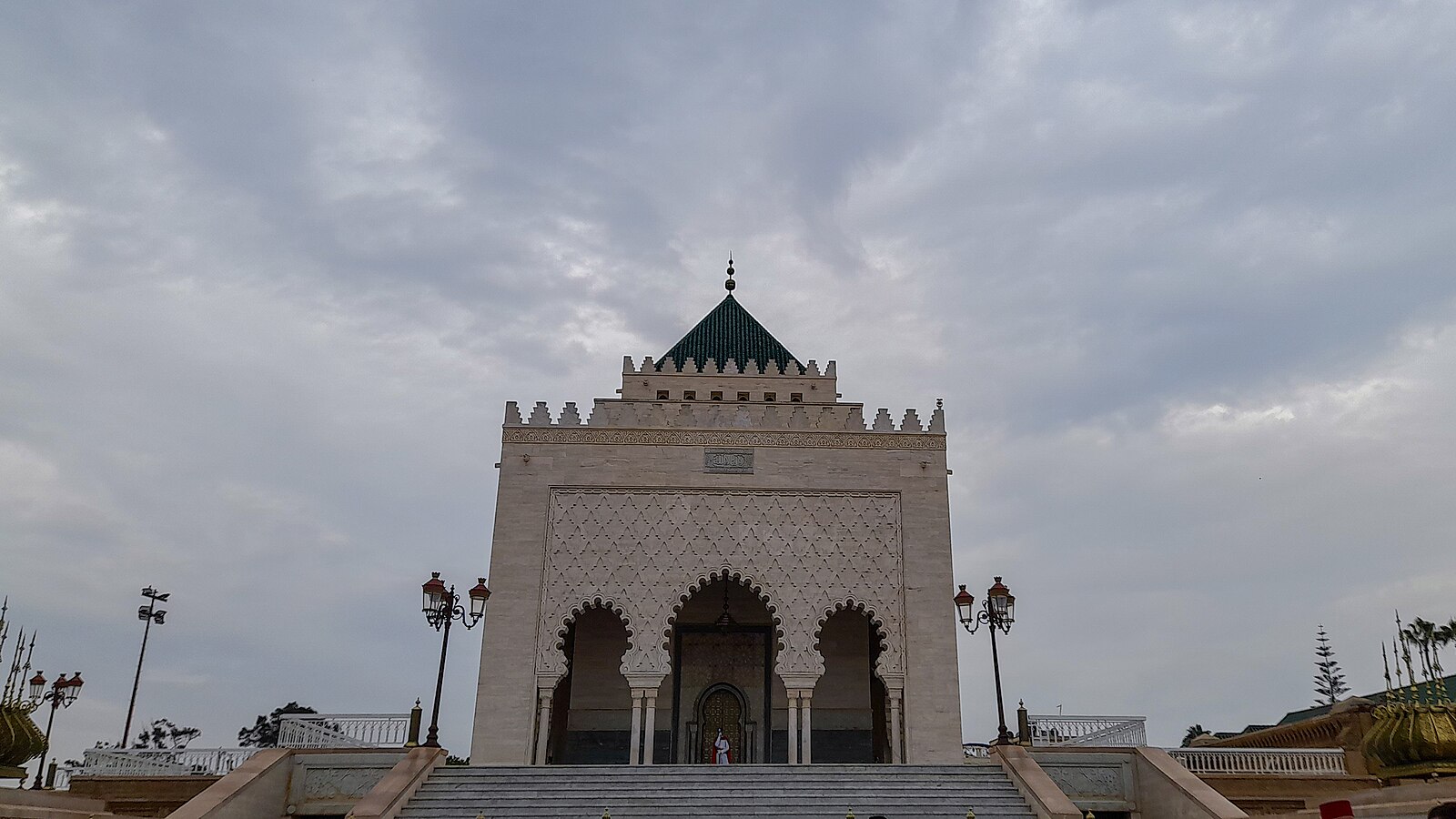
Elected Power and the 2026 Coalition
Below the palace, voters choose the 395-member House of Representatives every five years. Article 47 obliges the King to appoint the head of government from the party that comes first.
On Tuesday 29 September 2026 he named Fatima Ezzahra El Mansouri, a lawyer and former mayor of Marrakech who leads PAM.
The Interior Ministry’s final results gave PAM 97 seats, the National Rally of Independents (RNI) 66, Istiqlal 65 and the Justice and Development Party (PJD) 54. On Monday 12 October, El Mansouri announced a majority of four parties holding 207 seats, nine more than the 198 needed.
Hespress listed the partners and their seats:
- PAM (97 seats): the Authenticity and Modernity Party, founded by royal adviser Fouad Ali El Himma and led by El Mansouri.
- Istiqlal (65): the conservative independence party, led by Nizar Baraka.
- USFP (26): the Socialist Union of Popular Forces, the main centre-left party, led by Driss Lachgar.
- PPS (19): the Party of Progress and Socialism, a small left party with communist roots, led by Nabil Benabdallah.
The RNI, a business-friendly party that led the outgoing government under Aziz Akhannouch, is now in opposition. Its leader since February 2026, Mohamed Chouki, promised a “strong, responsible and constructive” opposition on 13 October.
The Islamist PJD, which led two governments between 2011 and 2021, also sits outside the majority.
As of 13 October 2026 no ministers had been named, and the 2027 finance bill must reach parliament by 20 October. Until the new cabinet wins a confidence vote, Akhannouch’s ministers handle current business.
Business Families and the Royal Holding
The best-known private group is Al Mada, which Hespress calls the royal holding company and which describes itself as one of Africa’s largest private equity funds. It grew out of SNI, created by the state in 1966, and the ONA group; the merged holding was renamed Al Mada in 2018, its history page says.
Al Mada says it is the main shareholder of Attijariwafa bank, which serves 12 million customers in 27 countries.
Its portfolio reaches into daily life. It includes the retail group Marjane, the mining group Managem, the power producer Nareva and the telecoms operator inwi.
Al Mada lists Santander, ArcelorMittal, LafargeHolcim, Caterpillar and Engie among its partners.
The state’s own champion is OCP, the phosphate group. Morocco’s reserves of 50 billion tonnes are about two-thirds of the world total of 73 billion, the US Geological Survey says in its 2026 summary.
That makes the kingdom central to global fertiliser supply.
Politics and private wealth overlap. Akhannouch, head of government since 2021, is the businessman behind the Akwa group, as Moroccan and French outlets routinely note.
Critics accuse him of conflicts of interest between business and office, an allegation rather than a finding of any crime.
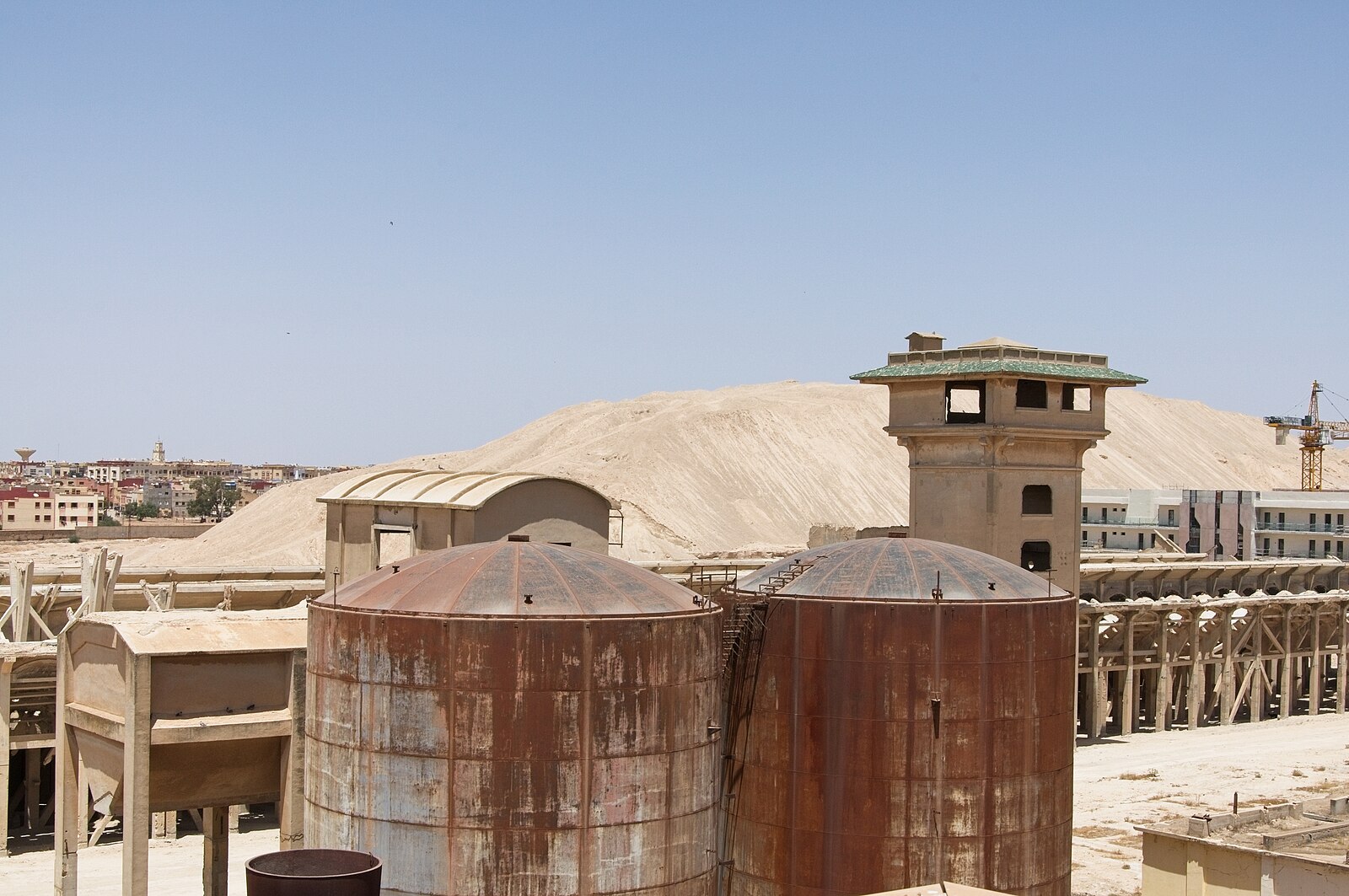
Mosques, Ulema and the Commander of the Faithful
Religious authority is concentrated as tightly as military power. Article 41 names the King “Commander of the Faithful” and puts him at the head of the Superior Council of Ulema, Islam’s senior scholars.
The council is the only body allowed to issue official religious opinions, or fatwas.
This gives the palace the last word on religious doctrine and a strong hand against Islamist rivals. It also explains why the PJD, despite its religious roots, has worked inside the monarchy’s framework rather than against it.
Islamist parties compete for votes, but not for religious authority.
The same article makes the King guarantor of the free exercise of worship. Religion therefore reinforces the throne twice: as faith, and as the legal source of the King’s role above party politics.
Regions, Amazigh Identity and the Sahara
Spending is concentrated in the big-city regions. In 2024 five regions accounted for 74.4% of household consumption, and Casablanca-Settat alone for 25.3%, the HCP reported in July 2026.
The other seven regions shared the remaining quarter, from 0.8% in Dakhla-Oued Eddahab to 7.2% in Souss-Massa.
Amazigh, often called Berber, has been an official language alongside Arabic since 2011 (Article 5). The 2024 census found that 24.8% of Moroccans speak it, 33.3% in rural areas and 19.9% in towns.
The Amazigh association AMREC disputed those figures in December 2024 and said the census undercounted speakers.
Language overlaps with geography: Amazigh is far more common in the countryside, where incomes are lower. Western Sahara, which the Polisario Front claims for independence, is the other regional question.
The United States recognised Moroccan sovereignty over the territory in a proclamation published on 15 December 2020.
Unions, Youth and Who Is Left Out
Organised labour still has a voice. The Moroccan Labour Union (UMT), one of the main federations, is led by Miloudi Moukharik, who used the 1 May 2026 rallies to demand wage and pension increases.
Unions negotiate with the government in a formal “social dialogue” but rarely shape policy alone.
The data show a widening gap. The HCP puts the Gini index at 40.5 in 2022, back to levels of the early 2000s, while absolute poverty rose from 1.7% in 2019 to 3.9% in 2022.
Urban poor numbers jumped from 109,000 to 512,000 over the same three years.
Women and young people are the most excluded from economic power. Only about 19% of women are in the labour force against 70% of men, the HCP found.
Youth unemployment was 21.9% in 2025 by the World Bank’s modelled estimate, based on International Labour Organization methods.
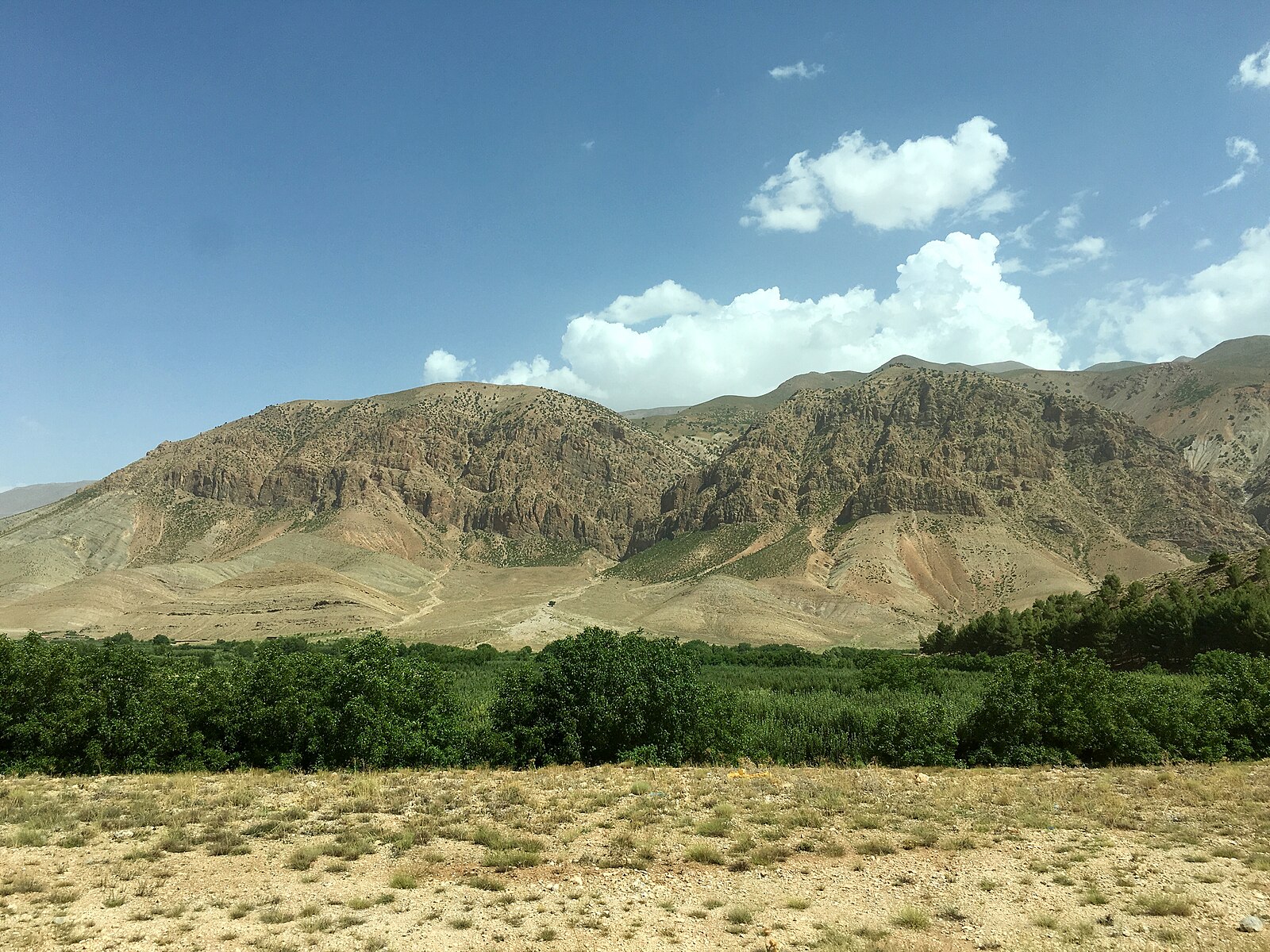
That frustration erupted on 27 September 2025, when young people organised online as “GenZ 212” marched in several cities. They demanded better hospitals and schools and accountability for public spending.
Courts in Tangier and Casablanca later sentenced protesters. In Casablanca, 13 of 18 defendants received eight-month terms that allowed their release after time served.
The King acknowledged the divide in a July 2025 speech. He said there was no place “for a Morocco moving at two speeds,” as quoted by Hespress.
What It Means for US Readers
For investors, the practical rule is that strategy is set by the palace and implemented by ministers. Big projects in phosphates, energy, ports and defence need palace backing, and the change of head of government is unlikely to alter them.
Tax rates, subsidies and public wages, by contrast, will follow the new four-party coalition.
The US free trade agreement with Morocco has been in force since 1 January 2006, per the US Trade Representative. Exporters and investors in fertiliser, autos or energy should watch the 2027 finance bill, due in parliament by 20 October 2026, for tax and customs changes.
Travellers and expats should expect continuity. Policing, public order and the security chiefs named above stay under the palace and the Interior Ministry, whoever forms the cabinet.
Washington’s 2020 recognition of Moroccan rule in Western Sahara also anchors US policy, so a change of head of government does not reopen that question.
What Prediction Markets Say
Polymarket, a crypto-based betting exchange, gives a 90.6% chance that Aziz Akhannouch is out as head of government by 31 December 2026. About US$171,800 has been traded on that contract, and the price was about three points lower than a week earlier (13 October, 8:57 a.m. ET).
A second market, on who is formally invested as the next head of government, gives El Mansouri 94.3%. It has traded about US$19,600 on her name and US$34,200 in total.
Neither contract has settled, because no cabinet had been appointed or confirmed by parliament by 13 October. These are bets, not polls.
Why we show this: prediction markets turn real-money bets into a live probability that moves within minutes of the news, which is why investors, campaigns and newsrooms in the United States now follow them closely. We show them next to polls and official results, never instead of them.
What Is Not Known
The cabinet line-up is not known, including who will hold finance, interior and foreign affairs. The date of the parliamentary confidence vote had not been set as of 13 October 2026, and nor had the size of the cabinet.
The true size of royal and family business holdings is not published in one place, and Al Mada does not list its shareholders on its website. Inequality figures run only to 2022, so the effect of recent wage and subsidy changes is not yet measured.
Connected Coverage
Who Holds Power in Morocco? Politics Explained 2026
Who Runs Morocco’s Economy, the Key Players in 2026
Foreign Powers and Investors in Morocco 2026
Fatima Ezzahra El Mansouri, Morocco’s New PM
Morocco Socialists Bring 26 Seats to New Government
Frequently Asked Questions
Who holds real power in Morocco?
King Mohammed VI. Under the 2011 constitution he commands the armed forces, heads religious affairs as Commander of the Faithful and approves top appointments. Elected governments run the economy and public services.
What is the makhzen in Morocco?
The makhzen is the palace establishment: the royal court, the King’s advisers and the senior officials he appoints. The royal palace in Fez is still called Dar al-Makhzen.
Who is Morocco’s head of government in October 2026?
Fatima Ezzahra El Mansouri of the Authenticity and Modernity Party, appointed on 29 September 2026. On 12 October she announced a four-party majority of 207 of 395 seats, and her cabinet had not been named as of 13 October.
Which business groups dominate Morocco?
Al Mada, the royal holding company, is the main shareholder of Attijariwafa bank, and its portfolio includes Marjane, Managem, Nareva and inwi. The state phosphate group OCP is the other giant.
How unequal is Morocco?
The High Commission for Planning puts the Gini index at 40.5 in 2022, back to the level of the 2000s. The richest fifth of households accounts for 48.1% of consumption, the poorest fifth for 6.7%.
How many Moroccans speak Amazigh?
The 2024 census found that 24.8% of Moroccans speak Amazigh, 33.3% in rural areas and 19.9% in towns. Amazigh groups dispute the figure as too low.
Sources: Constitution of Morocco 2011 (Articles 5, 41–43, 47, 49, 51, 53); Hespress, four-party coalition; Hespress, RNI in opposition; Hespress, final election results; Hespress on HCP inequality data; Hespress on HCP regional accounts 2024; Hespress on census language data; HCP, Gini index 1985–2022; Al Mada, fund and history; Al Mada, banking; Hespress on Al Mada; USGS Mineral Commodity Summaries 2026, phosphate rock; World Bank, youth unemployment; US Trade Representative, Morocco FTA; Federal Register, Proclamation on Western Sahara; Hespress, GenZ 212 demands; Hespress, Casablanca GenZ verdict; Le Monde on Fouad Ali El Himma. All accessed 13 October 2026.
This article was produced by The Rio Times’ automated newsroom system. How we use AI · Report an error · Editorial responsibility: Matthias Camenzind, Editor-in-Chief
Part of our ongoing coverage
Africa: The New Scramble — the great-power contest over the continent.
Expat Guide to Morocco
What The Rio Times publishes for foreigners who live in or move to Morocco.
Start here
- Open a Bank Account in Morocco as a Foreigner 2026
- Taxes in Morocco for Expats 2026: The 37% Band Starts Early
- Morocco Residency Visa Requirements 2026: The Ninety-Day Line
- Moving to Morocco and the paperwork that decides everything else
City guides
Coming up in Morocco
- U-17 Women's World Cup in Rabat-Salé: USA Opens 19 October 17 Oct
- Rabat Hosts Global Champions Tour Finals on 30 October 30 Oct
- Morocco's First Unity Day Holiday Is 31 October 2026 31 Oct
- French Star GIMS Plays Casablanca 7 November 7 Nov
Understand Morocco