Who Runs Morocco’s Economy, the Key Players in 2026
A king, a new head of government, a central bank, a phosphate giant and a few families steer Morocco’s money.
MOROCCO · ECONOMY
Key Facts
- The country 36.8 million people (2024 census); Africa’s fifth-largest economy by IMF estimates.
- Who governs Fatima Ezzahra El Mansouri, appointed head of government on 29 September 2026.
- What happened The dirham slid from 9.32 to 9.98 per US$ since 31 July.
- The state giant Phosphate group OCP, 94.12% state-owned, had 2025 revenue of about US$11.4 billion.
- The royal holding Royal family holding Al Mada held 46.5% of Attijariwafa bank (June 2026).
- Prediction markets Polymarket: 87% chance Aziz Akhannouch is out as prime minister by 31 December (8 October, 10:22 a.m. ET).
A king, a new head of government, a central bank, a phosphate giant and a few families steer Morocco’s money.
The Morocco economy is steered by a short list: the palace, the government, the central bank, OCP and a few family groups. A new head of government was appointed on 29 September 2026, and the currency has weakened against the US dollar since July.
This guide sets out who controls the money, the phosphates and the big brands as of October 2026.
Who Sets the Rules in the Morocco Economy
King Mohammed VI sits at the top of the system. Under Article 48 of the 2011 constitution, he presides over the Council of Ministers.
That council sets the state’s strategic direction and the broad lines of each finance bill, under Article 49. It also deliberates on appointing the central bank governor and the heads of strategic state companies.
On Tuesday, 29 September 2026, the king appointed Fatima Ezzahra El Mansouri head of government, the royal household announced. Abroad, the post is usually called prime minister.
She coordinates the leadership of the Authenticity and Modernity Party (PAM), the winner of the 23 September election. PAM took 97 seats, ahead of the National Rally of Independents (RNI) with 66 and the Independence Party, Istiqlal, with 65.
Those are the provisional results announced by the Interior Ministry. The RNI is the party of Aziz Akhannouch, the outgoing head of government.
El Mansouri was housing minister in Akhannouch’s cabinet, the official government portal shows. Her own profile is in the Rio Times piece on Fatima Ezzahra El Mansouri.
No new cabinet had been named by 8 October, and coalition talks were still running, the state news agency MAP reported. The state of play is covered in the Rio Times report on the coalition talks.
Until a new government is formed, the outgoing one handles current affairs, as Article 47 provides. On the portal, Nadia Fettah is still listed as Minister of Economy and Finance, with Fouzi Lekjaa as budget minister.
Parliament opens its new term on Friday, 9 October, with the king presiding, MAP said. MAP calls the 2027 finance bill an early test for the new parliament.
The public purse is under strain. In the first eight months of 2026, tax revenue rose 9.9% but total spending rose 10.5%, Treasury figures show.
Bank Al-Maghrib expects a budget deficit of 3.4% of output in 2026, excluding proceeds from selling state holdings. It projects 3.5% for 2027.
The state also owns a wide portfolio of companies. Morocco had 271 public entities and enterprises in September 2024, the US State Department says.
State stakes such as OCP are overseen by ANGSPE, the national agency that manages state holdings. It is led by Abdellatif Zaghnoun, OCP’s 2025 reference document says.
Bank Al-Maghrib and the Falling Dirham
Bank Al-Maghrib, the central bank, is led by Governor Abdellatif Jouahri, its website shows. Its board held the key interest rate at 2.25% on Tuesday, 22 September 2026.
That is far below the US Federal Reserve’s target range of 3.75% to 4.00%. The Fed raised rates on 16 September, the board’s statement noted.
Inflation is low. Consumer prices fell 0.3% in the year to August 2026, the High Commission for Planning (HCP), the statistics office, reported.
The central bank expects inflation of 0.7% for 2026 and 1.5% in 2027. It forecasts growth slowing from 4.9% in 2025 to 4.4% this year.
HCP data show the economy grew 4.0% in the second quarter of 2026, down from 5.8% a year earlier. Non-farm activity grew only 1.5%, while value added in mining fell 28.6%.
The currency is managed, not free-floating. Since 9 March 2020 it may move 5% either side of a central rate, the central bank says.
That central rate tracks a basket that is 60% euro and 40% US$. When the dollar strengthens worldwide, the dirham tends to weaken against it.
On 31 July 2026, one US$ bought 9.32 dirhams at the central bank’s reference rate. By 7 October, one US$ bought 9.98 dirhams, a fall of 6.5% in the dirham.
Since the end of 2025, the dirham has lost 8.5% against the US$, on the same reference rates. The slide is examined in the Rio Times report on the dirham.
Energy is part of the story. The central bank expects the energy import bill to rise 28.4% in 2026, to MAD 138.1 billion (about US$13.8 billion).
It sees the current account deficit widening from 2.4% of output in 2025 to 4.6% in 2026. That gap measures how much more the country spends abroad than it earns.
Reserves remain a cushion. Official reserves stood at MAD 503.0 billion (about US$50.4 billion) on 18 September 2026.
In August they covered five months and 24 days of imports, the central bank says. It judges the currency broadly in line with economic fundamentals.
Conversions in this guide use Bank Al-Maghrib’s reference rate of 7 October 2026, 9.9765 dirhams per US$.

OCP, the State’s Phosphate Giant
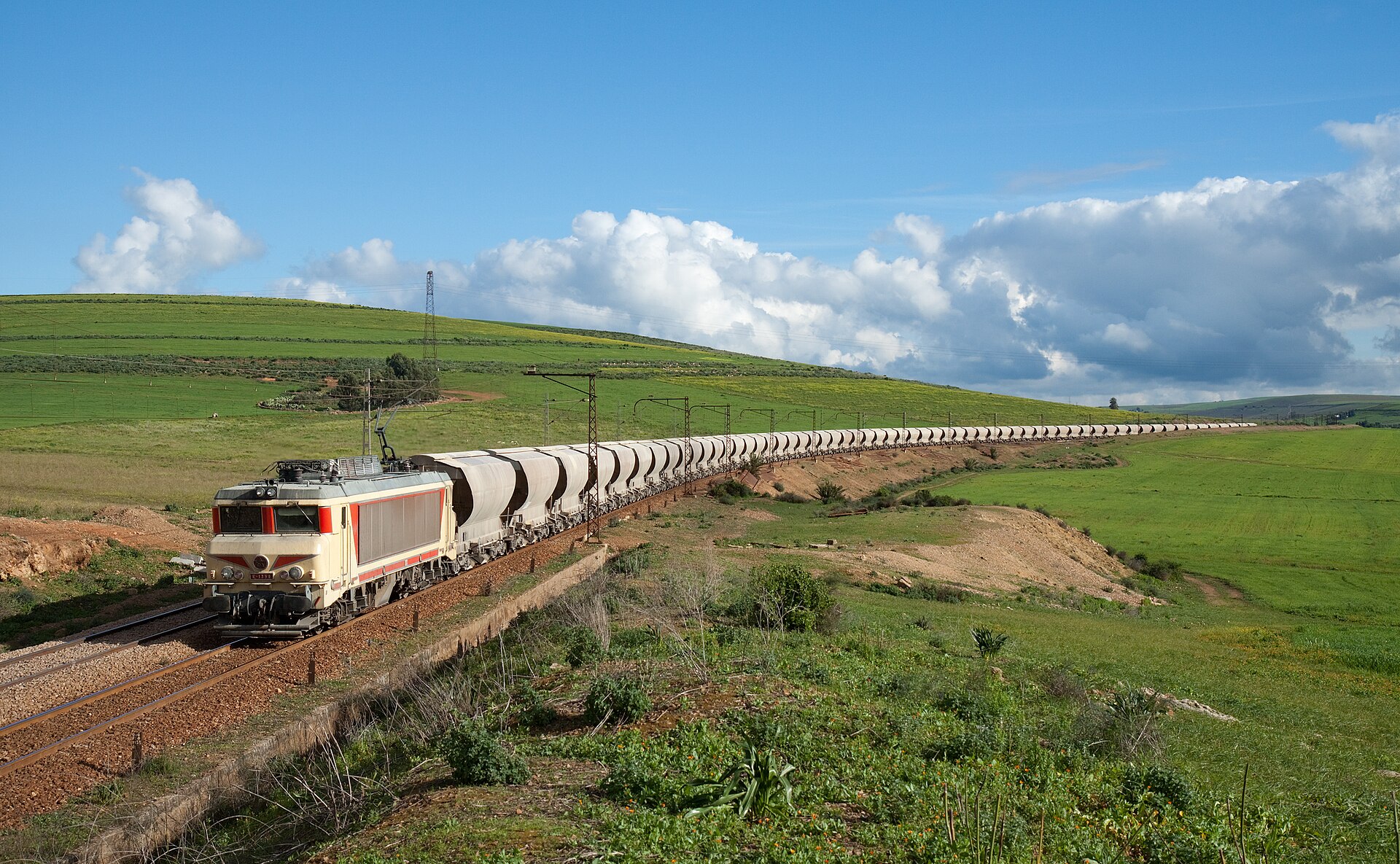
OCP, the former Office Chérifien des Phosphates, is the state phosphate and fertiliser group. The state owns 94.12% of it, its 2025 reference document shows.
The rest belongs to funds linked to the bank BCP, the pension fund RCAR and the endowment of Mohammed VI Polytechnic University. A 2008 law gives OCP the exclusive right to mine phosphates in Morocco.
Mostafa Terrab is OCP’s chairman and chief executive, according to the same filing. The group had 17,275 employees at the end of 2025.
Morocco holds about 50 billion of the world’s 73 billion tonnes of phosphate rock reserves, the US Geological Survey estimates. That is roughly two-thirds of the total.
Morocco is also the second-largest producer of phosphate rock after China, the USGS says. Phosphate is a key ingredient of fertiliser for crops such as corn and wheat.
OCP’s 2025 revenue rose 17% to MAD 113.9 billion (about US$11.4 billion). Its operating profit before depreciation, or EBITDA, reached MAD 43.2 billion (about US$4.3 billion).
Net profit attributable to the group fell 14% to MAD 17.7 billion (about US$1.8 billion). OCP keeps an investment-grade Baa3 rating from Moody’s, its filing says.
2026 has been harder. First-half revenue fell 7% to MAD 48.4 billion (about US$4.8 billion), OCP said on Monday, 31 August.
The company pointed to geopolitical tensions and disrupted shipping of raw materials. Imports of crude sulphur, a key fertiliser input, rose by MAD 17.8 billion (about US$1.8 billion) through August.
Exports of phosphates and derivatives fell 6.0% to MAD 61.1 billion (about US$6.1 billion) in the first eight months. The Office des Changes, the state agency that compiles trade data, published those figures.
The central bank still expects phosphate exports to rise 9.7% over 2026 as fertiliser prices climb. It cites forecasts of US$860 per tonne for Moroccan diammonium phosphate in 2026, up from US$713 in 2025.
Al Mada and the Big Banks
Al Mada is a Casablanca-based investment fund that calls itself pan-African. The US State Department describes it as the Moroccan royal family’s holding company.
Its main shareholders at the end of 2024 were Copropar with 42.03%, Group Invest with 5.57% and Siger with 4.83%. Institutional investors held the remaining 47.57%.
Al Mada reported 2024 consolidated revenue of MAD 51.3 billion (about US$5.1 billion). Those details appear in a filing by Attijariwafa bank with the market regulator AMMC.
Its portfolio reaches into daily life. It includes the supermarket chain Marjane, the insurer Wafa Assurance, the mobile operator inwi and the power producer Nareva.
It also holds the mining group Managem, the steelmaker Sonasid and Holcim Maroc, a building materials joint venture with the Holcim group. Al Mada lists all of them on its website.
Managem is growing fast on new mines and high metal prices. First-half 2026 revenue reached MAD 11.8 billion (about US$1.2 billion), up from MAD 4.4 billion.
Its net profit rose to MAD 3.8 billion (about US$379 million), helped by the Tizert mine in Morocco and Boto in Senegal. Imad Toumi chairs its board.
The crown jewel is Attijariwafa bank, 46.5% owned by Al Mada at the end of June 2026. The State Department calls it Morocco’s largest bank and Africa’s sixth-largest by assets.
At the end of June 2026 its total assets were MAD 825.3 billion (about US$82.7 billion). First-half net profit attributable to the group was MAD 5.9 billion (about US$596 million).
Mohamed El Kettani is chairman and chief executive. On Thursday, 1 October 2026, the bank agreed to buy 55.22% of Société Générale Ghana.
That deal is covered in the Rio Times report on Attijariwafa in Ghana. The group already operates in 27 countries, Al Mada says.
Groupe Banque Centrale Populaire (BCP), the Banque Populaire network, is another major lender. Its board, chaired by Naziha Belkeziz, reported customer deposits of MAD 429.5 billion (about US$43.1 billion) in June 2026.
Bank of Africa, formerly BMCE, is led by its chairman and chief executive, Othman Benjelloun. Its customer loans reached MAD 243.5 billion (about US$24.4 billion) at the end of June 2026.
Family Groups Beyond the Palace
Several family holdings sit just below the palace. One is Akwa Group, the fuel and gas holding behind the Afriquia brand.
The Akhannouch and Wakrim families created Akwa Group in 1993, a 2018 filing by its listed unit Afriquia Gaz says. At the end of 2016 each family held 50%.
The same filing showed Akwa Group holding 62.57% of Afriquia SMDC, a fuel distributor. It described a portfolio of about 60 companies, from fuel and gas to property.
Holmarcom is the group of the Bensalah family. Mohamed Hassan Bensalah has been its chairman and chief executive since 1993, the group says.
It controls three listed companies: Les Eaux Minérales d’Oulmès, the insurer AtlantaSanad and the bank Crédit du Maroc. On 29 April 2026, its finance arm agreed to buy BNP Paribas’s 67% stake in the bank BMCI.
Closing is expected in the fourth quarter of 2026, subject to approval by the central bank and the competition authority. Holmarcom plans to bring BMCI and Crédit du Maroc together.
Moulay Hafid Elalamy controls Saham Bank, formerly Société Générale’s Moroccan unit. His holding, Saham Finances, owned 51.00% and he held 18.20% directly in May 2026, the bank’s filing shows.
The French bank sold its 57.68% stake to Saham Finances in a deal completed on 3 December 2024. With the BMCI deal, a second French bank would hand its Moroccan arm to a local group.
What Morocco Sells: Cars, Crops and Phosphates
Cars are the biggest export. Automotive exports rose 14.5% to MAD 116.1 billion (about US$11.6 billion) in the first eight months of 2026.
Farm and food exports came next at MAD 65.1 billion (about US$6.5 billion), ahead of phosphates. Aerospace exports grew 21.5% to MAD 23.0 billion (about US$2.3 billion).
That industry is growing fast, as seen in the Rio Times report on the Marrakech air show. Garment exports, by contrast, fell 5.2% to MAD 19.2 billion (about US$1.9 billion).
Imports grew faster than exports. They rose 15.8% to MAD 617.5 billion (about US$61.9 billion), and the trade deficit widened 25.4%.
Energy imports alone rose 32.6% to MAD 96.4 billion (about US$9.7 billion). Fuel supply has a long back story, told in the Rio Times account of the SAMIR refinery.
Services and money from abroad fill much of the gap. Tourism receipts rose 9.7% to MAD 97.9 billion (about US$9.8 billion) through August.
Moroccans living abroad sent home MAD 89.2 billion (about US$8.9 billion), up 9.0%. Foreign direct investment receipts rose 17% to MAD 47.3 billion (about US$4.7 billion).
The government names automotive, aeronautics, renewables, textiles, pharmaceuticals, outsourcing and agro-industry as key industries, the State Department notes. Morocco’s role south of the Sahara is set out in the Rio Times guide to Morocco in Africa.
The Casablanca Stock Exchange and Maroc Telecom
The Casablanca Stock Exchange was worth MAD 1,063.6 billion (about US$106.6 billion) on 23 September 2026. Its main index, the MASI, was down 4.27% for the year.
The central bank publishes those figures weekly from exchange data. Daily moves are tracked in the Rio Times Morocco market report.
The market is regulated by the AMMC, the Moroccan capital markets authority. Listing activity is covered in the Rio Times report on Dislog.
Maroc Telecom, legally Itissalat Al-Maghrib, trades in Casablanca and Paris. The state still owns 22%.
Its controlling shareholder, with 53%, is a holding company controlled by Etisalat, the telecoms group from the United Arab Emirates. Mohamed Benchaaboun runs the company.
First-half 2026 revenue rose 5.4% to MAD 19.0 billion (about US$1.9 billion). Growth came mainly from its Moov Africa subsidiaries in other African countries.
What It Means for US Readers
Morocco is the only African country with a US free trade agreement, in force since 1 January 2006. It is a market where US exporters run a large surplus.
US goods exports to Morocco were US$5.5 billion in 2025, against imports of US$1.9 billion, Census Bureau data show. From January to August 2026, exports reached US$4.7 billion.
The weaker currency cuts both ways. US$1 bought 9.98 dirhams on 7 October, against 9.32 on 31 July, so holidays in Marrakech got cheaper.
American goods, by contrast, cost Moroccan buyers more. For investors, Moroccan shares trade mainly in Casablanca, while OCP’s dollar bonds are listed on Euronext Dublin.
Phosphate matters to US farmers through world fertiliser prices. The USGS says US imports of phosphate rock came almost entirely from Peru in 2021 to 2024.
The bigger picture is in Morocco Explained and Morocco Geopolitics Explained 2026. All coverage is collected on the Rio Times Morocco page.
What Prediction Markets Say
On Polymarket, bets put an 87% chance on Aziz Akhannouch being out as prime minister by 31 December 2026. That price stood at 10:22 a.m. ET on 8 October.
The market had traded about US$172,000 in total, but less than US$20 in the past day. The price was 91.1% at 5:07 a.m. ET, and a week earlier it was about 11 points higher.
The contract had not been settled, although the king named El Mansouri on 29 September. Akhannouch’s outgoing team still handles current affairs until a new cabinet is formed.
Why we show this: prediction markets turn real-money bets into a live probability that moves within minutes of the news, which is why investors, campaigns and newsrooms in the United States now follow them closely. We show them next to polls and official results, never instead of them.
What Is Not Known
The make-up of the new cabinet is not known, including who will run economy and finance. The content of the 2027 finance bill is also open.
How far the currency slide goes is unclear, and so is the central bank’s next move. Its board meets quarterly and held rates in September.
Akwa Group’s current ownership, including any stake held by Aziz Akhannouch personally, has not been published since the 2018 filing. The BMCI sale to Holmarcom still needs regulators’ approval.
Full-year 2026 results for OCP and the banks will only come in 2027.
Frequently Asked Questions
Who runs the Morocco economy?
King Mohammed VI presides over the Council of Ministers, and Fatima Ezzahra El Mansouri became head of government on 29 September 2026. Bank Al-Maghrib, led by Abdellatif Jouahri, sets interest rates.
What is OCP?
OCP is Morocco’s state phosphate and fertiliser group, 94.12% owned by the state. Its 2025 revenue was about US$11.4 billion.
What is Al Mada?
Al Mada is a Casablanca-based investment fund that the US State Department calls the royal family’s holding company. It held 46.5% of Attijariwafa bank at the end of June 2026 and owns stakes in Marjane, Managem and inwi.
Why is Morocco’s currency falling?
It tracks a basket of the euro and the US dollar, so a stronger dollar tends to pull it down. Costlier energy imports have also widened the trade deficit.
What does Morocco export?
Cars and car parts lead, worth about US$11.6 billion from January to August 2026. Food, phosphates and aircraft parts follow.
Can Americans invest in Moroccan companies?
Moroccan shares trade mainly on the Casablanca Stock Exchange, and Maroc Telecom also trades in Paris. OCP’s US dollar bonds are listed on Euronext Dublin.
Does Morocco have a free trade deal with the United States?
Yes. The US-Morocco Free Trade Agreement has been in force since 1 January 2006.
Sources: MAP, appointment of the head of government, 29 September 2026; MAP, opening of Parliament; MAP, government formation talks; Maroc.ma, composition of the government; Maroc.ma, provisional election results; Constitution of Morocco, 2011; Bank Al-Maghrib, board statement of 22 September 2026; Bank Al-Maghrib, governing bodies; Bank Al-Maghrib, reference exchange rates; Bank Al-Maghrib, exchange rate regime; Bank Al-Maghrib, weekly indicators; HCP, national accounts second quarter 2026; HCP, consumer prices August 2026; HCP, 2024 census; Office des Changes, trade to end-August 2026; OCP, 2025 reference document; OCP, second-quarter 2026 results; Attijariwafa bank, reference document; Attijariwafa bank, first-half 2026 results; Attijariwafa bank, Ghana agreement; Groupe BCP, first-half 2026; Bank of Africa, second quarter 2026; Bank of Africa, investor site; Managem, first-half 2026; Maroc Telecom, first-half 2026; Maroc Telecom, 2025 results; Maroc Telecom, buyback notice 2026; Saham Bank, reference document; Afriquia Gaz, 2018 information notice; Al Mada; Holmarcom, BMCI agreement; Holmarcom, organisation; USGS, phosphate rock 2026; US State Department, 2025 Investment Climate Statement; US Census Bureau, trade with Morocco; USTR, Morocco FTA; IMF, Morocco data (all accessed 8 October 2026).
This article was produced by The Rio Times’ automated AI newsroom. Editorial responsibility: Matthias Camenzind, Publisher and Editor-in-Chief. The Rio Times also runs Ask Rio Times, which answers from 100,000+ of our own articles, the daily Latin America Power Map, and prediction-market odds on elections and markets.. How we use AI · Report an error
Expat Guide to Morocco
What The Rio Times publishes for foreigners who live in or move to Morocco.
Start here
- Cost of Living in Morocco in 2026
- Is Morocco Safe? Level 2 Advisory, Violent Crime Down 10%
- Best Places to Live in Morocco for Expats 2026, Ranked
- Renting in Morocco 2026: Leases, Deposits and Rents
City guides
Coming up in Morocco
- Manal Plays Casablanca on 21 November 2026 21 Nov
- Visa For Music Rabat Returns for 13th Edition, 18 to 21 November 21 Nov
- Zamane Festival Runs 3 to 6 December in M'Hamid El Ghizlane 3 Dec
- Tiakola Opens Africa Tour in Casablanca on 5 December 5 Dec
Understand Morocco