How Morocco’s 2026 Election Works and Why the King Decides
Africa · Politics
Key Facts
- —The date Moroccans elect a new House of Representatives on 23 September; candidates registered online first.
- —The system King Mohammed VI appoints the prime minister from the winning party and keeps defence, foreign policy and religious affairs.
- —The backdrop An economic boom from factories, phosphates, and the 2030 World Cup build-out, alongside drought and 22.9% youth unemployment.
- —The players The RNI of Prime Minister Aziz Akhannouch defends its record against the Islamist-rooted PJD and the palace-linked PAM.
- —The catch Not who wins, but how many bother to vote: turnout is the number analysts watch most closely.
Morocco holds elections that are free, orderly and carefully bounded. Understanding what 23 September can and cannot change is key to understanding the kingdom.
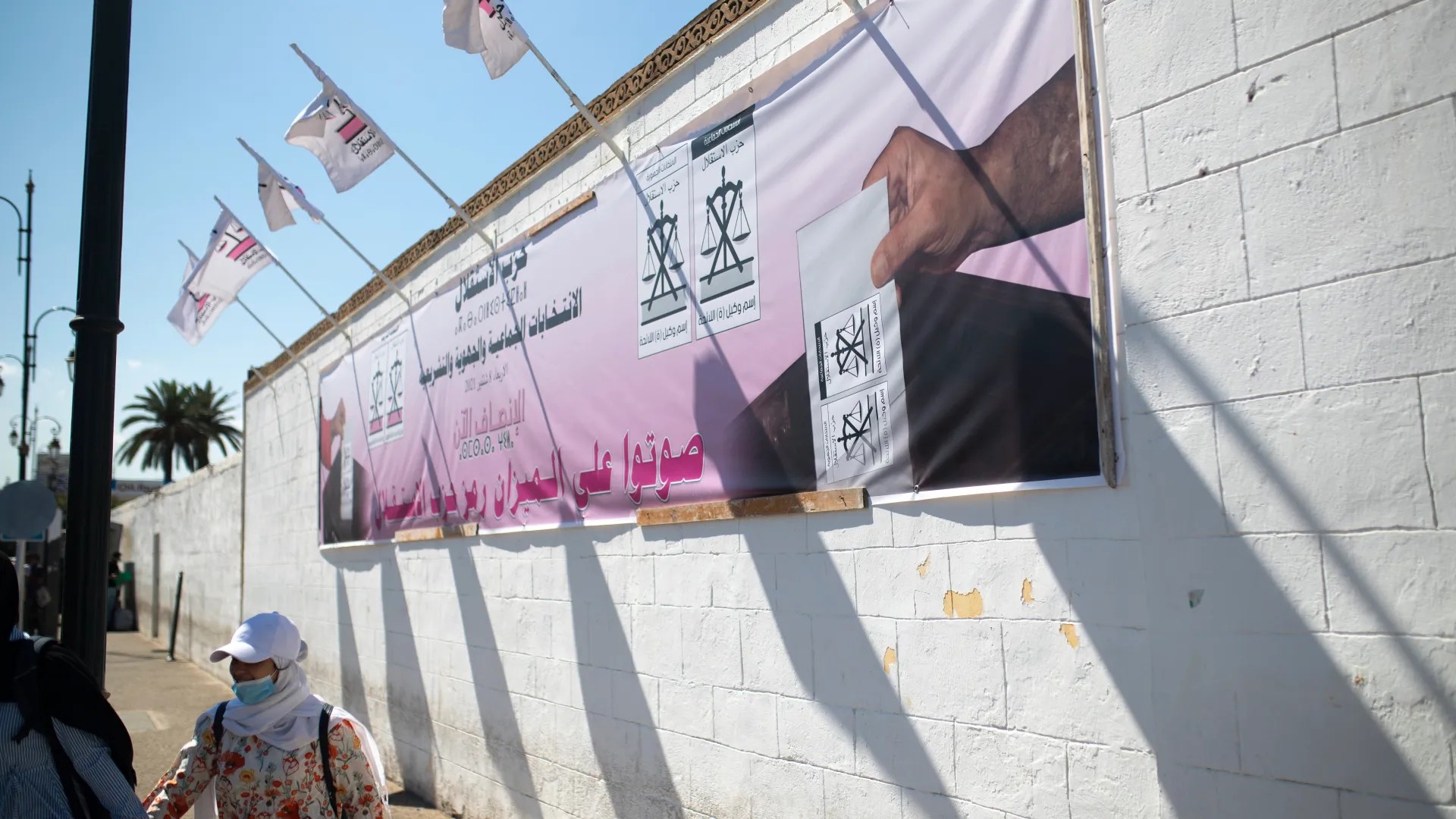
What parliament decides — and what it does not
The 395-seat House of Representatives writes budgets and laws, and its largest party’s leader becomes prime minister. The king keeps the strategic ministries’ real levers: defence, foreign affairs, interior and religious affairs.
Moroccan parties campaign mainly on administration — schools, hospitals, prices — while the palace sets the state’s broader direction. Analysts describe this as the system’s design, not a secret.
The economic record everyone campaigns on
Morocco has become a North African industrial hub: car factories, aeronautics, phosphates, and the port of Tanger Med. It ranks among the world’s 20 busiest container ports.
Factory exports have risen this year. Morgan Stanley has named Morocco in its regional investment strategy, though it has not disclosed a specific new position.
The shadow side is real too: years of drought, and duty-free wheat imports set to restart on 16 September. Youth unemployment stood at 22.9% in the second quarter of 2026, a factor behind last year’s Gen Z protests.
The parties and the palace
Akhannouch’s RNI, the National Rally of Independents, runs on competence and continuity. The PJD, the Islamist-rooted Justice and Development Party, was crushed in the 2021 election and now seeks rehabilitation.
PAM, the Authenticity and Modernity Party, was founded by a royal confidant. It competes as a modernising alternative, but stays within the same boundaries.
Analysts say the palace’s preference is rarely stated but usually known: a governable coalition and a presentable prime minister.
Why the region watches
Morocco overtook Algeria in 2026 to become Africa’s largest arms importer, according to the Stockholm International Peace Research Institute (SIPRI). It hosts African Lion, the US military’s largest annual Africa exercise, which drew more than 5,000 troops in April 2026.
This summer Morocco’s counter-terrorism agency (the BCIJ) said it arrested ten suspects linked to an ISIS-Sahel plot across seven cities. A stable, cooperative Rabat is a strategic asset for Europe and Washington, analysts say.
What to watch on election night
First, turnout: below the 2021 level of 50.35%, and commentators reopen the legitimacy debate. Second, the PJD’s recovery: a respectable return would suggest managed pluralism continues, while a wipeout would suggest otherwise.
Third, the World Cup clock is ticking, with 2030 approaching. The next government will oversee the biggest construction and event-hosting cycle in Morocco’s modern history, analysts say.
The Gen Z factor
Last year’s youth protests, organised online and largely leaderless, focused on hospitals and schools rather than the monarchy. Since then, most parties have adopted similar language about public services.
Whether young Moroccans actually vote is a separate question. Online-first registration was new this cycle, but a generation that marched does not automatically become one that casts ballots, analysts say.
The World Cup countdown
Co-hosting the 2030 World Cup with Spain and Portugal gives the state a deadline for stadiums, rail extensions, airports and hotel construction. The next parliament will fund the middle years of that build-out.
Mega-projects concentrate both pride and financial risk. Whoever wins in September inherits the construction boom, and the bill if costs outrun the budget.
The Western Sahara file
No Moroccan election escapes the Western Sahara question, the kingdom’s central foreign-policy issue. On 31 October 2025 the UN Security Council backed Morocco’s plan as the basis for talks, 11 votes to none.
Russia, China and Pakistan abstained rather than vote against it.
Every major Moroccan party endorses the plan, so it is not contested in this campaign. What changes with the vote is who administers the development programmes promised for the southern provinces, including around Laâyoune.
What a surprise would look like
A real shock would not be a PJD comeback or an RNI landslide; both are already expected by analysts. A turnout below 40%, however, would force the palace to answer a question it usually avoids.
The likelier outcome, analysts say, is a coalition negotiated once the main results are known.
How the voting works
The 395 seats use two tiers of proportional lists. Some 305 come from 92 local constituencies, and 90 from a national list reserved for women and younger candidates.
Of those 90 seats, 60 are reserved for women and 30 for candidates under 40, election officials say. This design tends to produce a fragmented house and coalition government.
Campaign finance is public and audited, and broadcast time is allocated by formula. The interior ministry runs the official count; Morocco has no separate independent electoral commission.
Election night, hour by hour
Polling stations close on the evening of 23 September, and counting is fast by regional standards. Morocco’s interior ministry publishes results by province, with a national picture usually clear before midnight.
The first number analysts check is turnout, not any single party’s seat share. If turnout is near or above the 2021 figure of 50.35%, the palace can point to renewed public consent.
The second check is the national list of 90 seats. Analysts say these names show how the establishment plans to staff its next government.
By the following weekend, Rabat typically has a prime minister designate, once coalition talks conclude.
Background: Brazil Focus Survey Shows Weaker Growth, Sticky Inflation.
Background: BRICS Just Got Bigger — Who’s In, Who’s Still Out, and Why It Matters.
More: Morocco news in English, every day from The Rio Times.
The campaign’s final fortnight
Moroccan campaigns are short, regulated, and fought on home ground: public services, prices and competence. In the final two weeks, the RNI’s record defence meets the PJD’s rehabilitation bid in swing districts.
Online-first candidate registration was new this cycle, part of a push for younger candidates. Broadcast time allocated by formula compresses differentiation, so parties compete mainly through organisation rather than airtime.
The unresolved question is the protest generation. Last year’s Gen Z marches produced no party and no leader, only a shared demand every party now echoes: hospitals and schools.
By 22 September, campaigning ends and the arithmetic — and the palace’s preferences — take over.
Connected Coverage
Morocco Votes on 23 September, and Candidates Register Online First
Morgan Stanley Bets Bigger on Morocco as Factory Exports Jump
Morocco Is Becoming the West’s Training Ground for African Armies
The Big Picture
Africa: The New Scramble — why the world’s powers are competing for the continent
Latest developments
- Sudan Gold Miners Say Over 200 Died in Air Strikes — 12 October 2026
- Egypt’s Banque du Caire Plans 30% IPO in November — 11 October 2026
- Morocco Puts 26 Provinces on Orange Storm Alert — 11 October 2026
- Santiago Rent for Foreigners in 2026, US$422 to US$886 — 11 October 2026
This article was produced by The Rio Times’ automated newsroom system. How we use AI · Report an error · Editorial responsibility: Matthias Camenzind, Editor-in-Chief
Expat Guide to Morocco
What The Rio Times publishes for foreigners who live in or move to Morocco.
Start here
- Cost of Living in Morocco in 2026
- Is Morocco Safe? Level 2 Advisory, Violent Crime Down 10%
- Best Places to Live in Morocco for Expats 2026, Ranked
- Renting in Morocco 2026: Leases, Deposits and Rents
City guides
Coming up in Morocco
- Rabat Hosts Global Champions Tour Finals on 30 October 30 Oct
- Morocco's First Unity Day Holiday Is 31 October 2026 31 Oct
- French Star GIMS Plays Casablanca 7 November 7 Nov
- Manal Plays Casablanca on 21 November 2026 21 Nov
Understand Morocco