Morocco Automotive Exports Rise 17.4% to US$10.06bn as World Cup Debt Looms
Economy · Morocco
Key Facts
- —The stakes Morocco’s World Cup plan may raise public debt by 7-8% of GDP by 2030.
- —The date Elections are on 23 September 2026, with unemployment and tournament costs key issues.
- —The trade engine Automotive exports rose 17.4% to MAD 93.655 billion (≈US$10.06 billion) in H1 2026.
- —The strain Drought hurts agriculture and forces wheat imports, though tourism hit near 20 million visitors in 2025.
- —The catch Growth is strong, but the bill for the World Cup may strain the budget.
Morocco enters the September 2026 election season with its strongest growth in a decade. It is also making a public investment gamble tied to the 2030 FIFA World Cup.
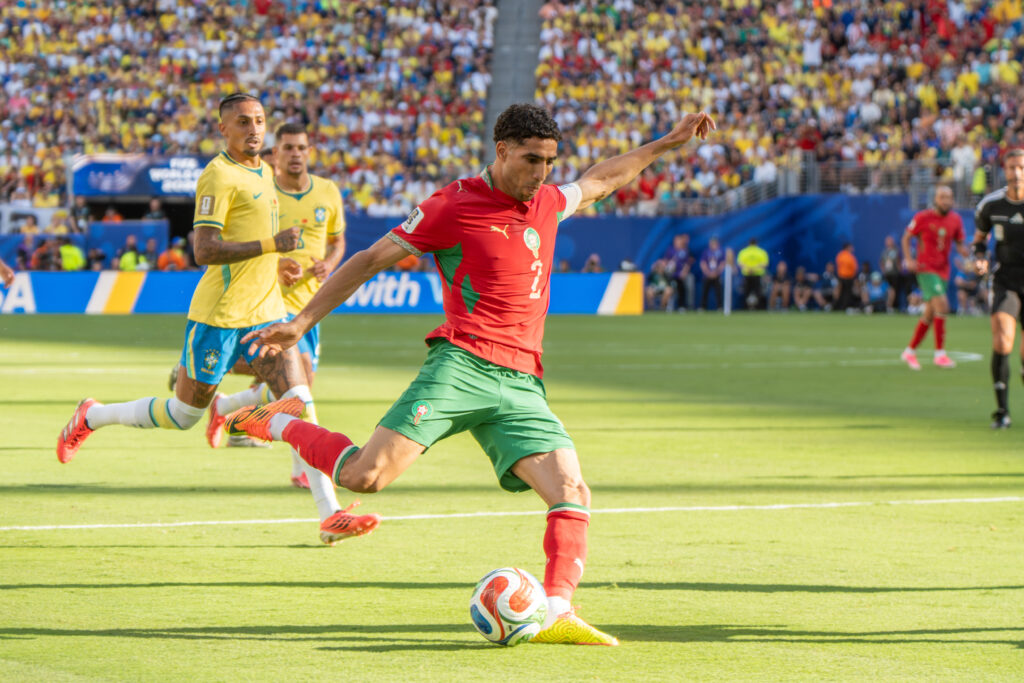
The same build-out that fuels 4.9% growth is projected to widen the fiscal deficit. It will also raise public debt before any productivity gains arrive.
The election and the economic backdrop
Morocco holds parliamentary elections on 23 September 2026. The campaign is unfolding against a backdrop of strong headline growth but persistent social pressures.
Real GDP grew an estimated 4.9% in 2025, the fastest in ten years. The World Bank projects growth will remain solid at 4.2% in 2026.
Public investment linked to the 2030 FIFA World Cup and a recovery in agriculture are the main drivers. That investment has created jobs and contracts, but it has also concentrated attention on how the bill will be paid.
Unemployment and the cost of living remain sensitive topics. The election gives voters a chance to weigh the promise of infrastructure against immediate household concerns.
The World Cup build-out: scale and cost
Morocco has earmarked more than US$23 billion for projects tied to the 2030 World Cup. This story converts dirhams at MAD 9.36 per dollar, the rate quoted on 3 September 2026.
The government plans to invest more than 190 billion dirhams, about US$20.3 billion, in rail, roads, airports, stadiums and urban infrastructure. A centrepiece is a planned 115,000-seat stadium near Casablanca, described as one of the largest in the world.
Direct football investments are reported at 50–60 billion dirhams, about US$5.3–6.4 billion. Wider infrastructure upgrades total around 215–220 billion dirhams, about US$23–23.5 billion.
Moroccan media cite an IMF assessment on infrastructure spending. It puts connectivity and tourism outlays at 11.9% of 2024 GDP over 2024-2030.
Rail networks account for 6.0% of GDP and airports 2.4%.
Stadium construction and renovation make up 2.2% of GDP, roads 0.9% and urban and tourism infrastructure 0.5%. Rail alone represents half of total World Cup-linked investment by sector share.
Who pays: financing and fiscal risk
State-owned enterprises are expected to finance 7.4% of GDP of the investments. Sub-national governments would cover 3.2% of GDP through bank loans.
The central government is projected to finance 1.4% of GDP from the budget. By share, 62% of financing is led by state-owned enterprises, 27% by regional governments and 11% by the central government.
The IMF estimates the programme will widen the fiscal deficit by an average of about 1.2% of GDP per year over 2024–2030. Public debt is projected to rise by 7–8% of GDP by 2030 before gradually declining.
IMF simulations show the investment could raise real GDP by about 2% above a no-investment scenario by 2030. It could raise it by around 3% after 2031.
The Fund warns the projects could strain the budget. It urges control of costs and off-balance-sheet debt.
Automotive exports: the top export industry
Automotive remains Morocco’s top export industry. In the first half of 2026, automotive exports reached MAD 93.655 billion (≈US$10.06 billion).
That was up 17.4% from MAD 79.807 billion (about US$8.5 billion) a year earlier.
Vehicle manufacturing exports rose 26.7% to MAD 37.93 billion (about US$4.1 billion). Wiring sales increased 13.9% to MAD 35.05 billion (about US$3.7 billion).
By July 2026, automotive exports had risen 14.9% to US$11.45 billion. Overall goods exports reached MAD 260.397 billion (about US$27.8 billion) in January–June 2026, up 9.7% year on year.
Aeronautics and broader export momentum
Aeronautics is lifting Moroccan exports alongside the automotive sector. Total exports in January–February 2026 reached MAD 74.842 billion (about US$8 billion), a 2% rise.
By end-April 2026, overall exports had climbed to MAD 168.85 billion (about US$18 billion), an 8.7% increase. Automotive manufacturing and wiring harness segments accounted for much of the gain.
The Office des Changes, Morocco’s Foreign Exchange Office, tracks these trade flows. The economy is diversifying beyond agriculture and phosphates, though exports are still concentrated in a few industries.
Phosphates and OCP: the strategic resource base
Phosphates remain a strategic pillar of the Moroccan economy. The sector is dominated by the state-owned OCP Group, the country’s main phosphate producer and exporter.
Morocco holds large phosphate reserves and uses them to support fertiliser production and foreign revenue. OCP operates across the value chain, from mining to processing and global distribution.
The company is a major source of export earnings and public revenue. Its performance influences fiscal space and the state’s ability to fund infrastructure.
The World Cup investment plan relies in part on public enterprises such as OCP having access to external financing and domestic bonds. That makes phosphate revenue relevant to the tournament’s financing ecosystem.
Drought, agriculture and wheat imports
Agriculture is recovering but drought remains a deep-seated constraint. Real GDP growth in 2025 was helped by that recovery, yet water scarcity continues to force wheat imports.
Morocco depends on imported wheat to cover domestic consumption when rainfall is poor. Drought years raise the import bill and widen the trade deficit in food products.
The agricultural recovery is fragile because rainfall patterns remain irregular.
The World Bank says better farm output will help growth rebound in 2025.
But it warns farming still faces risks from climate shocks.
Food imports and local prices feed directly into household budgets. That makes drought a political issue in the 23 September election, especially for rural voters.
Tourism records and the 2030 target
Morocco welcomed nearly 20 million tourists in 2025, making it the most visited destination in Africa. The country aims to reach 26 million visitors per year by 2030.
The 2030 World Cup is being used as an accelerator for tourism rather than an end in itself. Hotel capacity is being expanded by about a fifth ahead of the tournament.
The tourism push supports jobs, foreign exchange and demand for transport and urban services. Airport and rail investments are designed partly to handle larger visitor flows.
Tourism revenue helps offset the cost of wheat and energy imports. The sector’s growth is central to the government’s broader economic narrative for 2030.
Inflation, debt and the long game
The IMF expects World Cup investment to raise inflation only briefly, by about 0.1 percentage point. Supply-side improvements should keep inflation below its equilibrium level until 2034.
The same simulations project a productivity boost after 2031. That is the case for borrowing now to build rail, airports and stadiums, even though debt rises first.
The IMF’s warning is blunt: Morocco needs careful cost control and maintenance planning to avoid a fiscal hangover.
More: Brazil news, every day from The Rio Times.
The big picture: Morocco explained — economy, politics, society and daily life in one read.
What the September vote will decide
The election will decide who manages the second half of the 2030 investment push. Contracts for rail, stadiums and urban renewal are already shaping regional economies.
Voters will weigh the visible construction boom against unemployment and high food costs. The government can point to 4.9% growth and record exports.
Opposition parties can point to debt, water stress and the risk that World Cup spending crowds out other priorities. The IMF has given them material for that argument.
Whatever the outcome, the economic direction is largely set. The 2030 World Cup build-out, automotive exports and drought management will define the next government’s term.
Connected Coverage
Danish Fund Buys Control of Moroccan Logistics Leader Globex
Morocco Is Becoming the West’s Training Ground for African Armies
Morocco Restarts Wheat Imports on 16 September
The Big Picture
More from the Morocco section
This article was produced by The Rio Times’ automated newsroom system. How we use AI · Report an error · Editorial responsibility: Matthias Camenzind, Editor-in-Chief
LatAm Markets: Live Signals → — real-time movers, turnover leaders and FX across Latin America.
Expat Guide to Morocco
What The Rio Times publishes for foreigners who live in or move to Morocco.
Start here
- Cost of Living in Morocco in 2026
- Is Morocco Safe? Level 2 Advisory, Violent Crime Down 10%
- Best Places to Live in Morocco for Expats 2026, Ranked
- Renting in Morocco 2026: Leases, Deposits and Rents
City guides
Coming up in Morocco
- Rabat Hosts Global Champions Tour Finals on 30 October 30 Oct
- Morocco's First Unity Day Holiday Is 31 October 2026 31 Oct
- French Star GIMS Plays Casablanca 7 November 7 Nov
- Manal Plays Casablanca on 21 November 2026 21 Nov
Understand Morocco