Guides · Morocco
—The draw. Morocco offers European retirees proximity to home, a mild climate and a lower daily cost base than many retiree areas in southern Spain and Portugal.
—The permit. A retiree files for the carte de séjour at the local police prefecture with passport, legal entry, pension proof and accommodation evidence.
—The property rule. Foreigners can own registered urban property with a titre foncier, while untitled melkia or customary land carries more legal risk.
—The tax question. Treaties with France and Spain can assign pension taxing rights to the residence state but vary by pension type and require confirmation.
—The healthcare model. Expat retirees generally rely on private clinics in Casablanca, Rabat and Marrakech and often keep European coverage for major treatment.
Morocco is becoming a standing option for retirees who want Europe’s proximity without southern Europe’s housing and service costs. But the path depends less on a single official income figure than on assembling the right local file, banking structure and titled property.
The residence permit mechanism
A foreign retiree applies for Morocco’s carte de séjour through the police prefecture of the place where they actually live. The file is built around identity, legal entry, pension income and proof of accommodation inside Morocco.
Publicly described dossiers usually require a passport, passport photos, application forms and proof of pension or regular bank transfers. Authorities also commonly ask for a lease or title deed, a criminal-record check and often a local medical certificate.
The search confirms the mechanism and the kind of proof expected, but it does not establish one universal monthly income threshold. In practice, the application is organised around a completed local file rather than a single declared number.
Typical documentation for retirees
The core documents are a valid passport, proof of legal entry into Morocco and local civil status documents as required. Pension evidence can be a pension statement, bank transfers or other proof of regular foreign-source resources.
Accommodation proof is usually a registered lease or a property title, supported by recent utility or address records. Authorities may request a criminal-history extract from the applicant’s country of origin or recent long-term residence.
A medical certificate from a Moroccan doctor is frequently part of the file. Retirees should expect a paperwork-led process that rewards local preparation rather than a fixed numerical formula. Because requirements can differ by city and prefecture, the safest rule is to assemble the core file and then adapt locally.
Why European retirees choose Morocco
Morocco’s attraction is tied to short travel times from major European airports and a mild climate in many coastal and inland areas. The relocation argument also compares daily costs with retiree strongholds in southern Spain and Portugal.
Guides commonly describe Morocco as materially cheaper for housing, services and everyday expenses than those southern European zones. The precise savings gap changes by city, neighbourhood and lifestyle, so it should be treated as a local estimate.
Fixed-income couples often test Morocco as a way to keep a southern climate while reducing accommodation and service costs. This advantage is strongest when compared with high-season coastal southern Europe and less so in luxury or fully imported expat settings.
Where retirees settle
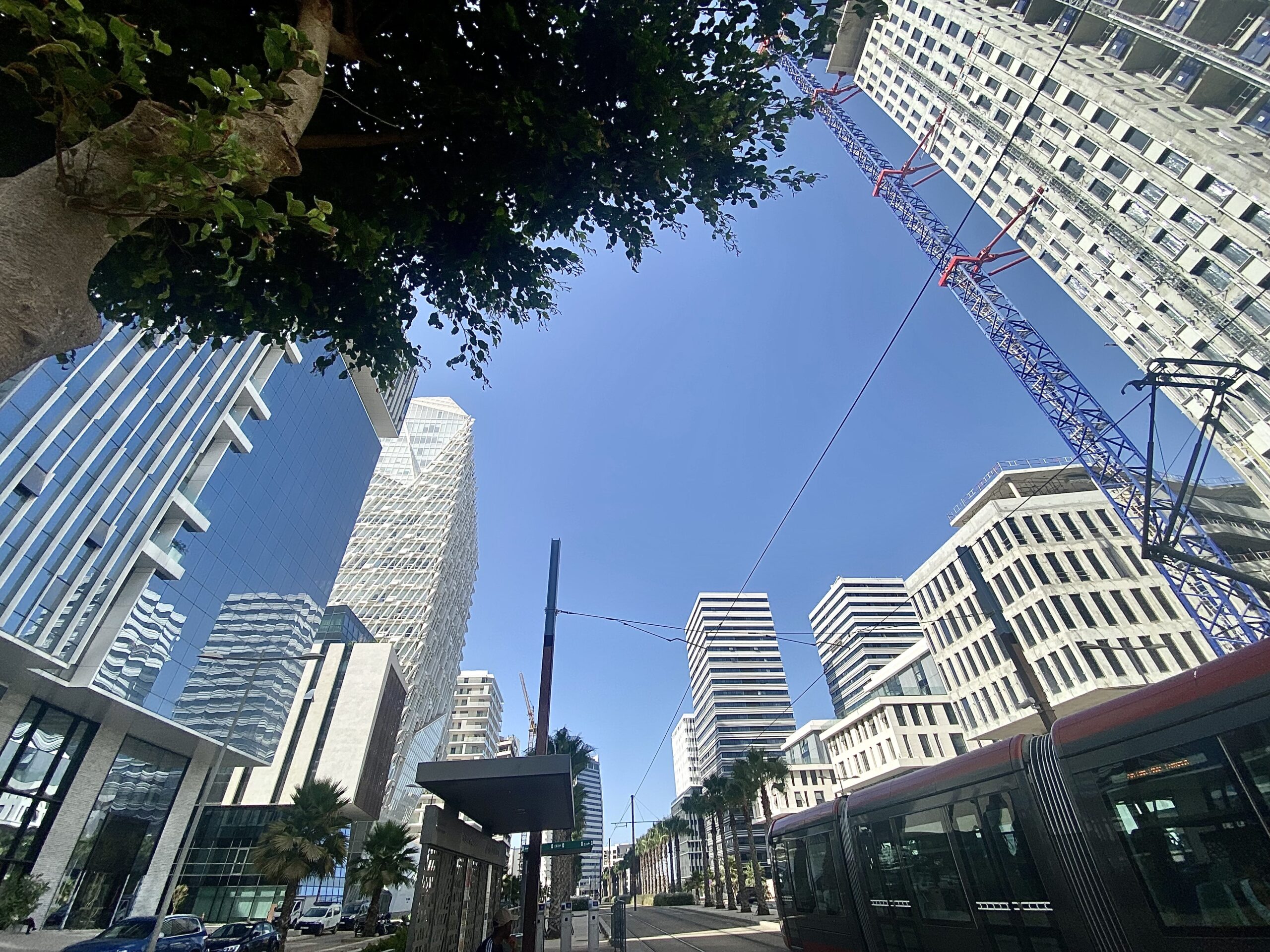
The most cited retiree destinations are Marrakech, Essaouira, Agadir, Tangier and Rabat. Marrakech draws people who want inland climate, year-round amenities and a large foreign community.
Essaouira and Agadir offer Atlantic air and a smaller coastal rhythm, while Tangier adds proximity to Spain. Rabat is valued for administrative convenience and a more formal capital-city environment.
Each city has a different balance of rental supply, medical access, language comfort and social infrastructure. Settlement choice often comes down to whether the retiree prioritises expat services or a quieter local neighbourhood.
Cost of living for a retired couple
Morocco is consistently described as affordable for couples on fixed income, but no single verified 2026 euro or dollar figure is safe to present as authoritative. Rent, imported goods, private healthcare and lifestyle choices can move the budget significantly.
A couple living centrally in Marrakech or Tangier will face a different budget from one in a smaller Atlantic town. The practical approach is to build a city-specific budget with local rents, transport and private insurance costs.
Any national average would misstate the range created by housing markets and imported consumption. Retirees should verify current local figures rather than rely on older guidebook numbers.
Healthcare reality for expatriates
For foreign retirees, the standard model is private care, not the public system. Private clinics and specialist care are more available in Casablanca, Rabat and Marrakech than in smaller cities.
These three cities form the expat medical triangle for consultations, imaging and planned procedures. Many retirees keep European private or supplemental coverage for major treatment.
Serious procedures may prompt treatment outside Morocco or reliance on coverage held in Europe. This means Moroccan residence works best when combined with a realistic international medical safety net.
Buying property safely
Foreigners can generally own titled urban property in their own name in Morocco. The key safety marker is a registered titre foncier, the modern land-registry title.
Melkia, also written moulkia, refers to traditional proof based on adoul deeds and witness testimony rather than the land registry. A notaire normally authenticates the deed and registers the transfer for titled property.
Older customary property may involve adouls, and many buyers seek conversion to registered title before or during purchase. Untitled or unregistered customary land carries higher risk because ownership is harder to verify and resale or financing is more difficult. Agricultural land is commonly treated as a separate and more restricted category for foreign buyers.
Taxation of foreign pensions
A Moroccan tax note states that Morocco applies an 80 percent allowance to qualifying foreign-source pensions received by tax residents. The allowance is linked to transfer into a non-convertible dirham account, so the banking structure matters for tax treatment.
The France–Morocco treaty is cited as existing and as assigning taxing rights on many private pensions to the state of residence. Public-service pensions can be treated differently under that treaty.
The Spain–Morocco treaty is also cited as existing with a similar residence-state rule for private pensions. Because treatment depends on pension type and source country, a country-specific result should be confirmed against the treaty text and current tax code before action.
French-language advantage and daily life
French remains a major practical advantage in administration, banking, healthcare and property transactions. It is widely used alongside Arabic in the institutions that retirees touch most often.
Expat integration is typically easier in cities with established foreign communities and service providers. The day-to-day experience still depends heavily on neighbourhood and local language confidence.
A retiree with working French will handle permits, leases and medical appointments more directly than someone relying only on translation. Daily practicality is therefore strongest in French-friendly urban and expat-heavy areas.
Safety and urban caution
Morocco is commonly described in relocation guides as one of North Africa’s more stable countries. Petty theft and opportunistic crime can still occur in busy tourist medinas and crowded areas.
The practical framing is balanced: generally stable by regional standards but not risk-free in tourist zones. Retirees should apply the usual precautions with phones, cash and documents in crowded historic districts.
Residential neighbourhoods away from tourist flows often present fewer petty-crime incidents. The country’s stability supports long-stay residence, but daily caution remains part of the reality.
More: Morocco news in English, every day from The Rio Times.
Banking and money mechanics
Morocco uses convertible dirham accounts for residents and retirees. This account structure is designed to hold foreign-source funds and allow international convertibility and easier repatriation under Moroccan rules.
The tax allowance for foreign pensions is tied to transfer into a non-convertible dirham account, making account choice central to money management. Retirees must therefore coordinate their bank account type, pension transfer route and tax filing position.
Local banks in major cities are used to serving foreign residents, but account opening still requires residence documentation. The banking system functions as the practical bridge between foreign pension income and local spending capacity.
Connected Coverage
Morocco Automotive Exports Rise 17.4% to US$10.06bn as World Cup Debt Looms
Danish Fund Buys Control of Moroccan Logistics Leader Globex
Morocco Is Becoming the West’s Training Ground for African Armies
The Big Picture
This article was drafted with automated assistance and reviewed before publication. How we use AI · Report an error · Editorial responsibility: Matthias Camenzind, Editor-in-Chief
Expat Guide to Morocco
What The Rio Times publishes for foreigners who live in or move to Morocco.
Start here
- Cost of Living in Morocco in 2026
- Is Morocco Safe? Level 2 Advisory, Violent Crime Down 10%
- Best Places to Live in Morocco for Expats 2026, Ranked
- Renting in Morocco 2026: Leases, Deposits and Rents
City guides
Coming up in Morocco
- Rabat Hosts Global Champions Tour Finals on 30 October 30 Oct
- Morocco's First Unity Day Holiday Is 31 October 2026 31 Oct
- Gnawa Night in Rabat on 7 November 2026 7 Nov
- Singer GIMS Casablanca Show Listed Cancelled 7 Nov
Understand Morocco