
KENYA · INFRASTRUCTURE
The World Bank has warned Kenya that late compensation to people affected by the 740 km Isiolo-Mandera highway in northern Kenya is costing about KSh1.2 billion (US$9.2 million) a month. Amounts in Kenyan shillings (KSh) are converted at KSh129.95 per US$, the market rate on 18 November 2026.
The Standard, a Kenyan daily, reported on Tuesday 17 November 2026 on a letter from Qimiao Fan, the World Bank’s director for Kenya, to three Cabinet Secretaries (Kenyan ministers). The Bank, a Washington-based lender, says its money for compensation, meaning payment for assets and livelihoods the road affects, has been available since 2024.
For readers in the United States, the road tests whether multilateral lending turns into finished infrastructure, and it is meant to speed trade across the Horn of Africa, the region around Somalia and Ethiopia. Every month of delay adds cost to a loan-funded project.
Key Facts
- Cost. Late compensation to people affected by the road costs about KSh1.2 billion (US$9.2 million) a month.
- Paid. 1,281 of 1,669 approved claimants on the two Isiolo-Modogashe stretches were paid.
- Funding. The World Bank announced US$550 million for the corridor on 27 March 2026.
- Next. Payments on the Wajir-Tarbaj-Kotulo section were due to finish by the end of November 2026.
- As of. 18 November 2026, 20:00 GMT
A World Bank letter says unpaid compensation restricts contractor access to parts of a 740 km road in northern Kenya. The delay adds about US$9.2 million of cost each month.
The Big Picture: A Road Held Up by Land Payments
On 27 March 2026 the World Bank announced US$550 million, made up of US$290 million for the Horn of Africa Gateway Development Project and US$260 million for a second project. The money upgrades 508 km of the 740 km corridor and adds about 1,270 km of fibre optic cable, the Bank said.
The Bank expects the work to cut the Nairobi to Mandera trip from three days to one, and other partners fund the rest of the road. Qimiao Fan, the Bank’s Division Director for Kenya, Rwanda, Somalia and Uganda, leads its Kenya work.
The strain is now on land. Compensation began only in November 2025 and so far reached the Isiolo-Modogashe section, The Standard reported on 17 November 2026, citing the letter.
What We Know
Fan’s letter went to Treasury Cabinet Secretary John Mbadi, Roads Cabinet Secretary Davis Chirchir and Lands Cabinet Secretary Alice Wahome. Contractors lack unrestricted access to some sections because compensation is unpaid, and the delay costs about KSh1.2 billion (US$9.2 million) a month across six active road contracts, The Standard reported.
Only 1,281 of 1,669 approved claimants on the two Isiolo-Modogashe stretches had been paid. On the 77 km Isiolo-Kulamawe stretch KSh456 million (US$3.5 million) has been paid, and delays on Kulamawe-Modogashe could add KSh536 million (US$4.1 million) a month.
Delays on Wajir-Tarbaj-Kotulo cost about KSh421 million (US$3.2 million) a month, and payments there were due to finish by the end of November 2026. Delays on Kotulo-Elwak add about KSh243 million (US$1.9 million) a month.
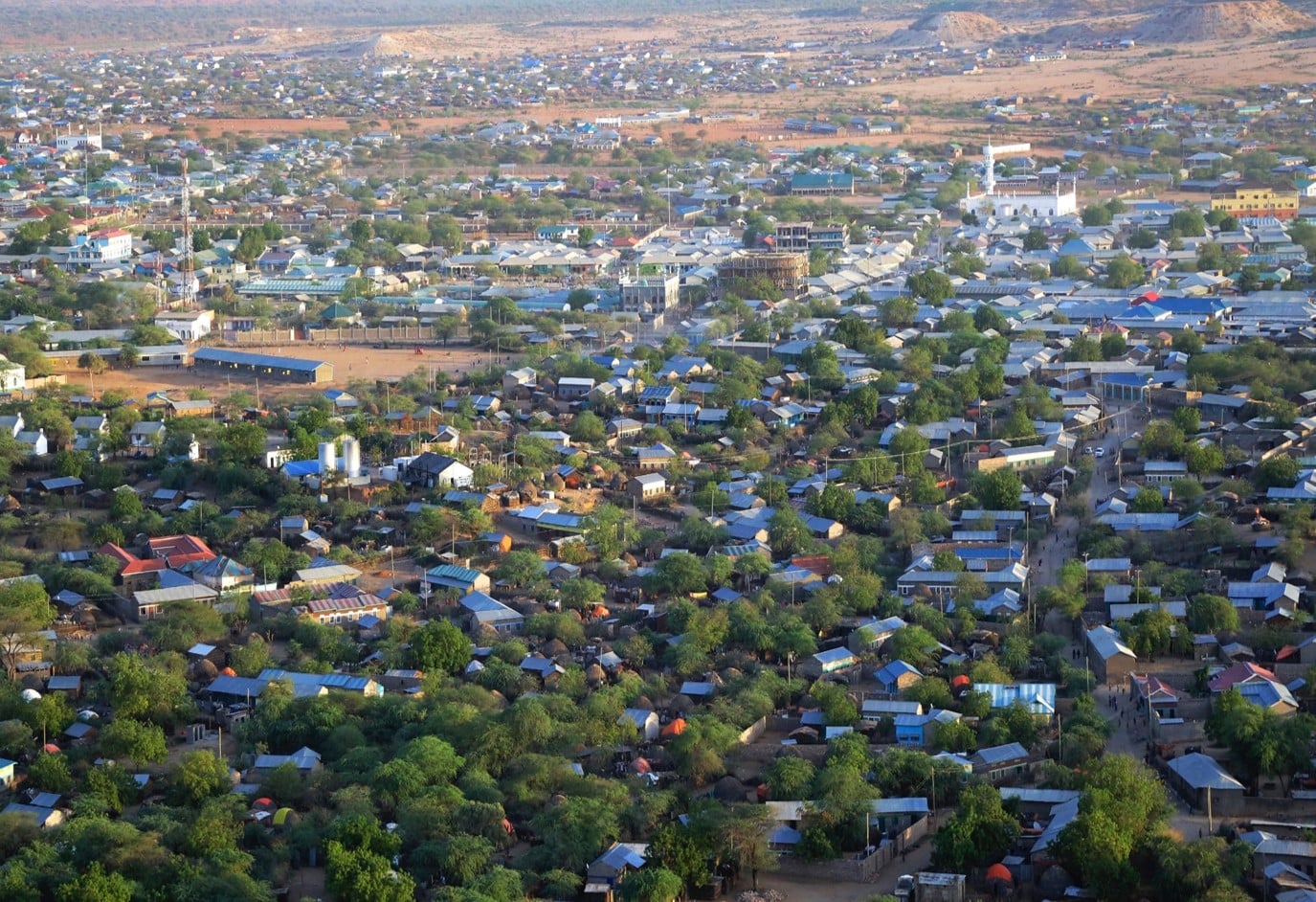
Who Pays Compensation
Two Kenyan bodies share the work. The National Land Commission (NLC), Kenya’s land agency, values and certifies claims, and the Kenya National Highways Authority (KeNHA), the state road agency, pays them.
Eastleigh Voice, a Kenyan outlet, reported on 25 June 2025 that Justice John Mutungi of the Environment and Land Court, a Kenyan court for land disputes, lifted orders freezing the funds in a ruling of 20 June 2025. Two petitioners, Osman Abdille and Fardowsa Abdullahi, had argued that only the NLC should pay, but the judge held that KeNHA may disburse payments for replacement assets and livelihood restoration as computed and certified by the NLC.
Why It Matters
The Bank says money has been available since 2024, so each idle month is cost without progress: about KSh1.2 billion (US$9.2 million), the Bank’s letter estimates. The three section figures it gives, KSh536 million, KSh421 million and KSh243 million, add up to that total.
For the Horn of Africa, delay postpones the one-day Nairobi to Mandera trip the Bank projected in March. For borrowers elsewhere in Africa, it shows that approved financing does not help until land is paid for.
What to Watch
Payments on Wajir-Tarbaj-Kotulo were due to finish by the end of November 2026, according to the letter as reported on 17 November. A Kenyan court ruled on 20 June 2025 that KeNHA may pay, so the test is whether payments now follow.
What Is Not Known
We have not seen a reply to the letter from KeNHA, the Treasury or the NLC. We do not know when the 388 approved claimants still unpaid on those stretches will be paid.
In Plain English
A Cabinet Secretary is a Kenyan government minister. Compensation here means payment for assets, businesses or livelihoods the road affects, as the court and KeNHA describe it.
Earlier we reported on the World Bank’s call on Kenya to retire costly debt and on a separate highway deal. More is on our Kenya page.
Frequently Asked Questions
What is the Isiolo-Mandera highway?
It is a 740 km road in northern Kenya that ends at Mandera, a county on the borders with Somalia and Ethiopia. The World Bank announced US$550 million on 27 March 2026 to upgrade 508 km of it.
How much are the delays costing?
The World Bank puts the extra cost at about KSh1.2 billion (US$9.2 million) a month across six active road contracts. The cost comes from supervision, security, idle equipment and staff, as reported by The Standard on 17 November 2026.
Who pays compensation on the road?
The Kenya National Highways Authority pays, after the National Land Commission has computed and certified the claims. A Kenyan court allowed this in a ruling of 20 June 2025.
How many people have been paid?
The World Bank says 1,281 of 1,669 approved claimants on the two Isiolo-Modogashe stretches had been paid. Payments so far are concentrated on that section.
Sources: World Bank press release, 27 March 2026 (worldbank.org); The Standard, a Kenyan daily, on the World Bank letter, 17 November 2026 (standardmedia.co.ke); Eastleigh Voice, a Kenyan outlet, on the Environment and Land Court ruling of 20 June 2025, published 25 June 2025 (eastleighvoice.co.ke).
This article was produced by The Rio Times’ automated AI newsroom. Editorial responsibility: Matthias Camenzind, Publisher and Editor-in-Chief. The Rio Times also runs Ask Rio Times, which answers from 100,000+ of our own articles, the daily Latin America Power Map, and prediction-market odds on elections and markets.. How we use AI · Report an error
Horn of Africa and the Red Sea
- Horn of Africa 2026: Why It Matters and Who Backs Whom
- Ethiopia’s Neighbors Explained, Ports, Eritrea, Somalia
- Eritrea Explained 2026, a Red Sea Country Guide
- Somalia Explained: Al-Shabaab, Somaliland, the Ports and the Fight Over a 2026 Vote