Healthcare in Kenya for Expats: The System and What It Costs
KENYA · HEALTHCARE
Key Facts
- —The change The old national insurance fund was replaced on 1 October 2024 by the Social Health Authority.
- —The three funds A primary care fund, a social health insurance fund and an emergency, chronic and critical illness fund.
- —Contributions 2.75% of gross monthly pay in the formal sector, with a floor of 300 shillings, about US$2.32, and no upper cap.
- —Can foreigners join Yes. Registration is open to all residents, including non-citizens with an alien identity card.
- —The catch Private ward admissions and luxury services are explicitly excluded. The scheme will not pay for the room most expats want.
- —The gap The scheme pays 10,000 shillings toward a normal delivery. A private hospital charges 95,000 to 120,000.
Kenya replaced its national health insurance scheme two years ago. For a foreign resident, the practical consequence is that private insurance matters more than it did, not less.

Kenya has good private hospitals, a public system in the middle of the largest reform in its history, and a gap between the two that a foreign resident has to bridge with insurance.
What Replaced the Old Scheme
The National Hospital Insurance Fund, established in 1966, was replaced on 1 October 2024 by the Social Health Authority under the Social Health Insurance Act of 2023. The consumer-facing brand is Taifa Care.
The authority administers three funds. The Primary Healthcare Fund covers outpatient care at lower-level facilities and is financed from the exchequer. The Social Health Insurance Fund covers inpatient medical care, maternity, renal, mental health and surgical services and is financed by member contributions. The Emergency, Chronic and Critical Illness Fund covers ambulance and evacuation, accident and emergency, critical illness, palliative care and chronic disease beyond the second fund’s limits, and is government financed.
What It Costs to Belong
Formal-sector members contribute 2.75% of gross monthly pay, with a minimum of 300 shillings a month, about US$2.32, and no upper cap. On a salary of 50,000 shillings that is 1,375 shillings a month, about US$10.62; on 100,000 shillings it is 2,750, about US$21.25.
Informal-sector and non-salaried members are means-tested against the same 300-shilling floor, with an instalment facility. Reporting differs on whether the 2.75% is employee-only or matched by the employer, and The Rio Times does not state which.
Registration is open to all residents, including non-citizens, who register with an alien identity card. The authority states that there are no age limits, no exclusions for pre-existing conditions and no cap on dependants. Whether contribution is enforceable against a foreign retiree with no Kenyan payroll is not cleanly settled in public sources.
What the Scheme Actually Pays
The tariffs published in February 2026 set the terms precisely. Outpatient primary care is 900 shillings per person a year, about US$6.95. Medical inpatient care pays 2,240 to 4,480 shillings a day depending on facility level, about US$17 to US$35, capped at 180 days per household a year.
Maternity pays 10,000 shillings for a normal delivery, about US$77, and 30,000 for a caesarean, about US$232. Dialysis pays 10,650 a session for two sessions a week. Oncology is capped at 400,000 shillings per person a year, about US$3,090, with a further 400,000 available from the emergency fund once that is exhausted.
Critical care at the higher facility levels pays 28,000 shillings a day, about US$216, for twelve days before prior authorisation is required. Ambulance cover pays 4,500 shillings within 25 kilometres and 75 a kilometre beyond, and is available to all Kenyans regardless of registration or payment status.
The Exclusion That Decides It for Expats
The scheme explicitly excludes private ward admissions, luxury services and personal comfort items, along with cosmetic procedures unless medically necessary, assisted fertility treatment and vaccines outside the national schedule.
That single exclusion is why a foreign resident still needs private insurance. The scheme will not pay for the accommodation, and frequently not the institution, that most expatriates would choose.
The arithmetic is starker on maternity. A normal delivery at Aga Khan University Hospital costs about 120,000 shillings and a caesarean about 220,000. The scheme pays 10,000 and 30,000. It covers roughly a tenth of the bill.
The System Is Under Strain
By September 2026 the authority reported 32.3 million registered members but only about five million actually paying premiums to July, against 203.7 billion shillings collected and 178.4 billion paid out.
Hospital arrears stood at 11 billion shillings, about US$85 million, and the health ministry had rejected 10.6 billion shillings of claims as fraudulent. Earlier in 2026 the private hospitals association reported members receiving only 54% of filed claim value, with thousands of beds removed from the registry and a threat to move to cash-only operation.
The practical consequence for a foreign resident is that a growing number of private hospitals decline the scheme and ask for cash or a private policy at the door.
The Private Hospitals
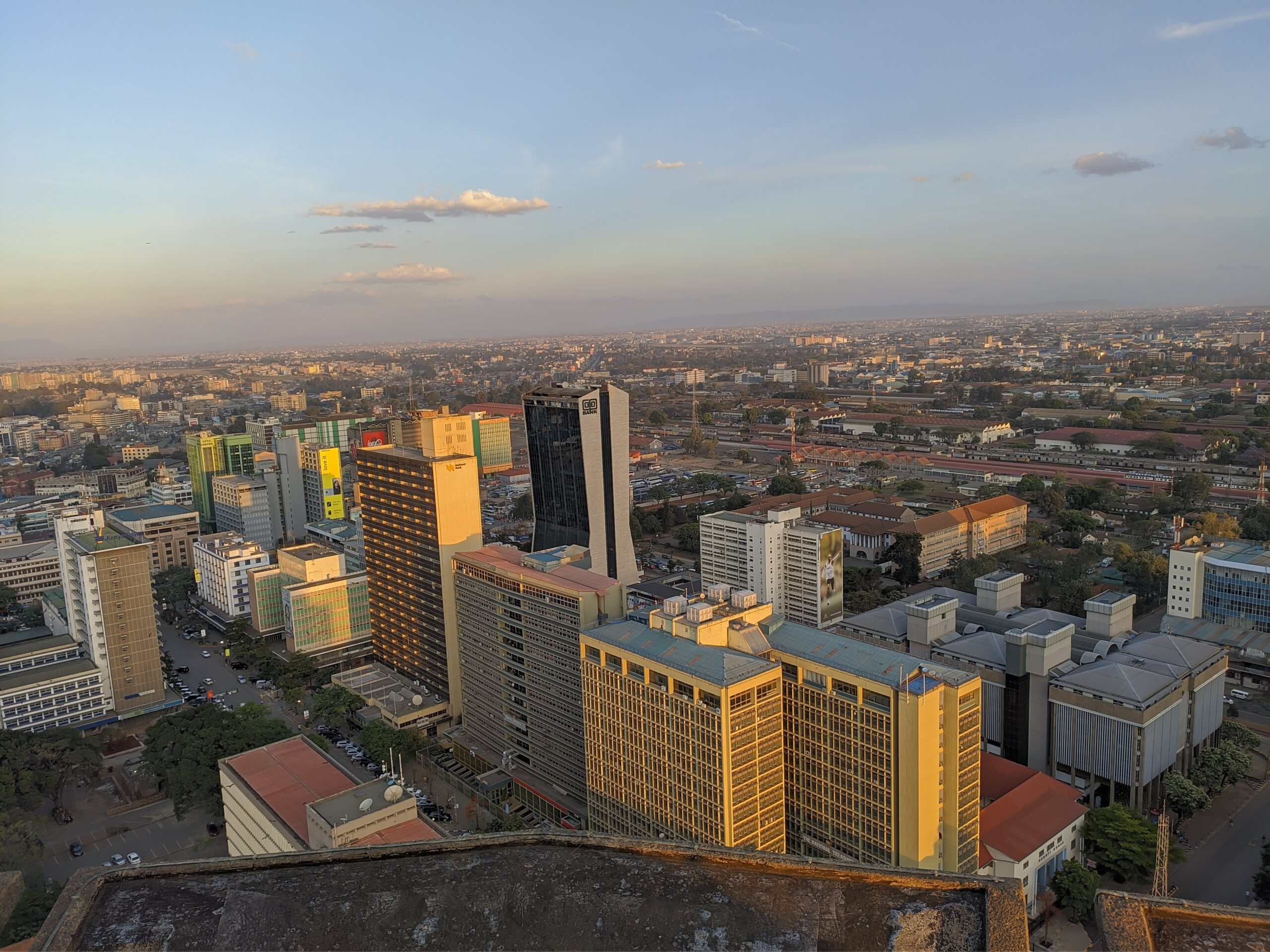
In Nairobi the established institutions are Aga Khan University Hospital, which treats patients from more than 27 African countries, The Nairobi Hospital, MP Shah, The Karen Hospital, The Mater and Avenue Healthcare. Kenyatta National Hospital is the main public referral centre.
In Mombasa the Aga Khan Hospital was recently upgraded to serve a catchment of 1.2 million, alongside Mombasa Hospital, Pandya Memorial and the Coast General referral hospital.
A private specialist consultation in Nairobi costs 3,000 to 10,000 shillings, about US$23 to US$77, with The Nairobi Hospital charging 4,000 to 5,000. In smaller towns the range is 1,500 to 3,000. An MRI starts from about 8,500 shillings, roughly US$66, depending on the region scanned and whether contrast is used.
Private Insurance
Annual premiums start from about 8,900 shillings, roughly US$69, on budget tiers from APA; 16,361 shillings, about US$126, from AAR; 21,316 shillings, about US$165, for Jubilee’s main product, which holds roughly a sixth of the market; and 32,257 shillings, about US$249, for Old Mutual’s plan including critical illness.
Those are entry prices for younger members. Premiums rise steeply with age and with the inpatient limit chosen, and a foreigner in their sixties should expect a multiple of the entry figure or should look at an international policy instead.
The question to ask any Kenyan insurer is which hospitals it settles with directly. A policy that reimburses after the fact is a different product from one that admits you without payment.
Practical Health Matters
Malaria is present at the coast and around Lake Victoria and largely absent from Nairobi, which sits at about 1,795 metres. Prophylaxis depends on where you live and travel rather than on being in Kenya.
Yellow fever vaccination is required for entry from certain countries and is worth holding regardless for regional travel. Private air and road ambulance services operate from Nairobi and are the reason evacuation cover is worth having if you live outside the capital.
More: Africa guides and news, every day from The Rio Times.
Frequently Asked Questions
What replaced Kenya’s national health insurance fund?
The Social Health Authority, from 1 October 2024, administering three funds under the Social Health Insurance Act of 2023.
Can foreigners register?
Yes. Registration is open to all residents including non-citizens, using an alien identity card, with no age limits or pre-existing condition exclusions.
How much are contributions?
2.75% of gross monthly pay in the formal sector, with a floor of 300 shillings a month, about US$2.32, and no upper cap.
Does the scheme cover private hospitals?
It excludes private ward admissions and luxury services, and a growing number of private hospitals decline it because of payment arrears.
What does it pay for a delivery?
10,000 shillings for a normal delivery and 30,000 for a caesarean, against private hospital charges of 95,000 to 220,000.
What does private insurance cost?
Entry-level annual premiums start from about 8,900 shillings, roughly US$69, and rise steeply with age and coverage limits.
Sources: Social Health Authority, Ministry of Health tariff regulatory impact assessment 2026, The Standard, Nation Africa, Rural and Urban Private Hospitals Association.
This article was drafted with automated assistance and reviewed before publication. How we use AI · Report an error
Read More from The Rio Times