Kenya Safety for Expats 2026: The Roads, Not the Terrorists
KENYA · EXPAT GUIDE
Key Facts
- —The murder rate 2,711 police-recorded murders in 2025, about 4.8 per 100,000, down ten percent.
- —The comparison Roughly a third of Nigeria’s rate and about two-thirds of the American one.
- —The advisory The United States rates the country level two, with no level three areas at all.
- —Where the risk sits Mandera, Wajir, Garissa and northern Lamu, all on or near the Somali border.
- —In the city Eastleigh and Kibera are the two Nairobi neighbourhoods named as do-not-travel.
- —The catch Every foreign office names traffic as the most likely thing to hurt you.
The threat people worry about here is concentrated on a border most residents never approach. The one that actually kills foreigners is the drive to work.
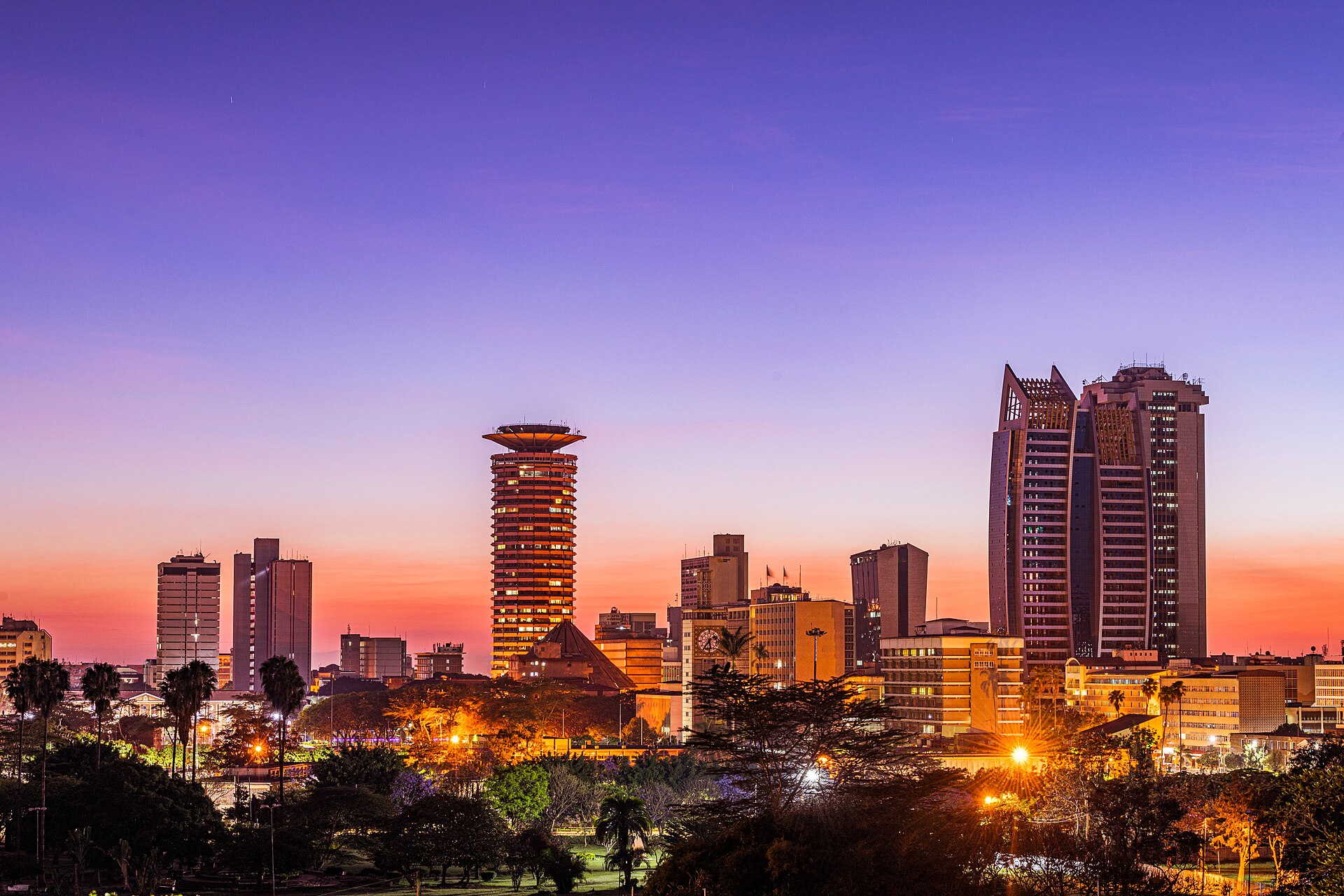
Kenya is a different proposition from its reputation. The overall advisory level is one notch above normal, not three, and the dangerous areas sit on the periphery.
The real risks for a foreign resident, in order of likelihood, are street crime in Nairobi, road traffic and protest disruption. Road traffic is by far the most likely to kill you.
The Murder Numbers
Police recorded 2,711 murders in 2025, down 10.1 percent from 3,015 the year before. Against a population near 56.4 million that works out at about 4.8 per 100,000.
An independent series puts the rate at 4.87 per 100,000 for 2022. The two agree closely, which is a good sign for data quality.
For scale, that is roughly a third of Nigeria’s rate and about two-thirds of the United States figure. It is not a high-homicide country by regional standards.
Other crime fell too. Total reported crimes came to 96,038, down 5.1 percent, with robbery down 10.5 percent and theft down as well.
One figure jumped sharply. Firearm surrenders rose to 1,291 in 2025 from 31 the year before, and recoveries of illegally held weapons rose fourfold.
What the Advisories Say
The United States rates the country level two, exercise increased caution, as of 28 July 2026. There are no level three areas at all.
The advisory jumps straight from level two to level four. Those zones are Garissa, Wajir, Mandera, Lamu and Tana River.
They also cover Kilifi north of the C103 highway and the coast north of Malindi. Every one of them sits on or near the Somali border.
Two Nairobi neighbourhoods are also level four. They are Eastleigh and Kibera.
Britain advises against all travel to Mandera County and parts of Wajir and Garissa. It carves out Lamu Island and Manda Island as travellable, which the United States does not.
Canada asks for a high degree of caution and names the same border counties. It adds the Kibera neighbourhood to its avoid-non-essential list.
The Somali Border Threat
Al-Shabaab activity is concentrated in Mandera, Wajir and Garissa, plus Lamu and the northern coastal strip. All three governments’ worst zones map almost exactly onto that geography.
The most recent significant attack killed at least five Kenyan security personnel in a roadside ambush in Mandera on 29 July 2026. That is the pattern, and it targets security forces rather than civilians.
Nairobi has a history of major attacks, which is why the threat looms large in people’s minds. The current geography of incidents is overwhelmingly on the border.
Nairobi, Neighbourhood by Neighbourhood
The problem areas named by name are Eastleigh, the central business district, Mathare, Kibera and the informal settlements. In Mombasa they are Old Town and the area around the Likoni ferry.
Violent crime includes mugging, armed robbery and carjacking, and it happens in daylight. Two carjacking routes are named specifically, the old airport road and Jogoo Road.
Where foreign residents actually live is a different list entirely. Karen, Lavington, Westlands, Kilimani, Gigiri, Runda, Muthaiga and Spring Valley appear on no government avoid list.
Gigiri is the diplomatic quarter and is the most heavily policed. The operative distinction is not that Nairobi is dangerous but that the centre after dark and the eastern settlements are.
One caution about that picture. Neighbourhood crime statistics are not published in any retrievable form.
The map above is inferred from the advisory carve-outs rather than from a dataset. Treat it as guidance, not measurement.
What is published is the county share. Nairobi accounted for 10.4 percent of all recorded crime in Kenya between 2021 and 2025, the largest of any county.
The Scams
One scam dominates and it is specific. People impersonate police officers or private security guards to take valuables and documents.
The classic version is a supposed officer demanding to inspect your passport. Knowing the pattern is most of the defence.
Drink spiking in bars and nightclubs is the second. The stated purpose is to weaken and confuse the victim rather than anything else.
Dating-app robbery and assault is the third, and the British foreign office notes an increase in criminals targeting LGBT travellers in particular.
The standing advice is short. Do not resist a mugging or carjacking and do not carry large sums or visible jewellery.
Keep car windows closed in traffic. Avoid driving at night and avoid isolated areas alone.
The Coast
Mombasa itself appears on no avoid list. The named problem areas there are Old Town and the Likoni ferry surroundings.
Diani, Watamu and Malindi all sit outside the restricted zone. The American line runs north of Malindi and north of the C103 highway in Kilifi.
So Malindi and everything south of it, including Watamu, Kilifi town, Mombasa and Diani, is outside the worst category. Lamu is where the three governments disagree.
Day-to-day coastal problems are beach-boy hassle, drink spiking and opportunistic theft. Terrorism is the tail risk and it is concentrated further north.
The Risk Nobody Plans For
Driving standards are poor and long-distance buses suffer serious accidents from poor maintenance and speeding. That is the plain assessment of the British foreign office.
Political tension is the other live factor. Canada notes that large demonstrations can occur with little warning and turn violent.
It adds that women have been sexually assaulted during past protests. Kenya’s protest cycle is unpredictable by design.
Put the three together and the practical rules are simple. Live in the western suburbs, do not drive at night and stay away from demonstrations.
Kenya rewards that discipline. On the numbers it is a considerably safer posting than much of the region.
More: Africa news in English, every day from The Rio Times.
Frequently Asked Questions
How safe is Kenya for expats?
Safer than its reputation. Police recorded 2,711 murders in 2025, about 4.8 per 100,000, roughly a third of Nigeria‘s rate and about two-thirds of the American one.
Which areas should I avoid?
Mandera, Wajir and Garissa counties on the Somali border, Lamu County outside the islands, Tana River, Kilifi north of the C103 highway and the coast north of Malindi. In Nairobi, Eastleigh and Kibera.
Where do foreign residents live?
Karen, Lavington, Westlands, Kilimani, Gigiri, Runda, Muthaiga and Spring Valley. None of them appears on any government avoid list and Gigiri is the diplomatic quarter.
Is the coast safe?
Malindi and everything south of it, including Watamu, Kilifi town, Mombasa and Diani, sits outside the most restrictive zone. Old Town and the Likoni ferry area in Mombasa are named as problem spots.
What is the biggest risk?
Road traffic. Driving standards are poor and long-distance buses suffer serious accidents from poor maintenance and speeding. Street crime and protest disruption follow.
Sources: US Department of State advisory of 28 July 2026, the UK FCDO of 4 September 2026, Global Affairs Canada of 9 September 2026, the KNBS Economic Survey 2026, the World Bank and UNODC homicide series, and Al Jazeera.
This article was produced by The Rio Times’ automated newsroom system. How we use AI · Report an error
Read More from The Rio Times