Jamaica Explained 2026: The Country, Its Economy, Its Politics and What to Watch
GUIDES · JAMAICA
Key Facts
- —Capital Kingston, on the south coast. The Kingston and St Andrew area counted 672,904 people in the 2022 census, about a quarter of the island.
- —Population About 2.84 million in 2025 (World Bank), roughly the population of Lithuania. The 2022 census counted 2,774,538 people.
- —Currency The Jamaican dollar, written J$. About J$158 bought one US dollar on 26 September 2026 (open.er-api.com). The Bank of Jamaica’s rate on 18 September was J$157.85.
- —Language English is the official language. Jamaican Patois, an English-based creole, is widely spoken in everyday life.
- —GDP US$22.7 billion in 2025, or about US$8,000 per person (World Bank). That is roughly a tenth of US output per person.
- —Government A parliamentary democracy with King Charles III as head of state. Prime Minister Andrew Holness won a third straight term on 3 September 2025.
Jamaica explained for readers abroad: an English-speaking island of 2.8 million people, under two hours by air from Miami. It is rebuilding from the costliest hurricane in its history, and the next twelve months decide how fast.
Most Americans, Canadians and Britons already know Jamaica as a beach holiday or through the diaspora in New York, Toronto and London. Jamaica explained properly in 2026 starts elsewhere. On 28 October 2025 Hurricane Melissa caused damage and losses worth more than half a year’s national output.
What kind of country is this?
Jamaica covers 10,991 square kilometres, a little smaller than Connecticut. It is the third-largest island in the Caribbean after Cuba and Hispaniola.
Mountains run down its spine, rising to 2,256 metres at Blue Mountain Peak. Most people live along the coasts and in the Kingston basin.
The island is divided into 14 parishes, which work like counties. Kingston is the capital and business centre in the southeast.
Montego Bay, Negril and Ocho Rios on the north and west coasts are the tourist economy. That split matters, because Hurricane Melissa hit the west far harder than the capital.
Spain held the island from the early 1500s until England seized it in 1655. Under British rule it became a sugar colony worked by enslaved Africans, and slavery was abolished in the 1830s.
Most Jamaicans today descend from those Africans. The country became independent on 6 August 1962 and kept the British monarch as its head of state.
That colonial history is not only background. In September 2026 it became an active legal case, covered below. It also explains why debates about the monarchy and the country’s final court of appeal keep returning to Parliament.
Who runs Jamaica and how
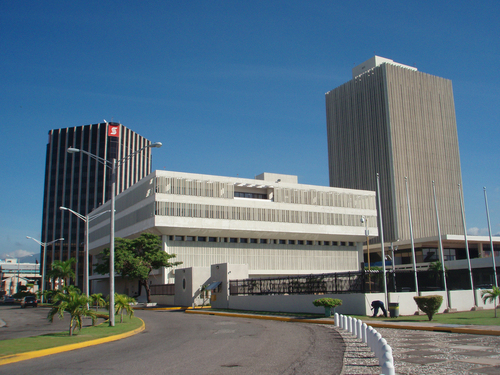
Jamaica uses the Westminster system inherited from Britain. King Charles III is head of state, represented on the island by a Governor-General with a largely ceremonial role. Real power sits with the prime minister, who leads the party with a majority in the elected House of Representatives.
The House has 63 members, each elected in a single constituency by whoever wins the most votes. The Senate has 21 appointed members.
Thirteen are chosen on the prime minister’s advice and eight on the opposition leader’s. Two parties have alternated in power since independence: the Jamaica Labour Party (JLP) and the People’s National Party (PNP).
The general election of 3 September 2025 was closer than its seat count suggests. The Electoral Commission of Jamaica’s final count gave the JLP 35 seats and the PNP 28.
The JLP received 412,705 votes to the PNP’s 401,398, a gap of about 11,300. Turnout was 39.96 percent of 2,077,800 registered voters.
Andrew Holness of the JLP thereby won a third consecutive term as prime minister. It is his fourth term in all, counting a brief first spell from 2011 to 2012. The PNP, led by Mark Golding, doubled its seats from 14.
Changing the most protected parts of the constitution needs a two-thirds majority in both houses. Removing the monarch also needs a referendum. The government lacks two-thirds in either house, so constitutional change requires the opposition’s votes.
Two other institutions shape policy. The Bank of Jamaica (BOJ), the central bank, sets interest rates to keep inflation between 4 and 6 percent. The Independent Fiscal Commission, a public watchdog, checks the government’s budget numbers against the fiscal rules written into law.
How the economy works
Jamaica’s economy produced US$22.7 billion in 2025, according to the World Bank. That is about US$8,000 per person, a middle-income level.
Foreign currency comes mainly from three sources. They are tourists, money sent home by Jamaicans abroad, and bauxite and alumina, the raw materials for aluminium.
Tourism is the largest. The Jamaica Tourist Board counted 3.74 million visitors in 2025, down 9.9 percent on 2024 because of the hurricane.
That was 2.49 million stopover visitors and 1.24 million cruise passengers, with estimated gross earnings of US$3.79 billion. The United States is the largest source market.
Remittances are almost as large. The Bank of Jamaica recorded US$3.49 billion of remittance inflows in calendar 2025, up 3.8 percent. That equals roughly 15 percent of output, a far larger share than in most economies.
The other defining feature is debt discipline. For over a decade Jamaica ran large primary surpluses, meaning revenue exceeded spending before interest. The aim was to pay down one of the region’s heavier public debts.
By March 2025 debt was 62.4 percent of GDP. The government was on course to reach its legal target of 60 percent two years early.
The labour market was tight before the storm and has largely recovered. Unemployment was 3.7 percent in April 2026, and 1,418,800 people were employed. That is slightly more than the 1,413,200 employed in October 2025, just before Melissa struck.
Inflation is the weak spot. Prices rose 7.9 percent in the year to August 2026, above the central bank’s 4 to 6 percent target.
Transport costs were up 14.6 percent and food 10.2 percent. The BOJ has held its policy rate at 5.50 percent since a quarter-point cut on 23 February 2026.
What is happening right now
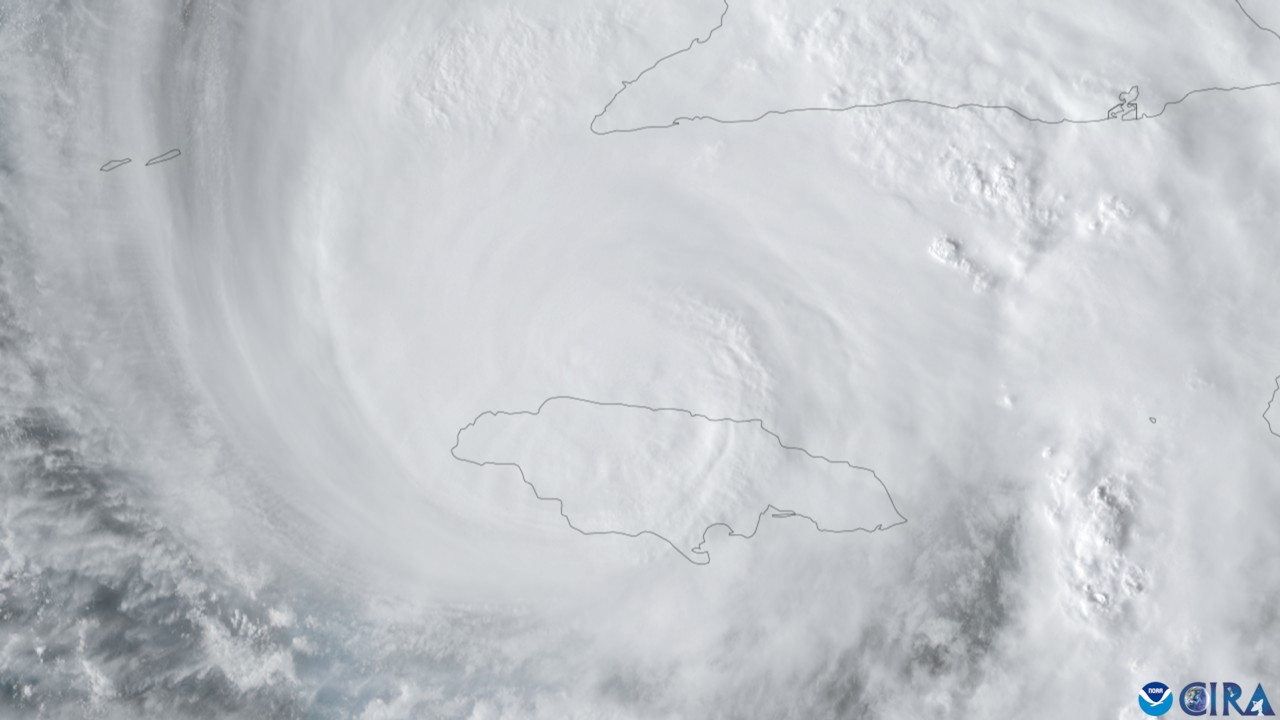
As of 26 September 2026, Jamaica is eleven months into recovery from Hurricane Melissa. The storm made landfall near New Hope, Westmoreland, on 28 October 2025.
It was a Category 5 hurricane, the strongest ever to hit the island. It crossed from the southwest to the north coast within hours.
The government confirms 45 deaths. In December 2025 the disaster agency said 13 people were still missing and 32 further deaths were under investigation. Around 1.6 million people, more than half the population, were affected, according to a World Bank project document.
Two estimates of the cost are often confused. The World Bank’s rapid assessment put physical damage alone at US$8.8 billion, 41 percent of 2024 GDP. St Elizabeth was the worst-hit parish, at US$2.3 billion.
The fuller damage and loss assessment was led by the Planning Institute of Jamaica (PIOJ) with the UN’s Latin America commission. It reached J$1.95 trillion (US$12.2 billion at the assessment’s exchange rate).
That larger figure equals 56.7 percent of Jamaica’s 2024 output and more than four times the cost of Hurricane Gilbert in 1988. For scale, a disaster of the same relative size in the United States would cost more than US$15 trillion. About 80 percent of the total cost fell on households and businesses rather than the state.
Jamaica had insured itself unusually well. Pre-arranged instruments were set to deliver about US$650 million quickly, according to the prime minister.
That included a US$150 million catastrophe bond paid in full and US$91.9 million from the regional insurer CCRIF. In December 2025 the IMF, World Bank and three regional development banks assembled up to US$6.7 billion over three years.
Parliament suspended the fiscal rules in December 2025 until the end of March 2027. The fiscal outcome was better than feared.
The finance ministry says the 2025/26 deficit was 2.5 percent of GDP, not the projected 3.8 percent. Debt ended at 65.6 percent, not 68.9 percent.
Output fell 7.3 percent in the last quarter of 2025 compared with the quarter before, and was 3.5 percent lower year on year in the first half of 2026. The PIOJ’s preliminary estimate for April to June 2026 is a 2.9 percent contraction.
Measured quarter on quarter, though, output grew 3.3 percent in early 2026. Jamaica has therefore not had the two consecutive quarterly falls that usually define a recession.
The recovery is uneven. In July 2026 airport arrivals were 22.4 percent below a year earlier and crude bauxite output was down 55.7 percent.
A drought linked to El Niño has hurt farming. Finance Minister Fayval Williams acknowledged in September that people in the west are not yet feeling the national improvement.
Politics has its own storyline. On 7 September 2026 Jamaica petitioned King Charles, as its head of state, to seek a Privy Council opinion on slavery reparations.
It asks whether the enslavement of Africans in Jamaica was lawful and whether Britain owes a remedy. On 22 September Culture Minister Olivia Grange told Parliament the King had referred it to the Judicial Committee of the Privy Council.
The plan to become a republic, meanwhile, is stalled. A bill to replace the monarch was tabled on 10 December 2024 and lapsed when Parliament was dissolved for the 2025 election.
The PNP will only back it if Jamaica also replaces the Privy Council with the Caribbean Court of Justice. The government prefers to do one step at a time.
Crime, long Jamaica’s biggest reputational problem, has fallen sharply. The national security minister reported a provisional 673 murders in 2025.
That was the lowest since 1993 and about 41 percent below 2024. That is still a rate of roughly 24 per 100,000 people, several times the US rate.
What to watch
Monday 28 September 2026: the Bank of Jamaica’s next interest-rate decision, published at close of business. With inflation at 7.9 percent, the question is whether the 5.50 percent rate holds. Further decisions follow on Wednesday 18 November and Friday 18 December.
Late September and October: the finance minister expects STATIN, the statistics institute, to publish official April to June output around month-end. It replaces the PIOJ’s preliminary minus 2.9 percent.
September inflation should follow in mid-October, in line with STATIN’s usual monthly timing. The BOJ expects inflation above its target through the September quarter, then moderating toward the target range.
Wednesday 28 October 2026 marks one year since Melissa. The Atlantic hurricane season ends on Monday 30 November.
The PIOJ forecasts a contraction of 0.5 to 1.5 percent for July to September. It expects growth to return from October to December, and 1 to 3 percent growth for the fiscal year to March 2027.
Two longer markers matter most. The PIOJ now expects output to regain its pre-Melissa level as early as April to June 2027. That is about a year and a half sooner than the late-2028 date projected just after the storm.
Separately, the fiscal-rule suspension expires on 31 March 2027. The 2027/28 budget will show how the government plans to cut debt to 60 percent by 2029/30.
On the legal front, watch for the Privy Council’s directions on how it will hear the reparations questions. Any timetable it sets will be the first concrete sign of how long the case could take.
What this means for foreigners
Entry is simple for most Western visitors. Jamaica’s immigration agency lists no visa requirement for citizens of the United States, Canada and the United Kingdom.
Americans may stay up to six months; the British government says its citizens are usually granted 90 days. The stamp in your passport sets the exact leaving date.
Visitors can apply to extend a stay, to a maximum of 12 months for Commonwealth citizens and six months for others. Working needs a work permit, which the employer applies for. The Rio Times Jamaica residency and visa guide walks through each route.
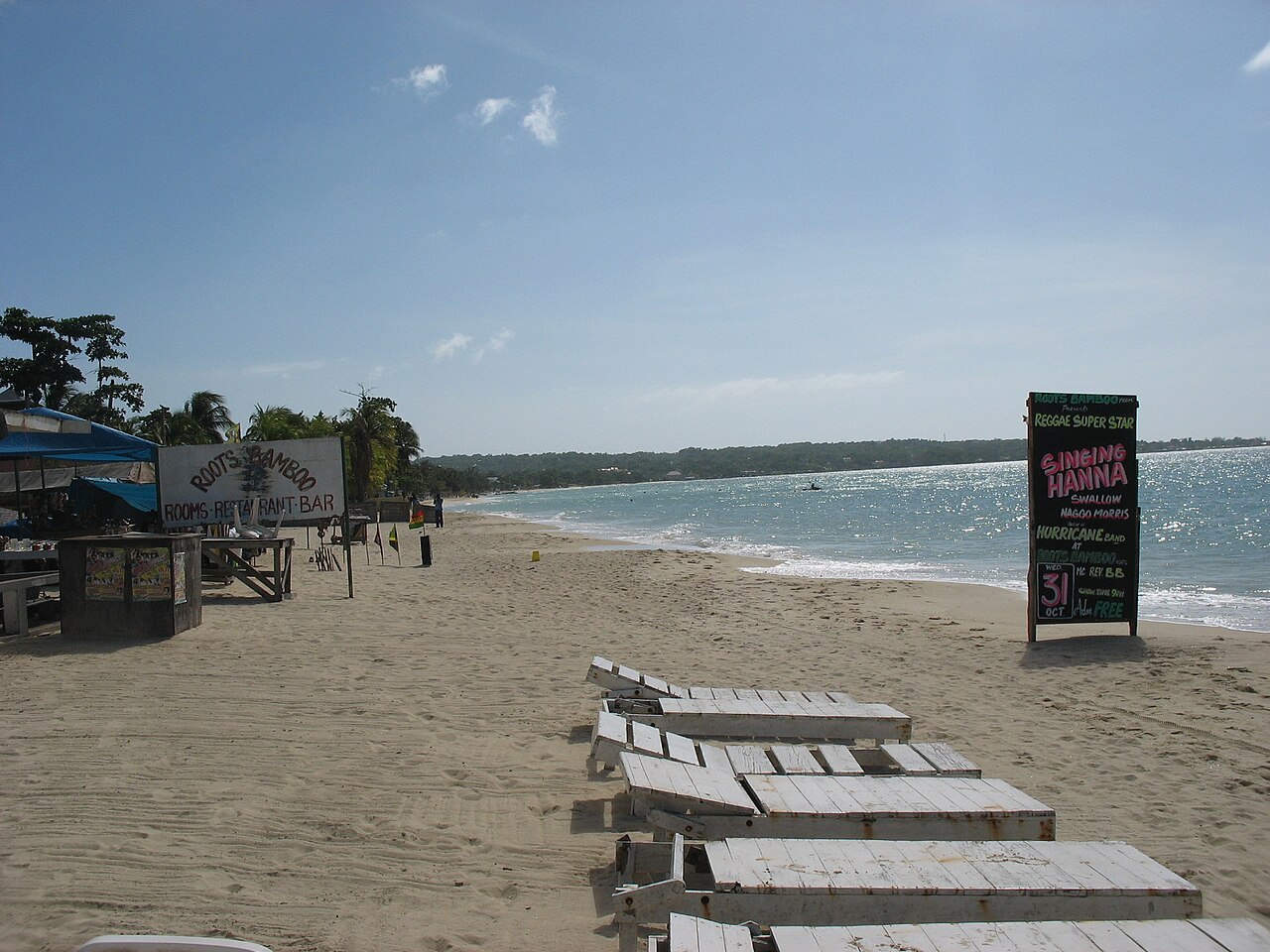
Travellers should check their destination rather than the country. Kingston and the east suffered far less damage, while St James, which includes Montego Bay, suffered US$1.8 billion of damage. Airport arrivals in July 2026 were still more than a fifth below the previous year.
Prices are rising faster than in North America or Europe, with inflation at 7.9 percent in August. The exchange rate has held near J$158 to the dollar.
That is partly because the central bank regularly sells US dollars to the market. It sold US$40 million on 17 September alone.
For investors, the headline is resilience with conditions attached. The finance minister says Fitch, Moody’s and S&P kept their positive ratings through the storm.
But debt has risen, the fiscal rules are suspended until March 2027, and a new hurricane season is a standing risk. Our investing, property, tax and safety guides below go into the practical detail.
Connected Coverage
Investing in Jamaica as a Foreigner 2026 — Costs, Title Checks and Real Risks
Healthcare in Jamaica for Expats and What It Really Costs
Open a Bank Account in Jamaica as a Foreigner and What It Takes
Taxes in Jamaica for Expats and What the Rules Actually Reach
Moving to Jamaica, from the Shipping Container to the Driving Test
Jamaica Residency Visa Requirements, from the Airport Stamp to Citizenship
Retire in Jamaica — the Route That Actually Exists
Is Jamaica Safe for Expats — What the 2026 Numbers Show
Buying Property in Jamaica as a Foreigner: Transfer Tax and Title
Caribbean Debt Crisis Deepens as Hurricane Melissa Leaves Jamaica a J$198 Billion Hole
Jamaica Economy Slashes Debt to 72 Percent as Caricom Investors Watch the 2027 Target
Sources: Election results from the Electoral Commission of Jamaica, hurricane damage from the World Bank and the Planning Institute of Jamaica, prices and interest rates from the Bank of Jamaica and STATIN, fiscal data from the Ministry of Finance and the Independent Fiscal Commission, and exchange rates from open.er-api.com and the Bank of Jamaica. All accessed 26 September 2026.
- Electoral Commission of Jamaica — 2025 general election summary results
- World Bank / GFDRR — GRADE rapid damage estimate, Hurricane Melissa
- Planning Institute of Jamaica via JIS — damage and loss assessment
- ODPEM via JIS — confirmed deaths and missing persons
- IMF — joint US$6.7 billion recovery package
- Bank of Jamaica — August 2026 policy decision and schedule
- PIOJ — review of economic performance, April–June 2026
- Independent Fiscal Commission — statement on fiscal performance, May 2026
- Jamaica Tourist Board — 2025 arrivals and earnings
- Bank of Jamaica — remittance bulletin, December 2025
- World Bank — GDP and population data
- Passport, Immigration and Citizenship Agency — entry visa requirements
- JIS — reparations petition referred to the Privy Council
What Is Not Known
The final human toll. The confirmed figure is 45 deaths, but as of December 2025 thirteen people were still missing and 32 deaths were under investigation. The official count could still change.
Whether the recovery timeline holds. The PIOJ sees output regaining its pre-storm level by mid-2027.
That depends on reconstruction speed, farm output after the drought and a quiet hurricane season. Housing and infrastructure, the PIOJ says, will take three to five years to rebuild.
Where inflation peaks. The BOJ expects it to ease toward target after the September quarter.
It calls the risks skewed upward, mainly because of oil prices tied to conflict in the Middle East. Whether the bank raises rates, holds or cuts is open.
The debt path after March 2027. The Independent Fiscal Commission has warned of a gap.
With the rules suspended, no law sets a timetable for returning debt to 60 percent of GDP. The government’s target of 2029/30 is a policy aim, not yet law.
How the reparations case will proceed. The Privy Council has not yet issued directions.
It is not known how Britain’s government will respond or how long an opinion might take. Whether Jamaica becomes a republic in this Parliament is equally unclear.
Frequently Asked Questions
Who won Jamaica’s 2025 general election?
The Jamaica Labour Party of Prime Minister Andrew Holness won the election of 3 September 2025 with 35 of the 63 seats. The People’s National Party, led by Mark Golding, won 28, doubling its seats. The JLP’s margin in votes was about 11,300, and turnout was 39.96 percent.
How much damage did Hurricane Melissa do to Jamaica?
Melissa hit on 28 October 2025 as a Category 5 storm, the strongest ever to strike the island. The government confirms 45 deaths. The World Bank put physical damage at US$8.8 billion, 41 percent of 2024 GDP, and the full damage and loss assessment reached US$12.2 billion, or 56.7 percent of GDP.
Is Jamaica’s economy recovering from the hurricane?
Yes, but slowly and unevenly. Output was 2.9 percent lower year on year in April to June 2026, a smaller fall than in the two previous quarters. The Planning Institute of Jamaica expects growth to return from October to December 2026 and pre-storm output as early as mid-2027.
What currency does Jamaica use?
The Jamaican dollar, written J$. It traded near J$158 to the US dollar on 26 September 2026. Inflation was 7.9 percent in August 2026, above the central bank’s target range of 4 to 6 percent.
Do Americans need a visa to visit Jamaica?
No. Jamaica’s immigration agency lists no visa requirement for US citizens, who may stay up to six months. Canadian and British citizens also need no visa. The stamp in the passport sets the exact leaving date.
Is King Charles still Jamaica’s head of state?
Yes. Jamaica is a parliamentary democracy with King Charles III as head of state, represented by a Governor-General. A bill to become a republic lapsed in 2025, and the two main parties disagree over whether to replace the Privy Council at the same time.
This article was produced by The Rio Times’ automated newsroom system. How we use AI · Report an error
Read More from The Rio Times