Retire in Jamaica — the Route That Actually Exists
Jamaica · Retirement
Key Facts
- —How you actually stay Jamaica has no retirement visa. Retirees live on repeated visitor extensions, then apply for permanent residence in the immigration agency’s retirement category.
- —What the paperwork costs Permanent residence costs 100,000 Jamaican dollars (about US$640) and is usually decided within three to six months.
- —The catch No income threshold is published. The agency weighs pension details, bank statements and property evidence, and decides case by case.
- —Tax on a pension The 2026 tax-free threshold is about US$12,100, with separate exemptions for pensioners and for people aged 65 and over.
- —Medicines after 60 A state programme covers ten chronic illnesses for residents aged 60 and over, leaving only a small pharmacy dispensing fee.
- —What living costs Crowd-sourced Kingston data put one person’s monthly costs, excluding rent, at about US$1,055 in August 2026.
There is no retirement visa and no published income threshold. The people who retire in Jamaica arrive as visitors, convert to residence, and plan where their income lands.
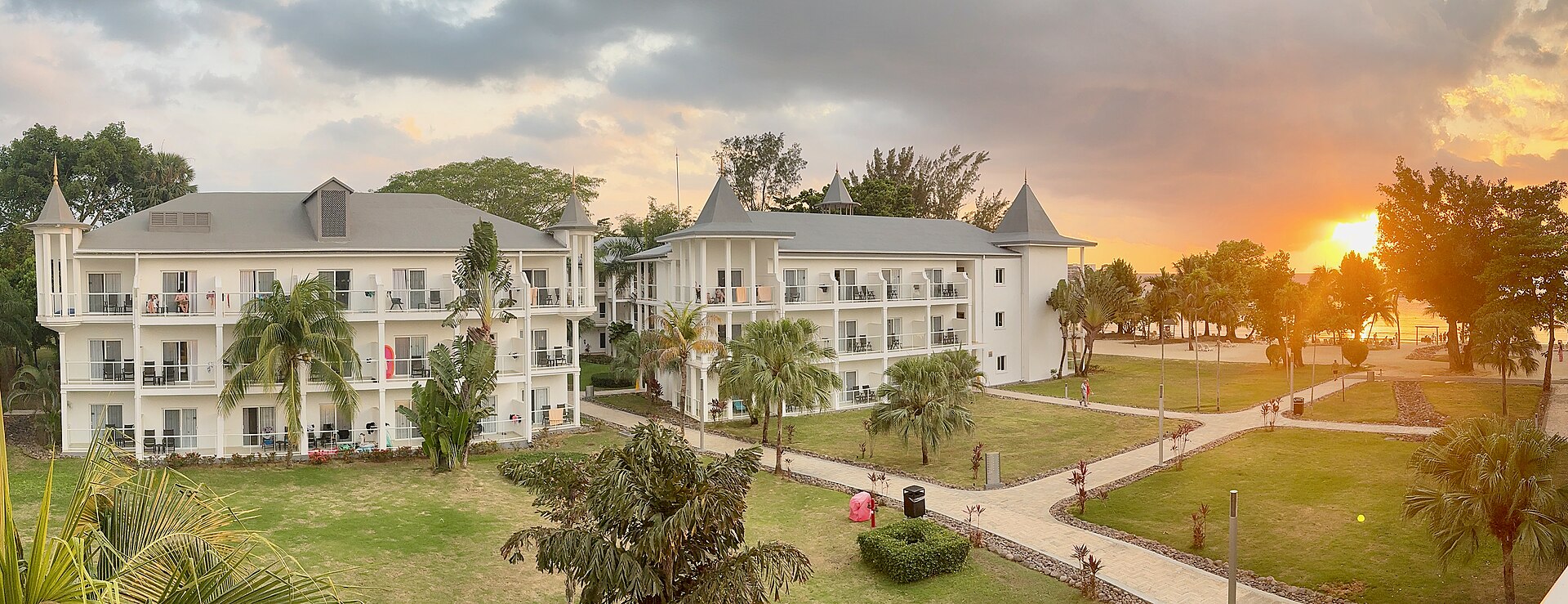
Retire in Jamaica and the first thing you discover is that no retirement visa exists. The route that does exist is a different one, and it is open.
There is no retirement visa, and that is not the whole story
The Passport, Immigration and Citizenship Agency, known as PICA, lists five routes to permanent residence. One of them is called Retirement.
So the accurate statement is a narrow one. Jamaica has no retirement visa and no published income test, but it does have a retirement pathway to permanent residence.
PICA describes the category as being for retired foreign nationals who wish to retire in Jamaica. The other four routes are employment, marriage, dependency and previous unconditional landing status.
The employment route opens after more than three years of working on the island. Marriage and dependency rest on a Jamaican spouse or on a resident sponsor.
How the waiting period actually works
Before residence there is a gap, and you spend it as a visitor. PICA grants extensions of stay in five categories, the first of which is visitors.
A Commonwealth citizen can be extended for up to 12 months. A citizen of a non-Commonwealth country can be extended for up to six.
Processing takes three working days and the fee is 10,000 Jamaican dollars (about US$64). The application must be filed before your current landing time expires.
PICA publishes no cap on how often a visitor extension may be repeated. Each grant is discretionary, so this is a tolerated gap rather than a guaranteed status.
A non-Commonwealth citizen over 16 staying six months or more also registers, for 2,000 Jamaican dollars (about US$13). Overstaying is regularised at 50,000 Jamaican dollars (about US$320).
What permanent residence asks you to prove
The application costs 100,000 Jamaican dollars (about US$640). PICA states that applications are usually processed within three to six months.
It asks for a passport with at least six months of validity and a birth certificate. Two passport photographs must be certified by a Justice of the Peace.
You also supply a local medical certificate and police certificates from your current and previous places of residence. Two reference letters from Jamaican nationals are required.
The financial test is where retirees expect a number and do not find one. PICA asks for financial evidence, naming pension details and bank statements, and for property or asset evidence.
There is also a letter to the chief executive explaining your reasons for applying. Nothing published sets a minimum income or a proof-of-funds figure.
Anyone quoting a specific dollar threshold for this route has invented it. The assessment is qualitative and taken file by file.
The returning-resident scheme is not for you
Jamaica has a well-known concession for people coming home, and foreigners routinely assume it covers them. It does not.
The Jamaica Customs Agency restricts returning-resident status to Jamaican nationals aged 18 and over. They must have lived overseas for the last three consecutive years and be returning to settle.
Former Jamaican citizens who can prove earlier citizenship also qualify, as do deported persons abroad for three years. Returning students receive duty exemption on some items.
The customs agency states that non-Jamaicans do not qualify as returning residents themselves. The single opening is for the spouse of a qualifying returning resident.
For an ordinary foreign retiree the consequence is blunt. There are no returning-resident concessions on household goods or on a vehicle, and full duty applies.
Bringing the furniture and the car
Customs allows US$1,000 of personal and household goods for every passenger aged 18 and over. The allowance covers both accompanied luggage and goods shipped separately.
Above that, charges are assessed on the excess value. Clearing a barrel of personal items carries a minimum processing fee of 6,500 Jamaican dollars (about US$41).
Imported cars, station wagons and sport utility vehicles must be no more than six years old. Those limits have been in force since 6 November 2019.
Returning residents may bring vehicles up to ten years old, and that concession is the one most often misquoted to foreigners. It belongs to returning residents, and a foreign retiree is not one.
The spouse exception has its own machinery, run through the Trade Board. It permits two vehicles per return but not two cars, and requires six months of prior ownership.
That import permit costs 6,325 Jamaican dollars (about US$40) and takes a minimum of three working days. Applications run through the trade window system and need a taxpayer registration number.
What Jamaica does to a pension
The income tax threshold rose to 1,902,360 Jamaican dollars (about US$12,100) on 1 April 2026. The full-year tax-free amount for 2026 is 1,876,614 Jamaican dollars (about US$11,950).
Pensioners receive a further exemption of 250,040 Jamaican dollars (about US$1,590). People aged 65 and over receive a second exemption of the same size.
Someone aged 55 to 64 uses the pension exemption plus the threshold. Someone aged 65 or over uses the pension exemption, the age exemption and the threshold together.
Above the threshold the rate is 25% up to 6 million Jamaican dollars (about US$38,200) a year. Income above that level is taxed at 30%.
The larger advantage is not a rate at all. A person resident in Jamaica but not domiciled there is taxed on foreign investment income only as it is remitted.
Foreign investment income left offshore and never brought in sits outside the Jamaican charge. Employment income for work relating to Jamaica is taxed wherever it is paid.
For Americans the treaty settles the biggest line. United States social security is taxable only in the United States, even for a citizen living here.
Private pensions are generally taxable only where you live, which would be Jamaica. The exception is a pension from employment performed in the other country while you were resident there.
A saving clause in the same treaty lets the United States tax its citizens as though the treaty did not exist. Americans keep filing United States returns whatever they do here.
Medicines, doctors and the card that unlocks them
The National Health Fund runs JADEP, the Jamaica Drugs for the Elderly Programme. It serves all residents of Jamaica aged 60 and over.
The programme covers ten chronic illnesses, among them diabetes, hypertension, asthma, glaucoma and ischaemic heart disease. Specified drugs carry a full subsidy.
The patient pays only a pharmacy dispensing fee. It runs from 40 Jamaican dollars (about US$0.25) for one item to 240 Jamaican dollars (about US$1.53) for six or more.
Enrolment is automatic once a health fund card holder turns 60. The card itself covers 28 chronic conditions and is issued the same day at a card centre.
Applying requires a taxpayer registration number, which a foreigner can obtain. No source confirms that a non-citizen resident has been issued a card, so treat this as a mechanism rather than a promise.
What a retired couple actually spends
Numbeo, a crowd-sourced cost database, updated its Kingston figures on 20 August 2026. They rest on 145 entries from 20 contributors, which is a thin sample.
It puts one person’s monthly costs, excluding rent, at 165,814.90 Jamaican dollars (about US$1,055). A family of four comes to 602,398.20 Jamaican dollars (about US$3,840).
No figure for a couple is published, and interpolating between those two would be invention. A couple sits between them, and only your own list will settle where.
A one-bedroom flat in central Kingston averages 152,477.65 Jamaican dollars (about US$970) a month. Outside the centre the average is 90,416.67 Jamaican dollars (about US$575).
Basic utilities for an 85 square metre home run to 27,750 Jamaican dollars (about US$177). Broadband at 60 megabits or better costs 8,384.81 Jamaican dollars (about US$53).
Electricity is the shock. Residential power costs US$0.291 per kilowatt hour, which GlobalPetrolPrices puts at 172% of the world average on data collected in June 2025.
Inflation was 7.5% in July 2026, above the Bank of Jamaica target range of 4% to 6%. The bank’s buying rate on 15 September 2026 was US$1 to 156.8855 Jamaican dollars.
How the first two years usually run
The realistic sequence starts with a long visit rather than a move. You enter as a visitor, extend once, and use the time to choose a parish.
Then you file for permanent residence with pension statements, bank statements and two Jamaican references. Three to six months later there is a decision.
Budget for full duty on everything you ship, because the returning-resident concessions are closed to you. Budget separately for electricity, which is the line that surprises almost everyone.
The choice to retire in Jamaica is therefore less about a visa than about patience and paperwork. The tax rules then reward whoever has planned where their income lands.
More: Caribbean coverage, every day from The Rio Times.
Sources: PICA on the five permanent residence categories, PICA on immigration processing fees, PICA on extension of stay for visitors, Jamaica Customs Agency on returning-resident eligibility, Jamaica Customs Agency on motor vehicle age limits, Jamaica Gleaner on the 2026 income tax threshold, Jamaica Information Service on the pension and age exemptions, PwC on the remittance basis for non-domiciled residents, IRS text of the United States–Jamaica tax treaty, National Health Fund on the drugs programme for over-60s
This article was produced by The Rio Times’ automated newsroom system. How we use AI · Report an error
Read More from The Rio Times