
GUIDES · JAMAICA
Key Facts
- —Where it sits Jamaica is an island state in the western Caribbean Sea. Cuba lies to the north, Haiti to the east and Colombia’s waters to the south-west. It has no land border.
- —Sea borders Treaties with Colombia (signed 12 November 1993) and Cuba (signed 18 February 1994), both listed by the UN ocean affairs division. The Colombia treaty created a shared Joint Regime Area.
- —Regional club A full member of the Caribbean Community (CARICOM). Jamaica chaired its heads of government from July to December 2025.
- —Largest partner The United States. US goods exports to Jamaica were US$2.64 billion in 2025 against imports of US$379 million, per the US Census Bureau.
- —Diaspora money Remittances reached US$3.12 billion in the fiscal year to March 2026, according to Finance Minister Fayval Williams (16 September 2026).
- —Hosts The International Seabed Authority, the UN-treaty body for deep-sea mining, has its headquarters in Kingston.
Jamaica’s neighbourhood is a ring of sea borders, not land frontiers. Cuba lies to the north, Haiti to the east, Colombia’s waters to the south-west and the United States beyond.
How Kingston handles those neighbours shapes migration toward Florida, Caribbean security and the deal it signed to receive third-country migrants from the US. For American readers, that makes the Jamaica neighbourhood a live policy question rather than a map exercise.
An Island State With Only Sea Borders
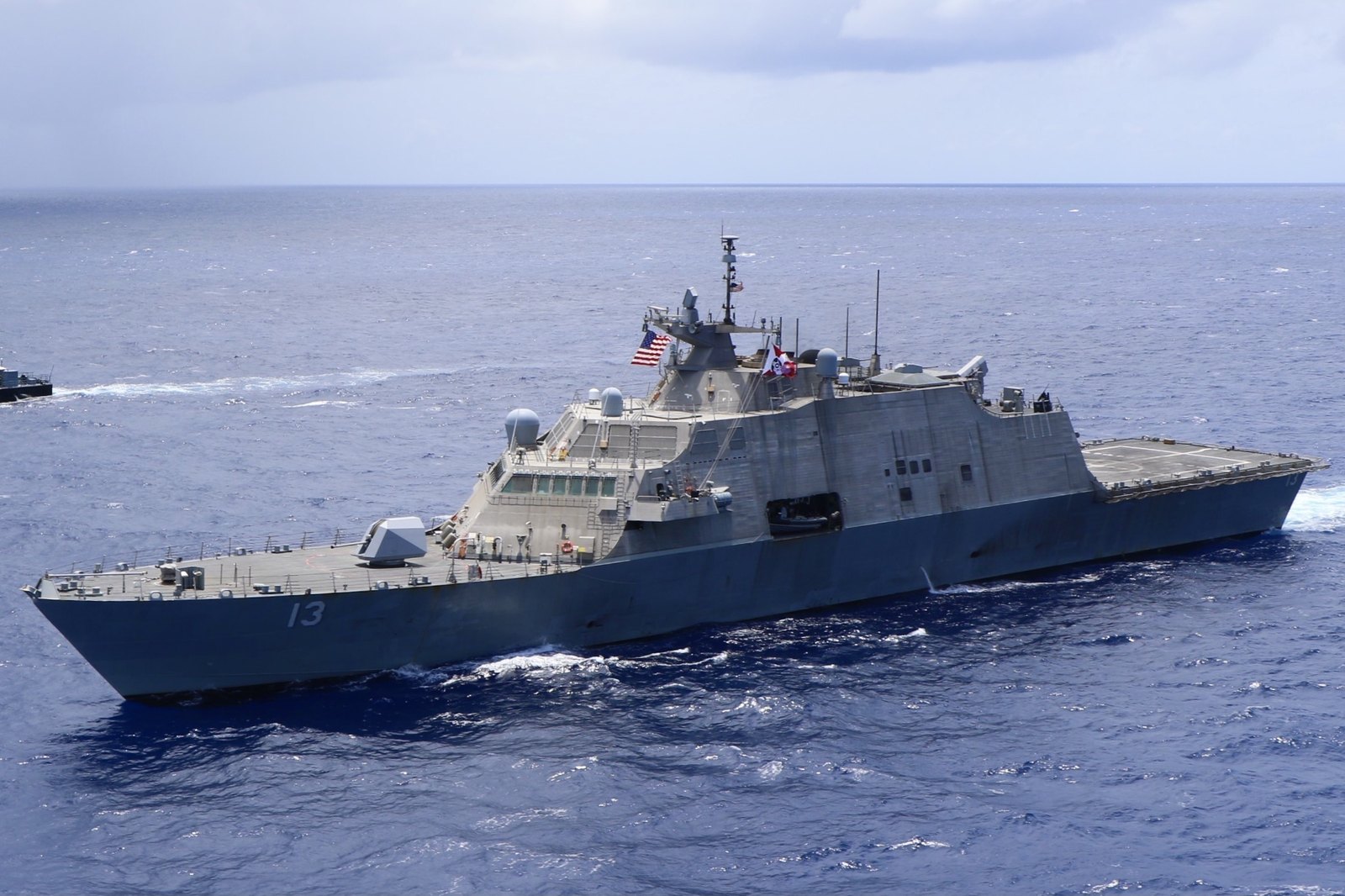
Jamaica has no land border. Every neighbour is across water, and every boundary is a line at sea drawn by treaty or still open.
The country treats itself as an archipelagic state under the UN Convention on the Law of the Sea. It deposited its archipelagic baselines with the UN Secretary-General in 1996, according to the UN ocean affairs division.
Its domestic framework rests on the Exclusive Economic Zone Act of 1991 and the Maritime Areas Act of 1996. Those laws set out Jamaica’s claims to its territorial sea, exclusive economic zone and seabed.
Prime Minister Andrew Holness, leader of the governing Jamaica Labour Party (JLP), calls Cuba the country’s closest neighbour. Haiti is the other near neighbour, across the strait to the east.
Both relationships have become harder since 2025.
Sea Borders With Colombia and Cuba
Jamaica has two settled maritime boundaries, both listed by the UN Division for Ocean Affairs and the Law of the Sea. The first is with Colombia, signed on 12 November 1993 and in force since 14 March 1994.
That treaty is unusual. Instead of one line everywhere, it created a Joint Regime Area.
There, both countries jointly manage, explore and exploit living and non-living resources.
The shared zone excludes a 12-nautical-mile circle around the cays of Serranilla Bank and another around Bajo Nuevo. Those cays and their surrounding waters sit outside the joint arrangement.
Inside the zone, each party has jurisdiction over its own nationals and flagged vessels. Fishing, research, environmental protection and any installations fall under the joint regime.
The second agreement, with Cuba, was signed on 18 February 1994 and delimits the boundary across the channel between the two islands. No delimitation treaty with Haiti appears in the UN register for Jamaica, so that line remains unsettled on paper.
Cuba, the Closest Neighbour
Jamaica and Cuba have a long, warm relationship built on doctors, nurses, teachers and eye-care programmes. That bond was tested in 2025 and 2026 by pressure from Washington over how Cuba runs its medical missions abroad.
Prime Minister Holness told Parliament on 19 March 2026 that Cuban doctors and nurses had served Jamaica well. He said Jamaicans ‘love them and want them to stay’.
He also said parts of the programme, including how personnel are paid, ran counter to Jamaican law and international conventions. Talks to make it compliant did not succeed, and the bilateral mission came to an end.
Health Minister Christopher Tufton has said about 278 Cuban health workers had been in the programme before the recall. More than 40 chose to stay and now work on individual contracts, with an open invitation for others to return on the same terms.
Kingston has kept its tone toward Havana supportive. Speaking at the opening of the CARICOM summit in Basseterre on 24 February 2026, Holness warned that a prolonged crisis in Cuba ‘will not remain confined to Cuba’.
He backed dialogue between Cuba and the United States.
Haiti: Security, Storms and Small Boats
Haiti is the neighbour that most shapes Jamaica’s security policy. Foreign Minister Kamina Johnson Smith has described concern for Haiti as a matter of solidarity, proximity and Jamaica’s own national security.
Jamaica backed the Multinational Security Support (MSS) mission, whose mandate expired in October 2025. It then joined the Group of Standing Partners steering its successor, the Gang Suppression Force (GSF).
The UN Security Council authorised the GSF in 2025 as a 5,550-strong force with a 12-month mandate, according to the Jamaica Information Service. Its task is to work with Haitian authorities to neutralise gangs, secure infrastructure and open humanitarian access.
Haiti’s crisis also reaches Jamaica’s shores directly. In June 2026 the Jamaica Observer reported 28 Haitians returned after arriving illegally in Portland, on the island’s north-east coast.
At CARICOM’s July 2026 summit in Saint Lucia, leaders backed Haiti’s government as it prepares for elections. Haiti’s Prime Minister Didier Fils-Aimé attended, and Guyana pledged 500 tons of rice in humanitarian support.
CARICOM: Where Jamaica Leads and Where It Follows
The Caribbean Community (CARICOM) is the regional bloc of mainly English-speaking states, with Haiti and Suriname also members. Its heads of government meet twice a year and rotate the chair every six months.
Jamaica led the conference from July to December 2025. Under its chairmanship, leaders adopted the Montego Bay Declaration on Transnational Organised Crime and Criminal Gangs on 8 July 2025.
Jamaica also acceded to a CARICOM partnership with the African Export-Import Bank (Afreximbank), a pan-African trade lender. The deal opens access to up to US$1.5 billion of financing for the region, according to the foreign ministry.
Holness handed the chair to St Kitts and Nevis Prime Minister Terrance Drew in February 2026. Since July 2026 the chair has been Saint Lucia’s Prime Minister Philip J. Pierre.
Where Jamaica follows is free movement. Since 1 October 2025, four members have let each other’s nationals live and work indefinitely.
They are Barbados, Belize, Dominica and St Vincent and the Grenadines, under CARICOM’s enhanced cooperation rules.
Jamaica is not in that group. Its government backs the principle but said in 2024 that a significant amount of technical work remained.
Grenada and Saint Lucia told the July 2026 summit they are taking steps to join.
Holness wrote to CARICOM in July 2026 raising concerns about how Secretary-General Carla Barnett was reappointed, the Jamaica Observer reported. Trinidad and Tobago maintained a formal objection, and leaders agreed to ask the Caribbean Court of Justice (CCJ), the region’s court, for an advisory opinion.
The United States: Trade, Remittances and Migrants
The United States is the country’s dominant economic partner, even though it is not a physical neighbour. US goods exports to Jamaica reached US$2.64 billion in 2025, against imports of US$379 million, per the US Census Bureau.
That left a US goods surplus of about US$2.26 billion. From January to August 2026, US exports were US$2.08 billion and imports US$226 million.
Money flows the other way through the diaspora. Remittances reached US$3.12 billion in the fiscal year from April 2025 to March 2026, Finance Minister Fayval Williams said on 16 September 2026.
December 2025 brought US$296 million, the largest single month on record at the Bank of Jamaica. Williams credited Jamaicans abroad for sending more after Hurricane Melissa.
The newest link is migration policy. On 16 September 2026 Johnson Smith said Jamaica and the United States had finalised operating procedures for a memorandum on third-country nationals (TCNs).
Under the deal, Jamaica receives non-Jamaicans removed by the US for onward return home. The International Organization for Migration (IOM), the UN migration agency, helps with their return.
Johnson Smith stressed they are not deportees. Jamaica joins close to 30 countries with similar arrangements, including several CARICOM members.
Jamaica negotiated a cap of 25 people per two-week period. The arrangement is suspended if 10 TCNs apply to stay through asylum or humanitarian procedures, and no one with criminal antecedents may transit.
Kingston says it will not fund the programme.
Hurricane Melissa and the Regional Response
Hurricane Melissa made landfall near New Hope, in Westmoreland parish, on Tuesday 28 October 2025. The US National Hurricane Center estimates its winds at 160 knots (about 185 mph), category 5.
The center calls it the strongest hurricane on record to make landfall in Jamaica. It crossed the western parishes, then struck Santiago de Cuba the next day as a category 3 storm.
The center lists 45 known deaths in Jamaica and 43 in Haiti linked to the storm. Physical damage in Jamaica was estimated at US$12.2 billion, about 41 percent of 2024 GDP, citing World Bank figures as of 26 March 2026.
The Caribbean Disaster Emergency Management Agency (CDEMA), CARICOM’s disaster body, deployed staff before landfall. Its operations support team stayed at the national emergency centre in Kingston until early December 2025.
The economy contracted 7.1 percent in the October to December 2025 quarter, the finance minister said. Later quarters showed smaller contractions, which she described as a sign of recovery.
Kingston as a Seat of Ocean Law
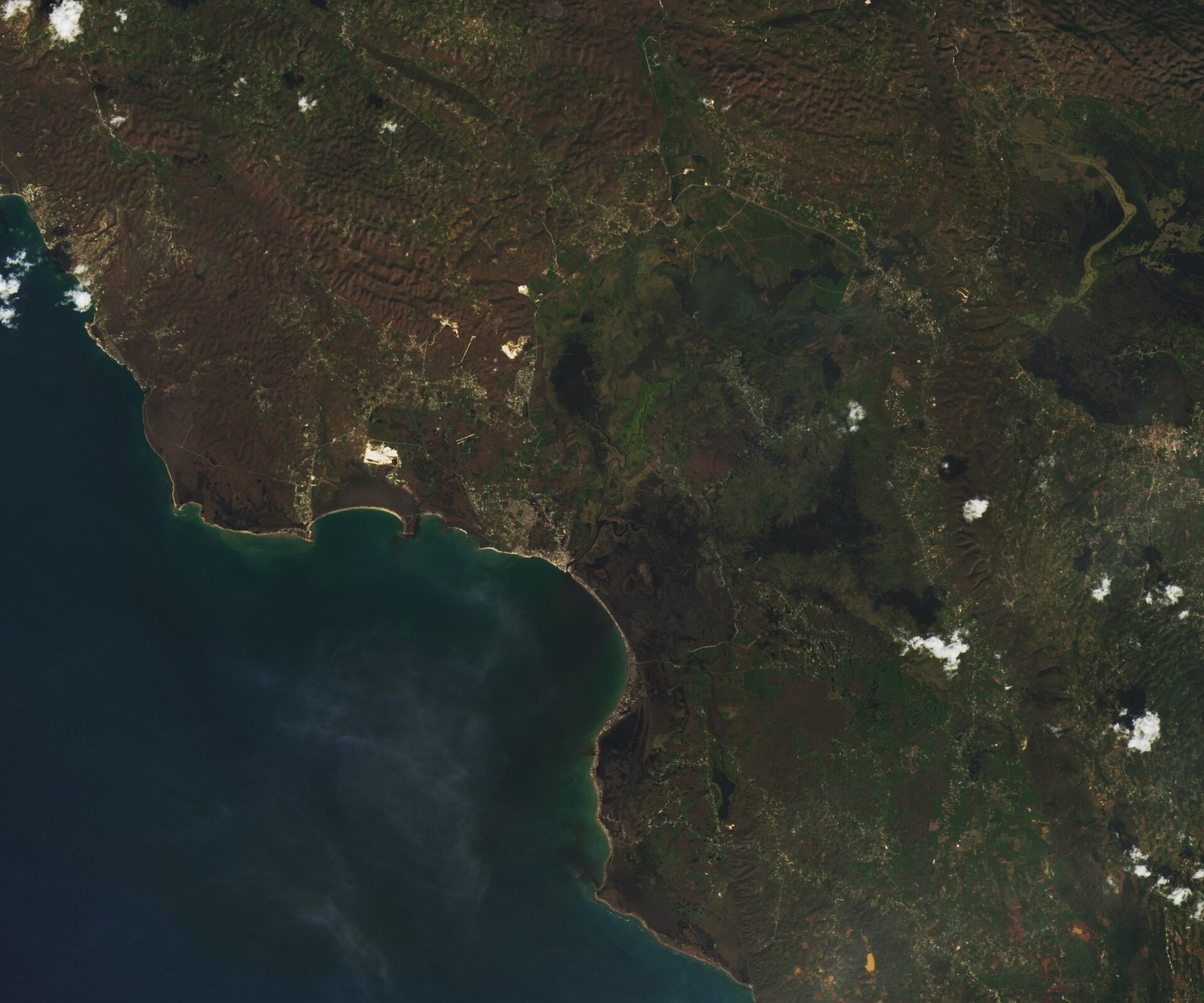
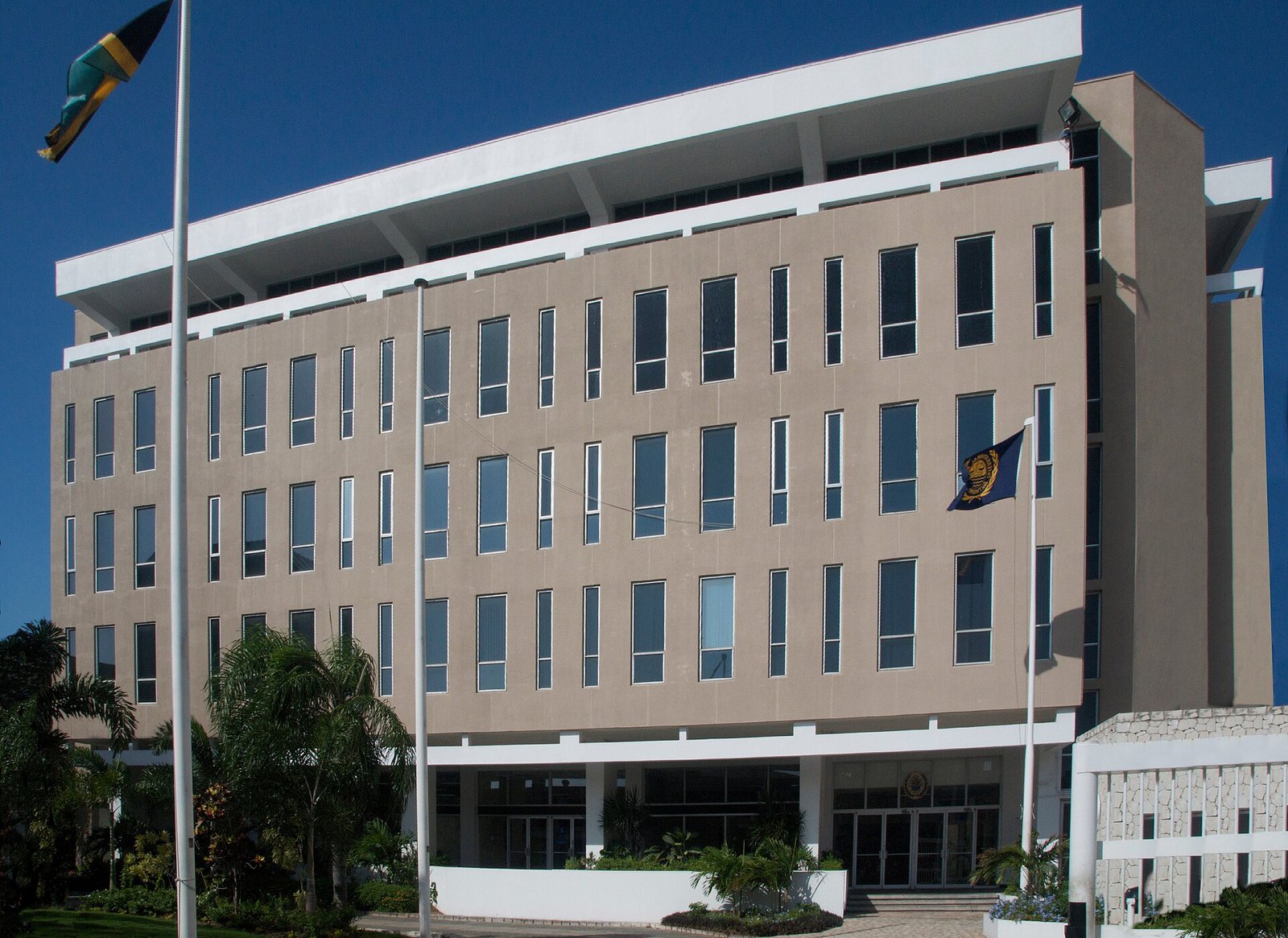
One place where Jamaica clearly leads is the law of the sea. The International Seabed Authority (ISA), which governs mineral activity on the deep seabed beyond national jurisdiction, has its headquarters in Kingston.
The ISA came into existence on 16 November 1994 and became fully operational in Kingston in June 1996. As of 6 February 2026, it had 172 members: 171 states and the European Union.
The seabed area it oversees covers around 54 percent of the world’s oceans. Hosting it gives Kingston a permanent place in global ocean diplomacy.
The CARICOM Secretariat also keeps a Jamaica office on the University of the West Indies campus at Mona, in Kingston.
What It Means for US Readers
For investors, the Jamaica neighbourhood is mostly about American trade. The United States sells far more to Jamaica than it buys.
US exports from January to August 2026 ran about 21 percent above the same months of 2025, a period of post-Melissa rebuilding.
For travellers, Jamaica’s sea neighbours matter in the Atlantic hurricane season. Melissa showed how one storm can affect Jamaica, Haiti, Cuba and the Bahamas within days.
For policy watchers, the TCN deal makes Jamaica part of US deportation logistics, with tight caps on numbers. Kingston’s balancing act between Washington and Havana on Cuban doctors is a test of how small allies handle US pressure.
For the diaspora, record remittances after the storm show how closely Jamaicans abroad remain tied to home. CARICOM’s slow free-movement rollout also affects Jamaicans who work across the region.
Connected Coverage
Jamaica Explained: The Country, Its Economy, Its Politics and What to Watch
Is Jamaica a Third World Country? The Facts
Jamaica Justice Minister Wants Jamaican Final Court
What Is Not Known
When the first third-country nationals will arrive under the US deal, and how many, has not been made public. How a suspension trigger would be applied in practice is also untested.
Whether Jamaica will join CARICOM’s full free movement group, and on what timetable, is undecided. The outcome of the request for a CCJ advisory opinion on the Secretary-General’s reappointment is not known.
The maritime boundary with Haiti remains undelimited in the UN record, and no negotiation timetable is public. How many Cuban health workers will ultimately return on individual contracts is also open.
Frequently Asked Questions
Which countries are Jamaica’s neighbours?
Jamaica has no land border. Its nearest neighbours across the sea are Cuba to the north and Haiti to the east, with Colombia’s waters to the south-west. The United States is its largest trading partner.
Does Jamaica have maritime boundary treaties?
Yes, two. A treaty with Colombia signed on 12 November 1993 created a jointly managed Joint Regime Area, and an agreement with Cuba was signed on 18 February 1994. No delimitation treaty with Haiti appears in the UN register.
What is Jamaica’s role in CARICOM?
Jamaica is a full member of the Caribbean Community and chaired its heads of government from July to December 2025. It is not yet part of the four-country full free movement group that started on 1 October 2025.
What is the Jamaica and US third-country nationals deal?
Jamaica agreed to receive non-Jamaicans removed by the United States for onward return home with IOM help. The cap is 25 people per two weeks, and the deal is suspended if 10 apply for asylum.
How much money does the Jamaican diaspora send home?
Remittances reached US$3.12 billion in the fiscal year from April 2025 to March 2026, according to the finance minister. December 2025 was the largest single month on record at US$296 million.
How strong was Hurricane Melissa in Jamaica?
Melissa made landfall on 28 October 2025 as a category 5 hurricane with winds of about 185 mph. The US National Hurricane Center calls it the strongest on record to hit Jamaica and lists 45 known deaths there.
Sources: UN DOALOS, Jamaica legislation and maritime treaties; Jamaica-Colombia maritime delimitation treaty, 1993; Jamaica Information Service, TCN procedures; Jamaica Information Service, Gang Suppression Force; Jamaica Information Service, CARICOM chairmanship; Jamaica Information Service, Holness on Cuba; Jamaica Information Service, Cuban medical mission; Jamaica Information Service, Cuban doctors on contracts; Jamaica Information Service, remittances; Jamaica Information Service, CDEMA; Jamaica Information Service, free movement; CARICOM, full free movement; CARICOM, 51st heads of government communiqué; US Census Bureau, trade in goods with Jamaica; US National Hurricane Center, Hurricane Melissa report; International Seabed Authority, about ISA. All accessed 12 October 2026.
Editorial responsibility: Matthias Camenzind, Editor-in-Chief · Editorial standards · Report an error
Expat Guide to Jamaica
What The Rio Times publishes for foreigners who live in or move to Jamaica.
Start here
- Healthcare in Jamaica for Expats and What It Really Costs
- Open a Bank Account in Jamaica as a Foreigner and What It Takes
- Taxes in Jamaica for Expats and What the Rules Actually Reach
- Moving to Jamaica, from the Shipping Container to the Driving Test
Coming up in Jamaica
- Cardi B Headlines BZR WKND in Kingston on 18 October 18 Oct
- Reggae Marathon Kingston 2026: Jamaica Race Is on 6 December, Not Negril 6 Dec
Understand Jamaica