Healthcare in Jamaica for Expats and What It Really Costs
Jamaica · Healthcare
Key Facts
- —What the state provides Jamaica abolished user fees at public health facilities on 1 April 2008, covering examinations, surgery, medication, laboratory tests and ambulances.
- —The catch The University Hospital of the West Indies, the country’s main teaching hospital, was explicitly excluded from that free-care policy.
- —Where the specialists are The United States Embassy says comprehensive but basic emergency medical services exist only in Kingston and Montego Bay.
- —What an emergency can cost The United States embassy puts hospitalisation or evacuation at US$15,000 to US$20,000; the State Department puts air ambulance at US$30,000 and up.
- —Help with medicines The National Health Fund card subsidises drugs for 28 chronic illnesses and needs a Taxpayer Registration Number to apply.
- —What a visit costs A short private consultation in Kingston was estimated at 4,475 Jamaican dollars (about US$28) by a crowd-sourced site in May 2026.
Jamaica abolished fees at public health facilities almost two decades ago, and the best-equipped hospital in the country was left outside the policy. That gap is where planning starts.
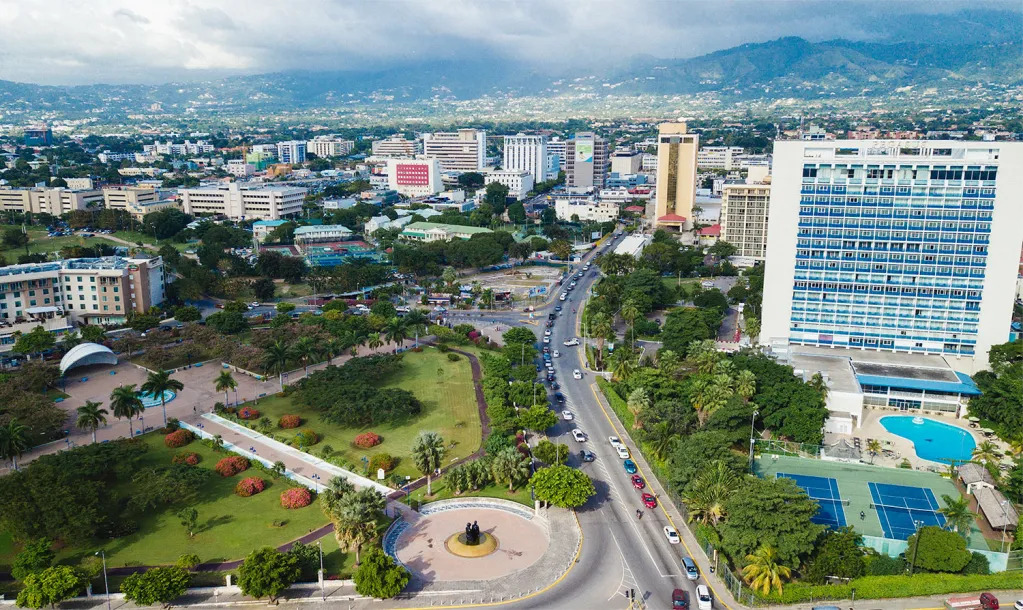
Healthcare in Jamaica for expats is two systems standing side by side. One is free at the point of use, and the other asks for payment before treatment.
Knowing which one you will actually use decides what you need to budget. It also decides how much insurance you need to buy.
What free at the point of use really covers
Jamaica abolished health user fees at public facilities on 1 April 2008. The measure was announced in the Throne Speech by Governor General Sir Kenneth Hall on 27 March 2008.
The Jamaica Information Service listed what became free. Registration and doctors’ examinations, surgery and medication, diagnostic services, haematology and laboratory tests.
Maternal and child health services including family planning were on the list. So were ambulance service, physiotherapy and blood transfusions.
That is a wide list and it is genuine. What it does not settle is whether it applies to you.
No published source states the position for people who are not Jamaican nationals. The policy was framed around services at facilities rather than around categories of patient.
So the honest advice is to confirm it with the specific hospital. Ask at the facility you would actually use, not at a ministry switchboard.
The hospital the policy leaves out
There is one explicit exclusion and it is a significant one. The University Hospital of the West Indies at Mona sits outside the free-care policy.
That hospital is the country’s teaching hospital and one of its most capable. The United Kingdom foreign office lists it for cardiology, obstetrics, surgery, emergency medicine, haematology, haemodialysis, psychiatry and radiology.
So the best-equipped public hospital is also the one that charges. Plan around that rather than discovering it during an emergency.
Other major public hospitals were covered by the 2008 change. Kingston Public Hospital lists neurosurgery, oncology, renal dialysis and gastroenterology.
Cornwall Regional Hospital in Montego Bay runs a 24-hour casualty department, oncology, dialysis and radiotherapy. Bustamante Hospital for Children in Kingston covers paediatric cardiology, neonatology, neurology and surgery.
That register was last updated on 2 September 2020. It predates the hurricane, and the hurricane changed part of it.
What Hurricane Melissa left behind
Melissa came ashore in Westmoreland on 28 October 2025, as the National Hurricane Center recorded. The damage to the health system in the west was severe.
Black River Hospital in St Elizabeth was completely destroyed and 92 patients had to be evacuated. International SOS reported that hospitals in western regions continued operating at limited capacity.
The consequence for a resident in the west is concrete. International SOS reported western hospitals working at limited capacity, which slowed emergency response and specialist access.
Anyone settling in Westmoreland, Hanover, St James or St Elizabeth should check facility status directly. A list of hospitals from 2020 is not a list of working hospitals today.
The private hospitals foreign residents actually use
Most discussions of healthcare in Jamaica for expats end at three private names. They are Andrews Memorial Hospital in Kingston, Hargreaves Memorial Hospital in Mandeville and Hospiten Montego Bay.
Andrews Memorial offers general surgery, gynaecology, neurosurgery, thoracic surgery, ophthalmology, orthopaedics and ear, nose and throat services. Hargreaves Memorial covers maternity, cardiology, laboratory work, ultrasound, physiotherapy and digital imaging.
Hospiten Montego Bay is the option most often named for the north-west. It publishes 27 beds in total, five intensive care beds, two operating theatres and one delivery room.
It also lists eight consultation rooms and 16 specialised departments. The hospital says it works with a wide network of national and international insurance companies.
Twenty-seven beds is a small hospital by any measure. It is worth stating plainly that this is the principal private option for the whole north-west.
Scale is the thing to understand here, rather than quality. A hospital of that size treats a great deal, but capacity is finite when several serious cases arrive together.
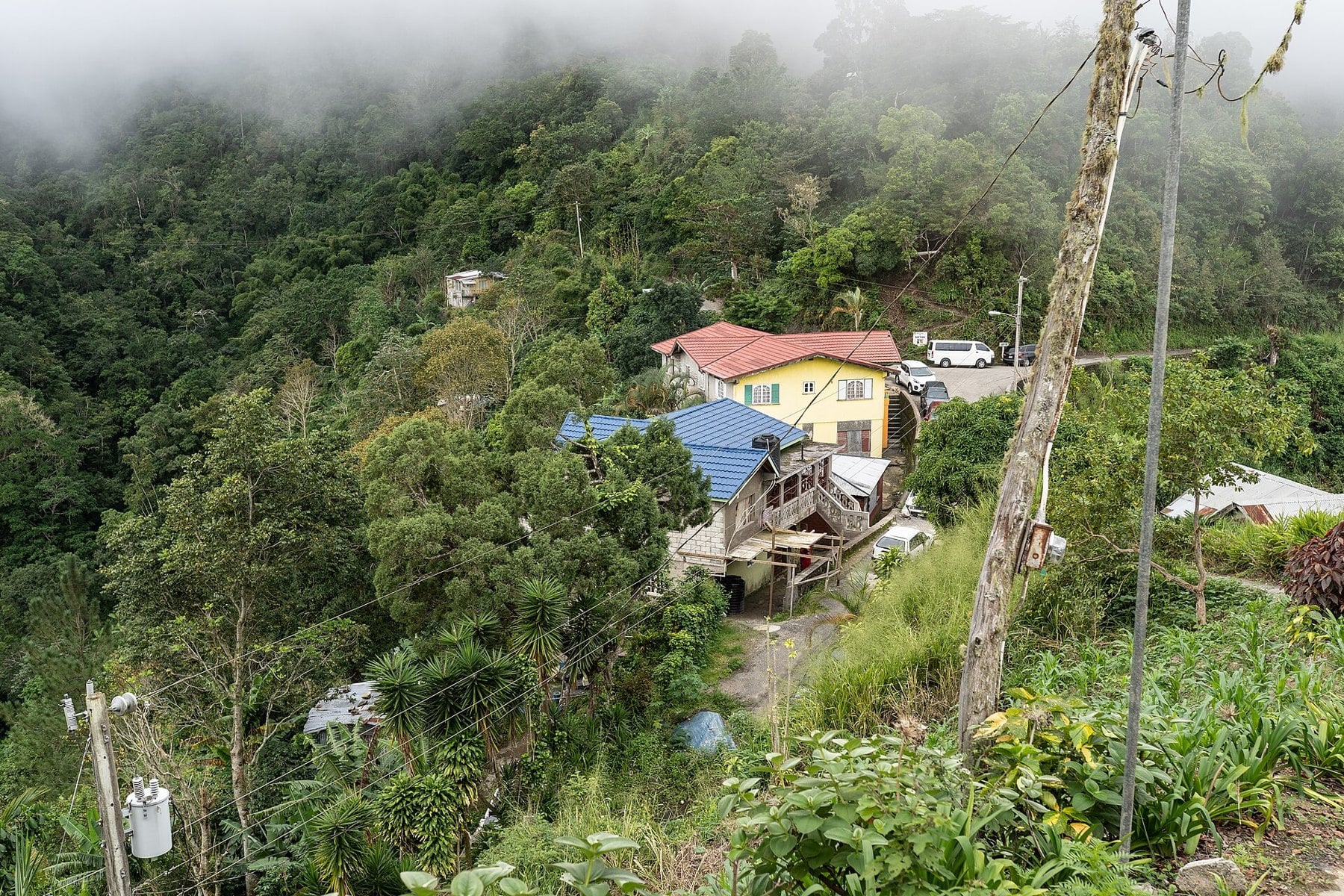
Where a serious case actually goes
The United States Embassy in Kingston puts it bluntly. Comprehensive but basic emergency medical services are located only in Kingston and Montego Bay.
Smaller public hospitals exist in each parish. The embassy says availability of prescription drugs, emergency care and ambulances is limited in outlying parishes.
For anything beyond that, the answer is evacuation. The embassy quotes US$15,000 to US$20,000 or more for a medical evacuation to the United States.
The State Department gave a different figure in its travel advisory of 17 January 2026. It put air ambulance transport at US$30,000 on the low end.
Cost estimates from United States government sources start at US$15,000 and run past US$30,000. Price a policy against the higher end, not the lower one.
The embassy also warns about the brokers. Some firms offering evacuation do not actually have the capability and act as intermediaries at inflated cost.
The embassy keeps its own list of verified medical evacuation companies. Get that list before you need it, not during a crisis.
One further embassy line matters more than any price. Private doctors and hospitals in Jamaica often require cash payment before providing services, even in emergency cases.
That sentence should shape your arrangements more than any brochure. A payment method that works on the island matters as much as the policy behind it.
The card that pays for the medicine
The National Health Fund issues a card that subsidises prescription medication. It covers 28 chronic illnesses, from asthma and diabetes to several cancers, lupus and Parkinson’s disease.
The fund pays a fixed contribution and the patient pays the difference. Children under 19 receive double discounts.
The card also brings a free glucometer for diabetes patients. Insulin pens, asthma pumps and test strips are subsidised, and mammograms, pap smears and echocardiograms are discounted.
Applying requires a TRN, the nine-digit Taxpayer Registration Number. That is the same number a bank or a landlord will ask you for.
You can apply yourself, with a doctor’s certification, at any NHF card centre. The fund says collection is same-day, within 15 minutes.
Your doctor can instead register online and apply using your TRN. Either route ends with a card in hand rather than a wait.
For people aged 60 and over there is a second programme. JADEP, the Jamaica Drugs for the Elderly Programme, serves all residents of Jamaica aged 60 and over.
JADEP covers ten chronic illnesses with a full subsidy on specified drugs. The patient pays only a dispensing fee at the pharmacy.
That fee runs from 40 Jamaican dollars (about US$0.25) for one item to 240 Jamaican dollars (about US$1.53) for six or more. Enrolment is automatic once an NHF cardholder turns 60.
One caution belongs here. The fund describes JADEP as serving all residents, but no source confirms that a non-citizen has been issued a card.
The TRN requirement is the real gate, and a foreigner can obtain a TRN. Apply and find out rather than assuming it either way.
Insurance, and the two things that matter
Private cover exists, and it stacks with the state schemes rather than replacing them. Sagicor states that its individual plan coordinates benefits with the National Health Fund and JADEP.
Sagicor publishes a price for its Supreme Health individual plan. It shows 73,489.87 a year and 7,347.83 a month, and the page names no currency at all.
The page does not name the currency, so confirm the figures with the insurer before budgeting. It does not publish limits, deductibles, co-insurance or age eligibility either.
One feature is worth knowing about in advance. Someone leaving a group plan because of a change of employment can convert within 30 days.
That conversion avoids medical underwriting and avoids waiting periods for pre-existing conditions. Miss the window and you are treated as a new applicant.
Other insurers operate in the market, and comparing them is a job for a local broker. What matters in that comparison is narrower than most buyers expect.
Two things decide whether a policy is useful in Jamaica. It must cover medical evacuation, and it must settle in a way a hospital demanding cash will accept.
Everything else is refinement. Those two features are the reason the policy exists at all.
Pharmacies, dentists and the price of a consultation
Pharmacy coverage is uneven across the island. The United States Embassy states that the availability of prescription drugs is limited in outlying parishes.
The practical response is to carry a buffer of anything you take regularly. Travel with the prescription and the generic name, not only the brand.
Dental care is the thinnest part of the public record. Dental pricing in Jamaica is not published anywhere reliable.
Some public hospitals do list dental services, among them Bellevue in Kingston, Falmouth and Noel Holmes in Lucea. Beyond that, ask other foreign residents and price the work in advance.
A routine private consultation is easier to sketch. Expatistan estimated a short 15-minute visit to a private doctor in Kingston at 4,475 Jamaican dollars (about US$28).
That estimate is dated 9 May 2026 and rests on nine price points. The site itself calls it only a guess, so treat it as an order of magnitude.
The ambulance you should not count on
Ambulance service was on the 2008 list of things that became free. Free is not the same as available.
The State Department says ambulance services lack emergency medical technician staffing. The availability of vehicles is limited, particularly in rural areas.
The embassy makes the same point in its own words. Service is limited both in the quality of emergency care and in the availability of vehicles in remote parts of the country.
No verified figures exist for response times, fleet size or private operators. The mechanism to plan around is clear enough without them.
Know the route to the nearest capable hospital and know who would drive it. Across much of the island, the realistic plan is a private car and a route you have already driven.
Planning a year of medical life on the island
Healthcare in Jamaica for expats works when you build it in layers. The public system for routine care, the NHF card for medication, private cover for everything above that.
Get the TRN first, because the health card and the bank account both depend on it. Then register with a doctor before you actually need one.
Decide early where you would go for something serious. In practice that means Kingston or Montego Bay, whichever parish you live in.
Carry a means of paying on the spot. The embassy warning about cash before treatment is the most actionable line in the entire record.
Buy evacuation cover and read what it says about approval. An insurer that must authorise a flight in office hours is a different product from one that does not.
And keep the storm in view. Jamaica’s western hospitals were rebuilding after Melissa, which is a health fact as much as a weather one.
More: Caribbean coverage, every day from The Rio Times.
Sources: Jamaica Information Service on the abolition of health user fees, UK Foreign Office list of medical facilities in Jamaica, Hospiten on the size and departments of its Montego Bay hospital, United States Embassy Kingston on medical assistance and evacuation, United States State Department on medical care and air ambulance cost, National Health Fund on the NHF card and the illnesses it covers, National Health Fund on JADEP for residents aged 60 and over, Sagicor on its Supreme Health individual plan, International SOS on hospital damage after Hurricane Melissa, Expatistan on the cost of a private doctor visit in Kingston
This article was produced by The Rio Times’ automated newsroom system. How we use AI · Report an error
Read More from The Rio Times