Jamaica Economy Slashes Debt to 72 Percent as Caricom Investors Watch the 2027 Target
Economy · Jamaica
—The stakes. Jamaica moved from a debt ratio near 145 percent of GDP to roughly 72 percent by FY2023/24, and to 62.4 percent by the end of FY2024/25 once the national accounts were restated. Hurricane Melissa then pushed the ratio back up to an estimated 68.9 percent in FY2025/26.
—The pivot. Persistent primary budget surpluses above 5 percent of GDP, backed by IMF and World Bank support, turned the country into an unlikely fiscal model.
—The drags. Violent crime and heavy dependence on remittances still raise operating and social costs even as headline fiscal numbers improve.
—The storm risk. Hurricane Melissa struck in late October 2025 and caused loss and damage of J$1.952 trillion, about US$12.2 billion, or 56.7 percent of 2024 GDP. The IMF disbursed US$415 million in January 2026.
—The signal. Foreign investors are now watching tourism records and business process outsourcing growth as proof that fiscal discipline can coexist with expansion.
Jamaica is no longer the Caribbean’s fiscal warning sign. A decade after debt peaked near the mid-140s, the island is now a case study in how a small, disaster-prone economy can rebuild creditor trust through stubborn primary surpluses and legal debt anchors. The question for 2026 is whether tourism and outsourcing income can keep outpacing the costs of crime, remittance dependence and hurricanes.
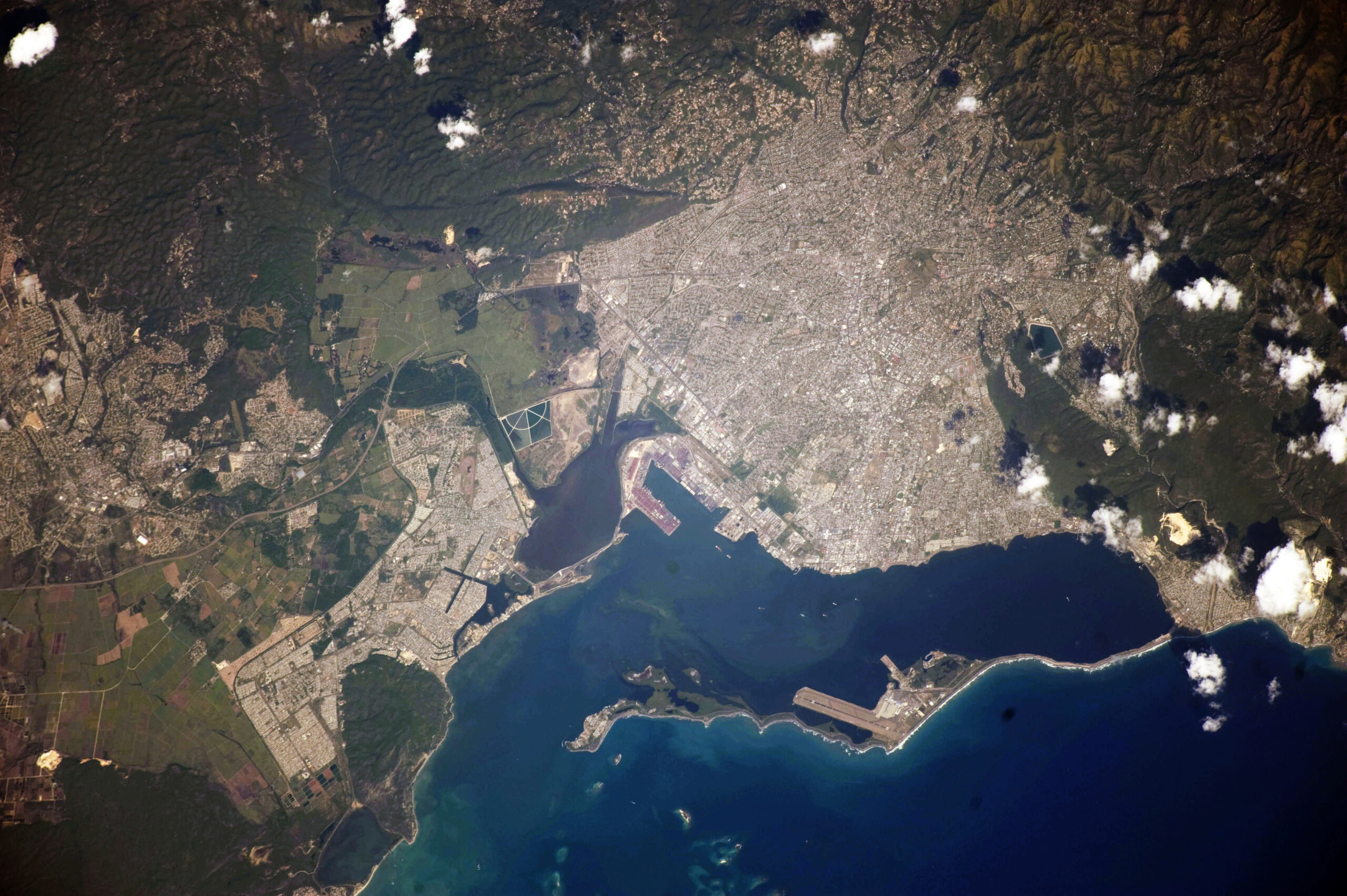
From 144 Percent to 72 Percent: The Jamaica Exception
Jamaica’s public debt-to-GDP ratio peaked between 143 and 147 percent in 2013. That year the country borrowed an additional US$2 billion, pushing the ratio to 147 percent.
A Brookings paper published in spring 2024 described Jamaica as an exception that reduced its debt from 144 percent of GDP to 72 percent over the previous decade. The same analysis credits large and persistent primary budget surpluses.
An ODI case study reports debt at 72.2 percent of GDP at the end of fiscal year 2023/24, then the lowest level since Jamaica began borrowing in the 1970s. The series has since been restated and the ratio has moved again after Hurricane Melissa.
The outturn was 62.4 percent at end-FY2024/25. Official projections now show 65.7 percent in FY2026/27 and 64.0 percent in FY2027/28. The Fiscal Responsibility Law, or FRL, makes that 60 percent ceiling a legal target.
The IMF recorded central government debt falling from 142 percent of GDP in FY2009/10 to 77 percent in FY2022/23. The pandemic spike was real, but the downward path resumed quickly.
Primary Surpluses Built the Fiscal Model
Jamaica’s fiscal turnaround rests on primary surpluses, meaning government revenue exceeding spending before interest payments. The FY2023/24 budget delivered a primary surplus of about 5.7 percent of GDP.
The FY2024/25 budget targeted a primary surplus of 5.6 percent of GDP, even with lower trade and corporate tax collections than projected.
For FY2025/26 the primary balance is put at 1.3 percent of GDP, with 0.5 percent programmed for FY2026/27 and 1.6 percent for FY2027/28. Public debt is estimated at 68.9 percent at end-FY2025/26.
Brookings attributes the debt decline from 144 percent in 2012 to 72 percent in 2023 to persistent primary surpluses. Jamaica achieved this despite low real growth and repeated shocks.
Interest payments were about 11 percent of GDP in 2013, showing how heavy the initial burden was. Sustained surpluses slowly reduced that pressure.
The Fiscal Responsibility Law as an Investor Anchor
The Fiscal Responsibility Law, known as the FRL, sets a 60 percent debt ceiling. Its fiscal rules were temporarily suspended in December 2025 after Hurricane Melissa, through to the end of March 2027, and the government now targets 60 percent by the end of FY2029/30.
IMF staff cite the trajectory from 142 percent of GDP in FY2009/10 to the 70s by FY2022/23 and FY2023/24 as evidence of policy continuity.
In April 2024, the government partially converted two Inter-American Development Bank loans from US dollars to Jamaican dollars. That reduced the foreign currency component of public debt by US$92.5 million.
Debt service still accounts for about 37 percent of public spending, with roughly two-thirds going to amortization and one-third to interest. This is based on projections with debt falling from 72.2 percent to 64.4 percent.
The early IMF-supported adjustment included a US$1.27 billion IMF loan and more than US$2 billion from the World Bank and IDB. Those programmes helped build the institutional discipline now anchored in the FRL.
Post-Election Continuity Without a Policy Cliff
IMF reports through 2024 and 2025 describe strong fiscal performance and adherence to the FRL, with planned primary surpluses above 5 percent of GDP. This indicates policy continuity across political cycles.
The BTI 2026 Jamaica Country Report notes that the fiscal deficit has been brought under control and public debt is once again below 100 percent of GDP.
The same report says the economy is projected to grow, reinforcing the view that macro-fiscal discipline remains intact into late-2024 and beyond.
Both major parties have kept to the fiscal framework. Individual election events matter less than the legal and IMF-backed anchors that survive changes in government.
For investors, that reduces the risk of a sharp spending reversal after the election. The FRL and IMF programme reviews act as external and internal guardrails.
Tourism Records Support the Turnaround Story
Tourism remains the clearest revenue engine behind Jamaica’s fiscal credibility. Record visitor arrivals and tourism earnings have given the government room to run primary surpluses.
A May 2025 report noted a record increase in Caribbean visitor arrivals to Jamaica, with tourism minister Edmund Bartlett highlighting sustained demand.
The Ministry of Tourism has positioned Jamaica as a high-recovery destination after the pandemic. Strong arrivals translate into direct taxes, foreign exchange and employment.
Tourism revenue supports the external accounts while the fiscal side stays tight. That combination is rare in the Caribbean and attractive to bondholders and hotel investors.
The risk is concentration: tourism depends on airlift, US demand and storm-free seasons. Hurricane Melissa in October 2025 showed how quickly a weather event can hit arrivals and GDP.
BPO Growth Adds a Services Cushion
Business process outsourcing, or BPO, has grown into a second pillar beyond tourism. The sector provides back-office and customer support services for foreign companies.
BPO employment gives Jamaica a non-weather-dependent source of foreign exchange and urban jobs. It also reduces the economy’s reliance on beach tourism alone.
The sector benefits from English fluency, time-zone alignment with North America and improved digital infrastructure. Global firms use Jamaica as a lower-cost nearshore base.
BPO income is less visible than tourism in headline data but it stabilises services exports. It also gives younger workers formal employment in Kingston and Montego Bay.
For investors, BPO represents a scalable urban growth story that complements the tourism coast. Both sectors depend on North American demand and stable security conditions.
Crime Still Taxes Growth and Investment
Violent crime remains a structural drag on Jamaica’s investment case. Security costs raise operating expenses for tourism, BPO and logistics firms alike.
High homicide rates deter some foreign investors from expanding beyond secured resorts or business parks. The issue is social as well as economic.
The fiscal turnaround has not eliminated the root causes of crime. Youth unemployment, informal urban housing and gang activity persist even as debt ratios fall.
Investors often price in private security and insurance costs when evaluating Jamaica. Those costs reduce the net advantage of lower wages or beachfront assets.
Crime also interacts with remittance dependence. Many households rely on money from abroad, which can cushion income but also reflect weak local opportunity.
Remittance Dependence Keeps the Economy Exposed
Remittances remain a major source of household income and foreign exchange. Jamaica depends heavily on transfers from the diaspora in the United States, Canada and the United Kingdom.
That flow stabilises consumption but also shows limited domestic job creation. When North American labour markets weaken, remittances can slow quickly.
Heavy reliance on remittances means household spending can diverge from local productivity. Imports rise while local wages and formal employment lag.
For investors, remittances support retail, housing and banking liquidity. But they also signal an economy still exporting workers rather than enough goods and services.
Reducing this dependence requires faster formal job growth in BPO, logistics and agriculture. Fiscal discipline alone cannot solve the structural labour market gap.
Hurricane Resilience Funds and Climate Risk
Hurricane Beryl contributed to a real GDP contraction of 3.5 percent in the third quarter of 2024, on revised statistics office figures. Hurricane Melissa in October 2025 was far larger, and real GDP for FY2025/26 is estimated at minus 4.5 percent.
Jamaica has responded by building resilience financing into its fiscal framework. This includes multilateral support and precautionary instruments designed to release funds after disasters.
Resilience funds reduce the need to divert normal budget resources when a hurricane strikes. They give investors more confidence that a storm will not blow the debt trajectory off course.
Climate risk still affects tourism, agriculture and infrastructure. The cost of rebuilding after frequent storms could otherwise reverse years of primary surplus gains.
Investors in the Caribbean should treat resilience financing as part of the fiscal model. Jamaica’s legal debt anchor works only if disaster shocks can be absorbed without emergency borrowing spikes.
What the Turnaround Means for Investors
Jamaica offers a rare Caribbean combination of falling debt, legal fiscal targets and growing services exports. Foreign investors can now analyse the country as a credit improvement story rather than a default risk.
The 60 percent debt target for FY2027/28 is a concrete milestone. Hitting it would place Jamaica in a different category for bond pricing and multilateral access.
Tourism and BPO provide two distinct growth channels. One is capital-intensive and weather-exposed, while the other is labour-intensive and more urban.
Crime and remittance dependence remain the main reasons for caution. They add costs and reveal that fiscal success has not yet produced broad-based domestic prosperity.
For foreign investors, the lesson is that Jamaica’s discipline is institutional, not personal. The FRL, IMF reviews and the agreement between the two main parties make the turnaround harder to reverse, even where a shock forces the rules to be paused.
The 2027 Test for the Caribbean Model
The next major test is whether Jamaica can return to the 60 percent ceiling by the end of FY2029/30, the date the government set after suspending the fiscal rules.
A primary balance of 1.3 percent of GDP for FY2025/26 leaves debt at an estimated 68.9 percent, so the margin to 60 percent is now measured in years rather than months.
Maintaining that pace while funding hurricane recovery and social spending will be difficult. Any sharp tourism shock or North American slowdown could delay the target.
Other Caribbean and small-island economies are watching Jamaica closely. Success would show that legal debt anchors and persistent surpluses can work even in climate-vulnerable states.
For now, Jamaica’s economy is the region’s fiscal benchmark. The challenge is converting that reputation into lower borrowing costs, higher wages and safer cities.
The Big Picture
Latest developments
- Jamaica Carnival 2027 Road March Set for 4 April — 1 October 2026
- Jamaica Economy Shrinks 2.9% in April-June 2026 — 1 October 2026
- Jamaica’s Prime Minister Wants Long-Term Supply Contracts for Farmers — 29 September 2026
- Jamaica Firearms Act: Defence Lawyers Withdraw From Criminal Courts Over 15-Year Minimum — 29 September 2026
This article was produced by The Rio Times’ automated newsroom system. How we use AI · Report an error · Editorial responsibility: Matthias Camenzind, Editor-in-Chief
LatAm Markets: Live Signals → — real-time movers, turnover leaders and FX across Latin America.
Expat Guide to Jamaica
What The Rio Times publishes for foreigners who live in or move to Jamaica.
Start here
- Healthcare in Jamaica for Expats and What It Really Costs
- Open a Bank Account in Jamaica as a Foreigner and What It Takes
- Taxes in Jamaica for Expats and What the Rules Actually Reach
- Moving to Jamaica, from the Shipping Container to the Driving Test
Coming up in Jamaica
Understand Jamaica